
Selecting the right titanium tube type determines whether your system performs reliably for decades or fails prematurely under operating stress. Seamless, square, threaded, and heat exchanger configurations each address specific engineering constraints, from pressure containment to thermal cycling to connection integrity. The decision depends on understanding how each tube type behaves under your actual service conditions, not just its catalog specifications. This guide walks through the manufacturing differences, performance characteristics, and selection criteria that matter when specifying titanium tubing for demanding industrial applications.
Titanium earns its place in critical systems through a combination of properties that no single alternative metal matches. The material forms a stable oxide layer within milliseconds of air exposure, creating a self-healing barrier against corrosive attack. This passive film remains intact in chloride environments, oxidizing acids, and seawater that would pit stainless steel or dissolve copper alloys. Chemical processing equipment, offshore platforms, and surgical implants all exploit this characteristic.
The strength-to-weight ratio compounds the corrosion advantage. Titanium delivers tensile strength comparable to many steels at roughly 60% of the density. Aerospace hydraulic systems, racing components, and portable medical devices benefit from this weight reduction without sacrificing structural margins. The material also integrates with living tissue without triggering immune responses, which explains its dominance in orthopedic implants and dental fixtures.
Alloy selection tailors these baseline properties to specific demands. Grade 2 commercially pure titanium maximizes ductility and corrosion resistance for chemical processing and heat transfer applications. Grade 5 (Ti-6Al-4V) adds aluminum and vanadium to increase yield strength for aerospace structural components and high-load medical implants. Grade 7 incorporates palladium for enhanced resistance to reducing acids in pollution control systems. Grade 9 balances moderate strength with cold formability for hydraulic tubing and sporting goods. All production follows ASTM B338 requirements for condenser and heat exchanger service.
| Titanium Grade | Key Characteristics | Typical Applications |
|---|---|---|
| Grade 2 | Excellent corrosion resistance, good ductility | Chemical processing, marine, heat exchangers |
| Grade 5 | High strength, good fatigue resistance | Aerospace, medical implants, automotive |
| Grade 7 | Superior corrosion resistance in reducing acids | Chemical processing, pollution control |
| Grade 9 | Moderate strength, good cold formability | Aerospace hydraulic tubing, sports equipment |
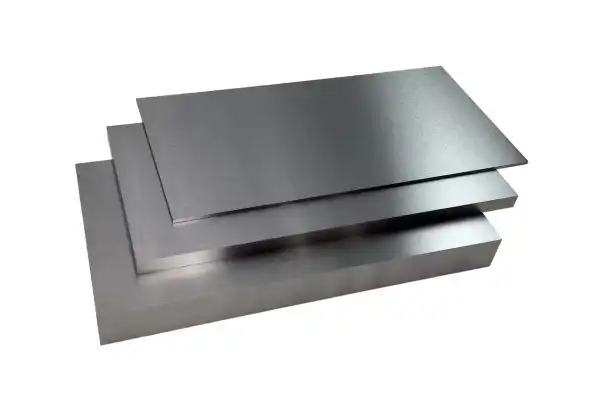
Seamless titanium tubes start as solid billets that are pierced, elongated, and reduced through multiple passes without introducing any longitudinal joint. The process begins with heating the billet to working temperature, then forcing a mandrel through the center to create the initial hollow. Subsequent cold drawing or hot rolling operations progressively reduce the diameter and wall thickness while refining the grain structure. Cold drawn tubes achieve the tightest dimensional tolerances and smoothest surface finishes, which matters for precision fluid metering and instrumentation.
The absence of a weld seam eliminates the metallurgical discontinuity that creates stress concentration points in welded tubes. Under cyclic pressure loading, fatigue cracks preferentially initiate at weld fusion zones where the heat-affected zone meets base metal. Seamless construction removes this failure mode entirely. The uniform wall thickness also means consistent pressure ratings around the entire circumference rather than a weakest-link scenario at the weld.
Welded titanium tubing costs less for equivalent dimensions and serves adequately in moderate-duty applications where inspection protocols can verify weld quality. The economic calculation shifts when failure consequences become severe. Aircraft hydraulic lines, reactor coolant piping, and implantable medical devices justify the seamless premium because the cost of a single in-service failure vastly exceeds the material price difference. Seamless tubes also simplify qualification testing since there is no weld procedure to validate separately.
If your application involves pressure cycling above 3000 psi or operates in environments where weld inspection access is limited after installation, seamless construction typically proves cost-effective over the system lifecycle despite higher initial material cost.
Seamless tubes carry higher allowable working pressures for equivalent wall thickness because the design calculation does not require a weld efficiency factor. A typical weld efficiency of 0.85 means the welded tube needs proportionally thicker walls to match the seamless tube’s pressure rating. Seamless construction also eliminates the inspection burden of verifying weld integrity through radiographic or ultrasonic examination of every joint. For applications where the tube will experience vibration, thermal cycling, or corrosive attack at elevated temperature, the seamless option reduces the probability of premature failure.
Aerospace hydraulic and pneumatic systems represent the largest volume application, where weight savings and absolute reliability justify premium material costs. Medical implants including spinal fusion cages and joint replacement components use seamless tubing machined to final geometry. Chemical processing plants specify seamless tubes for reactor internals and high-purity fluid transfer where contamination from weld spatter is unacceptable. Nuclear power generation uses seamless titanium in steam generator tubing where the consequences of a leak extend beyond simple maintenance costs.
Round tubes optimize material distribution for internal pressure containment, but many structural and connection applications benefit from alternative geometries. Square titanium tubing provides flat bearing surfaces for bolted attachments and resists torsional loads more efficiently than round sections of equivalent weight. Architectural frameworks, bicycle frames, and modular equipment racks exploit these characteristics. The aesthetic appeal of square sections also matters in exposed structural applications where visual design carries commercial value.
Threaded titanium connections enable field assembly and disassembly without welding equipment or inert gas shielding. Standard NPT or metric threads machined into tube ends create mechanical joints that seal through interference fit and can be broken and remade repeatedly during maintenance cycles. Chemical processing plants use threaded titanium piping for instrument connections and sampling ports where the line must be opened periodically. Marine applications benefit from threaded joints in locations where shipboard welding would require extensive fire watch and ventilation arrangements.
Custom fabrication extends these standard forms to application-specific geometries. A recent project for deep-sea exploration equipment required square titanium sections with internal threading for modular sensor arrays. The design called for repeated connection and disconnection of sensor modules at depth, where external threading would be vulnerable to damage during handling. Internal threads protected the connection interface while the square exterior simplified mounting bracket design. The extrusion and machining sequence delivered thread quality that maintained seal integrity through pressure testing to 15,000 psi hydrostatic load.
Square titanium tubes appear in lightweight structural frameworks where attachment simplicity and torsional stiffness outweigh the slight weight penalty compared to round sections. Architectural facades, high-performance bicycle frames, and modular laboratory equipment use square profiles. Threaded titanium tubes serve plumbing and instrumentation systems in corrosive environments, particularly offshore platforms, chemical plants, and desalination facilities where stainless steel threads would gall or corrode. The combination of corrosion resistance and mechanical joint capability makes threaded titanium valuable wherever welding access is limited or repeated disassembly is anticipated.
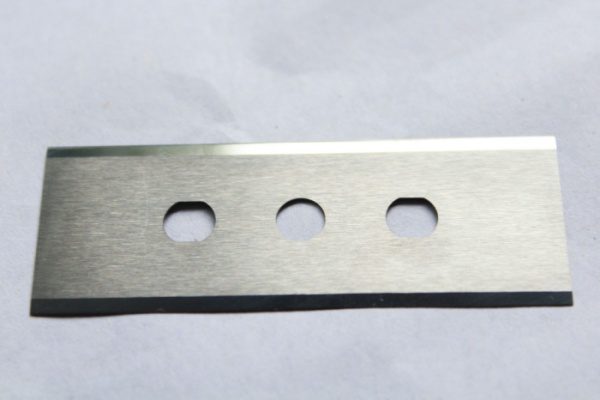
Heat exchangers transfer thermal energy between fluid streams that often carry corrosive species, suspended solids, or biological fouling agents. Titanium tubes resist the pitting and crevice corrosion that destroys copper alloys and stainless steels in chloride-rich cooling water. Power plant condensers using seawater or brackish water for cooling achieve 40-year service lives with titanium tubes, compared to 10-15 years for copper-nickel alternatives that require periodic retubing. Desalination plants, chemical reactors, and offshore platform coolers similarly benefit from titanium’s durability in aggressive service.
The thermal conductivity of titanium falls below copper, but this apparent disadvantage diminishes in practice. Titanium’s corrosion resistance permits thinner tube walls that reduce the conduction path length. The smooth, hard oxide surface resists fouling buildup that would insulate a copper tube and degrade heat transfer over time. Titanium tubes maintain their as-installed thermal performance while copper tubes progressively lose efficiency between cleaning cycles.
Tube configuration matches the heat transfer duty. Straight tubes suit single-pass designs with clean fluids. U-bend tubes eliminate one tubesheet and accommodate thermal expansion in multi-pass arrangements. Finned tubes increase external surface area for gas-side heat transfer in air-cooled exchangers or flue gas economizers. The fin geometry, whether integral extruded fins or mechanically attached aluminum fins, optimizes the tradeoff between surface area enhancement and pressure drop penalty.
Titanium eliminates the corrosion allowance that other materials require, permitting thinner walls and higher heat transfer coefficients. The material resists erosion-corrosion from high-velocity fluids carrying entrained particles, maintaining tube integrity in conditions that would wear through copper alloys. Chloride stress corrosion cracking, which limits stainless steel in warm seawater, does not affect titanium. The combination of corrosion immunity, erosion resistance, and fouling resistance translates to lower lifecycle cost despite higher initial material expense.
Start with the corrosive species present in both fluid streams, since different titanium grades offer varying resistance to specific chemical environments. Operating temperature affects both corrosion rate and mechanical strength, with most titanium alloys losing significant yield strength above 300°C. Pressure determines wall thickness requirements, which interact with heat transfer calculations. Tube support spacing must prevent flow-induced vibration that causes fatigue cracking at baffle contact points. The choice between seamless and welded construction depends on pressure rating requirements and inspection access during fabrication.
for Spraying)
Titanium tube failures in service typically trace back to manufacturing defects that escaped detection, not inherent material limitations. Subsurface voids from improper billet preparation, surface cracks from aggressive cold working, and dimensional variations from worn tooling all create failure initiation sites that propagate under operating stress. Comprehensive quality assurance catches these defects before shipment.
Non-destructive testing methods verify internal and external integrity without damaging the product. Ultrasonic inspection detects subsurface voids, inclusions, and laminations by analyzing the reflection patterns of high-frequency sound waves transmitted through the tube wall. Eddy current testing identifies surface and near-surface cracks by measuring disturbances in an induced electromagnetic field. Radiographic examination reveals internal discontinuities through X-ray or gamma-ray imaging. Hydrostatic testing confirms pressure containment capability by subjecting each tube to a proof pressure exceeding the design working pressure.
A recent aerospace hydraulic project illustrated the value of rigorous inspection protocols. Initial tube batches from an alternative supplier showed micro-cracks during ultrasonic examination, failing ASTM B338 requirements. The defects originated from improper cold drawing parameters that exceeded the material’s ductility limits between annealing cycles. Adjusting the reduction schedule and intermediate heat treatment eliminated the cracking mechanism, achieving defect rates below 0.01% on subsequent production. The cost of enhanced inspection and process control proved negligible compared to the consequences of installing defective tubing in flight-critical systems.
ISO 9001 certification provides baseline assurance that quality management systems exist and function consistently. The certification audit verifies documented procedures, calibrated equipment, trained personnel, and corrective action processes. Material certifications trace each tube lot to specific melt chemistry and mechanical test results. Together, these quality system elements create accountability that supports confident specification of titanium tubing for critical applications.
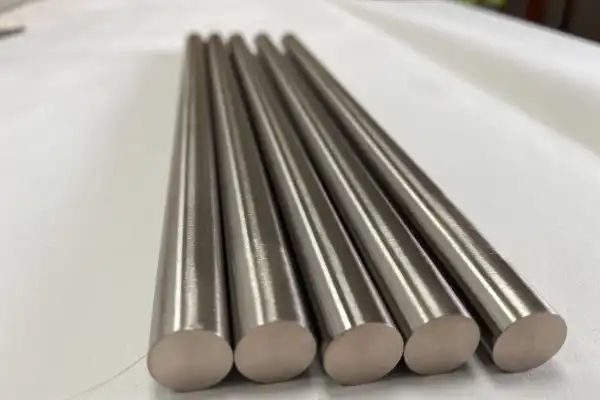
Titanium tubes routinely achieve 30-40 year service lives in seawater heat exchanger duty that would destroy copper alloys in 10-15 years. Chemical processing applications vary with specific corrosive agents, but properly selected titanium grades typically outlast multiple generations of alternative materials. The passive oxide layer regenerates if mechanically damaged, providing ongoing protection throughout the service life. Replacement intervals extend far enough that the original installation engineers have often retired before the first retubing project.
Titanium welding requires inert gas shielding on both sides of the joint to prevent oxygen and nitrogen pickup that embrittles the weld zone. Argon purge chambers or trailing shields maintain atmosphere control during fusion. The welding procedure must be qualified for the specific alloy grade and wall thickness, with welder certification demonstrating consistent technique. Properly executed titanium welds achieve full base metal strength and corrosion resistance. The specialized requirements add cost and complexity compared to carbon steel welding but remain routine for fabricators experienced with reactive metals.
Grade selection determines the balance between corrosion resistance, mechanical strength, and cost. Commercially pure grades (1 through 4) maximize corrosion resistance and formability at progressively higher strength levels. Alloyed grades add elements like aluminum, vanadium, molybdenum, or palladium to enhance specific properties. Grade 5 (Ti-6Al-4V) provides the highest strength for structural applications. Grade 7 and Grade 11 add palladium for superior resistance to reducing acids. Grade 9 (Ti-3Al-2.5V) balances moderate strength with excellent cold formability for hydraulic tubing. Specifying the wrong grade either wastes money on unnecessary alloy content or risks premature failure from inadequate properties.
The extended service life of titanium tubes reduces material consumption over the facility lifetime compared to frequently replaced alternatives. A single titanium heat exchanger bundle replacing three or four copper alloy bundles over the same period represents significant resource savings in mining, refining, and fabrication energy. The weight reduction in transportation and aerospace applications directly decreases fuel consumption and emissions. Titanium is fully recyclable, with scrap commanding prices that ensure collection and reprocessing rather than landfill disposal. To discuss how titanium tubing specifications align with your project requirements, contact our technical team at [email protected].
If you’re interested, check out these related articles:
What Is Tzm Material Equivalent To
Comprehensive Applications Of Tungsten Copper Alloy In Aerospace And New Energy Vehicles
Tips To Prevent Molybdenum Wire From Being Broken
Exploring The Secrets Of Tungsten Sputtering Targets The Material Magician Of The Microscopic World