
Sourcing tungsten and molybdenum from Chinese manufacturers means dealing with Minimum Order Quantities that can make or break your procurement budget. After years of working with industrial buyers, I’ve seen how understanding MOQ dynamics separates smooth supply chains from costly headaches. The numbers aren’t arbitrary—they reflect real production economics that, once understood, become negotiation leverage rather than obstacles.
Minimum Order Quantity represents the smallest volume a supplier will produce and sell in a single transaction. For refractory metals like tungsten and molybdenum, these thresholds stem from concrete manufacturing realities rather than arbitrary policy decisions.
Consider what happens when a production facility switches to your order. Machinery requires recalibration for specific material grades. Tooling must be changed. Raw materials need preparation. These fixed costs exist whether the run produces 10 kilograms or 1,000 kilograms. Suppliers set MOQs to spread these expenses across enough units to maintain viable margins.
The economics work in reverse for buyers. Meeting higher MOQs typically unlocks lower unit pricing because production resources get used more efficiently. A facility running at optimal capacity produces each unit more cheaply than one constantly stopping and starting for small batches.
FOTMA operates as an ISO-9000-1:2008 certified enterprise with advanced production equipment designed to optimize these dynamics. Our material research capabilities—spanning Molybdenum-Copper alloys for high-power electronic packaging and CMC Copper-Molybdenum-Copper composites for precise CTE matching—allow competitive MOQ structures without compromising quality standards.
Typical MOQ ranges shift considerably based on product specifications:
| Product Form | Typical MOQ Range (kg) |
|---|---|
| Tungsten Rods | 50 – 200 |
| Molybdenum Sheets | 30 – 150 |
| Tungsten-Copper Plates | 20 – 100 |
| Molybdenum Wire | 10 – 50 |
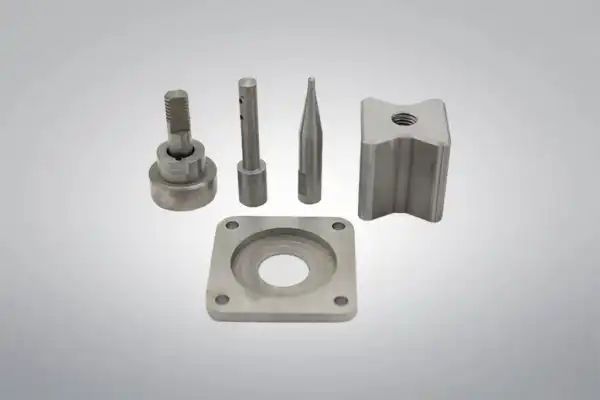
| Custom Components | Project-specific (often lower) |
Standard forms like rods and sheets tend toward higher MOQs because production lines handle them efficiently at volume. Custom components often carry lower quantity requirements but higher unit costs—the tradeoff reflects specialized tooling and reduced batch efficiency.
For deeper understanding of the material science behind these components, consider reading 《Analysis Of The Outstanding Performance Of Molybdenum Copper Alloy And Cmc Three Layer Structure Materials》.
Several interconnected factors determine the Minimum Order Quantity for these specialized alloys. Understanding each element helps buyers anticipate requirements and plan procurement accordingly.
Raw material economics sit at the foundation. Tungsten and molybdenum extraction and initial processing demand significant energy inputs. Suppliers purchase these materials in bulk quantities to access favorable pricing from their own upstream sources. This purchasing pattern directly establishes minimum volumes they can process economically. Manufacturing a Pure Tungsten Rod or Molybdenum Rod begins with substantial raw material commitments that must be justified by order size.
Production line setup creates another threshold. Configuring machinery for specific material specifications tungsten or manufacturing custom tungsten parts MOQ involves considerable preparation time and labor costs. Tooling expenses, machine calibration procedures, and specialized operator involvement all factor into the equation. Production runs must generate enough output to justify these fixed investments. Creating Molybdenum Plate Moly Sheet or specialized Customized Molybdenum Parts requires dedicated production cycles that suppliers need to fill efficiently.
Customization complexity directly affects quantity requirements. Components with unique alloy compositions or intricate geometries often carry lower MOQs because specialized processes don’t scale as easily. The tradeoff appears in pricing—reduced economies of scale mean higher per-unit costs. A custom Tungsten Crucible will carry different MOQ parameters than standard Tungsten Plate Tungsten Sheet production.
The relationship between MOQ and total cost operates on multiple levels. Higher order quantities generally reduce unit pricing through production scale efficiencies—fixed setup costs spread across more pieces, and material purchasing power increases. These savings can be substantial for refractory metals where processing costs represent a significant portion of final pricing.
Larger orders also affect logistics costs China differently. Freight expenses per kilogram typically decrease with volume, but total shipping, customs, and warehousing expenditures rise. Storage requirements and inventory carrying costs enter the calculation for buyers who must hold materials before use.
Project budgeting requires balancing these competing factors. Sometimes accepting a slightly higher MOQ delivers enough unit cost reduction to offset increased logistics and storage expenses. Other situations favor smaller quantities despite premium pricing, particularly for prototype work or uncertain demand forecasts.
Effective MOQ negotiation focuses on finding arrangements that work for both parties rather than simply pushing for lower numbers. Suppliers respond to approaches that acknowledge their operational constraints while addressing buyer needs.
Relationship building creates negotiating room that doesn’t exist in transactional interactions. Suppliers extend flexibility to customers they trust for repeat business. Demonstrating commitment through long-term contracts MOQ discussions or sharing annual material forecasts signals that accommodating your current request leads to future volume. This context changes the calculation for suppliers weighing setup costs against relationship value.
Trial orders serve as credibility builders for new supplier relationships. An initial order slightly above your ideal MOQ establishes track record and allows both parties to verify quality standards and operational compatibility. FOTMA regularly works with clients on initial small batches that prove capabilities before larger commitments.
Creative structuring opens additional possibilities. Some suppliers will produce your full order quantity but ship in installments, reducing immediate inventory burden while meeting their production efficiency needs. Consolidating orders across multiple product types can satisfy cumulative MOQ thresholds even when individual product quantities fall short.
Lower MOQs for custom components remain achievable through several pathways. Suppliers often accommodate reduced quantities for prototype orders or specialized OEM tungsten molybdenum components when future larger orders appear likely. Complex parts requiring unique tooling or specialized fabrication processes may qualify for small batch molybdenum orders if the supplier sees development potential.
The pricing adjustment matters here. Expect higher unit costs for reduced quantities—this reflects genuine increased costs per piece rather than arbitrary markup. Setup expenses spread across fewer units, and material purchasing loses bulk advantages.
Success in these negotiations depends on transparent communication about project scope and anticipated future demand. Suppliers who understand they’re investing in a relationship rather than a one-time transaction show more flexibility on initial quantities.
Quality and reliability concerns intensify when sourcing specialized materials from overseas suppliers. For high-performance tungsten and molybdenum applications, verification systems must be robust and documented.
FOTMA maintains ISO-9000-1:2008 certification, reflecting adherence to international quality management standards across all operations. This framework governs processes from raw material inspection through final product verification, creating accountability at each production stage.
Material testing protocols address the specific requirements of refractory metal applications. Chemical composition analysis confirms alloy grades meet specifications. Mechanical property testing—hardness, tensile strength, dimensional tolerance verification—ensures functional performance. Non-destructive examination methods detect internal defects that could compromise component integrity.
Upstream supplier vetting China represents another quality control layer. FOTMA maintains strict standards for raw material sources, ensuring only high-grade inputs enter manufacturing processes. Our core team brings over 30 years of material research expertise to these evaluations, applying knowledge accumulated across countless production cycles.
These protocols apply uniformly whether producing standard Molybdenum Spray Wire or custom Tungsten Alloy Rod components. Consistency across order sizes maintains the reliability industrial buyers require.
Shipping tungsten and molybdenum products from China involves complexities that directly affect project timelines and total costs. Effective logistics management requires understanding both regulatory requirements and practical shipping considerations.
Export regulations China for refractory metals involve documentation requirements and potential licensing depending on material grades and end-use applications. Experienced suppliers navigate these requirements routinely, but buyers should factor compliance timelines into project planning.
Transit options span sea freight, air cargo, and combined transport modes. Sea shipping offers cost advantages for larger volumes but extends delivery windows. Air freight accelerates arrival but increases per-kilogram expenses significantly. The optimal choice depends on order urgency, material value, and project timeline constraints.
FOTMA coordinates with established logistics partners to manage shipping tungsten molybdenum across these options. Supply chain management China experience helps anticipate potential delays from port congestion, customs processing variations, and seasonal shipping patterns.
Critical components like igbt heat sink substrates or hot zone thermal shields often justify expedited shipping to protect project schedules. Our handling experience across material forms—from Tungsten Wire to Tungsten Heavy Alloy Plate—allows tailored logistics approaches matching specific product requirements.
Lead times for tungsten and molybdenum MOQ orders generally range from 4 to 12 weeks, depending on several variables. Standard products with available raw materials and established production processes fall toward the shorter end. Custom components requiring specialized tooling, unique alloy formulations, or complex geometries extend timelines.
Material availability fluctuates with market conditions. Certain grades may require longer procurement windows from upstream suppliers. Production scheduling also affects timing—facilities running at high capacity may queue orders differently than those with immediate availability.
Expedited shipping can compress transit time but adds cost. The production phase typically represents the larger portion of total lead time, so shipping acceleration offers limited overall improvement unless manufacturing is already complete.
Clear communication with suppliers about timeline requirements helps identify potential bottlenecks early. Realistic planning that accounts for these variables prevents costly schedule disruptions.
Supplier selection for refractory metals affects everything from product quality to procurement efficiency. Hubei Fotma Machinery Co., Ltd. brings specific capabilities that address common industrial buyer concerns.
Established in 2004 with ISO-9000-1:2008 certification, FOTMA combines modern production equipment with technical expertise accumulated over three decades of material research. This foundation supports both standard product manufacturing and custom component development.
Our product range covers tungsten-molybdenum products, tungsten-molybdenum alloys, tungsten-copper alloys, Cemented Carbide Cutting Tool materials, high-density alloys, titanium, and nickel. This breadth allows consolidated sourcing for buyers requiring multiple material types.
Whether requirements involve Customized Tungsten Parts or standard pure molybdenum sheets, our manufacturing capabilities deliver consistent quality. Competitive positioning in both domestic and international markets reflects operational efficiency that benefits buyer pricing.
Connect with Hubei Fotma Machinery Co., Ltd. to discuss your specific tungsten and molybdenum product requirements. Our team can explore flexible MOQ options tailored to your project scope and leverage our manufacturing expertise for your critical material needs.
Email: [email protected], [email protected]
Phone: +86 13995656368, +86 13907199894
MOQs vary based on material form, grade, and customization requirements. Our advanced production capabilities often allow more accommodating quantities for specialized or custom components compared to industry averages. Direct consultation provides the most accurate assessment for your specific project parameters.
Our ISO-9000-1:2008 certification establishes the quality management framework. Modern production equipment combined with advanced testing methods—including chemical analysis, mechanical property verification, and dimensional inspection—ensures all products meet stringent standards. A core team with over 30 years of material research expertise oversees these protocols regardless of order size.
Custom design support represents a core capability. Our technical strength and advanced equipment enable exploration of flexible MOQs for custom tungsten and molybdenum components. We work with clients from initial concept through precision-engineered final product, adapting quantity requirements to project realities where possible.