
For decades, lead served as the default radiation shielding material across medical, nuclear, and industrial applications. That default is shifting. Tungsten’s density advantage—up to 19.3 g/cm³ versus lead’s 11.34 g/cm³—delivers equivalent attenuation in thinner profiles, while eliminating the toxicity concerns that now drive regulatory pressure worldwide. The transition represents more than compliance; it changes how shielding systems are designed, fabricated, and maintained over their operational life.
Lead’s practical advantages—high density, low cost, easy machining—made it the obvious choice for radiation shielding throughout the twentieth century. Those advantages no longer outweigh the liabilities.
Regulatory frameworks have tightened considerably. The EU’s RoHS directive restricts lead in electronic equipment. OSHA’s permissible exposure limits for airborne lead have dropped repeatedly since the 1970s. Medical device manufacturers face increasing scrutiny over lead content in equipment that contacts patients or operators. These aren’t theoretical concerns—they translate directly into compliance costs, specialized handling requirements, and hazardous waste disposal fees that accumulate over a shielding system’s lifetime.
The health risks are well-documented. Lead exposure affects neurological function, kidney performance, and reproductive health. Workers fabricating or installing lead shields require respiratory protection, blood lead monitoring, and decontamination procedures. Environmental persistence compounds the problem: lead contamination in soil and groundwater can remain for centuries, creating long-term liability exposure for facility operators.
For procurement teams evaluating total cost of ownership, these factors shift the calculation. The question is no longer whether to transition away from lead, but how to do so without sacrificing shielding performance.
Radiation attenuation depends on material density and atomic number. More atoms per unit volume means more opportunities for incoming radiation to interact with the shielding material. Tungsten’s density advantage is substantial—approximately 70% higher than lead at comparable alloy compositions.
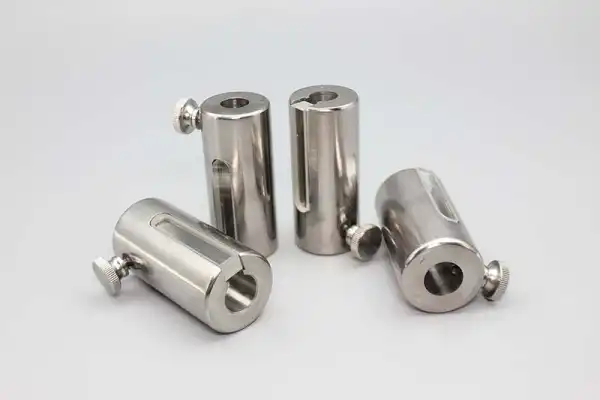
This density difference has direct design implications. A tungsten shield can achieve the same attenuation as a lead shield while occupying significantly less volume. In applications where space is constrained—medical imaging gantries, portable radiography equipment, aerospace systems—this translates to smaller device footprints and reduced weight. The mechanical properties differ as well: tungsten alloys maintain structural integrity under conditions that would deform lead, and their corrosion resistance eliminates degradation concerns in humid or chemically active environments.
| Feature | Tungsten Heavy Alloy (WHA) | Lead (Pb) |
|---|---|---|
| Density | 17.0 – 19.3 g/cm³ | 11.34 g/cm³ |
| Toxicity | Non-toxic | Highly toxic |
| Melting Point | ~3422 °C (pure W) | 327.5 °C |
| Mechanical Strength | High | Low |
| Corrosion Resistance | Excellent | Moderate |
| Disposal | Standard industrial waste | Hazardous waste (special) |
The non-toxic classification simplifies the entire supply chain. Manufacturing facilities don’t require the same ventilation and containment systems. Installation crews work without respiratory protection. End-of-life disposal follows standard industrial waste protocols rather than hazardous material handling procedures. These operational simplifications accumulate into meaningful cost differences over a system’s service life.
Tungsten’s advantages come with manufacturing complexity that lead doesn’t present. The material’s hardness and high melting point rule out the casting and machining approaches that work for lead. Tungsten radiation shields are typically produced through powder metallurgy: tungsten powder is blended with binder metals (nickel, iron, or copper), pressed into near-net shapes, and sintered at temperatures exceeding 1400°C.
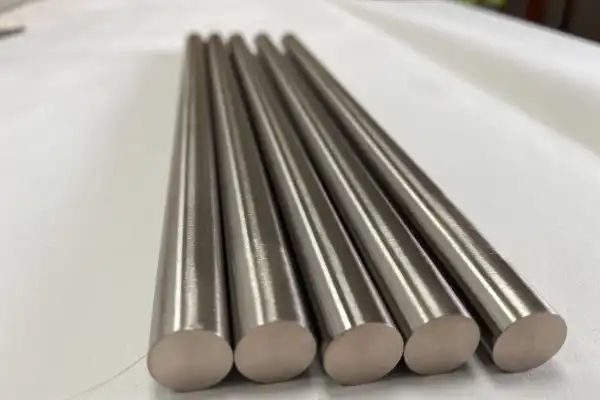
This process enables precise dimensional control and the production of complex geometries that would be difficult or impossible to achieve with lead. Collimators for linear accelerators, for example, require intricate internal passages with tight tolerances—powder metallurgy accommodates these requirements where casting cannot. The trade-off is that fabrication requires specialized equipment and process expertise. Not every machine shop can produce tungsten shielding components to specification.
Design engineers transitioning from lead to tungsten need to account for these differences early in the development process. Shielding thickness calculations change due to the density differential. Mounting and support structures may need redesign to accommodate different weight distributions. Thermal expansion characteristics differ. These aren’t obstacles, but they do require attention during the design phase rather than discovery during fabrication.
A recent project illustrates the practical outcomes of tungsten adoption. A medical device manufacturer developing a new diagnostic imaging system needed to reduce the device’s footprint while maintaining radiation protection standards for patients and operators. The original design specified lead shielding components.
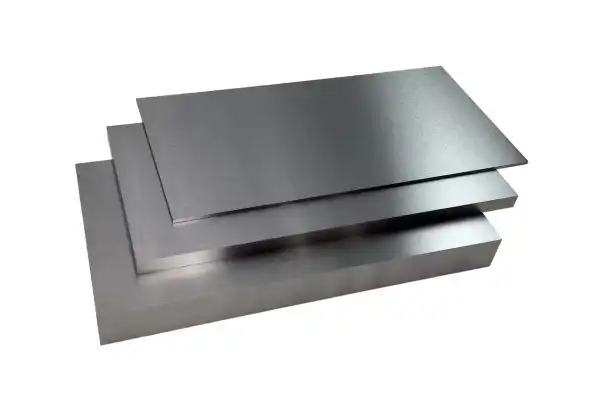
The recommendation was to substitute a 95% tungsten heavy alloy. The density advantage allowed the required gamma attenuation to be achieved with shield thickness approximately 40% less than the lead specification. This reduction cascaded through the rest of the design: the device footprint decreased by 15%, overall weight dropped by 20%, and the system became significantly more portable and easier to install in clinical settings.
Post-implementation radiation surveys showed a 25% reduction in scatter radiation exposure to peripheral areas compared to the lead prototype. The improvement wasn’t just about the primary shielding—the more compact geometry reduced secondary scatter paths that the original design hadn’t fully addressed. Manufacturing also simplified: eliminating lead handling requirements removed the need for specialized ventilation, worker monitoring programs, and hazardous waste disposal contracts. Production costs decreased despite the higher material cost of tungsten.
The adoption curve for tungsten radiation shielding is steepening across multiple sectors. Medical imaging remains the largest application area—CT scanner components, linear accelerator collimators, PET scanner shielding, and brachytherapy equipment all benefit from tungsten’s density and non-toxicity. Nuclear power facilities use tungsten for hot cell windows, transport casks, and personnel shielding in high-radiation environments.
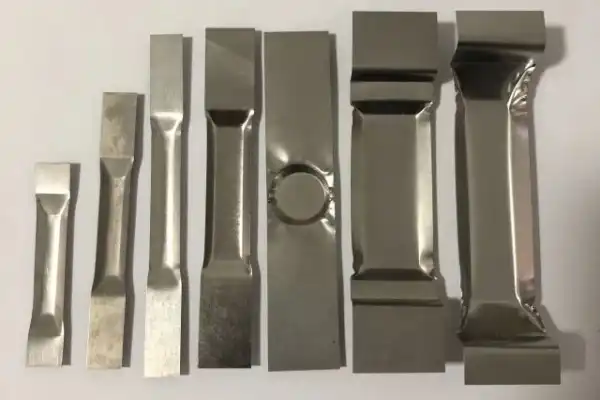
Industrial radiography is another growth area. Portable inspection equipment for pipeline welds, structural components, and aerospace parts requires shielding that combines effectiveness with manageable weight. Tungsten’s density-to-weight ratio makes it the practical choice for equipment that technicians carry to job sites. Defense applications include radiation hardening for electronics and shielding for nuclear-powered vessels.
The cost comparison between tungsten and lead has shifted over the past decade. Tungsten’s higher material cost per kilogram is offset by the reduced volume required for equivalent attenuation, the elimination of hazardous handling and disposal costs, and the longer service life of tungsten components. For applications with extended operational timelines, the total cost of ownership calculation increasingly favors tungsten. If your application involves space constraints, weight limitations, or regulatory sensitivity to lead content, the engineering case for tungsten is worth evaluating against your specific requirements.
Tungsten’s density—up to 70% higher than lead—allows equivalent radiation attenuation with less material volume, enabling more compact and lighter shield designs. The material is non-toxic, eliminating health hazards during manufacturing and disposal. Mechanical strength and corrosion resistance exceed lead’s, extending service life in demanding environments.
Initial material costs for tungsten exceed lead on a per-kilogram basis. However, the higher density means less material is needed for equivalent shielding, and the elimination of hazardous waste disposal, specialized handling equipment, and worker monitoring programs reduces operational costs. For systems with service lives exceeding five years, total cost of ownership often favors tungsten.
Medical imaging applications include CT scanners, linear accelerators, and PET systems. Nuclear power facilities use tungsten in transport casks and personnel shielding. Industrial radiography equipment benefits from tungsten’s combination of high attenuation and manageable weight. Aerospace and defense applications are expanding as well.
Physical replacement is straightforward in most cases, but the design should be re-evaluated rather than simply substituting materials. Tungsten’s higher density means thinner shields achieve equivalent attenuation, which may allow redesign of surrounding structures. Mounting hardware and support systems may need modification to accommodate different weight distributions.
Tungsten’s hardness and high melting point require powder metallurgy fabrication rather than the casting or machining approaches used for lead. This demands specialized equipment and process expertise. Complex geometries are achievable, but design-for-manufacturing considerations differ from lead components. Lead time and minimum order quantities may also differ from lead fabrication.
Transitioning from lead to tungsten involves material selection, design optimization, and fabrication coordination. Hubei Fotma Machinery Co., Ltd. produces high-density tungsten alloy components for radiation shielding applications across medical, nuclear, and industrial sectors. To discuss specifications for your project, contact us at [email protected] or call +86 13995656368.
If you’re interested, check out these related articles:
A Domestic Pioneer In High Purity Tungsten Target Technology
Tips To Prevent Molybdenum Wire From Being Broken
A European Auto Enthusiasts Smooth Purchase Of Tungsten Alloy Weights On Tungstenbuy
Beyond Price The Ultimate Guide To Choosing Your Titanium Supplier Parts Manufacturer
Thomas Mitchell S Successful Shopping Experience