
I have spent more than three decades working with non-ferrous metals, and the question that stops many procurement conversations before they start is a simple one: is nickel an alloy, or is it a pure metal? The answer matters because it determines which material standard applies, how the part will perform under heat, and whether the quote you receive actually matches the drawing. Nickel is an element — atomic number 28, a transition metal with a silvery-white appearance — not an alloy. But in industrial practice, the word “nickel” on a purchase order almost always points to a nickel alloy. Most engineering applications require the properties that alloying elements create, and pure nickel is reserved for a narrow set of conditions. This article sorts through the common nickel alloy types, their naming logic, and what engineers and buyers should check before placing an order for nickel alloy plate, rod, wire, or tube.
Pure nickel carries the UNS designation N02200 (or N02201 for the low-carbon grade) and contains at least 99.0% nickel. It offers exceptional resistance to caustic alkalis, reasonable thermal and electrical conductivity, and good mechanical properties at ambient temperature. I have seen Ni200 specified most often in chemical processing equipment where sodium hydroxide concentration is high and temperatures stay below 315°C — conditions that would rapidly corrode stainless steel. The material welds readily, forms well, and costs less than most nickel alloys.
That said, pure nickel loses strength quickly above 300°C and offers almost no resistance to sulfur-bearing gases at elevated temperatures. For anything involving combustion, gas turbine environments, or acidic process streams, pure nickel is the wrong material. This is where the nickel alloy families earn their place.
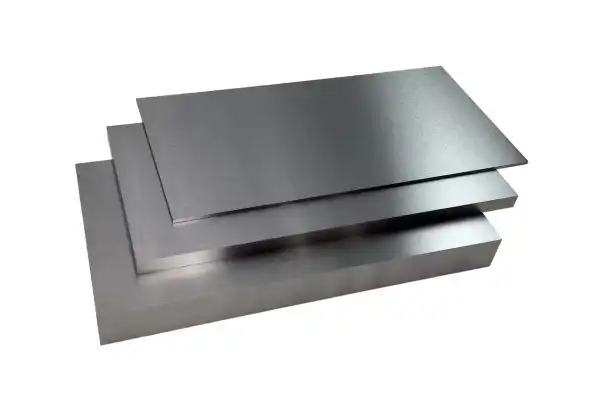
Nickel alloys are organized by their primary alloying addition and the metallurgical family they belong to. The names engineers encounter daily — Inconel, Hastelloy, Monel, Invar — are trademarks, not material specifications. Each sits within a broader alloy family defined by composition.
The commercially significant families break down as follows.
Nickel-copper alloys: Monel is the most recognized name in this group, with Monel 400 (UNS N04400) containing roughly 67% nickel and 23% copper. These alloys handle seawater, hydrofluoric acid, and reducing environments that attack stainless steel. I have specified Monel 400 for marine pump shafts and valve trim more times than I can count. Monel K-500 adds aluminum and titanium for precipitation hardening, roughly doubling yield strength.
Nickel-chromium alloys: This is the largest and most widely used family. Inconel 600 (UNS N06600, roughly 72Ni-15Cr-8Fe) resists oxidation to 1093°C, making it a default choice for furnace components and heat-treating fixtures. Inconel 625 adds molybdenum and niobium for pitting resistance and strength, widely used in aerospace exhaust systems and chemical plant piping. Inconel 718 is precipitation-hardenable and dominates gas turbine hot-section components. The chromium content, typically 15–30%, forms a protective oxide scale that makes these alloys indispensable above 500°C.
Nickel-molybdenum and nickel-chromium-molybdenum alloys: The Hastelloy family dominates here. Hastelloy C-276 (UNS N10276) resists both oxidizing and reducing acids, including wet chlorine gas and ferric chloride, across a wide temperature window. Hastelloy B-2 handles pure hydrochloric acid at all concentrations up to the boiling point. These are niche materials — expensive, difficult to machine, and absolutely necessary in pharmaceutical reactors, pollution control scrubbers, and certain nuclear waste handling systems.
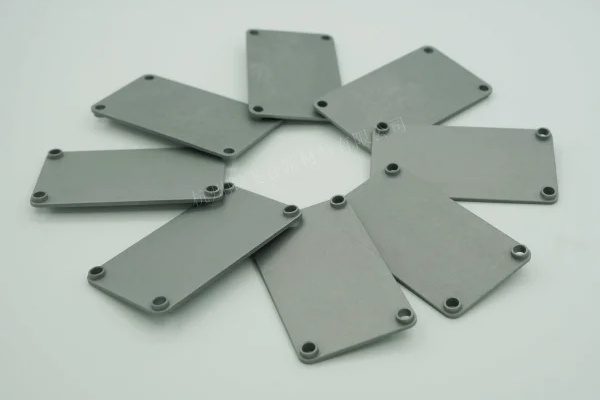
Nickel-iron controlled-expansion alloys: Invar (UNS K93600, roughly 36Ni-64Fe) exhibits near-zero thermal expansion from cryogenic temperatures to about 200°C. Kovar (UNS K94610, 29Ni-17Co-54Fe) matches the expansion of borosilicate glass and alumina ceramics, making it essential for glass-to-metal seals in electronic packaging, microwave tubes, and hermetic connectors. These are small-volume but irreplaceable materials.
Electrical resistance alloys: NiCr alloys with 80Ni-20Cr (Nichrome) serve as heating elements in industrial furnaces, toasters, and laboratory equipment. Their stable oxide film and high electrical resistivity make them the standard against which other heating element materials are measured.
| Alloy Family | Key Grade | Primary Elements | Typical Application |
|---|---|---|---|
| Ni-Cu | Monel 400 | 67Ni-23Cu | Marine, chemical |
| Ni-Cr | Inconel 600 | 72Ni-15Cr | Furnace, heat-treat |
| Ni-Cr-Mo | Hastelloy C-276 | 57Ni-16Mo-16Cr | Chemical processing |
| Ni-Fe | Invar | 36Ni-64Fe | Precision instruments |
| Ni-Cr (resistance) | Nichrome 80/20 | 80Ni-20Cr | Heating elements |
What separates nickel alloys from stainless steel and other engineering metals is not one property but a combination that holds up under simultaneous stress, temperature, and corrosion.
High-temperature strength retention: Nickel retains its face-centered cubic crystal structure from room temperature to its melting point at 1455°C. This means no phase transformation, no weakening at intermediate temperatures, and no embrittlement from structural change. Chromium, molybdenum, and cobalt additions strengthen the matrix further. Inconel 718, properly heat-treated, holds over 1000 MPa ultimate tensile strength at 650°C — a temperature where most stainless steels have lost more than half their room-temperature strength.
Corrosion resistance across multiple mechanisms: Nickel alloys resist general corrosion, pitting, crevice attack, intergranular corrosion, and stress-corrosion cracking in environments that defeat other materials. The mechanism is metallurgical: nickel forms a stable passive film but, unlike iron in stainless steel, does not undergo active-passive transitions that cause localized attack in chloride environments. This is why nickel alloys survive where 316L fails.
Controlled physical properties: Invar and Kovar demonstrate that nickel alloys can be engineered for specific thermal expansion, magnetic, or elastic properties. No other alloy system offers this breadth of tailorable physical characteristics.
If your application involves temperatures above 500°C and a chemically aggressive environment, it is worth confirming the specific alloy grade with test data rather than relying on brand-name assumptions. Reach out at [email protected] with your operating conditions — temperature, pressure, and media composition — and we can help cross-reference the right material.
for Spraying)
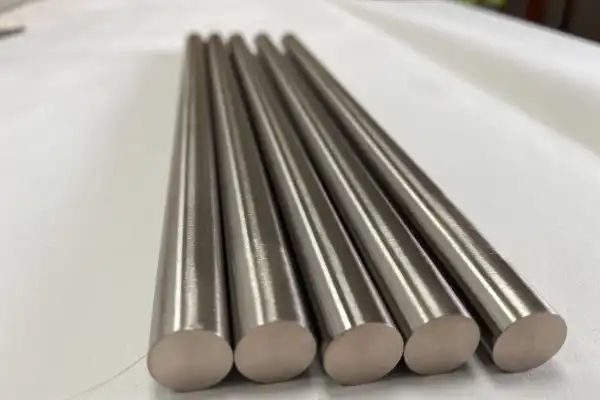
Nickel alloys are supplied in nearly every mill form: plate and sheet, rod and bar, wire, tube and pipe, strip, and forgings. Each form has a distinct supply chain in China, and knowing what to expect saves weeks of lead time.
Plate and sheet: Thickness ranges from 0.5mm up to 100mm or more. Hot-rolled plate is common for Inconel 600 and Hastelloy C-276 in chemical equipment fabrication. Cold-rolled sheet down to 0.1mm serves electronic applications, including expansion alloy components.
Rod and bar: Diameters from 3mm to 300mm, typically in solution-annealed condition. For precipitation-hardenable grades like Inconel 718, confirm the heat-treat condition on the mill certificate — I have seen disagreements arise when the buyer expected solution-treated material and received aged bar stock that was impossible to re-machine.
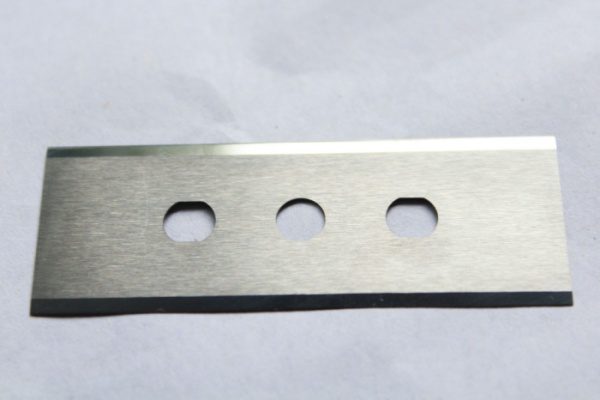
Wire and strip: Fine wire down to 0.025mm for resistance heating and thermocouple applications. Strip for Kovar lead frames and Invar shadow masks demands tight thickness tolerances, often ±0.005mm or better.
Tube and pipe: Seamless tube for heat exchangers and chemical process piping, with wall thickness from 0.5mm upward. Welded tube is more economical for larger diameters and lower-pressure service.
FOTMA supplies nickel alloy plate, rod, wire, and tube from its Wuhan facility, with in-house testing to confirm composition, mechanical properties, and dimensional accuracy before shipment. The thirty-plus years of technical accumulation in the core team mean that non-standard sizes and custom processing — cutting to length, surface grinding, or specific heat-treat conditions — are handled as standard workflow rather than exceptions.
Grade selection starts with the environment, not the brand name. I recommend working through three questions before looking at a datasheet.
First, what is the most aggressive chemical species in the operating environment, and at what concentration and temperature? This single question eliminates most candidate grades. For reducing acids like hydrochloric, look at nickel-molybdenum grades (Hastelloy B). For oxidizing acids like nitric, nickel-chromium grades perform better. For mixed environments, nickel-chromium-molybdenum grades (Hastelloy C-276, Inconel 625) offer the broadest resistance.
Second, what mechanical load does the part carry, and at what temperature? If yield strength above 500°C matters, precipitation-hardenable grades like Inconel 718 become necessary. If the part is a static component with no significant stress, a solid-solution grade like Inconel 600 often suffices.
Third, what form is required, and can your supply chain deliver it? Some grades are readily available as plate and sheet but difficult to source as seamless tube in small diameters. Others machine well but cannot be cold-worked to tight wire tolerances without intermediate annealing. Matching the grade to the available form and your supplier’s capabilities avoids re-design downstream.
Nickel is a pure metallic element, number 28 on the periodic table. Commercially pure nickel grades like Ni200 are considered metals, not alloys, because they contain at least 99.0% nickel with only trace additions. However, most industrial “nickel” products — Inconel, Hastelloy, Monel — are alloys in which nickel is the majority element combined with chromium, molybdenum, copper, iron, and other additions to create specific properties.
Both are nickel-based, but the alloying philosophy differs. Inconel grades are primarily nickel-chromium, optimized for high-temperature strength and oxidation resistance — they dominate aerospace and gas turbine applications. Hastelloy grades are nickel-molybdenum or nickel-chromium-molybdenum, optimized for corrosion resistance in aggressive chemical environments — they dominate chemical processing and pollution control. The overlap region is Inconel 625 and Hastelloy C-276, which both handle high-temperature corrosion but differ in cost, availability, and specific acid resistance.
Start with the mill test certificate, which must list the cast number, chemical analysis, mechanical test results, and the applicable ASTM or ASME specification. For critical applications, I recommend independent third-party verification of composition using optical emission spectroscopy or X-ray fluorescence — this takes minutes and costs little relative to a material failure. At FOTMA, every shipment includes full documentation, and we encourage customers to cross-check with their own incoming inspection.
Yes, but filler metal selection and interpass temperature control determine the outcome. Nickel alloys are sensitive to sulfur embrittlement at welding temperature, so cleaning the joint area of oil, grease, and marking ink is non-negotiable. For corrosion-resistant grades like Hastelloy C-276, matching or over-alloyed filler is required, and post-weld heat treatment is generally not necessary for solid-solution grades. The real risk is intergranular corrosion in the heat-affected zone if the alloy is sensitized by improper heat input — a problem I have investigated more than once in failed chemical plant piping.
If your fabrication involves welding and the service environment includes aggressive acids, share your welding procedure specification with us before cutting metal. We can review the filler match and heat-input limits against the alloy grade and help confirm the joint will hold up in service — reach out at [email protected] or call +86 13995656368.
If you’re interested, check out these related articles:
A Domestic Pioneer In High Purity Tungsten Target Technology
What Is The Most Commonly Used Titanium Alloy
Tungsten Filament Hard And Tough Light