
Niobium sits at the intersection of old metallurgy and new physics. It melts at temperatures that would vaporize most metals, yet it bends and shapes without cracking. It resists acids that dissolve gold, yet it conducts electricity without any resistance when cooled below 9.2 K. These contradictions make niobium one of the most versatile refractory metals in industrial use today. At Hubei Fotma, three decades of working with this metal have taught us that its real value lies not in any single property, but in how those properties combine for applications ranging from pipeline steel to particle accelerators.
Niobium (Nb) presents as a lustrous, gray, ductile refractory metal with properties that set it apart from its periodic table neighbors. The melting point reaches 2,477°C, placing niobium among the select group of metals that survive in extreme thermal environments. Density measures approximately 8.57 g/cm³, comparable to other transition metals in its row.
What distinguishes niobium from other high-temperature metals is its remarkable ductility. Where tungsten and molybdenum become brittle and difficult to work, niobium shapes readily into wire, sheet, and rod without cracking or losing structural integrity. This workability matters enormously when manufacturing complex components that require precise forming operations.
The corrosion resistance deserves particular attention. Niobium withstands attack from nitric acid, hydrochloric acid, and even aqua regia at room temperature. This resistance develops because niobium spontaneously forms a stable, passive oxide layer on its surface, essentially armoring itself against chemical attack. The metal also captures thermal neutrons poorly, a characteristic that nuclear engineers value highly.
Electrically, niobium functions as a Type II superconductor with a critical temperature of 9.2 K. This represents one of the highest transition temperatures among elemental metals. Below this temperature, niobium carries current without resistance and can sustain superconductivity even in strong magnetic fields. Combined with a low coefficient of thermal expansion, these properties create a material that performs reliably across demanding engineering conditions.
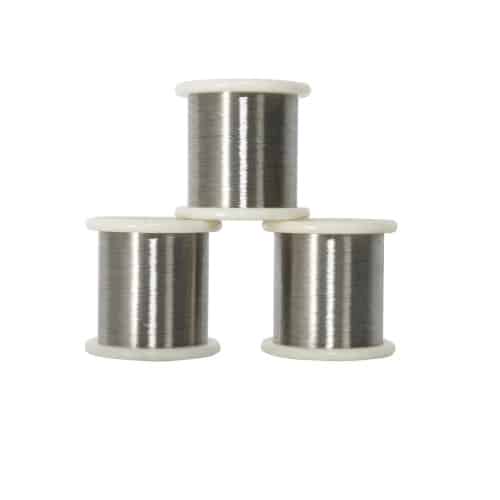
| Property | Value |
|---|---|
| Atomic Number | 41 |
| Atomic Mass | 92.906 g/mol |
| Melting Point | 2477 °C (4491 °F) |
| Boiling Point | 4744 °C (8571 °F) |
| Density | 8.57 g/cm³ |
| Crystal Structure | Body-centered cubic (BCC) |
| Superconducting Tc | 9.2 K |
The steel industry discovered something counterintuitive about niobium decades ago. Adding tiny amounts, typically between 0.01% and 0.1%, produces dramatic improvements in strength, toughness, and weldability. These High-Strength Low-Alloy (HSLA) steels now form the backbone of modern infrastructure and transportation systems.
The mechanism involves niobium forming fine precipitates within the steel matrix. Niobium carbides and niobium nitrides nucleate throughout the material during thermal processing. These precipitates act as barriers to grain growth, keeping the crystal structure fine rather than allowing large grains to develop. Finer grains translate directly into higher yield strength and better toughness.
A second strengthening mechanism operates simultaneously. The fine niobium precipitates obstruct dislocation movement through the steel lattice. Dislocations are the atomic-scale defects that allow metals to deform plastically. By impeding their motion, niobium precipitates harden the steel through what metallurgists call precipitation hardening.
The practical outcomes appear throughout modern manufacturing. Automotive engineers specify niobium-containing HSLA steels to reduce vehicle weight while maintaining crash safety standards. Pipeline operators rely on these steels for their resistance to brittle fracture and corrosion during oil and gas transport. The improved weldability simplifies fabrication and cuts manufacturing costs. Our work at Hubei Fotma with non-ferrous metals and various alloys supports the development of these advanced material systems.
Niobium strengthens steel through two complementary pathways operating during processing. First, stable niobium carbides and nitrides form and serve as nucleation sites for ferrite grains. This produces a significantly finer grain structure, which directly increases both strength and toughness according to the Hall-Petch relationship. Second, these same fine precipitates block dislocation movement through the steel matrix. Dislocations must either cut through or bow around these obstacles, requiring additional energy in either case. The combined effect allows engineers to specify thinner, lighter steel sections without sacrificing structural performance.
Superconducting magnets generate the most powerful sustained magnetic fields available to engineers. Niobium and its alloys make these magnets possible. Two alloy systems dominate the field: Niobium-Titanium (Nb-Ti) and Niobium-Tin (Nb₃Sn).
Nb-Ti became the workhorse superconductor because it combines good superconducting properties with excellent ductility. Manufacturers can draw it into fine wires and wind complex coil geometries without the material fracturing. This processability enabled the mass production of superconducting wire for commercial applications.
Nb₃Sn presents greater manufacturing challenges due to its brittleness. However, it offers a higher critical temperature and critical magnetic field than Nb-Ti. When applications demand the strongest possible magnetic fields, engineers accept the fabrication difficulties and specify Nb₃Sn.
MRI machines represent the most widespread application of niobium superconductors. The powerful, stable magnetic fields required for detailed medical imaging come from superconducting coils wound with niobium alloy wire. Particle accelerators at facilities like CERN use niobium-based superconductors to generate the intense fields that steer and accelerate subatomic particles to near light speed. Fusion energy research depends on niobium superconductors to create the magnetic confinement fields that contain superheated plasma at temperatures exceeding those in the sun’s core.
Niobium earns its position in superconducting technology through its high critical temperature and critical magnetic field. As a Type II superconductor, pure niobium transitions to zero electrical resistance at 9.2 K, one of the highest values among elemental superconductors. This relatively accessible temperature reduces cooling requirements compared to materials with lower transition points.
The critical magnetic field matters even more for practical applications. Type II superconductors like niobium and its alloys allow magnetic flux to penetrate in quantized vortices while maintaining superconductivity in the surrounding material. This behavior enables operation in strong magnetic fields where Type I superconductors would fail completely. Nb-Ti and Nb₃Sn alloys push these limits further, sustaining superconductivity in fields strong enough for MRI imaging and particle physics experiments.
The aerospace industry values niobium alloys for components that must survive extreme conditions. Jet engine turbine blades and rocket nozzles experience temperatures and mechanical stresses that would destroy most materials. Niobium-containing superalloys maintain their strength at elevated temperatures while resisting oxidation and corrosion from combustion products. These alloys improve turbine efficiency and extend component service life.
Nuclear reactor designers select niobium for its low thermal neutron capture cross-section. A material that absorbs neutrons interferes with the nuclear chain reaction and becomes radioactive itself. Niobium captures relatively few neutrons, making it suitable for fuel rod cladding and structural components within the reactor core. Its resistance to radiation damage provides additional safety margins.
Chemical processing equipment benefits from niobium’s corrosion resistance. Reaction vessels, heat exchangers, and piping systems handling aggressive chemicals at elevated temperatures require materials that won’t degrade. Niobium maintains its integrity against strong acids and alkalis that would attack stainless steel or even titanium.
Medical implant manufacturers use niobium for pacemakers and prosthetic devices. The metal’s biocompatibility means it doesn’t trigger immune responses or release toxic ions into surrounding tissue. This biological inertness allows long-term implantation without adverse reactions.
《Comprehensive Applications Of Tungsten Copper Alloy In Aerospace And New Energy Vehicles》
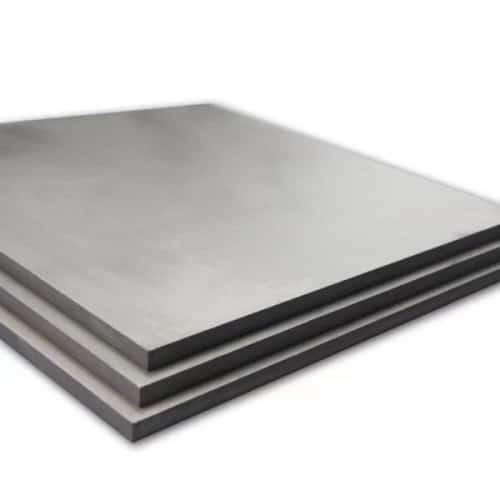
Brazil dominates global niobium production, supplying over 85% of world demand. Canada provides most of the remainder. This geographic concentration distinguishes niobium from most other industrial metals, which typically have more distributed production bases.
Pyrochlore ore serves as the primary niobium source. Processing converts this ore into ferroniobium, an alloy containing 60-70% niobium by weight. Steelmakers use ferroniobium directly as an additive. Applications requiring higher purity receive further processed niobium metal or specialized alloys.
The supply chain operates with unusual stability. Major producers and consumers maintain long-term contracts that smooth out price volatility and ensure reliable delivery. This arrangement benefits both sides: producers gain predictable revenue while consumers secure consistent supply for their manufacturing operations.
Demand trends point upward. HSLA steel consumption grows as automotive manufacturers pursue lighter vehicles and construction projects specify stronger structural members. Advanced technology sectors requiring superconductors and high-temperature alloys continue expanding. Geopolitical factors occasionally influence market dynamics, but the established supply infrastructure generally maintains reliable availability. Projections indicate sustained demand growth, driving continued exploration for new deposits and investment in processing efficiency.
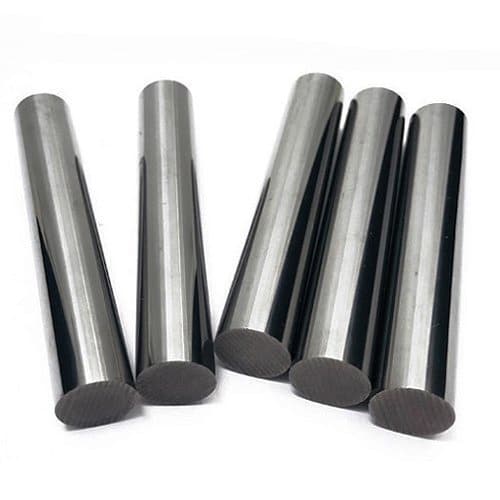
Materials scientists continue developing niobium alloys with enhanced properties. New compositions target greater strength, higher temperature capability, and novel functionalities for aerospace, energy, and defense applications. Next-generation jet engines and hypersonic vehicles may incorporate niobium-based superalloys currently under development.
Energy storage research explores niobium’s potential in advanced battery systems. Early results suggest niobium compounds could improve charging speeds and extend battery cycle life. If these findings translate to commercial products, niobium demand could expand significantly beyond its traditional markets.
Quantum computing represents perhaps the most intriguing frontier. Niobium’s superconducting properties make it a candidate material for quantum circuits and qubits. These quantum bits form the fundamental processing elements of quantum computers. Several leading quantum computing efforts use niobium-based superconducting circuits, positioning the metal at the center of a potentially transformative technology.
《Unveiling the Versatile World Of Cemented Carbide Products Powering Industries Across The Globe》
Niobium combines properties that rarely coexist in a single metal. The 2,477°C melting point provides high-temperature capability. Excellent corrosion resistance protects against chemical attack. Superior ductility allows complex fabrication. Superconducting behavior below 9.2 K enables zero-resistance current flow. These characteristics allow niobium to perform in extreme environments, strengthen steel at minimal addition levels, and enable technologies like MRI and particle accelerators that would otherwise be impossible. Hubei Fotma provides high-purity niobium tailored for these demanding applications.
Hubei Fotma maintains ISO-9000-1:2008 certification and operates modern production equipment with advanced testing capabilities. Our core team brings over 30 years of accumulated material research experience to quality control decisions. This combination of formal certification, appropriate equipment, and deep expertise ensures our niobium products meet the stringent specifications required for steel, superconductor, and other high-technology applications.
Niobium is finding new roles in several developing fields. Advanced aerospace components for hypersonic vehicles require materials that maintain strength at extreme temperatures. Nuclear reactor designs continue incorporating niobium for its low neutron capture and radiation resistance. Chemical processing equipment handling aggressive media benefits from niobium’s corrosion resistance. Energy storage researchers are investigating niobium compounds for improved battery performance. Medical implant applications exploit niobium’s biocompatibility. Quantum computing efforts use niobium superconducting circuits for qubit fabrication.
Hubei Fotma Machinery Co., Ltd. holds ISO-9000-1:2008 certification and brings over 30 years of material research expertise to niobium production and other non-ferrous metals. Our technical capabilities and modern production facilities deliver complete solutions for demanding mechanical processing and precision instrument accessory requirements. Contact our team to discuss your specific niobium needs and explore how our products can support your projects. Reach us at [email protected] or [email protected], or call +86 13995656368.