
Ensuring the purity of refractory metals is a fundamental requirement for their performance in demanding applications. Manufacturers rely on precise material verification to prevent costly failures and maintain product integrity. Implementing robust incoming inspection methods for refractory metal purity is not merely a quality control measure; it is a strategic imperative that directly impacts operational efficiency and the reliability of finished goods. This process safeguards against the inherent risks associated with material inconsistencies, which can compromise the structural and functional properties of high-performance components.
Refractory metals such as tungsten, molybdenum, tantalum, and niobium are chosen for their exceptional properties: high melting points, strength at elevated temperatures, and corrosion resistance. These characteristics make them indispensable in industries like aerospace, electronics, medical devices, and high-temperature processing. Even trace amounts of impurities can drastically alter these properties. Interstitial elements like oxygen, nitrogen, or carbon can embrittle tungsten, reducing its ductility and making it susceptible to cracking under stress. Substitutional impurities can affect electrical conductivity, thermal expansion, or even introduce undesirable magnetic properties.
Without rigorous incoming purity testing, manufacturers risk incorporating substandard materials into their production lines. This can lead to premature component failure, increased warranty claims, and significant reputational damage. The cost of identifying and rectifying a material defect late in the manufacturing process, or after a product has been deployed, far outweighs the investment in thorough initial inspection. Quality assurance in manufacturing begins with material verification at the source, ensuring that every batch meets the precise specifications required for its intended application. Preventing contamination from the outset is far more efficient than attempting to mitigate its effects later.
Modern analytical techniques provide the precision needed to verify the elemental composition of refractory metals and detect even minute impurities. These methods range from surface analysis to bulk material characterization. Spectroscopy, a technique that analyzes the interaction of matter with electromagnetic radiation, is particularly valuable. X-ray fluorescence (XRF) offers rapid, non-destructive elemental analysis by exciting atoms with X-rays and measuring the emitted secondary X-rays. Optical emission spectrometry (OES) is used for bulk analysis, vaporizing a sample and analyzing the light emitted by its constituent elements. Inductively coupled plasma optical emission spectrometry (ICP-OES) provides highly sensitive multi-element detection in solutions derived from dissolved samples.
Chemical analysis techniques further complement these spectroscopic methods. Gas analysis precisely quantifies interstitial elements like oxygen, nitrogen, and hydrogen, which are critical for the mechanical properties of refractory metals. Wet chemical methods, while more time-consuming, can offer definitive quantification of specific elements when extreme accuracy is paramount. Hubei Fotma Machinery Co., Ltd.’s modern production equipment and advanced testing methods enable precise analysis and verification of refractory metal purity, ensuring our materials meet stringent performance criteria.
| Method | Principle | Detection Limit | Sample Type | Key Application |
|---|---|---|---|---|
| XRF | X-ray excitation, secondary X-ray emission | ppm to % | Solid, powder, liquid | Rapid elemental screening |
| OES | Arc/spark excitation, light emission | ppm | Solid | Bulk elemental analysis |
| ICP-OES | Plasma excitation, light emission | ppb to ppm | Solution | Trace element detection |
| Gas Analysis | Inert gas fusion, thermal conductivity | ppm | Solid | O, N, H quantification |
The most accurate methods for testing refractory metal purity often involve a combination of techniques, depending on the specific elements of concern and the required detection limits. For trace element detection in bulk material, ICP-OES is highly regarded for its sensitivity. For precise quantification of interstitial elements like oxygen and nitrogen, inert gas fusion analysis offers exceptional accuracy. Surface analysis techniques such as Auger electron spectroscopy provide detailed compositional information of the outermost atomic layers.
Selecting the appropriate testing method for refractory metals involves balancing the need for comprehensive material characterization with the desire to preserve sample integrity. Non-destructive testing (NDT) methods allow for the inspection of materials without causing damage, making them suitable for finished components or large batches where individual sample destruction is impractical. Techniques such as XRF, eddy current testing for conductivity variations, and ultrasonic testing for internal flaws fall into this category. While NDT can quickly identify gross compositional deviations or structural defects, it often provides less detailed elemental analysis compared to destructive methods.
Destructive testing involves altering or destroying the sample to extract more detailed information. This includes chemical analysis, mechanical testing such as hardness and tensile strength tests, and microstructural analysis using scanning electron microscopy or optical microscopy. These methods provide in-depth insights into the material’s properties and microstructure, which are directly influenced by its purity. A tensile test can reveal the impact of impurities on a material’s ductility and ultimate strength. Microstructural analysis can identify grain boundary segregation or the presence of secondary phases caused by impurities. The choice between NDT and destructive testing depends on the material’s value, the stage of production, and the specific information required.
for Spraying)
Different testing methods compare primarily in their ability to detect specific impurities, their impact on the sample, and their cost-effectiveness. Non-destructive methods like XRF are fast and preserve the sample, ideal for initial screening or verifying major alloy elements. Destructive methods including ICP-OES or mechanical testing offer higher precision for trace elements or mechanical properties but consume the sample. The optimal approach often integrates both, using NDT for initial checks and destructive analysis for deeper insights or when NDT indicates potential issues.
Establishing robust incoming inspection protocols is paramount for ensuring consistent quality in refractory metal supply chains. This involves more than random sampling; it requires a systematic approach guided by industry standards and material specifications. We begin by defining clear material specifications with our suppliers, including precise purity levels for all critical elements. Next, we implement a statistically sound sampling plan for each incoming batch, ensuring representative samples are taken for analysis.
Our team then performs a series of tests based on the material’s intended application. When receiving pure molybdenum plate for vacuum furnace hot zones, we not only verify the elemental composition using OES but also conduct gas analysis to confirm extremely low levels of oxygen and nitrogen. This is critical because even minor interstitial impurities can significantly reduce the service life of a hot zone operating at 2000°C. We once received a batch of molybdenum with slightly elevated oxygen content that, if undetected, would have led to premature embrittlement and failure of furnace components. By catching this during incoming inspection, we prevented a potential production stoppage and significant financial loss. As an ISO-9000-1:2008 certified enterprise, Hubei Fotma Machinery Co., Ltd. applies stringent quality control to its tungsten-molybdenum and other non-ferrous metal materials, ensuring compliance and reliability.
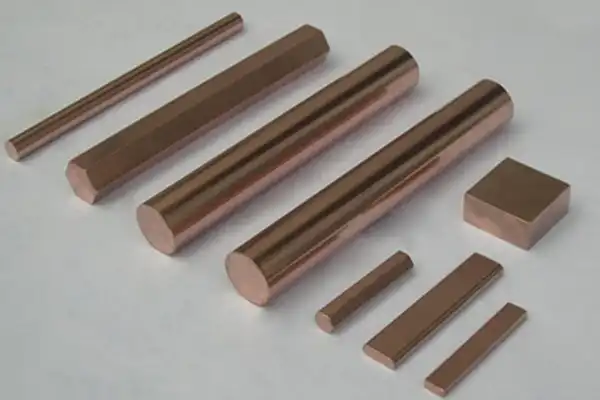
Incoming inspection prevents material defects by verifying that raw materials meet specified purity and quality standards before they enter the production process. This proactive approach identifies substandard materials early, preventing them from causing costly equipment damage, production delays, or the manufacturing of defective products. By catching issues at the receiving stage, manufacturers avoid the compounding costs associated with rework, scrap, and potential product recalls later on.
Testing refractory metal purity presents unique challenges due to their high melting points, chemical inertness, and the often ultra-low detection limits required for critical impurities. Sample preparation can be difficult, as many refractory metals are hard and brittle. The cost of advanced analytical equipment and the expertise needed to operate it can also be substantial. As applications become more demanding, the acceptable levels of impurities continue to shrink, pushing the boundaries of current detection technologies.
The future of refractory metal purity testing lies in the development of even more sensitive, faster, and potentially in-situ analytical techniques. Miniaturized sensors and artificial intelligence-driven data analysis could streamline the inspection process. Advanced surface analysis techniques will become increasingly important for understanding how surface impurities affect performance in thin films and coatings. Leveraging over 30 years of material research, Hubei Fotma Machinery Co., Ltd.’s core team offers competitive solutions for complex refractory metal challenges and advanced material verification, continually adapting to these evolving demands.
Visual inspection is insufficient because critical impurities affecting mechanical or chemical properties are often microscopic or internal. These impurities, such as trace elements or interstitial gases, cannot be seen with the naked eye but can profoundly impact material performance. Comprehensive material composition verification requires advanced analytical techniques to detect these hidden flaws.
Costs vary significantly based on the chosen method, sample complexity, and required turnaround time. Basic XRF screening might be relatively inexpensive, while detailed ICP-OES or gas analysis for ultra-trace elements can be considerably more. While initial investment can be high, it is often outweighed by preventing expensive production failures due to undetected trace element contamination.
Yes, even smaller manufacturers can implement effective incoming inspection by leveraging external labs, focusing on critical parameters, and adhering to relevant ASTM standards for metal testing to ensure quality. Outsourcing specialized tests allows access to high-end equipment without the capital investment, making robust quality control accessible.
Overlooking purity can lead to premature component failure, reduced product lifespan, increased warranty claims, and significant reputational damage. In critical applications, this can result in catastrophic system failures, safety hazards, and substantial financial losses. Thorough impurity identification is crucial for long-term reliability and market trust. If your operation involves high-temperature or high-stress applications, it is worth discussing your specific purity requirements with a qualified supplier before committing to a material source.
Molybdenum Wire Price And Its Importance In Industrial Applications
What Is The Difference Between 90 10 And 70 30 Copper Nickel
High Purity Tungsten Wire The Crossover King From Traditional Lighting To Modern Medicine
Manufacturing Process Of High Quality Molybdenum Plate Products
Technology Of Cold Rolling Tc4 Titanium Alloy Titanium Tube
Unverified material purity does not have to compromise your critical applications. Hubei Fotma Machinery Co., Ltd. helps engineers and manufacturers achieve superior product performance through its rigorously tested and high-purity refractory metal materials. To discuss your specific material verification and supply needs, contact us at +86 13995656368 or +86 13907199894, or email [email protected].