
Tungsten alloy sintering porosity remains one of the more persistent headaches in powder metallurgy. These microscopic voids—often invisible until a part fails under load—can undermine mechanical strength, thermal conductivity, and long-term reliability in ways that surface inspection never catches. For engineers producing high-density tungsten components, understanding how pores form and when to intervene makes the difference between consistent output and costly scrap rates.
Porosity in sintered tungsten alloys originates at multiple stages of the powder metallurgy process, and each stage offers different intervention points. Sintering bonds powder particles through heat and pressure without full liquefaction, densifying the material as particles fuse. The voids that remain fall into two categories: open porosity, where channels connect to the surface, and closed porosity, where isolated pockets trap gas within the structure. Both reduce the effective load-bearing cross-section.
Scanning electron microscopy reveals not just the presence of pores but their distribution and shape, information that points back to specific process failures. The green compact density—the density of pressed powder before sintering—sets the upper limit on final density. A green compact with uneven density or low overall compaction carries those defects through the entire thermal cycle.
| Porosity Type | Characteristics | Impact on Performance |
|---|---|---|
| Open Porosity | Interconnected channels | Allows fluid penetration, reduces strength |
| Closed Porosity | Isolated voids | Traps gases, reduces thermal conductivity |
| Intergranular | Along grain boundaries | Weakens grain cohesion, promotes fracture |
| Intragranular | Within grains | Less common, still detrimental to strength |
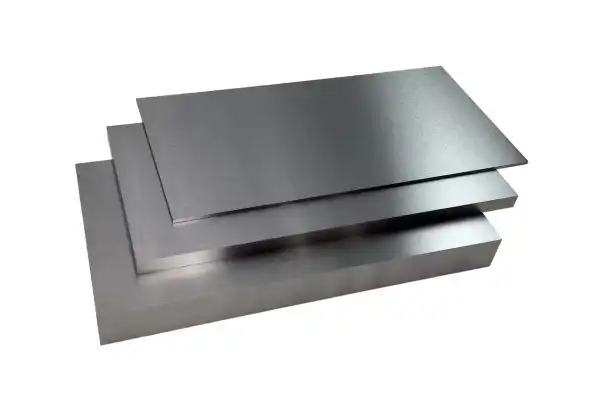
Defects can emerge from powder characteristics, compaction parameters, or atmosphere control during sintering. Powder quality matters more than many operators realize. Inconsistent particle size distribution, irregular particle shapes, or surface oxides lead to non-uniform packing during compaction. Those initial voids persist through sintering.
Compaction pressure and its distribution across the die cavity determine green density uniformity. Insufficient pressure leaves loose regions; uneven pressure creates density gradients that cause differential shrinkage. Binder removal, the step where organic additives burn off, requires careful thermal management. Heating too fast traps volatiles inside the compact, and those trapped gases nucleate pores or cause cracking.
The sintering atmosphere, typically hydrogen for tungsten, prevents oxidation and promotes densification. Temperature uniformity across the furnace matters equally. Hot spots accelerate local densification while cold spots lag behind, creating internal stress and pore networks. Excessive grain growth at high temperatures compounds the problem, as large grains leave voids at boundaries where smaller grains would have filled the space.
Even a few percent porosity can shift material properties enough to cause rejection or field failure. High-density tungsten alloy components derive their value from exceptional strength-to-weight ratios and radiation attenuation. Porosity reduces the effective cross-section under load, lowering tensile strength, ductility, and fatigue life in direct proportion to void volume.
Radiation shielding applications using High-Density Tungsten Alloy suffer measurable attenuation loss when porosity creates low-density paths through the material. Thermal management components like Tungsten Copper (W-Cu) Alloy heat sinks depend on continuous metal paths for heat conduction. Pores act as thermal barriers, creating hot spots that accelerate degradation in the devices they were meant to protect. Electrical conductivity follows the same pattern, which matters for contact applications.
Non-destructive testing methods, particularly ultrasonic inspection, can detect internal voids before parts reach service. The challenge lies in catching porosity early enough in production to adjust process parameters rather than simply rejecting finished parts.
Achieving high density requires matching the densification mechanism to the alloy system and application requirements. Liquid phase sintering, where a lower-melting binder phase (nickel or copper in WHA) forms a liquid that wets tungsten particles, accelerates densification and fills pores through capillary action. The liquid phase redistributes material into voids faster than solid-state diffusion alone.
Vacuum sintering removes atmospheric gases that would otherwise become trapped, allowing better outgassing of volatile impurities. Solid-state sintering of pure tungsten requires higher temperatures and longer hold times since densification depends entirely on atomic diffusion across particle contacts.
One project illustrates how process diagnosis translates to results. A manufacturer producing Tungsten Heavy Alloy radiation shielding components saw inconsistent porosity across batches. Analysis traced the problem to two sources: green compact density varied with die wear, and the binder burnout ramp was too aggressive for the compact thickness. Revising the burnout profile to a slower ramp and implementing die maintenance intervals brought density to 98.5% of theoretical, cutting scrap by 15% and improving shielding performance to specification.
Hot Isostatic Pressing (HIP) applies high pressure and temperature simultaneously after sintering, collapsing closed pores through plastic deformation. HIP can push density to near-theoretical levels but adds cost and cycle time. Infiltration, where molten copper or another metal wicks into a porous tungsten skeleton, fills voids and creates a composite structure with properties neither material achieves alone.
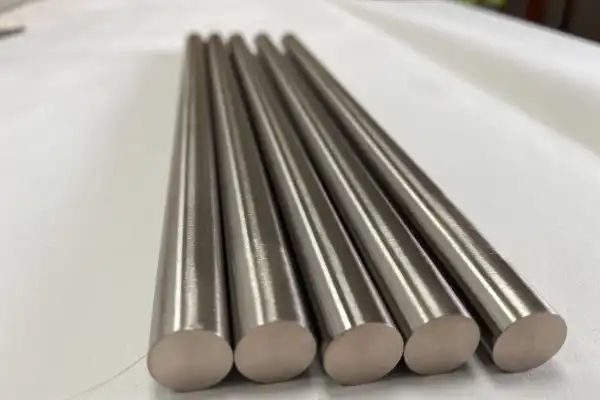
Preventing porosity costs less than detecting and removing it. Powder selection sets the baseline: narrow particle size distribution, spherical or near-spherical morphology, and low oxygen content all improve packing density. Binder selection and mixing uniformity affect both green strength and burnout behavior.
Compaction requires consistent pressure across the compact and from part to part. Die wear, press alignment, and fill uniformity all introduce variation. During binder removal, slow heating rates and controlled atmosphere allow complete volatilization without trapping decomposition products. The sintering cycle itself needs temperature uniformity verification, not just setpoint control. Thermocouples in the load, not just the furnace wall, reveal what the parts actually experience.
Post-sintering inspection closes the feedback loop. X-ray radiography and ultrasonic testing detect internal voids non-destructively. Metallographic sectioning provides quantitative porosity data and microstructure information that explains why defects formed. Combining these methods with statistical process control identifies drift before it produces out-of-spec parts.
Open porosity forms interconnected channels that allow gas or liquid penetration, while closed porosity consists of isolated voids that trap gas. Both result from incomplete densification or residual binder decomposition products. Intergranular porosity along grain boundaries weakens cohesion; intragranular porosity within grains is less common but still reduces strength.
Temperature controls diffusion rate and, in liquid phase systems, the amount and viscosity of the liquid phase. Too low, and diffusion is insufficient for full densification. Too high, and excessive grain growth leaves voids at boundaries, or localized melting disrupts the structure. Temperature uniformity across the furnace matters as much as the setpoint.
Near-complete elimination is achievable with optimized liquid phase sintering followed by HIP, reaching 99%+ of theoretical density. Complete elimination remains impractical for most production scenarios, but the remaining porosity can be reduced to levels that do not affect performance in the intended application.
Ultrasonic testing and X-ray radiography are the primary non-destructive methods for internal void detection. Eddy current testing works for near-surface defects. Destructive metallographic examination provides the most detailed information, including pore size distribution, morphology, and location relative to microstructural features.
For structural and shielding applications, porosity is almost always detrimental. Controlled porosity might be engineered into filtration elements or energy-absorbing structures, but these are niche applications. Standard tungsten alloy components for aerospace, medical, and defense use require minimum density specifications that leave little tolerance for voids. If your application involves unusual porosity requirements, discussing the specific performance targets with a materials engineer helps determine what density level actually matters for your use case.
Porosity-related failures do not have to compromise your production yield or product reliability. Hubei Fotma Machinery Co., Ltd. works with engineers and manufacturers to achieve the density and microstructure their applications require. To discuss specific requirements, contact us at [email protected] or +86 13995656368, +86 13907199894.
If you’re interested, check out these related articles:
A North American Electronics Engineers Successful Purchase Of Molybdenum Copper Alloy Mocu Heat Sinks On Tungstenbuy
What Is The Difference Between 90 10 And 70 30 Copper Nickel
What Is Tungsten Copper Used For
Unveiling Porous Titanium Sheets Properties Applications And Supplier Insights
Titanium And Titanium Alloys Widespread Application And Future Challenges