
When a design reaches the point where standard tungsten heavy alloy isn’t enough, engineers face a choice between a handful of datasheets and sales pitches. Tungsten specialty alloys like W-Re, W-Ag, W-Co, and W-Ir solve specific constraints—but only if production parameters are right. I’ve spent thirty years in powder metallurgy, and the difference between a component that works and one that cracks under thermal stress often comes down to a few percent of alloying element and the sintering cycle. This article walks you through how these four alloys compare in real production, not just on paper.
Most tungsten specialty alloys start with a micron-scale tungsten powder blended with the alloying element in precise ratios, then pressed, sintered, and often HIPed. The specific addition changes the microstructure and what the alloy can do.
W-Re alloys typically contain 3 to 25% rhenium. Rhenium makes tungsten ductile at room temperature and raises the recrystallization temperature, so W-25Re can hold its strength at 2300°C without becoming brittle. We produce these for thermocouple sheaths and heating elements.
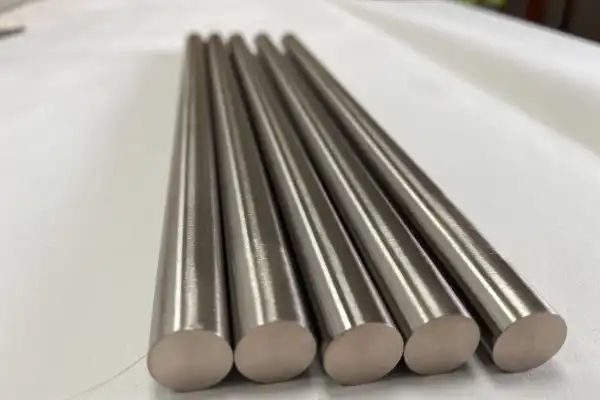
W-Ag uses 10 to 35% silver, usually infiltrated into a porous tungsten skeleton rather than blended. The result is a material that handles high arc energy while carrying current like a silver contact. It is common in circuit breakers and switchgear.
W-Co operates similarly to cemented carbide, with cobalt acting as a binder. At 3 to 30% cobalt, the alloy gives you higher hardness than pure tungsten and better toughness than straight carbide, which matters for hot-work tooling.
W-Ir with 5 to 20% iridium stands out for oxidation resistance. Iridium forms a protective layer that lets W-Ir run at 1200°C in air, far above what other tungsten alloys tolerate. That is why it is chosen for crystal growth crucibles.
No single number defines a specialty alloy, but a side-by-side look at the key properties clarifies where each one fits. The table below draws on measurements from our own production batches.
| Property | W-25Re | W-20Ag | W-10Co | W-10Ir |
|---|---|---|---|---|
| Density (g/cm³) | 19.6 | 16.8 | 17.9 | 19.5 |
| Melting Point (°C) | ~3300 | ~960 (Ag) | ~1500 (Co) | ~2600 |
| Electrical Conductivity (%IACS) | 12 | 45 | 15 | 10 |
| Thermal Conductivity (W/m·K) | 70 | 200 | 80 | 60 |
| Hardness (HV) | 450 | 160 | 600 | 500 |
| Oxidation Resistance | Good to 800°C | Poor above 400°C | Moderate | Excellent to 1200°C |
Values are for fully dense material; actual results vary with production route.
Rhenium atoms increase the mobility of screw dislocations in tungsten, which reduces brittleness at room temperature and delays recrystallization. I have seen W-25Re wire drawn to filament diameters without cracking, while pure tungsten required a higher preheat temperature simply to avoid splitting. For thermocouple sheaths and furnace heating elements that cycle between 2000°C and ambient, that ductility prevents early failure.
Silver infiltrated tungsten retains the arc erosion resistance of tungsten while providing the high conductivity of silver. In our testing, W-20Ag contacts show minimal material transfer after 100,000 operations at 500 A in air, outpacing standard copper contacts. The trade-off is that silver melts at 960°C, so the composite cannot be used where the contact body will reach that temperature.
W-10Co measures around 600 HV30, softer than cemented carbide but tougher. I have seen W-Co draw dies survive hot drawing of Inconel when carbide dies cracked during the first run, because the cobalt binder absorbs thermal shock better. For wear parts that see impact or rapid temperature swings, that toughness is worth the lower wear resistance.
Iridium forms a dense, adherent oxide scale that slows oxygen diffusion into the alloy. That allows W-10Ir crucibles to hold molten oxides at 1200°C for days without catastrophic weight loss. The cost of iridium keeps W-Ir confined to applications where no cheaper option works, but when a crystal grower needs a contamination-free melt, we often end up specifying it.
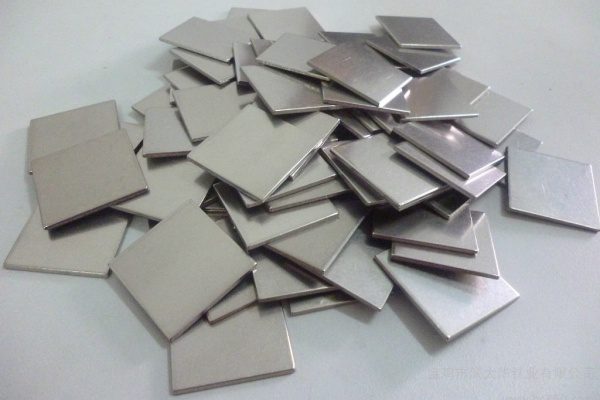
Aerospace programs use W-Re thermocouples and W-Co counterweights where thermal stability or high density in a small volume is the priority. Electrical switchgear relies on W-Ag contacts that can interrupt 5000 A without welding closed. Semiconductor crystal growers run W-Ir crucibles for oxide single crystals, and vacuum furnace builders specify W-Re heating elements for long campaign lifetimes under protective atmosphere.
If your application involves temperatures above 1500°C and moisture is present, W-Ir may be your only option despite the cost. Send your operating conditions to [email protected] or call +86 13995656368 and I’ll help you weigh the trade-offs between performance and budget.
The properties of these alloys are extremely sensitive to processing. I have personally seen batches of W-Re come out of the same furnace with density varying by 0.3 g/cm³ simply because the temperature ramp rate was inconsistent. That kind of variation turns a machinable part into scrap risk.
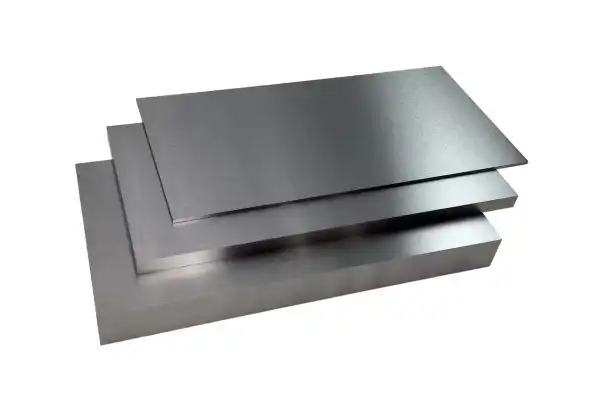
To avoid that, we log every sintering cycle and calibrate furnace thermocouples monthly. Powder blending is done under argon to prevent oxidation of the rhenium or cobalt, and hot isostatic pressing is applied whenever the final part must meet ultrasonic inspection criteria. Every batch is tested for density, hardness, and chemical composition, and we issue certificates with the measured values, not just the nominal specification.
FOTMA (Hubei Fotma Machinery Co., Ltd.) has been producing tungsten and molybdenum products since 2004 under an ISO 9001 certified quality system. With over thirty years of accumulated technical expertise, we manufacture tungsten specialty alloys to customer specifications.
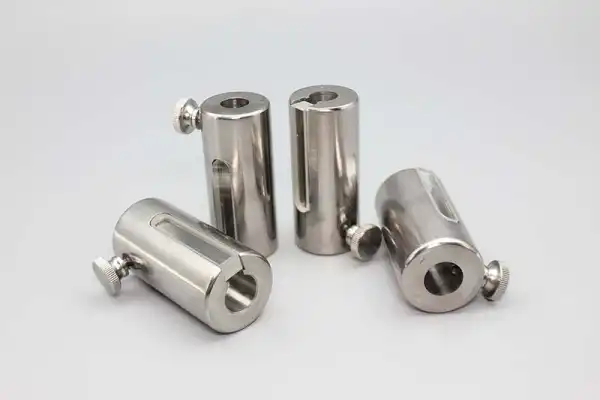
When you are ready to order, provide the alloy composition, dimensions, tolerances, and part quantity. Typical lead time is four to six weeks, with expedited production possible for urgent projects. Whether you need a few pieces for R&D or a steady production supply, having the right alloy from the start prevents delays. Send your part number and quantity to [email protected] or call +86 13995656368 for a quotation today.
W-25Re can operate continuously at 2300°C under vacuum or inert gas, making it one of the few materials suitable for ultra-high-temperature thermocouples. In air, however, oxidation becomes rapid above 800°C unless coated. The practical operating temperature in a furnace application is often limited more by the ceramic insulation than by the alloy itself, so consider the full assembly when setting design limits.
Many machinists assume W-Ag will cut like pure tungsten, but the silver phase actually makes it easier to machine. The challenge isn’t hardness. It is preventing the soft silver from smearing during grinding. With sharp carbide tools and low pressure, we can hold ±0.01 mm on diameter. For small threaded parts, we prefer EDM drilling over tapping to avoid silver pullout and maintain thread form.
It depends on whether you are optimizing for hardness or toughness. WC-Co cemented carbide typically measures 1200 HV30, while W-10Co comes in around 600 HV, so if pure wear resistance is the priority carbide wins. But if the part will see thermal shock or impact loading, W-Co’s higher fracture toughness often prevents catastrophic failure. We have supplied W-Co dies to customers running hot forming operations where carbide cracked within the first shift.
Over the years, we have blended tungsten with rhenium, silver, cobalt, and iridium in percentages requested by customers. Some require a specific electrical resistivity for a contact, others need a narrow density window for a counterweight. Because we mix and sinter in-house rather than relying on pre-alloyed powders, we can adjust composition quickly. Send your target properties to [email protected] and we will confirm feasibility.
If you’re interested, check out these related articles:
What Do Copper And Nickel Make
Tungsten Copper Composite Material An Efficient Electrode Material For Multiple Applications