
The push to move away from lead has been building for years, but the pace of change feels different now. Regulatory pressure is tighter, and the performance demands from industries like medical imaging and aerospace have grown more specific. Tungsten alloys have stepped into this gap not because they are new, but because they finally make sense at scale. The density advantage is real, the toxicity concerns disappear, and the engineering possibilities open up in ways that lead simply cannot match.
Lead creates problems that do not go away. The health risks are well documented. Neurotoxicity affects workers and communities exposed to lead dust or fumes. Children face developmental delays even from low-level contact. Organ damage accumulates over time, and there is no safe threshold that regulators can point to with confidence.
The environmental side is equally stubborn. Lead contamination in soil and water persists for decades. It moves through the food chain, concentrating in organisms and spreading far beyond the original source. Cleanup is expensive and often incomplete.
Regulatory frameworks have responded accordingly. RoHS restricts lead in electronics. REACH imposes strict controls on chemical substances across the European Union. Similar rules exist in other markets. Companies that continue using lead face compliance costs, supply chain complications, and reputational risk. The business case for alternatives has become unavoidable.
| Feature | Lead (Pb) | Tungsten (W) |
|---|---|---|
| Density | High (11.34 g/cm³) | Very High (19.25 g/cm³) |
| Toxicity | Highly toxic (neurotoxin, developmental) | Non-toxic, biocompatible |
| Environmental Impact | Persistent pollutant, bioaccumulative | Environmentally benign |
| Melting Point | Low (327.5 °C) | Extremely High (3422 °C) |
| Corrosion Resistance | Moderate | Excellent |
| Mechanical Strength | Low | High |
Tungsten brings a density advantage that changes design calculations. At 19.25 g/cm³, it packs nearly twice the mass of lead into the same volume. This matters when space is limited or when weight distribution needs to be precise. Radiation shielding components can be smaller without sacrificing protection. Counterweights can fit into tighter assemblies.
The shielding performance follows directly from that density. Tungsten heavy alloys attenuate X-rays and gamma rays effectively because more mass means more interaction with incoming radiation. The atomic structure helps too. Tungsten’s high atomic number increases the probability that photons will be absorbed or scattered rather than passing through.
Beyond density, tungsten handles extreme conditions. Its melting point sits at 3422 °C, far above what lead can tolerate. Mechanical strength is substantially higher, which means components hold their shape under stress. Corrosion resistance keeps surfaces stable in harsh environments. These properties combine to make tungsten alloys suitable for applications where lead would degrade or fail.
The non-toxic profile removes a category of risk entirely. Workers can handle tungsten components without the precautions required for lead. Disposal does not trigger hazardous waste protocols. Medical devices can incorporate tungsten alloy radiation shielding without concerns about patient exposure.
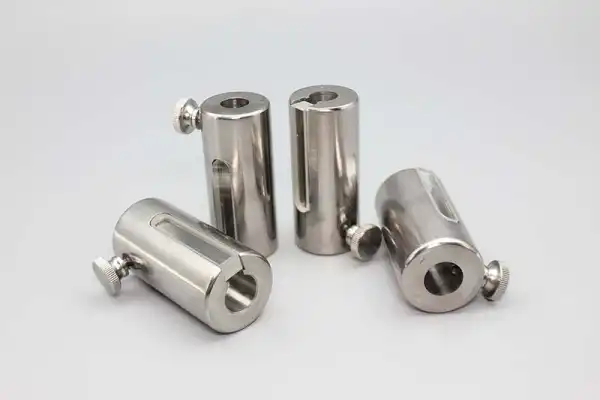
Tungsten’s density of 19.25 g/cm³ exceeds lead’s 11.34 g/cm³ by roughly 70%. That difference translates directly into shielding efficiency. A tungsten component can provide equivalent radiation attenuation while being thinner or lighter than its lead counterpart.
This volumetric efficiency matters most in applications where every millimeter counts. Medical imaging equipment, for example, requires shielding that fits within compact housings. Aerospace systems need mass in specific locations without adding bulk. The higher upfront cost of tungsten often pays for itself through design flexibility and reduced material volume.
The medical sector has become one of the largest consumers of tungsten alloys. Radiation therapy equipment relies on precise shielding to protect healthy tissue while delivering targeted doses. Diagnostic imaging systems use tungsten components to collimate X-ray beams. Protective aprons and barriers incorporate tungsten for clinician safety. The biocompatibility of tungsten makes it acceptable for devices that contact patients directly.
Aerospace applications take advantage of tungsten’s density for balance and stability. Aircraft require counterweights positioned precisely to achieve proper center of gravity. Vibration damping systems use tungsten alloy counterweights to absorb energy without adding excessive volume. Satellites and spacecraft face similar constraints where mass distribution affects performance.
Defense manufacturing has long used tungsten for kinetic energy penetrators. The combination of density and hardness allows projectiles to maintain velocity and structural integrity on impact. Precision components benefit from tungsten’s dimensional stability under stress.
Sporting goods represent a smaller but growing market. Golf club weights, fishing sinkers, and darts now use tungsten to achieve better performance without the toxicity concerns of lead. Environmental regulations in some regions have accelerated this shift.
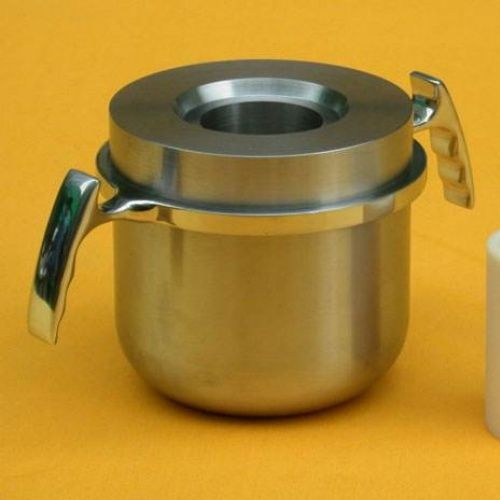
Medical, aerospace, and defense industries feel the strongest push toward tungsten alloys. Regulatory compliance is non-negotiable in these fields. Performance requirements leave little room for compromise. The combination of safety mandates and technical demands makes tungsten the practical choice.
Demand for Tungsten Alloy Radiation Shielding continues to grow as hospitals upgrade equipment and expand imaging capabilities. Aerospace manufacturers specify Tungsten Alloy Counterweights for new aircraft designs where weight optimization affects fuel efficiency.
For more insights into the applications of advanced materials, consider reading 《Comprehensive Applications Of Tungsten Copper Alloy In Aerospace And New Energy Vehicles》.
Tungsten costs more than lead. That is the straightforward reality. Raw material prices are higher, and processing requires more energy and specialized equipment. The hardness that makes tungsten durable also makes it difficult to machine. Standard cutting tools wear quickly. Tolerances are harder to hold.
These challenges are real but manageable. Manufacturing techniques have improved. Powder metallurgy allows tungsten alloys to be formed into near-net shapes, reducing the amount of material that needs to be removed. Electrical discharge machining handles complex geometries without the tool wear issues of conventional cutting.
The availability of customized tungsten products has expanded as suppliers develop expertise in specific applications. FOTMA has accumulated over 30 years of experience in tungsten processing, building capabilities for complex geometries and tight tolerances. Material research supports alloy formulations optimized for particular requirements. Production capacity ensures reliable supply for high-volume applications.
The total cost picture often favors tungsten when performance and compliance factors are included. Smaller components reduce material usage. Longer service life reduces replacement frequency. Avoiding lead-related compliance costs eliminates a category of expense entirely.
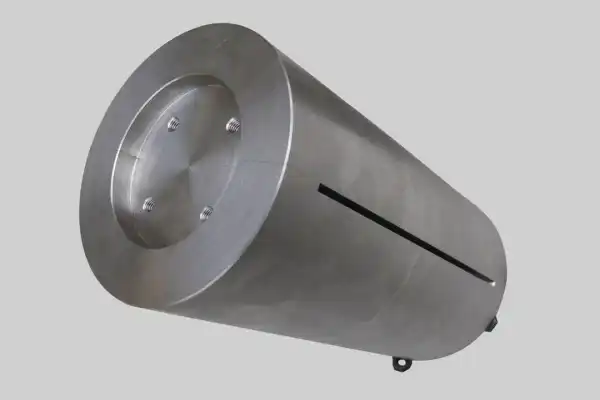
Research continues to expand what tungsten alloys can do. New compositions target specific property combinations. Manufacturing processes are becoming more precise and more economical. Applications that once seemed impractical are now feasible.
The broader trend points toward materials that deliver performance without environmental or health trade-offs. Tungsten fits that direction well. Its properties are well understood, its supply chains are established, and its applications continue to multiply.
FOTMA remains focused on advancing tungsten and non-ferrous metal solutions. Material science innovation drives the development of products that meet evolving industrial requirements. The goal is to support industries pursuing safer, more efficient operations without compromising on performance.
The shift from lead to tungsten alloys reflects a broader industrial priority: materials that perform without creating problems downstream. Hubei Fotma Machinery Co., Ltd. brings more than three decades of technical depth to tungsten-molybdenum products, high-density alloys, and custom material solutions. Modern production capabilities support demanding mechanical processing and precision instrument accessory requirements.
Contact us to discuss how our material expertise applies to your specific needs. Email [email protected] or [email protected]. Call +86 13995656368 or +86 13907199894.
Lead causes neurotoxicity, developmental delays in children, and progressive organ damage. There is no established safe exposure level. Environmental contamination persists in soil and water for decades, moving through food chains and affecting ecosystems far from the original source. Global regulations increasingly restrict lead use because these problems do not have simple solutions once contamination occurs.
Tungsten’s higher density allows more mass to occupy the same volume, which directly increases radiation attenuation. The atomic structure of tungsten, with its high atomic number, also improves the probability that X-rays and gamma rays will be absorbed or scattered. Components using Tungsten Alloy Radiation Shielding can be thinner while providing equivalent or better protection, and they eliminate the toxicity concerns associated with lead.
Yes. High-Density Tungsten Alloy (WHA / Tungsten Heavy Alloy) compositions can be adjusted to optimize density, hardness, machinability, and corrosion resistance for particular requirements. FOTMA specializes in tailoring alloy formulations and component geometries to match application needs, whether for aerospace counterweights, medical shielding, or precision instruments.