
Carbide wear parts keep production running in mining, metalworking, oil and gas, and dozens of other sectors where abrasion, impact, and heat would destroy softer materials within hours. When these components fail ahead of schedule, the costs go beyond replacement parts. Downtime stacks up, maintenance crews scramble, and budgets built around predictable wear cycles fall apart. Most premature failures trace back to five root causes, and each one is preventable once you know what to look for. This article breaks down those five causes and explains how to address them before they shut down your line.
Cemented carbide, usually tungsten carbide particles held together by a cobalt binder, earns its place in cutting tools, dies, nozzles, and protective linings because nothing else survives the same punishment at the same cost. The material holds a sharp edge under continuous abrasive contact, resists deformation at elevated temperatures, and tolerates corrosive environments that would pit or dissolve tool steels. When a carbide component fails early, the ripple effect hits production schedules, spare parts inventory, and total cost of ownership. A single unplanned replacement can cost ten times what the part itself costs once you factor in labor, lost output, and expedited shipping.
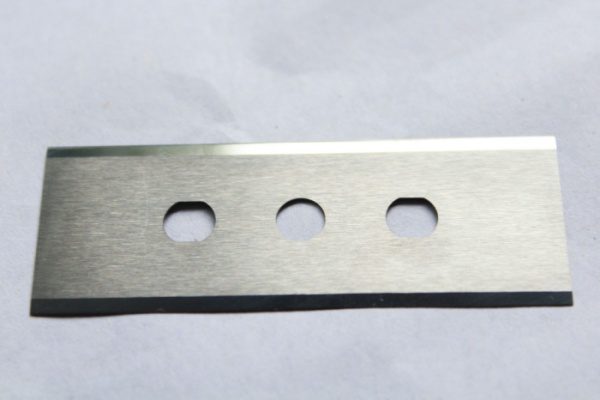
The performance ceiling of any carbide part is set at the powder stage. Tungsten carbide grains are sintered with a metallic binder, and the ratio between them determines whether the finished part favors hardness or toughness. Smaller grains pack more boundaries into the same volume, raising hardness and abrasive wear resistance. Higher binder content absorbs impact energy better but softens the matrix slightly. Problems start when the grain size distribution is inconsistent, when impurities contaminate the powder, or when voids form during sintering. Each of these defects creates a stress concentrator, a point where cracks initiate under load that would otherwise be routine.
Not all cemented carbides resist wear equally. A grade optimized for continuous sliding abrasion will chip under repeated impact because it lacks the toughness to absorb shock. A grade designed for impact will wear too fast in a high-velocity slurry because its binder content sacrifices hardness. Matching the grade to the application is the first line of defense against premature failure.
Correct material selection means nothing if the part geometry introduces stress concentrations. Sharp internal corners act as crack initiation sites under cyclic loading. Walls that are too thin for the applied force deform or fracture. Tolerances that are too loose allow mating surfaces to shift, generating friction and localized overheating. On the manufacturing side, surface cracks left by grinding, residual stresses from improper sintering profiles, or incomplete densification all reduce fatigue life. A part that tests fine in a static hardness check can still fail in service because the flaw only matters once the part sees real-world loading.
Every carbide component has an operating envelope defined by load magnitude, load frequency, temperature range, and contact conditions. Exceeding any of these limits accelerates wear or triggers outright failure. A nozzle rated for steady-state abrasive flow may crack under pulsating pressure because the cyclic stress exceeds its fatigue threshold. A cutting insert designed for continuous turning may chip during interrupted cuts because the repeated impact exceeds its toughness. Thermal shock, caused by rapid heating or cooling, induces internal stresses that can crack the part even when mechanical loads stay within spec.
Typical service life for carbide wear parts spans a wide range. Some cutting inserts last a few hours of active cutting time. Some wear plates in mining equipment run for years. The difference comes down to how closely actual operating conditions match the conditions the part was designed for. Misalignment between intended and actual use is one of the most common causes of early failure, and it often goes undiagnosed because operators assume the part simply wore out.
Corrosive environments target the cobalt binder rather than the tungsten carbide grains. Acids, alkalis, and even hot water can leach binder material from the surface, leaving unsupported carbide particles that break away under mechanical load. The result looks like accelerated wear, but the root cause is chemical. Erosive wear, where high-velocity fluid or entrained particles impinge on the surface, removes material progressively and can hollow out features that were originally designed to be solid. Surface coatings or alternative binder chemistries can help, but only if the environmental exposure is identified during the specification stage.
A perfectly specified, perfectly manufactured carbide part can still fail early if installation or maintenance practices introduce damage. Over-torquing a fastener induces residual stress that lowers fatigue life. Misaligning a wear plate against its mating surface creates a localized high-pressure zone that wears through in a fraction of the expected time. Skipping scheduled inspections allows minor chipping to propagate into cracks that would have been caught earlier. Lubrication lapses raise friction and temperature, accelerating both adhesive and abrasive wear. Maintenance protocols deserve the same engineering attention as material selection.
| Failure Mode | Primary Cause | Common Indicators |
|---|---|---|
| Abrasive Wear | Hard particles rubbing against surface | Scratches, grooves, material loss |
| Erosive Wear | High-velocity fluid or particle impingement | Scalloping, localized thinning |
| Corrosive Wear | Chemical attack on binder | Pitting, discoloration, binder leaching |
| Impact Damage | Sudden, high-energy loading | Chipping, macroscopic cracks, fracture |
| Fatigue Failure | Cyclic loading below yield strength | Micro-cracks, progressive crack growth |
| Thermal Shock | Rapid temperature changes | Surface cracking, spalling |
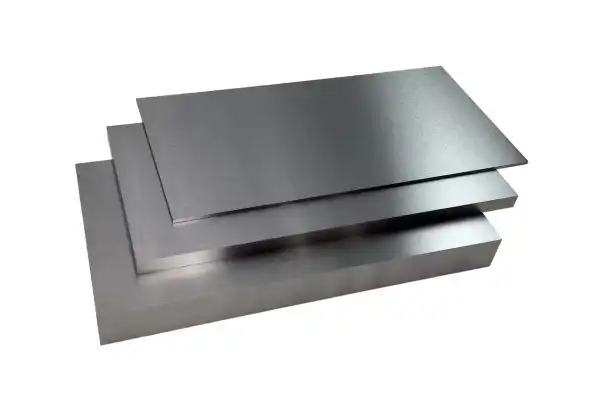
Replacing a failed part without understanding why it failed guarantees the same problem will return. A useful failure analysis starts with operational data: load history, temperature logs, environmental exposures, and any deviations from normal operating conditions. Visual inspection of the failed part reveals macroscopic clues like crack origins, wear patterns, and deformation. Scanning electron microscopy shows fracture surfaces at magnifications where the difference between brittle cleavage and ductile tearing becomes obvious. Chemical analysis identifies corrosive agents or material inconsistencies. Hardness testing and metallographic cross-sections confirm whether the material met specification or whether a manufacturing defect contributed to the failure.
In one case involving wear plates for mining equipment, the client reported a 30% reduction in expected lifespan. Fracture pattern analysis and microstructural examination pointed to a mismatch between the carbide grade and the actual impact conditions. Switching to a finer-grained grade with slightly higher binder content extended component life by more than 50%. The replacement cost was nearly identical. The difference came entirely from matching the material to the real operating environment.
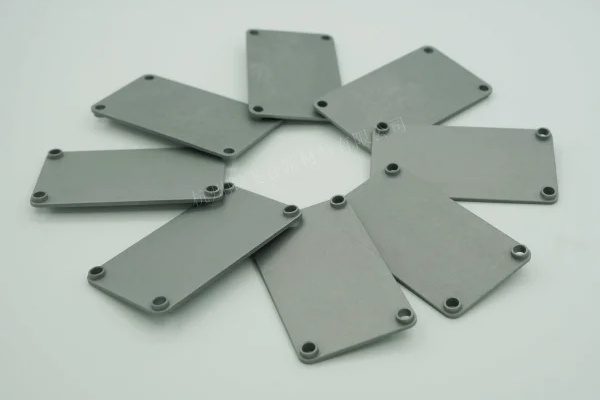
Preventing premature failure requires attention at every stage from specification through operation.
Material selection comes first. The right cemented carbide grade balances hardness and toughness for the specific application. A carbide moving knife blade used in plastic recycling needs extreme hardness and edge retention, which means fine-grained tungsten carbide with enough binder to resist chipping but not so much that the edge dulls quickly.
Design optimization follows. Geometry should minimize stress concentrations, provide adequate support, and account for all anticipated loads and environmental conditions. If the application involves cyclic loading, fatigue life calculations should inform wall thickness and fillet radii.
Manufacturing quality control ensures that the material properties specified on paper actually exist in the finished part. Consistent sintering profiles, proper densification, and surface finish inspection all matter.
Surface engineering can add another layer of protection where the application justifies the cost. Coatings or treatments that harden the surface or resist corrosion extend life in specific environments, but they are not a substitute for correct material selection.
Operational parameter control keeps the part within its design envelope. Monitoring load, temperature, and speed prevents the kind of excursions that cause sudden failures.
Installation and maintenance practices close the loop. Correct alignment, proper torque, regular inspection, and timely replacement of worn components all contribute to reaching or exceeding expected service life.
If your current carbide wear parts are failing ahead of schedule, it may be worth reviewing the specification against actual operating conditions before ordering replacements.
How does material grain size affect carbide wear resistance?
Smaller grain sizes raise hardness and abrasive wear resistance by packing more grain boundaries into the same volume. Those boundaries resist crack propagation and make it harder for wear particles to dislodge individual carbide grains. The tradeoff is that very fine grains can reduce toughness, making the part more susceptible to chipping under impact. The right grain size depends on whether the dominant wear mechanism is abrasion, impact, or a combination.
Can surface coatings extend the life of failing carbide parts?
Coatings work best on intact surfaces. They prevent initial wear or corrosion by adding a protective layer, but they cannot restore material that has already been compromised. A part that is already cracked, pitted, or worn beyond tolerance will not benefit from coating. The value of coatings lies in specifying them upfront for applications where the base carbide grade needs additional protection.
What role does binder content play in carbide durability?
Binder content, usually cobalt, controls the balance between toughness and hardness. Higher binder content increases toughness, which improves resistance to impact damage and fatigue failure. Lower binder content increases hardness, which improves resistance to abrasive wear. The optimal binder percentage depends on the application. A part that sees mostly abrasion benefits from lower binder content, while a part that sees repeated impact benefits from higher binder content. To discuss specific requirements for your application, contact Hubei Fotma Machinery Co., Ltd. at [email protected] or call +86 13995656368.
If you’re interested, check out these related articles:
What Is Molybdenum Alloy
Breaking Through The Performance Limit Of Titanium Alloys The Intrinsic Fracture Toughness Of Titanium
What Is The Most Commonly Used Titanium Alloy
Tips To Prevent Molybdenum Wire From Being Broken
What Is A Carbide Blade Good For