
5G base stations run hot. The power amplifiers and RF modules inside them push data at speeds and frequencies that generate serious thermal loads, and if that heat doesn’t go somewhere fast, performance drops, components age prematurely, and reliability suffers. I’ve seen the numbers: a 10°C rise in junction temperature can cut semiconductor reliability in half. That’s not a theoretical concern—it’s a practical constraint that shapes every design decision in modern 5G infrastructure.
5G operates at higher frequencies and power densities than anything that came before. The active components—power amplifiers, RF modules, transceivers—work harder and generate more heat in tighter spaces. Miniaturization compounds the problem: smaller components mean less surface area for heat to escape, even as power output climbs.
The physics here are unforgiving. Elevated operating temperatures degrade semiconductor performance through multiple mechanisms: reduced electron mobility, increased leakage currents, accelerated material aging. Signal quality suffers. Connections drop. Components fail before their time. The maintenance costs and service interruptions that follow hit network operators hard.
What makes 5G thermal management particularly challenging is the combination of constraints. You need materials that conduct heat efficiently, but you also need those materials to expand and contract at rates compatible with the semiconductor devices they’re attached to. Get that wrong, and thermal cycling creates stress at interfaces—delamination, cracking, eventual failure. Power amplifier cooling and RF module heat dissipation aren’t just engineering preferences; they’re requirements for networks that need to stay up.
Tungsten-Copper and Molybdenum-Copper composites have emerged as the materials of choice for 5G heat sinks, and the reason comes down to a specific combination of properties that other materials can’t match.
These powder-metallurgy composites blend copper’s high thermal conductivity with the low coefficient of thermal expansion of tungsten or molybdenum. Copper alone conducts heat beautifully—around 400 W/mK—but its CTE of 17 ppm/°C creates problems when bonded to semiconductor devices that expand at much lower rates. Pure tungsten has a CTE closer to what semiconductors need, but its thermal conductivity is mediocre. The composites give you both: efficient heat transfer and CTE values that can be tuned by adjusting the metal ratios.
WCu alloys deliver thermal conductivity in the 170-220 W/mK range with CTE values between 6-9 ppm/°C. MoCu alloys run slightly lower on conductivity (150-190 W/mK) but offer similar CTE tunability with better machinability and lower density. The ability to customize these ratios means engineers can match the expansion characteristics of specific semiconductor packages.
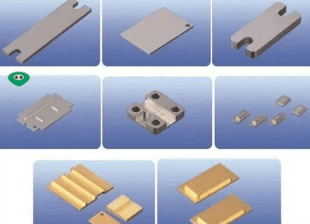
| Material Type | Thermal Conductivity (W/mK) | CTE (ppm/°C) | Density (g/cm³) | Key Advantages |
|---|---|---|---|---|
| WCu Composites | 170-220 | 6-9 | 13-17 | High TC, Tunable CTE, High Stiffness |
| MoCu Composites | 150-190 | 6-8 | 9.5-10.5 | Tunable CTE, Good Machinability, High Rigidity |
| Aluminum (6061) | 160-180 | 23 | 2.7 | Lightweight, Cost-effective |
| Copper (C11000) | 380-400 | 17 | 8.9 | Very High TC |
The manufacturing process matters as much as the composition. Sophisticated densification techniques and controlled sintering create a microstructure where both metals distribute uniformly throughout the material. This uniformity ensures consistent thermal performance across the entire heat sink surface—no hot spots, no weak points.
The combination of high thermal conductivity and tunable CTE addresses the core thermal management challenge in 5G equipment: getting heat out fast without creating mechanical stress. WCu and MoCu alloys conduct heat efficiently from high-power components while expanding at rates that match semiconductor devices. Their stiffness and wear resistance add structural reliability over thousands of thermal cycles. These properties work together to maintain stable performance under the sustained loads that 5G base stations experience.
When materials with different expansion rates bond together, temperature changes create stress at their interfaces. A heat sink that expands faster than the semiconductor it’s cooling will pull at that bond during heating and push during cooling. Repeat this cycle thousands of times, and you get delamination, cracking, and failure. WCu and MoCu alloys allow engineers to select compositions that closely match semiconductor CTE values, reducing interface stress and extending component life significantly.
FOTMA brings over 30 years of material science work in tungsten-molybdenum products, WCu, and MoCu alloys to 5G thermal solutions. The company’s production spans from powder preparation through final machining, which means complex geometries and tight tolerances are achievable for specific 5G applications.
The manufacturing process relies on advanced sintering and infiltration techniques to optimize both thermal and mechanical properties. ISO-9000-1:2008 certification reflects the quality control standards applied throughout production. This matters because consistency in thermal conductivity and CTE across production runs determines whether heat sinks perform as designed in the field.
Custom solutions are a core capability. Different 5G applications have different thermal requirements, and the ability to adjust W/Cu or Mo/Cu ratios, along with precise dimensional control, allows heat sink designs to match specific component packages and cooling architectures.
If you’re interested, check 《Analysis Of The Outstanding Performance Of Molybdenum Copper Alloy And Cmc Three Layer Structure Materials》.
Effective 5G heat sink design goes beyond material selection. The geometry, surface treatments, and integration with system-level cooling all affect how well heat moves from semiconductor junctions to the ambient environment. The goal is minimizing thermal resistance at every step of that path.
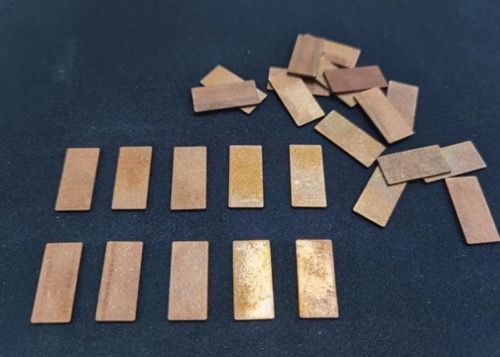
WCu and MoCu materials serve as heat spreaders in these designs. A Wcu Tungsten Copper AlloyWcu Tungsten Copper Alloy heat spreader positioned directly on a high-power RF module draws heat away from the active junction and distributes it across a larger area. From there, the heat transfers to a secondary heat sink—often aluminum with extended fins for passive cooling, or a liquid-cooled cold plate for higher power densities.
The applications span the major thermal challenges in 5G equipment:
5G power amplifiers fail when they run too hot for too long. High temperatures accelerate every degradation mechanism in semiconductors: material aging, increased leakage, reduced efficiency. The relationship between temperature and reliability follows well-established models—every degree matters. Effective cooling keeps amplifiers within their design temperature envelope, which translates directly to longer service life and fewer field failures. Network operators see this in reduced maintenance costs and better uptime.
FOTMA’s position in 5G thermal management comes from the combination of material science depth and manufacturing capability. Over three decades of work with tungsten-molybdenum products, Wcu Tungsten Copper AlloyWcu Tungsten Copper Alloy alloys, and Molybdenum Copper Alloy Mocu Heat SinkMolybdenum Copper Alloy Mocu Heat Sink alloys has built expertise that applies directly to 5G requirements.
The company offers flexibility in composition and form factor, which matters when standard products don’t fit specific thermal challenges. ISO-9000-1:2008 certification provides assurance that quality control meets industry expectations. For 5G infrastructure projects where component reliability affects network performance, that consistency matters.
Hubei Fotma Machinery Co., Ltd. provides advanced material solutions for demanding thermal management applications. With over 30 years of expertise in tungsten-molybdenum products, WCu, and MoCu alloys, the company supports 5G infrastructure projects requiring precision and reliability. Contact the team at [email protected] or +86 13995656368 to discuss specific requirements.
These alloys combine high thermal conductivity with tunable coefficient of thermal expansion. The thermal conductivity moves heat efficiently away from high-power density components, while the adjustable CTE allows engineers to match the expansion characteristics of semiconductor devices. This combination reduces thermal stress at interfaces and maintains stable operating temperatures—both requirements for reliable 5G performance.
Quality assurance starts with ISO-9000-1:2008 certification and extends through modern production equipment and testing methods. Thirty years of technical work with these materials has established process controls that maintain consistent thermal conductivity and CTE across production runs. Both Wcu Tungsten Copper AlloyWcu Tungsten Copper Alloy and Molybdenum Copper Alloy Mocu Heat SinkMolybdenum Copper Alloy Mocu Heat Sink products undergo verification against performance standards before shipment.
Yes. The company’s capabilities span from powder preparation through final machining, which enables customization of compositions, geometries, and surface treatments. Engineers work with clients to optimize material properties and dimensions for specific thermal management requirements, including precision instrument accessories and non-standard form factors.
The primary benefits are extended component life and reduced failure rates. When heat sinks properly manage thermal loads and minimize interface stress, power amplifiers and RF modules last longer. This translates to lower maintenance costs, fewer service interruptions, and more consistent network performance over the operational life of 5G infrastructure.