
High-power IGBTs run hot. That’s the fundamental reality anyone working with these devices confronts immediately. The heat sink substrate sitting beneath that semiconductor chip determines whether your module survives years of thermal cycling or fails within months. After evaluating countless IGBT installations across industrial and automotive applications, the substrate material choice—WCu, MoCu, or CMC—consistently emerges as the decision that separates reliable systems from problematic ones.
The substrate performs one job that matters above all others: moving heat away from the chip fast enough to prevent damage. But that simple goal becomes complicated when you factor in the mechanical stresses that accumulate over thousands of heating and cooling cycles.
Silicon chips expand and contract at roughly 3-4 ppm/K. Copper moves at about 17 ppm/K. Put those two materials in direct contact, bond them with solder, and run the assembly through repeated thermal cycles. The math is unforgiving. Differential expansion creates shear stress at every interface. Solder joints fatigue. Delamination starts at corners and edges. Eventually something cracks.
The substrate sits in the middle of this thermal battlefield. It needs to conduct heat efficiently while expanding at a rate close enough to silicon that the stress stays manageable. Beyond thermal performance, substrates must provide mechanical rigidity to maintain flatness, resist corrosion in whatever environment the module operates, and ideally not add excessive weight.
Modern power electronics push these requirements harder than ever. Higher power densities mean more heat concentrated in smaller areas. Automotive applications demand reliability across extreme temperature swings. Renewable energy systems expect decades of continuous operation. The substrate material selection directly determines whether a design can meet these demands.
Tungsten copper alloys solve the CTE mismatch problem through composition control. By adjusting the ratio of tungsten to copper, manufacturers can dial in a specific expansion coefficient. A typical WCu 80/20 composition achieves CTE values between 6.5 and 9.0 ppm/K—much closer to silicon than pure copper ever gets.
The manufacturing process involves powder metallurgy. Tungsten powder is pressed and sintered to create a porous skeleton, then molten copper infiltrates the structure. This produces a dense, homogeneous material where tungsten provides low expansion and structural strength while copper handles thermal conduction.
| Property | WCu 80/20 Value | Unit |
|---|---|---|
| Thermal Conductivity | 180-220 | W/(m·K) |
| CTE | 6.5-9.0 | ppm/K |
| Density | 15.0-16.0 | g/cm³ |
| Electrical Conductivity | 30-40 | %IACS |
| Hardness | 180-220 | HV |
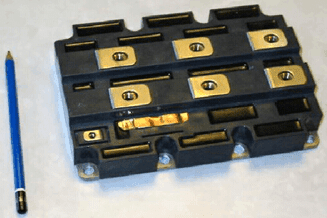
The thermal conductivity numbers look impressive on paper, but real-world performance depends on how well the CTE matches your specific assembly. A substrate that conducts heat brilliantly but creates excessive interface stress will fail faster than a slightly less conductive material with better CTE matching.
WCu finds its place in high-power applications where thermal loads are severe and reliability cannot be compromised. RF and microwave modules use it extensively. Optoelectronic packaging relies on it. IGBT modules in industrial drives and traction applications benefit from its combination of heat spreading and mechanical stability.
The ability to adjust CTE through composition control gives engineers a degree of freedom that homogeneous materials simply cannot offer. If your chip-to-substrate interface experiences excessive stress, you can specify a different tungsten-copper ratio to reduce the mismatch.
This tunability becomes particularly valuable when dealing with complex assemblies involving multiple materials. The substrate might need to match silicon on one side while accommodating a different material on the cooling side. WCu compositions can be optimized for these multi-interface situations.
Practical experience shows that modules using properly matched WCu substrates survive thermal cycling tests that destroy assemblies with poorly matched materials. The difference often amounts to an order of magnitude in cycle life.
You can explore more about the uses of this material in 《What Is Tungsten Copper Used For》.
Molybdenum copper follows the same basic principle as tungsten copper—combining a refractory metal with copper to achieve intermediate thermal and expansion properties. The key difference lies in density. MoCu weighs roughly 35% less than WCu at comparable compositions.
That weight reduction matters enormously in certain applications. Aerospace systems count every gram. Electric vehicle power electronics benefit from lighter components. Portable high-power equipment becomes more practical when substrates don’t add excessive mass.
| Property | MoCu 70/30 Value | Unit |
|---|---|---|
| Thermal Conductivity | 170-200 | W/(m·K) |
| CTE | 5.0-8.0 | ppm/K |
| Density | 10.0-11.0 | g/cm³ |
| Electrical Conductivity | 40-50 | %IACS |
| Hardness | 150-180 | HV |
The thermal conductivity runs slightly lower than WCu, but the difference rarely proves significant in practice. Both materials conduct heat well enough for most IGBT applications. The CTE range overlaps substantially, though MoCu can achieve somewhat lower values at high molybdenum content.
MoCu excels in high-frequency applications where stable thermal performance across a wide temperature range matters. The material maintains its properties consistently, avoiding the thermal runaway scenarios that plague some alternatives. Semiconductor base plates, RF modules, and precision electronic packaging all use MoCu substrates effectively.
The choice between WCu and MoCu often comes down to secondary requirements rather than raw thermal performance. Both materials handle heat adequately. Both offer tunable CTE. The decision hinges on factors like weight constraints, cost targets, and manufacturing compatibility.
Weight-sensitive designs favor MoCu. Applications where density doesn’t matter might choose WCu for its slightly higher thermal conductivity. Cost considerations can push either direction depending on current commodity prices for tungsten and molybdenum.
Machinability differs somewhat between the two. Both can be machined using conventional techniques, but tool wear rates and surface finish characteristics vary. Manufacturing engineers often develop preferences based on their specific equipment and processes.
To understand more about the performance of this material, read 《Analysis Of The Outstanding Performance Of Molybdenum Copper Alloy And Cmc Three Layer Structure Materials》.
Copper-Molybdenum-Copper composites take a different approach entirely. Rather than creating a homogeneous alloy, CMC bonds distinct layers together. A molybdenum core provides low expansion and rigidity. Copper cladding on both surfaces delivers high thermal and electrical conductivity.
This tri-layer architecture allows optimization that homogeneous materials cannot achieve. The molybdenum core can be made thicker or thinner to adjust overall CTE. Copper layer thickness controls thermal spreading capability. The result is a substrate that can be precisely tailored to specific requirements.
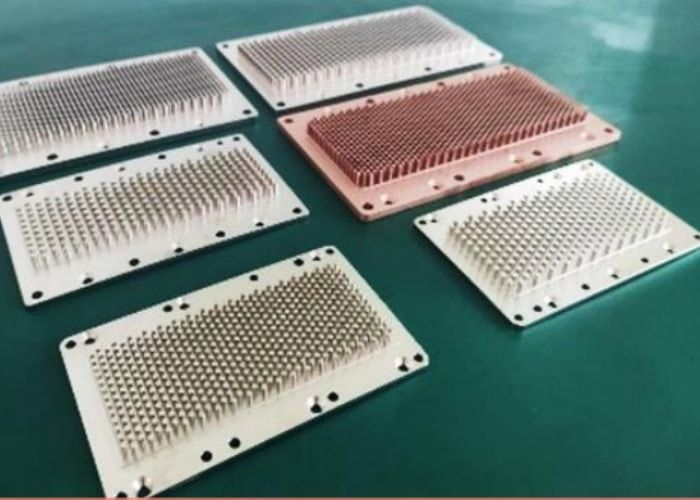
The metallurgical bonding between layers must be robust. Any delamination at the copper-molybdenum interface would catastrophically degrade thermal performance. Quality CMC substrates use bonding processes that create true metallurgical joints rather than mechanical adhesion.
Thermal conductivity in CMC often exceeds both WCu and MoCu, reaching 200-300 W/(m·K) or higher depending on layer ratios. The copper cladding provides direct thermal paths while the molybdenum core constrains expansion. This combination delivers exceptional heat spreading with minimal thermal stress.
Flatness represents another CMC advantage. The symmetric tri-layer structure resists warping during temperature changes. High-power modules require extremely flat mounting surfaces to achieve good thermal contact with cooling systems. CMC maintains that flatness better than many alternatives.
Applications demanding the absolute best thermal performance turn to CMC. Extreme environment IGBT modules, high-power rectifiers, laser diode substrates, and advanced RF systems all benefit from CMC’s superior characteristics. The cost premium reflects the manufacturing complexity, but performance-critical applications justify the investment.
For further details on similar materials, consider 《Analysis Of The Outstanding Performance Of Copper Molybdenum Copper Cmc Electronic Packaging And Heat Sink Materials》.
Direct comparison reveals where each material excels and where it falls short. No single substrate material dominates across all criteria. The optimal choice depends on which properties matter most for a specific application.
| Feature | WCu | MoCu | CMC |
|---|---|---|---|
| Thermal Conductivity | 180-220 W/(m·K) | 170-200 W/(m·K) | 200-300+ W/(m·K) |
| CTE Range | 6.5-9.0 ppm/K | 5.0-8.0 ppm/K | Precisely tunable |
| Density | 15.0-16.0 g/cm³ | 10.0-11.0 g/cm³ | 9.0-10.0 g/cm³ |
| Mechanical Rigidity | High | High | Very High |
| Relative Cost | Moderate to High | Moderate | High |
| Best Applications | High-power, high-stress | High-frequency, weight-sensitive | Extreme environments |
WCu provides the most straightforward solution for applications where weight doesn’t matter and moderate cost is acceptable. The material is well-understood, widely available, and performs reliably across a broad range of conditions.
MoCu makes sense when weight reduction provides meaningful system benefits. The thermal performance penalty is modest, and the density advantage can be substantial. High-frequency applications particularly benefit from MoCu’s stable properties.
CMC represents the premium choice for applications where thermal performance cannot be compromised. The cost is highest, but the combination of thermal conductivity, CTE control, and flatness exceeds what homogeneous materials can achieve.
Engineers frequently face budget constraints that prevent specifying the theoretically optimal material. Understanding the performance-cost relationship helps make informed compromises.
CMC delivers the best thermal performance but costs the most. For applications where thermal margins are tight and failure consequences are severe, the premium is justified. Automotive traction inverters and industrial drives with high reliability requirements often specify CMC despite the cost.
WCu occupies the middle ground. Performance is excellent, cost is manageable, and the material has a long track record in demanding applications. Many IGBT modules use WCu successfully without requiring CMC’s additional capabilities.
MoCu offers the best value when weight matters. The thermal performance is adequate for most applications, the cost is reasonable, and the weight savings can enable designs that wouldn’t otherwise be practical. We provide Focus on IGBT heat sink substrates:IGBT Heat Sink Substrates for a variety of applications.
The substrate selection process should follow a systematic evaluation of application requirements. Starting with thermal analysis establishes the baseline conductivity needed. CTE calculations identify the acceptable expansion range. Weight and cost constraints narrow the options further.
Substrate Selection Criteria:
Thermal load analysis comes first. Calculate the power dissipation, estimate the thermal resistance budget, and determine what substrate conductivity is needed to meet junction temperature targets. This establishes whether all three materials are viable or if only CMC provides adequate performance.
CTE matching requires knowing the expansion coefficients of all materials in the assembly. The substrate should minimize the maximum CTE mismatch at any interface. Sometimes this means accepting a slightly larger mismatch with the chip to reduce stress at the substrate-to-heatsink interface.
Weight constraints may eliminate WCu from consideration entirely. If the application demands minimum mass, MoCu or CMC become the only options. Between those two, CMC offers better thermal performance while MoCu costs less.
Cost analysis should consider total system cost, not just substrate price. A more expensive substrate that enables a simpler cooling system or extends service life may reduce overall cost of ownership. Reliability improvements often justify premium materials in applications where failure consequences are severe.
Why is CTE matching critical for the long-term reliability of IGBT power modules?
Thermal cycling creates mechanical stress whenever materials with different expansion coefficients are bonded together. Each heating and cooling cycle adds incremental damage to solder joints and interfaces. Over thousands of cycles, this fatigue accumulates until something fails. Materials like Focus on WCu tungsten copper alloy:WCu Tungsten Copper Alloy and Focus on molybdenum copper alloy MoCu heat sink:Molybdenum Copper Alloy MoCu Heat Sink achieve CTE values close to silicon, reducing the stress per cycle and dramatically extending module life.
What manufacturing processes are typically used for WCu, MoCu, and CMC IGBT heat sink substrates?
WCu and MoCu production relies on powder metallurgy. The refractory metal powder is pressed into shape, sintered to create a porous structure, then infiltrated with molten copper. This produces a dense composite with controlled composition. Focus on CMC composite material:CMC Composite Material requires different techniques—typically involving rolling or hot pressing to bond copper sheets to a molybdenum core. The bonding process must create true metallurgical joints to ensure thermal performance and mechanical integrity.
How do the electrical insulation properties of these heat sink substrates impact IGBT design?
All three substrate materials conduct electricity, which means they cannot directly contact the IGBT chip without an intervening insulation layer. Typical designs use ceramic insulators like aluminum nitride or alumina between the chip and substrate. The substrate then provides thermal spreading and mechanical support while the ceramic handles electrical isolation. Some CMC configurations can incorporate insulating layers within the composite structure, simplifying assembly.
Substrate selection benefits from collaboration with suppliers who understand both material properties and application requirements. Hubei Fotma Machinery Co., Ltd. brings over 30 years of experience in tungsten-molybdenum, tungsten-copper, and specialized alloy production. ISO-9000-1:2008 certified processes ensure consistent quality across production runs.
Custom substrate solutions often provide better results than standard catalog items. Specific compositions, dimensions, and surface treatments can be optimized for particular applications. Engineering teams can analyze thermal requirements, recommend appropriate materials, and manufacture substrates that meet exact specifications.
Contact the technical team at +86 13995656368 or +86 13907199894 for consultation on IGBT thermal management challenges. Email inquiries can be directed to [email protected] or [email protected].