
Working with refractory metals means accepting that no single material solves every problem. Tungsten handles temperatures that would vaporize most alloys, but try machining it at room temperature and you’ll understand why shops charge premium rates. Molybdenum offers a better balance of workability and thermal performance, though it oxidizes aggressively above 500°C without protection. Tantalum resists acids that eat through stainless steel in hours, yet its cost limits use to applications where nothing else survives. Titanium delivers strength without the weight penalty, but welding it requires inert atmospheres and meticulous cleaning. Each refractory metal fills a specific performance gap, and choosing wrong means either overspending or watching components fail under conditions they were never designed to handle.
Refractory metals share a defining characteristic: melting points above 2000°C. This thermal stability comes from their atomic structure and strong metallic bonding, which also explains why they maintain mechanical strength at temperatures where steel softens into uselessness. The trade-off appears at room temperature, where these same bonding characteristics create brittleness that complicates fabrication.
Tungsten sits at the extreme end with a melting point of 3422°C. Molybdenum melts at 2623°C but offers better ductility during processing. Tantalum reaches 3017°C and brings exceptional chemical inertness. Titanium, technically the lowest performer thermally at 1668°C, compensates with density roughly half that of steel and corrosion resistance that outperforms most alternatives in chloride environments.
| Property | Tungsten (W) | Molybdenum (Mo) | Tantalum (Ta) | Titanium (Ti) |
|---|---|---|---|---|
| Melting Point (°C) | 3422 | 2623 | 3017 | 1668 |
| Density (g/cm³) | 19.3 | 10.2 | 16.6 | 4.5 |
| High-Temp Strength | Excellent | Very Good | Good | Good |
| Corrosion Resistance | Good | Good | Excellent | Excellent |
The density differences matter more than casual observation suggests. Tungsten at 19.3 g/cm³ creates components that feel unexpectedly heavy, which becomes a design constraint in rotating equipment or aerospace applications where every gram affects fuel consumption.
Tungsten earns its reputation in applications where nothing else survives. Vacuum furnace heating elements operate at temperatures exceeding 2000°C for thousands of hours, and tungsten handles this without significant degradation. The material’s thermal conductivity allows efficient heat transfer while its vapor pressure remains low enough to avoid contaminating sensitive processes.
Molybdenum fills the gap between tungsten’s extreme capability and the practical limits of most industrial equipment. Vacuum furnace components, radiation shields, and high-temperature structural supports benefit from molybdenum’s combination of strength retention and reasonable machinability. The material also serves as an excellent substrate for thin-film deposition, where its thermal expansion characteristics match common semiconductor materials.
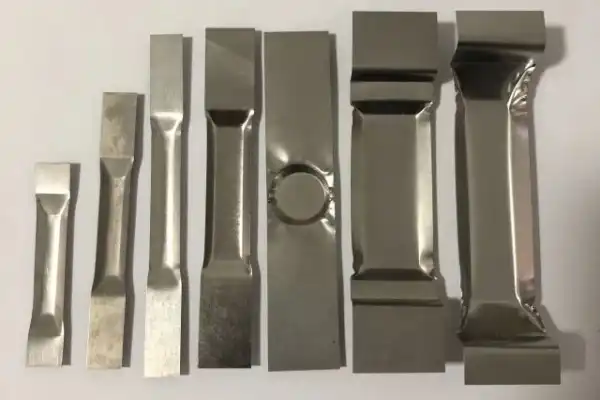
Sputtering targets represent a growing application for both metals. Molybdenum targets deposit conductive layers in flat-panel displays and photovoltaic cells, while tungsten targets create barrier layers in semiconductor manufacturing. Target purity requirements typically exceed 99.95%, and grain structure uniformity directly affects film quality.
Our Molybdenum Thermal Spray Wire addresses wear resistance needs in automotive and industrial applications. The wire feeds into thermal spray systems that build up protective coatings on cylinder bores, synchronizer rings, and other components subject to sliding contact.
Tungsten (W) and Molybdenum (Mo) are extensively used in high-temperature environments. Tungsten finds applications in heating elements, electrical contacts, and aerospace components due to its extremely high melting point. Molybdenum is critical for vacuum furnace parts, sputtering targets, and chemical processing equipment, offering excellent strength and corrosion resistance at elevated temperatures.
Explore our insights into high-performance alloys and their applications by reading 《Tzm Alloy Price Analysis Value And Procurement Strategy》.
Tantalum’s corrosion resistance borders on remarkable. Concentrated sulfuric acid, hydrochloric acid, and most organic acids leave tantalum surfaces essentially unchanged. This performance stems from a self-healing oxide layer that reforms instantly when damaged, providing protection even under conditions that strip passive layers from stainless steels.
Chemical processing equipment represents tantalum’s primary industrial market. Heat exchangers handling corrosive fluids, reactor linings, and valve components justify tantalum’s cost when alternative materials require replacement every few months. Medical implants leverage both the corrosion resistance and excellent biocompatibility, with tantalum bone scaffolds promoting osseointegration better than most alternatives.
Titanium alloys deliver strength-to-weight ratios that exceed steel by a factor of two or more. Aerospace structures, from airframe components to engine casings, rely on this advantage to reduce fuel consumption and increase payload capacity. Marine applications benefit from titanium’s resistance to seawater corrosion, particularly in heat exchangers and propeller shafts where chloride attack destroys conventional materials.
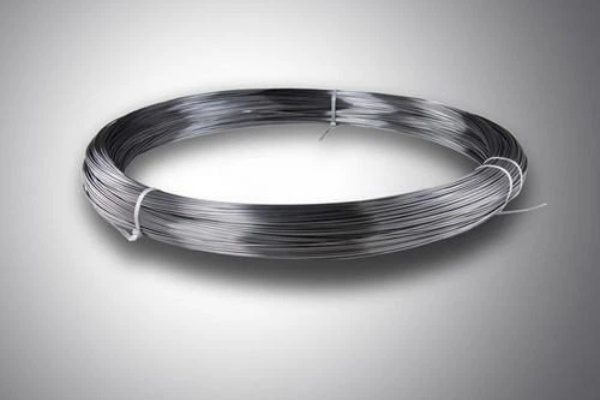
Our titanium rod manufacturers produce stock for machining into fasteners, medical devices, and structural components. Rod diameters range from small-diameter wire for surgical sutures to large bars for aerospace forgings.
Tantalum (Ta) is renowned for its exceptional corrosion resistance, making it ideal for highly aggressive chemical environments and medical implants. Titanium (Ti) offers an outstanding strength-to-weight ratio and good corrosion resistance, particularly against chlorides, making it preferred for aerospace structures, marine applications, and biomedical devices. While both are highly resistant, Tantalum generally surpasses Titanium in resistance to very strong acids.
| Property | Tantalum (Ta) | Titanium (Ti) |
|---|---|---|
| Corrosion Resistance | Excellent | Excellent |
| Strength-to-Weight | Good | Excellent |
| Biocompatibility | Excellent | Excellent |
| Cost | High | Moderate |
Further insights into the versatile applications of titanium can be found in 《What Is Titanium Wire Used For》.
Material selection starts with understanding what kills components in service. Temperature alone rarely tells the complete story. A furnace operating at 1800°C in vacuum presents different challenges than one running at 1200°C in a reducing atmosphere with trace sulfur compounds.
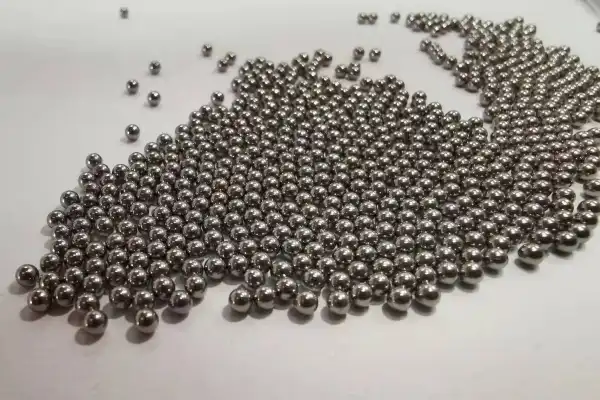
Cost-performance analysis requires looking beyond initial material prices. A molybdenum component costing three times more than a nickel alloy alternative may deliver ten times the service life, making it the economical choice over the equipment’s operational period. We help clients work through these calculations with realistic performance data from comparable applications.
Our Customized Molybdenum Parts address applications where standard shapes won’t work. Complex geometries, tight tolerances, and specific surface finishes all fall within our manufacturing capabilities.
Refractory metal quality depends on controlling every step from powder production through final inspection. Impurities measured in parts per million affect grain structure, ductility, and high-temperature performance. Our ISO 9001 certified processes establish traceability from raw material lots through finished components.
Testing goes beyond basic dimensional inspection. Material certifications include chemical analysis, density measurements, and mechanical property verification. For critical applications, we provide additional documentation covering grain size distribution, hardness profiles, and ultrasonic inspection results.
Over 30 years of material research and production experience inform our process controls. We understand how powder characteristics affect sintering behavior, how rolling schedules influence texture development, and how annealing parameters determine final properties. This knowledge translates into consistent products that meet specifications shipment after shipment.
Additive manufacturing opens possibilities that conventional processing cannot match. Complex internal cooling channels, lattice structures for weight reduction, and near-net-shape production all become feasible with powder bed fusion and directed energy deposition techniques. Tungsten and molybdenum present challenges due to their high melting points and susceptibility to cracking, but progress continues on parameter optimization and alloy modifications that improve printability.
Alloy development focuses on improving specific property combinations. Tungsten-rhenium alloys offer better ductility than pure tungsten while maintaining high-temperature strength. Molybdenum-lanthanum oxide dispersions resist recrystallization at elevated temperatures, extending component life in cyclic thermal applications. Titanium-aluminum-vanadium compositions continue evolving to balance strength, fatigue resistance, and processability.
Sustainability considerations increasingly influence material choices and production methods. Recycling programs recover valuable refractory metals from spent components, reducing both cost and environmental impact. Process improvements target energy consumption and waste reduction throughout the production chain.
Partner with Hubei Fotma Machinery Co., Ltd. for unparalleled expertise in refractory metal solutions. Leverage our 30+ years of material research and ISO 9001 certified manufacturing to achieve optimal performance for your most demanding applications. Contact us today for a consultation or custom quote. Email us at [email protected] or [email protected], or call us at +86 13995656368 or +86 13907199894.
Tungsten (W) and Molybdenum (Mo) are extensively used in high-temperature environments. Tungsten finds applications in Heating Elements, electrical contacts, and aerospace components due to its extremely high melting point. Molybdenum is critical for vacuum furnace parts, Molybdenum Sputtering Targets, and chemical processing equipment, offering excellent strength and corrosion resistance at elevated temperatures.
Tantalum (Ta) is renowned for its exceptional corrosion resistance, making it ideal for highly aggressive chemical environments and medical implants. Titanium (Ti) offers an outstanding strength-to-weight ratio and good corrosion resistance, particularly against chlorides, making it preferred for aerospace structures, marine applications, and biomedical devices. While both are highly resistant, Tantalum generally surpasses Titanium in resistance to very strong acids.
For reliable sourcing of custom refractory metal components, it is crucial to partner with an ISO 9001 certified enterprise with deep material science expertise. Hubei Fotma Machinery Co., Ltd. (FOTMA) specializes in the production of tungsten-molybdenum products, titanium, tantalum, and other non-ferrous metal materials, offering complete solutions for mechanical processing and manufacturing with over 30 years of technical accumulation.