
Tungsten sits at the heart of two material families that couldn’t behave more differently in practice. Tungsten carbide brings ceramic-like hardness that chews through rock and metal without flinching. Tungsten heavy alloy delivers density so extreme it stops radiation and adds mass where space is tight. Both start with the same element, yet their compositions push them toward opposite ends of the performance spectrum. Picking the wrong one means either premature failure or wasted budget, so the distinction matters more than most material choices I’ve encountered in industrial settings.
Tungsten carbide is a ceramic composite built from tungsten monocarbide particles. These WC grains form through strong covalent bonds between tungsten and carbon atoms, creating a structure second only to diamond in hardness. The grains alone would be too brittle for practical use, so manufacturers embed them in a metallic binder phase.
Cobalt is the most common binder, though nickel and iron appear in specialized grades. The binder acts as a ductile matrix holding the hard WC grains together, dramatically improving toughness and fracture resistance. Adjusting the cobalt content, typically between 3% and 30% by weight, lets engineers dial in the exact balance between hardness and impact tolerance. Lower binder content pushes hardness and wear resistance higher. More binder increases toughness at the expense of some hardness.
This tunability makes cemented carbide properties highly adaptable. The material resists abrasion, erosion, and impact better than almost any alternative. High elastic modulus, excellent thermal conductivity, and resistance to deformation at elevated temperatures round out the profile. These characteristics explain why tungsten carbide dominates cutting tool materials, mining tools, and components facing severe wear conditions.
| WC Grade | Binder Content (%) | Hardness (HRA) | Typical Applications |
|---|---|---|---|
| G5 | 6 | 90.5 | General purpose cutting, wear parts |
| G20 | 10 | 89 | Mining tools, impact resistance |
| G30 | 15 | 87 | Heavy impact applications |
Tungsten heavy alloy takes a fundamentally different approach. Instead of forming a carbide compound, WHA uses 85-97% pure tungsten particles sintered with a metallic binder, usually nickel-iron or nickel-copper. The result is a metal matrix composite with densities ranging from 17.0 to 18.8 g/cm³, far exceeding conventional metals.
The binder phase forms a ductile matrix around the tungsten grains, overcoming the brittleness that makes pure tungsten difficult to work with. This matrix allows conventional machining operations that would be impossible with pure tungsten or tungsten carbide. WHAs also offer good mechanical strength, corrosion resistance, and excellent absorption of X-ray and gamma radiation.
High density in WHAs serves specific engineering purposes that no other property can address. Radiation shielding benefits from maximum attenuation in minimum space, critical when equipment footprints are constrained. Counterweights and balancing applications need maximum mass in minimal volume to improve stability without bulking up component size. Kinetic energy penetrators rely on extreme density for superior momentum transfer and penetration.
Density is the primary selection driver for WHA. For tungsten carbide, extreme hardness and wear resistance take that role instead.
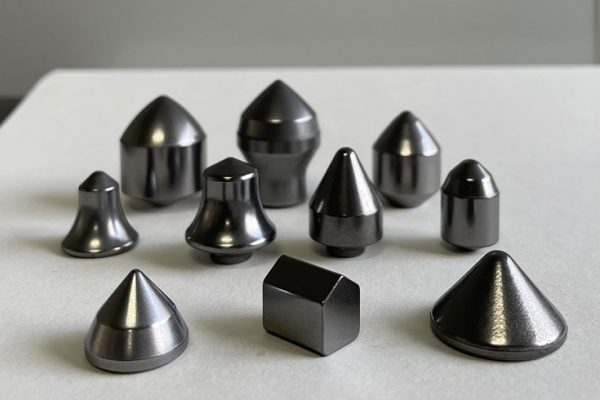
The gap between tungsten carbide and tungsten heavy alloy starts at the atomic level and widens through every manufacturing step.
Tungsten carbide is a ceramic composite where tungsten atoms bond chemically with carbon to form hard WC grains. These grains then get bound together by a metallic binder like cobalt, creating materials suitable for applications like Cemented Carbide Cutting Tool production. The carbon-tungsten bond produces an extremely hard ceramic phase.
WHA skips the carbon entirely. It consists of discrete elemental tungsten particles dispersed within a ductile nickel-iron or nickel-copper matrix. Without carbon, the structure remains metallic and ductile rather than ceramic and brittle.
Manufacturing follows different paths as well. Tungsten carbide production involves mixing WC powder with binder powder, pressing the mixture, then liquid phase sintering at high temperatures. This creates a dense, interlocked structure of WC grains within the binder. WHA also uses powder metallurgy, but the liquid phase sintering process melts the binder alloy so it wets and surrounds the solid tungsten particles, producing a dense, ductile composite.
Mechanical properties reflect these structural differences. Tungsten carbide excels in hardness and wear resistance, making it the right choice for Carbide Cutting Blade applications and wear parts. Its ceramic nature brings inherent brittleness as a tradeoff. WHAs sacrifice some hardness for superior toughness and ductility. They also offer exceptional density, good strength, and machinability that tungsten carbide simply cannot match.
| Property | Tungsten Carbide (WC) | Tungsten Heavy Alloy (WHA) |
|---|---|---|
| Primary Tungsten Form | Tungsten Monocarbide (WC) | Elemental Tungsten (W) |
| Binder Phase | Cobalt, Nickel, Iron | Nickel-Iron, Nickel-Copper |
| Material Class | Ceramic Composite | Metal Matrix Composite |
| Density (g/cm³) | 13.0 – 15.5 | 17.0 – 18.8 |
| Hardness (HRA) | 85 – 93 | 25 – 40 (Rockwell C) |
| Toughness | Low (Brittle) | High (Ductile) |
| Machinability | Difficult (Grinding) | Good (Conventional machining) |
For more insights into specific applications of tungsten alloys, consider reading 《A European Auto Enthusiasts Smooth Purchase Of Tungsten Alloy Weights On Tungstenbuy》.
The property differences between tungsten carbide and tungsten heavy alloy translate directly into distinct application territories.
Tungsten carbide owns applications demanding material removal, abrasion resistance, and structural integrity under compressive loads. Cutting tools like inserts, drills, and end mills rely on it for machining metals, wood, and composites. Mining and drilling operations use WC in drill bits, rock tools, and wear parts facing demanding excavation conditions. Nozzles, dies, seals, and bearings in oil and gas industries depend on its erosion and abrasion resistance. Precision instruments requiring exceptional stiffness and dimensional stability also benefit from tungsten carbide components.
Tungsten heavy alloy fills a different niche where mass, radiation shielding, or vibration damping matter most. Medical equipment uses WHA for collimators and syringe shields. Industrial radiography and nuclear energy applications rely on Tungsten Alloy Radiation Shielding for protection. Aerospace, automotive, marine, and sports equipment use Tungsten Alloy Counterweights for balance. Military applications employ WHA in kinetic energy penetrators. High-precision machinery and optical systems use it for vibration damping. Dies and fixtures requiring high strength at elevated temperatures round out the application list.
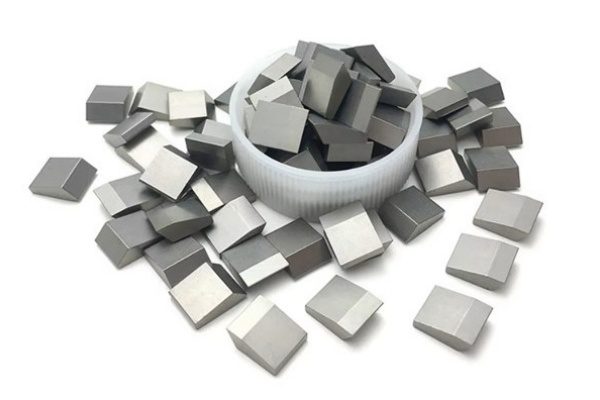
Material selection between tungsten carbide and tungsten heavy alloy requires looking beyond initial purchase price. Tungsten carbide typically costs more upfront due to complex processing and expensive raw materials including WC powder and cobalt binders. That higher initial cost often pays back through exceptional wear life in abrasive environments, reducing replacement frequency and downtime over the component’s service life.
Tungsten heavy alloy can be machined into intricate shapes more readily than tungsten carbide, potentially lowering fabrication costs for complex geometries. Its high density provides unique value where space constraints exist, enabling smaller, more efficient designs in radiation shielding or counterweight applications.
Engineers need to evaluate specific performance requirements, environmental conditions, and total lifecycle cost rather than focusing solely on material price. Impact resistance, corrosion resistance, and thermal properties all influence the optimal choice. The right material depends on what the application actually demands, not on which one looks cheaper on a quote.
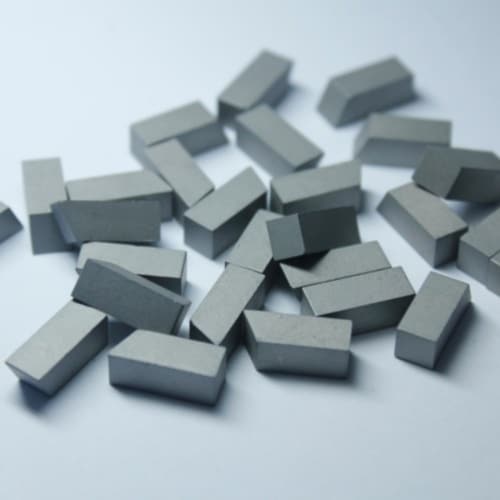
Both tungsten carbide and tungsten heavy alloy continue evolving as researchers push performance boundaries and explore new applications.
Tungsten carbide development focuses on novel binder phases offering improved toughness without sacrificing hardness. Advanced coating technologies extend tool life further. Gradient materials, where properties vary across a component, show promise for applications needing different characteristics at different locations.
Tungsten heavy alloy research targets optimized binder compositions for greater strength, ductility, and machinability. Additive manufacturing techniques including selective laser melting and binder jetting are changing what’s possible with both material types. These processes enable highly complex geometries with reduced waste and customized properties, opening applications in medical implants, intricate aerospace components, and advanced shielding solutions.
Choosing the right tungsten material is critical for your project’s success. FOTMA, an ISO-9000-1:2008 certified enterprise with over 30 years of technical accumulation, specializes in tungsten-molybdenum products, tungsten alloys, and cemented carbide. Our modern production equipment and advanced testing methods ensure superior quality and performance. Contact us today to discuss your specific requirements and leverage our expertise in mechanical processing and precision instrument accessories. Reach us at +86 13995656368, +86 13907199894, or email [email protected], [email protected].
No. Their properties differ too much for substitution in most cases. Tungsten carbide handles wear and cutting applications where hardness matters most. Tungsten heavy alloy serves applications needing high density, radiation shielding, or ductility. Using WC where WHA belongs risks brittle failure. Using WHA where WC belongs means rapid wear. Match the material to the actual performance requirement.
It depends entirely on the application. Tungsten carbide costs more initially but lasts far longer in abrasive environments, often making it cheaper per hour of operation. Tungsten heavy alloy may have lower fabrication costs for complex shapes and offers unique value in density-critical applications where no alternative exists. Calculate total lifecycle cost including replacement, downtime, and fabrication rather than comparing raw material prices alone.
Start with the primary performance requirement. If the component faces abrasion, erosion, or cutting forces, tungsten carbide is likely the answer. If the application needs high density for mass, radiation shielding, or vibration damping, tungsten heavy alloy fits better. Secondary factors like machinability, impact resistance, and operating temperature narrow the choice further. When requirements overlap or seem unclear, consulting with a materials specialist helps avoid costly mistakes.