
Tungsten’s hardness comes from its atomic structure and bonding characteristics, not from any single property in isolation. The element sits at atomic number 74, and its electron configuration produces metallic bonds strong enough to give it the highest melting point of any metal—3,422 degrees Celsius. That melting point is not a curiosity; it is a direct indicator of how much energy the lattice requires to disrupt.
The body-centered cubic crystal structure adds another layer of resistance. Atoms occupy the corners of each unit cell plus one at the center, creating a packing arrangement that restricts dislocation movement. Dislocations are the defects that let metals deform plastically, and tungsten’s lattice makes them difficult to propagate. The combination of tight atomic packing and strong metallic bonds means that initiating plastic deformation or fracture requires substantial energy input.
The electron configuration of tungsten leads to delocalized electrons shared across a lattice of positively charged ions. This sharing mechanism produces metallic bonds that are unusually strong compared to most transition metals. The bond strength shows up directly in physical properties: high melting point, high boiling point, and resistance to thermal degradation.
The BCC lattice structure compounds these effects. Unlike face-centered cubic metals, which have more slip systems available for dislocation movement, BCC tungsten restricts the pathways dislocations can follow. Fewer active slip systems at room temperature means the material resists deformation under load. This is why tungsten maintains dimensional stability under conditions that would cause other metals to creep or yield.
The tightly packed atoms also contribute to tungsten’s density of 19.3 grams per cubic centimeter. That density is not incidental to hardness—it reflects how closely the atoms are held together and how much energy would be needed to separate them.
The atomic-level characteristics translate into measurable values that engineers use for material selection. Pure tungsten typically shows a Vickers hardness between 350 and 400 HV, which places it well above common structural steels.
| Property | Pure Tungsten (Typical) | Steel (AISI 1045) (Typical) |
|---|---|---|
| Vickers Hardness (HV) | 350-400 | 160-200 |
| Tensile Strength (MPa) | 980-1500 | 570-700 |
| Young’s Modulus (GPa) | 340-410 | 200-210 |
| Density (g/cm³) | 19.3 | 7.85 |
Tensile strength ranges from 980 to 1500 MPa depending on processing history, grain size, and purity. Compressive strength often exceeds tensile strength, which matters for applications involving sustained loading. Young’s modulus between 340 and 410 GPa indicates exceptional stiffness—tungsten resists elastic deformation more effectively than nearly any other metal.
The tradeoff is brittleness at room temperature. Pure tungsten tends to fracture rather than deform plastically when stressed beyond its elastic limit. This behavior follows from the BCC structure and the high Peierls stress required to move dislocations. The ductile-to-brittle transition temperature for tungsten sits above room temperature, which constrains how the material can be used without modification.
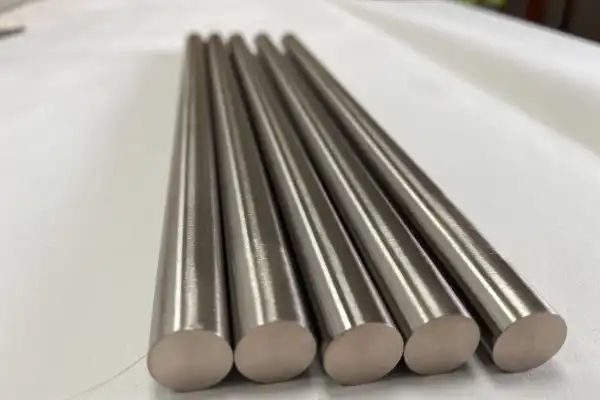
Pure tungsten’s brittleness limits its applications, but material science offers ways to adjust the property balance. Tungsten carbide forms when tungsten combines with carbon, producing a ceramic compound harder than the parent metal. Cemented carbide adds a metallic binder—usually cobalt—to provide toughness while retaining wear resistance. The binder phase absorbs impact energy that would otherwise propagate cracks through the brittle carbide grains.
High-density tungsten alloys incorporate nickel, iron, or copper into the tungsten matrix. These additions improve machinability and ductility without sacrificing much density or strength. The alloying elements concentrate at grain boundaries and modify the fracture behavior, making the material more forgiving under impact loads.
Work hardening also plays a role. Plastic deformation introduces dislocations that interact with each other and with grain boundaries, raising the stress required for further deformation. Controlled cold working can increase hardness and strength in tungsten alloys, though the process requires careful management to avoid cracking.
Hubei Fotma Machinery Co., Ltd. has accumulated over 30 years of technical expertise in developing these materials. On one project involving wear components for high-speed textile machinery, adjusting the binder content and grain size in a cemented carbide formulation produced a 15 percent increase in tool life compared to the previous specification. That improvement translated directly into reduced downtime for the end user.
The combination of hardness, high melting point, and wear resistance makes tungsten essential in applications where other materials would fail quickly. Furnace components, heating elements, and rocket nozzles all operate at temperatures that would soften or melt most metals. Tungsten maintains structural integrity under these conditions.
Aerospace applications use tungsten alloys as counterweights and balance weights. The high density allows compact mass placement, which matters when space is constrained and weight distribution is critical.
Cutting tools represent the most visible application of tungsten’s hardness. Cemented carbide inserts and blades machine steel, cast iron, and superalloys at speeds that would destroy high-speed steel tooling. The carbide maintains edge geometry under the heat and pressure generated during metal removal, which directly affects surface finish quality and dimensional accuracy.
Mining, construction, and oil and gas industries consume significant quantities of tungsten-based wear parts. Drill bits, crusher liners, and valve components face constant abrasion and impact. Tungsten carbide grades optimized for these conditions outlast alternatives by factors of three to ten, depending on the specific application.
Radiation shielding is another application where tungsten’s density and atomic number provide value. High-density tungsten alloys attenuate gamma radiation effectively in a smaller volume than lead, which matters in medical imaging equipment and nuclear facilities where space is limited.
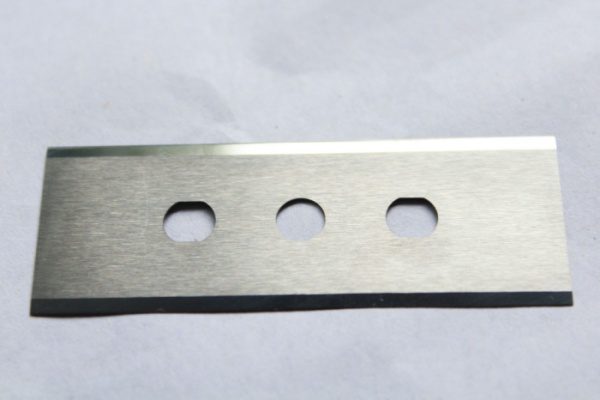
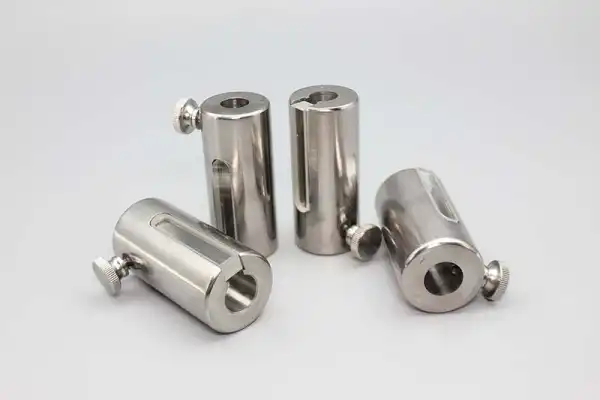
Chromium holds the distinction of highest hardness among pure metals. Tungsten ranks below chromium but significantly above most engineering metals, which is why it dominates applications requiring wear resistance combined with high-temperature stability.
Tungsten is substantially harder. Pure tungsten measures 350-400 HV on the Vickers scale, while titanium alloys typically fall between 150 and 250 HV. The difference is large enough that tungsten-based materials are preferred wherever abrasion resistance matters more than weight savings.
Pure tungsten is an elemental metal with high melting point and density. Tungsten carbide is a ceramic compound formed by combining tungsten with carbon, and it is considerably harder and more brittle than the pure metal. Cemented carbide adds a metallic binder to improve toughness while retaining most of the hardness.
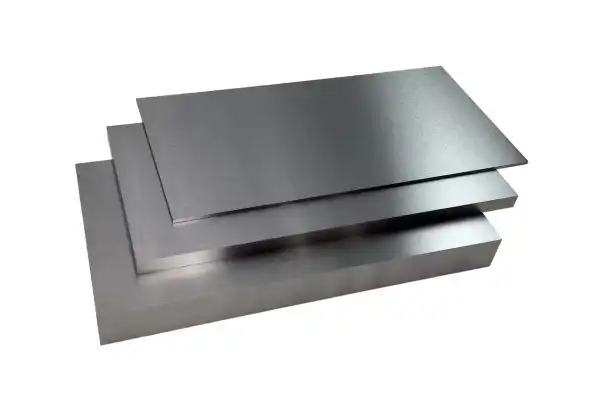
Pure tungsten fractures rather than deforms at room temperature because its ductile-to-brittle transition temperature sits above ambient conditions. This characteristic requires design accommodations—avoiding impact loads, using compressive rather than tensile stress states, or selecting alloyed grades with improved toughness.
Conventional cutting tools struggle with tungsten’s hardness and abrasiveness. Grinding with diamond or cubic boron nitride wheels, electrical discharge machining, and laser cutting are the standard approaches for achieving precise dimensions and surface finishes.
Tungsten has high electrical conductivity, which is why it serves in electrical contacts and incandescent lamp filaments. The dense atomic structure that produces hardness also provides efficient electron pathways. Hardness and conductivity are not mutually exclusive in this case.
Cost, density, and processing difficulty limit tungsten to applications where its properties justify the expense. The material is expensive to refine, heavy compared to aluminum or steel, and requires specialized equipment to shape. Where less demanding conditions exist, cheaper and lighter materials make more economic sense.
If your application involves extreme wear, high temperatures, or radiation shielding requirements, it is worth discussing material grade selection and processing options before finalizing specifications. To discuss specific requirements, contact Hubei Fotma Machinery Co., Ltd. at [email protected] or +86 13995656368.
If you’re interested, check out these related articles:
Unveiling The Versatile World Of Cemented Carbide Products Powering Industries Across The Globe
What Is Tzm Material Equivalent To
Molybdenum Wire Price And Its Importance In Industrial Applications
What Is The Use Of Yg6 Carbide Tips