
Molybdenum sits in a category of metals that engineers reach for when nothing else survives the operating environment. Its melting point of 2620°C places it among the highest of any element—only tungsten, rhenium, and tantalum exceed it. That thermal stability, combined with strength retention at temperatures above 1900°C and resistance to corrosion from acids and molten metals, explains why molybdenum appears in applications ranging from aerospace heat shields to chemical processing equipment. The material’s behavior under extreme conditions makes it worth understanding in detail, particularly for anyone specifying components that will see sustained high temperatures or aggressive chemical exposure.
The atomic structure of molybdenum produces a set of properties that work together in high-temperature service. The metal maintains mechanical integrity at temperatures where most alternatives have already softened or failed entirely. Thermal conductivity is high enough to move heat efficiently through components, which matters in applications like furnace elements or heat sinks where thermal management determines component life. Electrical conductivity is sufficient for use in electrical contacts and interconnects. The coefficient of thermal expansion stays low relative to most metals, reducing the dimensional changes that cause stress failures in assemblies subjected to temperature cycling.
These characteristics combine to produce a material that holds its shape and strength in environments that destroy conventional engineering metals. The modulus of elasticity is high, meaning the metal resists deformation under load. The strength-to-weight ratio is favorable enough that structural applications remain practical without excessive mass penalties.
Corrosion resistance extends to many acids and to contact with molten metals, which opens applications in chemical processing and metallurgical equipment. The resistance is not universal—oxidation becomes significant above certain temperatures in air—but the envelope of protection is broad enough to cover many demanding service conditions.
Pure molybdenum already offers impressive properties, but alloying pushes the performance boundaries further for specific applications. The additions are typically small in percentage terms but produce measurable improvements in targeted characteristics.
TZM alloy contains titanium and zirconium additions that increase high-temperature strength and creep resistance compared to unalloyed molybdenum. The improvement shows up in applications where components must resist deformation under sustained stress at elevated temperatures—furnace structural elements, for example, or tooling that sees repeated thermal cycling.
Molybdenum-rhenium alloys trade some of the base metal’s characteristics for improved ductility and weldability. The rhenium addition makes fabrication of complex shapes more practical and reduces the brittleness that can limit pure molybdenum in certain designs.
Molybdenum-copper composites allow engineers to tailor the coefficient of thermal expansion to match semiconductor materials. A project involving high-power electronics heat sinks demonstrated this approach: matching the CTE to the semiconductor components produced a 30% improvement in thermal dissipation efficiency compared to the previous solution. The ability to tune thermal expansion while maintaining high thermal conductivity makes these composites valuable in electronic packaging where thermal stress at interfaces causes failures.
| Alloy Type | Key Composition | Primary Benefit | Typical Application |
|---|---|---|---|
| TZM | Mo-0.5Ti-0.08Zr | High Temp Strength | Furnace Components |
| Mo-Re | Mo-41%Re | Ductility, Weldability | Aerospace |
| Mo-Cu | Mo-Cu Composite | Tailored CTE, Thermal Conductivity | Electronic Packaging |
| Mo-W | Mo-W Alloys | High Density, Strength | X-ray Targets |
for Spraying)
The mechanism behind these improvements involves solid solution strengthening and grain boundary effects. Alloying elements pin grain boundaries and refine grain structures, which increases toughness and ductility while maintaining or improving strength. In steel applications, molybdenum additions enhance hardenability. In superalloys, the contribution is primarily to high-temperature strength and corrosion resistance.
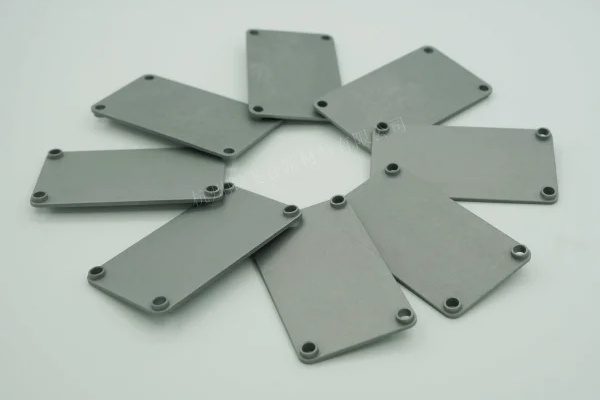
The aerospace sector uses molybdenum and its alloys in missile components, aircraft structures, and thermal protection systems. The combination of high-temperature strength and low thermal expansion makes the material suitable for parts that must maintain dimensional stability through severe thermal transients.
Chemical processing relies on molybdenum’s corrosion resistance in acidic and halogen environments. Heat exchangers, valves, and piping in aggressive chemical service often specify molybdenum or its alloys where stainless steels or nickel alloys would degrade too quickly.
Energy applications include nuclear reactor components, solar panel manufacturing equipment, and high-temperature furnace elements. The material’s stability under irradiation and at elevated temperatures makes it suitable for nuclear service, while its thermal properties support efficient heat transfer in solar and industrial heating applications.
Steel production consumes the largest volume of molybdenum globally. The metal serves as a primary alloying element in high-strength low-alloy steels and stainless steels, contributing strength, toughness, and corrosion resistance. These steels appear in structural applications, pressure vessels, and equipment that must resist both mechanical stress and corrosive environments.
Electronics manufacturing uses molybdenum for sputtering targets, thin-film transistor components, and interconnects. The electrical conductivity is adequate for these applications, and the low coefficient of thermal expansion reduces thermal stress in semiconductor assemblies during processing and operation.
Medical device applications take advantage of molybdenum’s biocompatibility and mechanical properties. X-ray tube targets use molybdenum because it produces characteristic radiation useful for imaging while withstanding the thermal loads from electron bombardment.
Catalytic applications rely on molybdenum compounds rather than the metal itself. Hydrodesulfurization processes in petroleum refining use molybdenum-based catalysts to remove sulfur from fuels, a requirement driven by emissions regulations.
Molybdenum disulfide functions as a solid lubricant in conditions where liquid lubricants fail. High temperatures, vacuum environments, and extreme pressures all favor solid lubricants, and MoS2 provides low friction and wear resistance across a broad range of these conditions.
Thermal spray wire produces dense, wear-resistant coatings on automotive components and machine parts. The coating extends service life in applications where surface wear limits component durability.
Research continues on new molybdenum alloys optimized for specific performance requirements. The targets include higher temperature capability, improved corrosion resistance in novel chemical environments, and better compatibility with advanced manufacturing processes.
Additive manufacturing of molybdenum components is an active development area. The ability to produce complex geometries directly from powder or wire feedstock could open applications where traditional machining or forming limits design options. If your application involves complex geometries or tight thermal management requirements, discussing material options early in the design process often prevents specification problems later.
Environmental considerations affect molybdenum production and use. Mining and ore processing carry environmental impacts including land disturbance, water consumption, and energy use. Modern operations emphasize land reclamation and water management to reduce these effects. Recycling of molybdenum from end-of-life products reduces demand for primary production and lowers the overall environmental footprint of the material supply chain.
The push toward cleaner energy and chemical processes creates demand for more efficient catalysts, and molybdenum compounds figure in several development programs. Energy storage applications represent another potential growth area as battery and fuel cell technologies evolve.
How does molybdenum compare to tungsten in high-temperature applications?
Molybdenum offers lower density and better thermal conductivity than tungsten, which favors applications requiring lighter components or more efficient heat dissipation. Tungsten provides higher melting point and superior strength at the most extreme temperatures. The choice depends on whether the application is limited by weight and thermal management or by absolute temperature capability. Many designs that could use either material end up specifying molybdenum because the density advantage reduces structural mass without sacrificing adequate high-temperature performance.
Is molybdenum considered a rare earth metal?
Molybdenum is not a rare earth element. It belongs to the refractory metals group, characterized by high melting points and resistance to wear at elevated temperatures. The element is relatively abundant in the Earth’s crust, with primary production from molybdenite ore. Supply chains are established and stable compared to actual rare earth elements, which face different extraction and processing challenges.
What are the primary forms of molybdenum available for industrial use?
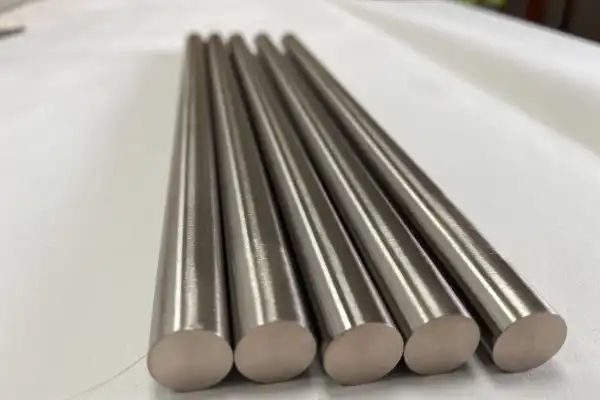
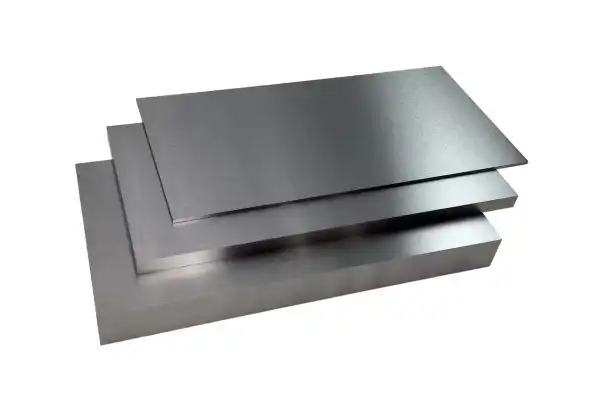
Pure molybdenum is available as sheet, plate, rod, wire, and tube in various dimensions. Alloys including TZM and molybdenum-rhenium are produced in similar forms. Powder forms support thermal spray, additive manufacturing, and powder metallurgy applications. Chemical compounds including molybdenum disulfide and various molybdates serve lubricant and catalyst applications. The form selection depends on the fabrication method and final application requirements.
Can molybdenum be recycled?
Molybdenum recycling is well established, particularly for high-value alloys and applications where the metal content justifies recovery economics. Scrap from machining operations, end-of-life components, and spent catalysts all enter recycling streams. The recycled material maintains properties comparable to primary production, making it suitable for demanding applications. Recycling reduces both raw material costs and environmental impact compared to exclusive reliance on primary production. For projects with significant molybdenum content, discussing recycling options with your supplier can improve both cost and sustainability outcomes.
Sourcing molybdenum products for demanding applications requires suppliers with both material expertise and manufacturing capability. Hubei Fotma Machinery Co., Ltd. provides tungsten-molybdenum products backed by over 30 years of technical development in refractory metals. Contact the materials team at +86 13995656368 or +86 13907199894, or email [email protected] to discuss specific requirements.
If you’re interested, check out these related articles:
Unveiling Porous Titanium Sheets Properties Applications And Supplier Insights
Introduction To Titanium Plates And Titanium Alloy Plates That Are Not Common In Buildings
Panoramic Analysis Of Chinas Molybdenum Industry In 2025 Market Status And Downstream Application Discussion
Technology Of Cold Rolling Tc4 Titanium Alloy Titanium Tube