
Tungsten holds a unique position among refractory metals. Its melting point sits at 3422°C, the highest of any pure metal, and its density approaches 19.3 g/cm³. These numbers translate into real performance advantages in environments where heat, wear, and radiation would destroy conventional materials within hours. Engineers specifying components for vacuum furnaces, radiation shielding, or high-current electrical contacts return to tungsten repeatedly because alternatives simply do not survive the operating conditions.
The material arrives at fabrication facilities in three primary forms: sheet, wire, and tube. Each form serves distinct functional requirements, and the choice between them depends on the specific thermal, mechanical, and dimensional demands of the application. Selecting the wrong form or grade creates problems that surface months later, often during commissioning or early operation when correction costs multiply.
Tungsten processing begins with ore reduction to powder, followed by consolidation through pressing and sintering. The resulting billets then undergo forming operations that determine the final product geometry. Rolling produces sheet stock. Drawing creates wire. Extrusion or mandrel pressing yields tube sections.
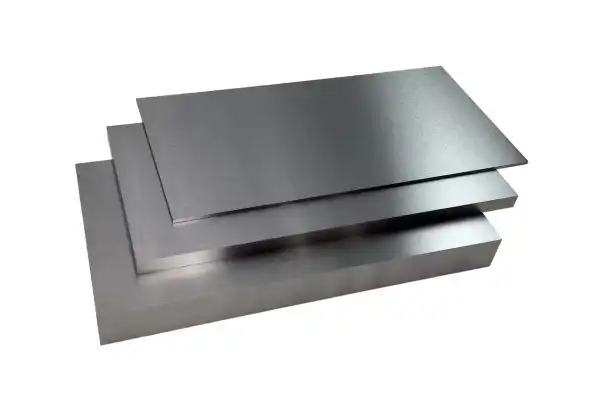
Sheet stock provides broad surface coverage with uniform thickness, typically ranging from 0.05 mm to 10 mm. This form works well for heat shields, sputtering targets, and structural elements in furnace hot zones. The rolling process aligns the grain structure parallel to the sheet surface, which affects both strength and thermal conductivity in predictable ways.
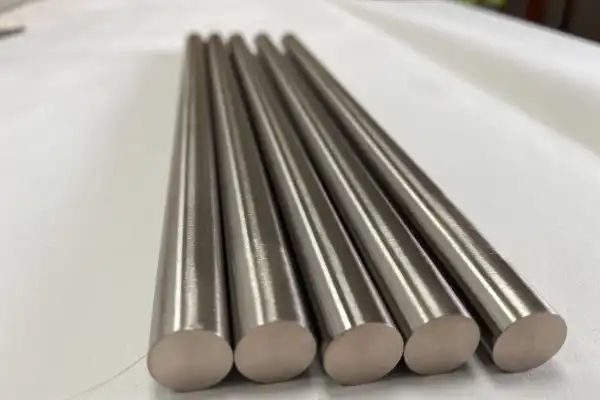
Wire production involves repeated drawing through progressively smaller dies. The resulting material exhibits high tensile strength and can achieve diameters as fine as 0.01 mm. Filament applications in lighting and heating elements rely on this form, as do precision electrical contacts where consistent cross-section matters.
Tube geometry combines the material’s inherent strength with a hollow structure. Outer diameters range from 3 mm to 100 mm depending on the application. Thermocouple protection sheaths, furnace support structures, and electron beam components frequently specify tube form because it provides structural rigidity while allowing internal passage of gases, wires, or other functional elements.
| Form | Typical Dimensions | Key Characteristics | Primary Uses |
|---|---|---|---|
| Sheet | 0.05-10 mm thick | High rigidity, large surface area | Heat shields, sputtering targets, furnace elements |
| Wire | 0.01-3 mm diameter | High tensile strength, ductility | Filaments, heating coils, electrical contacts |
| Tube | 3-100 mm OD | Hollow structure, high strength | Thermocouple protection, high-temperature furnace parts, electron beam components |
Pure tungsten at 99.95% or higher purity delivers the maximum melting point and excellent electrical conductivity. However, this grade presents a significant limitation: brittleness at room temperature. Machining pure tungsten requires careful attention to temperature control and cutting parameters. Cold working operations risk cracking if the material temperature drops below its ductile-to-brittle transition point.
Alloying addresses the brittleness problem while introducing other property modifications. The choice of alloying elements depends on which properties matter most for the intended application.
High-Density Tungsten Alloy contains 85 to 97 percent tungsten with nickel-iron or nickel-copper binders. The binder phase improves machinability dramatically and allows conventional machining operations that would be impractical with pure tungsten. Density remains high, typically above 17 g/cm³, which makes these alloys effective for counterweights, radiation shielding, and kinetic energy applications where mass concentration matters.
Tungsten-copper composites combine tungsten’s arc resistance and high melting point with copper’s thermal and electrical conductivity. The resulting material handles high-current electrical contacts and resistance welding electrodes where heat dissipation and arc erosion resistance both affect service life.
A project from several years back illustrates how grade selection affects outcomes. The initial specification called for pure tungsten in a furnace component operating above 2000°C. The thermal requirements were met, but machining the parts proved difficult. Brittle fracture during final grinding operations pushed rejection rates above acceptable levels. Switching to a tungsten-molybdenum alloy maintained the necessary high-temperature stability while improving machinability enough to reduce production time by 15 percent. Component failures during assembly dropped by 10 percent because the material tolerated the handling stresses inherent in furnace installation.
Standard tungsten products follow established dimensional ranges and tolerances. Custom fabrication addresses applications where those standard parameters do not match the functional requirements.
The manufacturing sequence for custom work follows the same basic steps as standard production: powder preparation, pressing, sintering, and forming. The difference lies in process control precision and the willingness to adjust parameters for specific outcomes. A custom sheet might require tighter thickness tolerance than standard production normally achieves. A custom wire might need a specific surface finish for a particular bonding process. A custom tube might require non-standard wall thickness or length.
Machining tungsten demands specialized approaches regardless of whether the work is standard or custom. The material’s hardness exceeds that of most tool steels, which means cutting tools wear rapidly. Carbide or diamond tooling extends tool life but increases setup costs. Electrical discharge machining handles complex geometries that would be impractical with conventional cutting.
Quality verification for custom work typically includes dimensional inspection at multiple stages, chemical analysis to confirm composition, and mechanical testing to verify that the forming operations achieved the expected property levels. Documentation requirements vary by industry and application, but critical applications generally require full traceability from powder lot through finished part.
The applications for tungsten products cluster around environments that destroy conventional materials. High temperature, high radiation, high wear, and high current density all favor tungsten over alternatives.
Vacuum furnace construction relies heavily on tungsten sheet for hot zone components. The material maintains structural integrity at temperatures where most metals would melt or vaporize. Heat shields fabricated from tungsten sheet protect furnace structures and insulation from direct radiation exposure. Heating elements made from tungsten wire or sheet deliver consistent thermal output over extended service periods.
Medical radiation equipment uses tungsten for shielding applications. The high density attenuates X-rays and gamma radiation effectively, allowing compact shield designs that would require much thicker sections in lower-density materials. Collimators, beam stops, and protective barriers in radiotherapy installations frequently specify tungsten or tungsten alloy construction.
Lighting technology still depends on tungsten wire for incandescent filaments, though the market has shifted toward other lighting technologies. Industrial heating applications continue to use tungsten wire and ribbon for resistance heating elements where operating temperatures exceed the capability of nichrome or other common heating alloys.
Aerospace applications include rocket nozzle components and turbine parts where the combination of high-temperature strength and density provides performance advantages. The material’s resistance to creep at elevated temperatures allows components to maintain dimensional stability under sustained thermal and mechanical loading.
Electrical contact applications exploit tungsten’s arc erosion resistance. High-current switching contacts and resistance welding electrodes experience repeated arc formation that would rapidly destroy copper or silver contacts. Tungsten-copper composites provide the arc resistance of tungsten with improved thermal conductivity for heat dissipation.
China produces a substantial portion of global tungsten supply, and Chinese fabricators have developed significant capability in tungsten processing over the past several decades. The cost structure often favors Chinese sources for standard products, but the decision involves more than price comparison.
Manufacturing capability varies widely among Chinese tungsten suppliers. Some operate modern facilities with advanced process control and testing equipment. Others rely on older equipment and less rigorous quality systems. The certification status of the supplier provides one indicator of quality system maturity. ISO certification demonstrates that the supplier has implemented documented quality management processes, though certification alone does not guarantee that every shipment will meet specifications.
Material certification documentation should accompany each shipment and include chemical composition data, mechanical property test results where applicable, and dimensional inspection records. The level of detail in these documents indicates how seriously the supplier treats quality verification.
Communication practices matter for custom work. A supplier who responds slowly or imprecisely to technical questions during quotation will likely create similar problems during production. The ability to discuss material selection, processing alternatives, and tolerance trade-offs in technical terms suggests engineering depth that benefits complex projects.
Export logistics add complexity to international sourcing. Packaging requirements for tungsten products depend on the form and quantity. Sheet stock requires protection against surface damage during transit. Wire spools need secure mounting to prevent unwinding. Tube sections require end protection and support against bending loads. A supplier with export experience handles these details routinely, while a supplier focused primarily on domestic sales may need guidance.
If your application involves non-standard specifications or tight tolerances, discussing the requirements with the supplier’s technical staff before committing to an order helps identify potential problems early. A supplier who asks clarifying questions about the application context is gathering information needed to make appropriate recommendations.
What are the primary advantages of tungsten over other refractory metals?
Tungsten’s melting point exceeds all other pure metals by a substantial margin, which provides operating temperature capability that molybdenum, tantalum, and niobium cannot match. Its density, nearly twice that of lead, makes it effective for radiation shielding and counterweight applications where space constraints limit the available volume. Corrosion resistance in many chemical environments adds to the application range. The combination of these properties in a single material explains why tungsten remains specified for applications where the operating conditions would destroy alternatives.
How does an OEM ensure the quality of custom tungsten products?
Quality assurance for custom tungsten fabrication involves controls at multiple process stages. Incoming powder inspection verifies that the raw material meets composition and particle size specifications. In-process checks during pressing, sintering, and forming operations confirm that intermediate products remain within tolerance. Final inspection includes dimensional verification, surface condition assessment, and mechanical or chemical testing as specified. Documentation links each finished part to the specific material lots and process records that produced it. Suppliers with mature quality systems maintain these records and can provide them on request.
Are there specific export considerations when ordering tungsten products from China?
Export documentation requirements include commercial invoices, packing lists, and material certifications. Some tungsten products may require export licenses depending on the specific grade, form, and end use. Customs classification affects duty rates and import procedures in the destination country. Packaging must protect the material during ocean or air freight while complying with carrier requirements. Suppliers experienced in export shipments handle these details as routine matters, which reduces the administrative burden on the buyer. Confirming the supplier’s export experience during supplier qualification helps avoid delays and documentation problems later.
For projects requiring specific tungsten grades, custom dimensions, or technical consultation on material selection, Hubei Fotma Machinery Co., Ltd. provides support based on over 30 years of tungsten processing experience. Contact the technical team at [email protected] or +86 13995656368 to discuss your requirements.
If you’re interested, check out these related articles:
What Is The Most Commonly Used Titanium Alloy
All You Need To Know About Copper Nickel Alloy Suppliers