
When procurement engineers ask me about sourcing tantalum products from China, the conversation rarely stays on price for long. Tantalum rod, tube, wire, and crucible each serve distinct applications across chemical processing, electronics, and high-temperature manufacturing, and the form you select determines not just cost but the entire quality verification approach. After three decades in non-ferrous metals production, I have seen too many buyers treat tantalum as interchangeable with other refractory metals and end up with material that fails in service. This guide lays out what you need to know before placing an order, from form selection through supplier qualification.
Tantalum rod, tube, wire, and crucible are not just different shapes of the same material. Each form implies a specific manufacturing route and a different set of performance expectations.
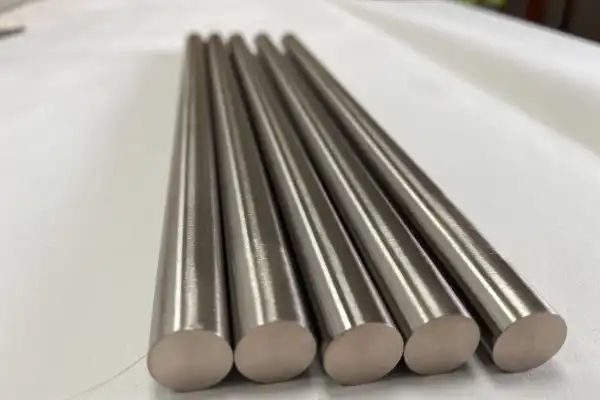
Tantalum rod is typically produced by powder metallurgy followed by forging and rotary swaging. The result is a dense, workable bar stock that can be machined into fasteners, electrodes, or structural components for chemical equipment. Most rods we supply fall between 3 mm and 100 mm in diameter, with lengths up to 2 meters depending on the diameter. Surface finish matters here: a centerless-ground rod eliminates the oxide skin that can cause early corrosion in acid service.
Tantalum tube draws on the same powder metallurgy base but adds a series of drawing and annealing steps. Seamless tube is the standard for heat exchangers and thermowells where a single leak path is unacceptable. Wall thicknesses below 0.5 mm are achievable but raise the scrap rate significantly, which is why thin-walled tantalum tube carries a premium that surprises first-time buyers.
Tantalum wire starts as rod and is drawn through progressively smaller dies. Capacitor-grade wire, which accounts for the largest share of global tantalum consumption, requires purity levels above 99.95% and diameter tolerances measured in microns. For less demanding heating element or mesh applications, 99.9% purity wire is generally sufficient and considerably more economical.
Tantalum crucibles present the most demanding manufacturing challenge. Deep drawing or spinning from sheet stock requires careful control of grain structure to avoid cracking. A crucible that looks sound after forming can develop pinhole leaks during the first thermal cycle if the grain size was inconsistent. For evaporation and melting applications where crucible failure means losing an entire batch, this is where supplier process control separates reliable shops from the rest.
| Product Form | Typical Purity | Common Diameter/Size Range | Key Applications |
|---|---|---|---|
| Rod | 99.9% to 99.95% | 3 to 100 mm dia. | Fasteners, electrodes, chemical equipment parts |
| Tube | 99.9% to 99.95% | 2 to 50 mm OD, 0.5 to 5 mm wall | Heat exchangers, thermowells, bayonet heaters |
| Wire | 99.9% to 99.99% | 0.1 to 3 mm dia. | Capacitors, heating elements, mesh |
| Crucible | 99.9% to 99.95% | 10 to 500 ml capacity | Evaporation sources, melting, crystal growth |
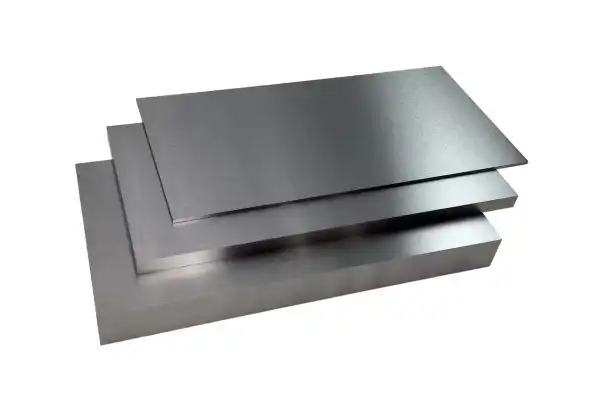
When a supplier tells you their tantalum meets ASTM standards, which ASTM standard are they referencing? ASTM B708 covers tantalum and tantalum alloy plate, sheet, and strip. ASTM B364 covers tantalum and tantalum alloy ingots. For rod and wire, the relevant specifications are less standardized, and this is where a buyer’s own incoming inspection protocol becomes the real quality gate.
The three quality dimensions I tell clients to verify on every shipment are chemistry, grain structure, and surface integrity.
Chemistry certification should come from an accredited lab and list not just the tantalum content but the full impurity spectrum. Iron and nickel are the most common contaminants introduced during powder handling, and each affects corrosion resistance differently. Oxygen content above 300 ppm indicates inadequate vacuum processing and will manifest as edge cracking during subsequent fabrication.
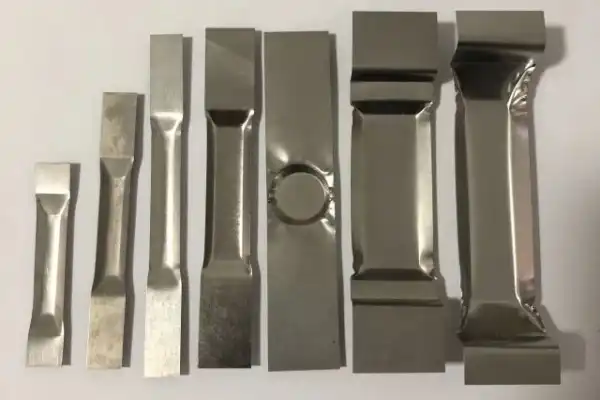
Grain structure is harder for a buyer to verify without metallography, but it is the single best predictor of forming performance. Fine, equiaxed grains indicate proper recrystallization during processing. Elongated or mixed grain sizes point to inconsistent annealing and can cause splitting during deep drawing of crucibles or tight-radius bending of tube.
Surface condition includes pitting, scratches, and residual oxide. For chemical processing applications, a nitric acid passivation step can heal superficial surface damage, but any pit deeper than 0.1 mm in a tube wall is a rejection criterion in our shop.
China controls a significant share of global tantalum processing capacity, but the range of supplier capability is wide. I group suppliers into three tiers based on what I have observed across hundreds of material audits and sourcing projects.
The first tier consists of vertically integrated operations that control ore sourcing through finished product. These are few in number and typically have dedicated tantalum divisions with their own reduction, sintering, and fabrication lines. Their quality systems are audited to ISO 9001 and often to aerospace or medical device standards. Lead times are longer because they do not cut corners in the sintering cycle, but the material consistency justifies the wait.
The second tier is the most common: fabricators who purchase tantalum ingot or billet and process it into finished forms. Their value depends almost entirely on their process control. A second-tier supplier with disciplined annealing and inspection can deliver rod and tube equal to first-tier quality. One without proper vacuum annealing capability will produce material that looks right but fails during customer fabrication.
The third tier consists of traders and aggregators who do no processing themselves. They have a role in the supply chain for standard off-the-shelf items, but for custom tantalum rod dimensions or thin-walled tube with tight tolerances, the lack of traceability to a known mill introduces risk that is hard to justify at tantalum’s price point.
The single most revealing question to ask a prospective supplier is whether they can provide a full mill test certificate that traces back to a specific heat or powder lot. If the answer involves a pause or a workaround, keep looking.
If your program involves custom tantalum dimensions or thin-walled geometries, the supplier tier matters more than the price difference between them. Send your specification to [email protected] with the critical dimensions and tolerance requirements, and we will confirm whether the material can be sourced from our qualified mill network before you commit to a purchase order.
Tantalum pricing is opaque in a way that catches new buyers off guard. Unlike nickel or titanium, tantalum does not trade on a public exchange in a form that sets a transparent benchmark. Price is negotiated bilaterally and moves with concentrate supply, downstream capacitor demand, and geopolitical factors that affect central African ore flows.
In the Chinese market, tantalum rod and tube pricing typically follows a cost-plus structure built on the underlying tantalum powder or ingot cost. Rod in standard diameters from 10 mm to 50 mm is the most economical form per kilogram because it requires the fewest processing steps after sintering. Crucibles carry the highest per-kilogram cost due to the labor and scrap involved in deep drawing or spinning, often 30 to 50 percent above an equivalent weight of rod.
Wire pricing is sensitive to diameter. Capacitor-grade wire below 0.5 mm can cost multiples of what 2 mm wire costs because the drawing process slows to a crawl at fine diameters and die wear becomes a significant cost driver.
Lead times in China for standard tantalum products run six to ten weeks. Custom dimensions, non-standard purity requirements, or thin-walled geometries can push that to twelve weeks or more. I advise clients to factor in an additional two weeks for third-party chemical analysis if they do not have their own material testing capability.
Any serious discussion of tantalum sourcing must address the conflict minerals question. Tantalum is designated as a conflict mineral under Section 1502 of the Dodd-Frank Act, and downstream companies are required to conduct reasonable country-of-origin inquiry on their supply chains.
Reputable Chinese tantalum processors have invested significantly in conflict-free sourcing programs. Many are members of the Responsible Minerals Initiative or have implemented OECD-aligned due diligence frameworks. When you request conflict-free documentation, a credible supplier should be able to provide a CMRT (Conflict Minerals Reporting Template) that names the smelters in their supply chain and confirms their conflict-free audit status.
A red flag is a supplier who dismisses the question or offers a generic assurance without supporting documentation. In my experience, the suppliers who take this seriously can produce their compliance paperwork within a day; those who cannot are either sourcing from unscreened channels or do not understand their own supply chain well enough to make representations.
Sourcing tantalum rod, tube, wire, or crucible from China does not need to be a guessing game. The suppliers who deliver consistent quality all share the same behaviors: they provide full mill test certification without being asked, they can trace every lot to a specific powder batch or ingot, and they answer questions about conflict-free sourcing with specific documentation rather than general assurances. If price is the only information you have to compare, you are missing everything that determines whether the material performs.
Share your part drawings, dimensions, quantity, and any special purity or certification requirements with our team at [email protected] or call +86 13995656368, and we will provide a detailed quotation with the material certifications and compliance documentation you need to evaluate the offer properly.
For standard tantalum rod and tube, most Chinese suppliers set MOQs around 5 to 10 kilograms per line item. Wire can go lower because it is typically sold on spools rather than by weight. Crucibles are often quoted as single pieces once you are above prototype quantities. Custom dimensions nearly always carry a higher MOQ, but for an initial trial order, many shops will run a smaller batch if you accept the setup charge.
Incoming inspection does not require a full laboratory. A handheld XRF analyzer can confirm tantalum content and flag major contaminants like iron or nickel within seconds. For oxygen and nitrogen levels, which matter for formability, you will need inert gas fusion analysis from a third-party lab. I recommend sending one sample from every batch for O/N analysis until you have enough historical data to move to periodic testing.
Tantalum machines more like soft copper than like tungsten or molybdenum. It galls easily, so sharp tooling and adequate coolant are non-negotiable. Expect a machining yield of 70 to 80 percent on complex parts from rod stock, meaning 20 to 30 percent of the starting weight ends up as chips. This is normal and should be factored into your cost model from the start rather than treated as a surprise.
In programs we have supported, Chinese tantalum processors who serve export markets have adopted conflict-free sourcing protocols because their downstream customers require it. The key is verifying that your specific supplier has done the work rather than assuming all Chinese tantalum carries the same risk profile. Ask for a current CMRT and check it against the RMI conformant smelter list before concluding. If your compliance documentation needs review, share the requirements with us and we will confirm what our material certifications cover for your audit trail.
If you’re interested, check out these related articles:
What Material Is Cuni44 Copper Nickel Alloy Plate
Panoramic Analysis Of Chinas Molybdenum Industry In 2025 Market Status And Downstream Application Discussion