
Radiation shielding calculations determine whether a design protects personnel or exposes them to unacceptable dose rates. For engineers specifying tungsten-based shields, the Half-Value Layer concept provides the quantitative foundation for thickness decisions. This article walks through HVL calculations for tungsten, compares performance against lead, and addresses the practical factors that influence shielding effectiveness in real installations.
The Half-Value Layer quantifies the material thickness required to reduce incident radiation intensity by exactly half. For tungsten, with its atomic number of 74 and density reaching 19.3 g/cm³, the HVL values are notably low compared to alternative shielding materials. This translates directly to thinner shield profiles for equivalent dose reduction.
The relationship between HVL and the linear attenuation coefficient μ follows the formula HVL = ln(2)/μ, where ln(2) equals approximately 0.693. The coefficient μ represents the fraction of photons attenuated per unit thickness, and it varies with both material composition and photon energy. Tungsten’s electron density and atomic structure promote photoelectric absorption at lower energies and Compton scattering across the diagnostic and therapeutic energy ranges, making it effective across a broad spectrum.
In a recent medical equipment project, substituting a high-density tungsten alloy for lead reduced shield volume by 35% while maintaining the required dose limits. The client needed a compact device footprint, and the density advantage of tungsten made that possible without compromising safety margins. This kind of outcome is typical when the application demands space efficiency.
| Material | Density (g/cm³) | HVL for 1 MeV Gamma Rays (cm) |
|---|---|---|
| Lead | 11.3 | 0.89 |
| Tungsten | 19.3 | 0.35 |
| Steel | 7.8 | 2.1 |
| Concrete | 2.3 | 6.0 |
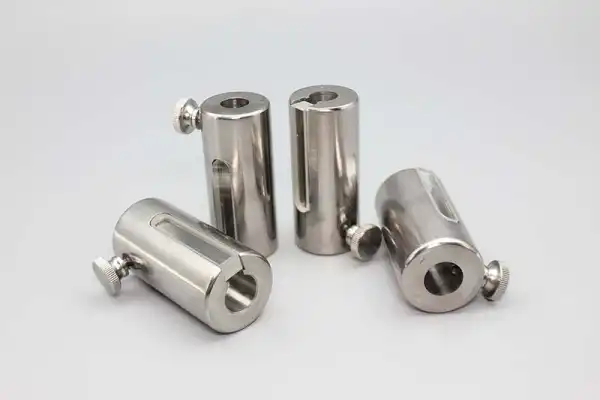
Accurate shielding thickness calculations require systematic attention to source characteristics, regulatory limits, and material properties. The following sequence applies to most tungsten shielding designs:
Specialized software handles complex geometries and multi-energy sources, but these fundamental steps underlie every shielding calculation. Skipping the buildup correction is a common error that leads to undersized shields in thick-barrier applications.
The Half-Value Layer provides a starting point, but several additional factors determine whether a shield performs as designed in actual service.
Radiation energy spectrum matters significantly. Higher-energy photons penetrate more deeply, requiring either greater thickness or materials with higher atomic numbers. A shield designed for 500 keV photons will underperform if the actual source includes a 1.5 MeV component.
Source geometry influences effective shield thickness. Point sources and distributed sources create different radiation fields, and the angle of incidence affects how much material photons actually traverse. A shield that works at normal incidence may be inadequate at oblique angles.
Tungsten alloy composition also affects performance. High-density tungsten alloys, typically containing 85-97% tungsten with nickel-iron or nickel-copper binders, achieve densities between 17.0 and 18.8 g/cm³. The binders improve machinability and ductility while maintaining the density needed for effective attenuation. Pure tungsten reaches 19.3 g/cm³ but is difficult to machine into complex shapes. The mass attenuation coefficient, which describes attenuation per unit mass, reflects these compositional differences.
If your shielding application involves non-standard geometries or mixed-energy sources, it is worth discussing these parameters with a materials specialist before finalizing the design.
Lead has served as the default shielding material for decades due to its availability, cost, and adequate density. Tungsten offers distinct advantages in applications where space, weight, or mechanical performance matter.
The density difference drives most comparisons. Tungsten at 19.3 g/cm³ versus lead at 11.3 g/cm³ means tungsten achieves equivalent attenuation in roughly 40% of the thickness. For 1 MeV gamma rays, tungsten’s HVL of 0.35 cm compares to lead’s 0.89 cm. Achieving the same shielding effect requires approximately 2.5 times more lead by thickness.
This matters in space-constrained environments. Medical imaging equipment, portable radiography systems, and aerospace applications all benefit from thinner, lighter shields. In a collimator design where every millimeter affects beam geometry, tungsten’s compactness is not optional but necessary.
Mechanical properties also favor tungsten. Tungsten alloys possess higher strength and rigidity than lead, making them suitable for structural components or applications involving vibration and mechanical stress. Lead deforms under load and requires secondary support structures in many installations.
Toxicity considerations have shifted the balance further. Tungsten is non-toxic, simplifying handling during fabrication and eliminating disposal complications. Lead requires specialized handling protocols and generates hazardous waste at end of life.
| Property | Tungsten (WHA) | Lead (Pb) |
|---|---|---|
| Density (g/cm³) | 17.0 – 18.8 | 11.3 |
| HVL for 1 MeV Gamma | 0.35 cm | 0.89 cm |
| Mechanical Strength | High | Low |
| Toxicity | Non-toxic | Toxic |
| Machinability | Good (for alloys) | Excellent |
| Cost | Higher | Lower |
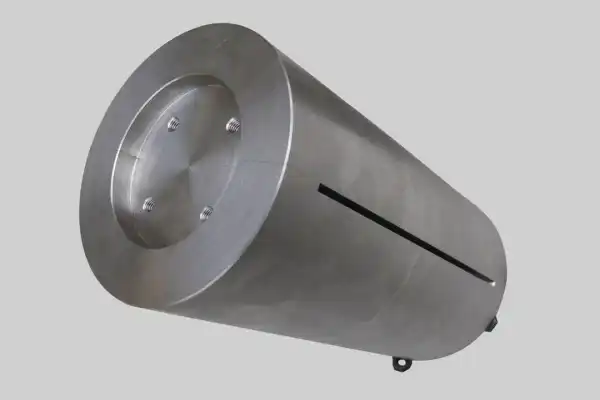
Tungsten shielding serves critical functions in medical, industrial, and energy applications where radiation control is non-negotiable.
Medical imaging relies on tungsten for collimators in PET and SPECT systems, where precise beam shaping determines image quality and patient dose. Syringe shields for radiopharmaceutical handling protect technicians during injection procedures. Radiotherapy equipment uses tungsten to shape treatment beams, protecting healthy tissue while delivering therapeutic doses to target volumes.
Industrial radiography employs tungsten in source containers and inspection equipment. Non-destructive testing of welds, castings, and structural components requires portable radiation sources, and tungsten’s density allows compact containers that meet transport regulations while providing adequate shielding for operators.
Nuclear energy applications include reactor components, hot cell windows, and waste storage containers. The combination of high density, radiation resistance, and mechanical stability makes tungsten alloys suitable for long-term service in high-radiation environments.
Research into advanced tungsten alloys continues to expand application possibilities. New binder systems aim to improve machinability without sacrificing density, and tungsten-based composites incorporating other high-atomic-number materials may offer even more efficient shielding solutions for next-generation systems.
The Half-Value Layer is calculated as HVL = ln(2)/μ, where ln(2) equals approximately 0.693 and μ is the linear attenuation coefficient for the material at a specific radiation energy. The formula directly connects the material’s attenuation properties to the thickness needed for 50% intensity reduction. For tungsten at 1 MeV, this yields an HVL of approximately 0.35 cm.
Tungsten provides superior attenuation per unit thickness due to its higher density and atomic number. A tungsten shield can be roughly 40% as thick as an equivalent lead shield for the same dose reduction. Tungsten also offers better mechanical strength, is non-toxic, and maintains dimensional stability under load. Lead remains cost-effective for large installations where space is not constrained.
Tungsten shielding is standard in medical imaging equipment including PET/SPECT collimators, radiotherapy beam-shaping components, and syringe shields for radiopharmaceutical handling. Industrial applications include radiography source containers and non-destructive testing equipment. Aerospace counterweights, nuclear reactor components, and research facilities also use tungsten where compact, high-density radiation protection is required. To discuss specific requirements for your application, contact our technical team at +86 13995656368 or [email protected].
Exploring The Secrets Of Tungsten Sputtering Targets The Material Magician Of The Microscopic World
High Purity Tungsten Wire The Crossover King From Traditional Lighting To Modern Medicine
For detailed discussions on shielding specifications or custom tungsten alloy solutions, contact us directly. Our team has over 30 years of experience in tungsten material research and precision manufacturing for radiation protection applications. Reach us at +86 13995656368 or +86 13907199894, or send an email to [email protected].
If you’re interested, you may want to read the following articles: