
Tungsten carbide brazing sits at the intersection of metallurgy, thermal management, and mechanical design—and getting it wrong shows up fast. A joint that looks sound at room temperature can crack within hours under thermal cycling, or fail catastrophically when the tool hits its first hard workpiece. The difference between a reliable brazed carbide assembly and a warranty claim often comes down to decisions made before the torch ever lights: which filler metal, what joint geometry, how much gap, and how fast to cool.
This piece walks through the technical framework behind those decisions. The focus is on practical methodology—what actually works when joining tungsten carbide to steel or other substrates, and why certain approaches fail. Engineers dealing with cutting tools, mining bits, or wear components will find the material directly applicable to specification and process development.
Tungsten carbide earns its reputation through a microstructure that combines hard WC grains with a metallic binder, usually cobalt. The cobalt content—anywhere from 3% to 30%—determines where a given grade falls on the hardness-toughness spectrum. A 6% cobalt grade like YG6 delivers hardness around 90.5 HRA but relatively modest transverse rupture strength. Push the cobalt up to 15% and you sacrifice some hardness for significantly better impact resistance, which matters in applications like heavy cutting or mining where shock loads are routine.
The thermal expansion coefficient is where tungsten carbide becomes genuinely difficult to braze. At roughly 5-6 × 10⁻⁶/°C, carbide expands at less than half the rate of most steels. Heat a carbide tip brazed to a steel shank to 700°C, then cool it back down, and the steel contracts faster than the carbide. The result is residual tensile stress concentrated at the joint interface—exactly the loading condition that promotes cracking in brittle materials.
Wettability compounds the problem. Pure tungsten carbide behaves more like a ceramic than a metal when molten filler tries to spread across its surface. Most conventional brazing alloys bead up rather than flow, leaving unbonded areas that become stress concentrators under load. Surface preparation or active filler metals become mandatory rather than optional.
| Carbide Grade | Cobalt Content (%) | Hardness (HRA) | Transverse Rupture Strength (MPa) | Typical Applications |
|---|---|---|---|---|
| YG6 | 6 | 90.5 | 1500 | Wear parts, cutting tools |
| YG8 | 8 | 89.5 | 1800 | Mining tools, dies |
| YG15 | 15 | 87 | 2500 | Impact parts, heavy cutting |
Different grades also respond differently to brazing temperatures. Higher cobalt content means more binder phase available to interact with the filler metal, which can improve wetting but also creates risk of excessive diffusion if hold times run long. A Carbide Moving Knife Blade designed for plastic recycling might use a moderate-cobalt grade that balances edge retention against the thermal abuse of the brazing cycle itself.
The filler metal decision drives everything downstream in tungsten carbide brazing. Get it wrong and no amount of process optimization will save the joint.
Silver brazing alloys remain the workhorse choice for carbide-to-steel joints where operating temperatures stay below 400°C. Their appeal lies in a combination of relatively low brazing temperatures (typically 620-750°C), good ductility after solidification, and reasonable wettability on properly prepared surfaces. The ductility matters because it allows the filler metal layer to absorb some of the differential contraction stress during cooling—essentially acting as a compliant interlayer between two materials that want to shrink at different rates.
Copper brazing pushes into higher temperature territory, with processing typically above 1000°C. The resulting joints can handle more demanding thermal environments, but the trade-offs are real. Higher brazing temperatures mean greater thermal gradients during heating and cooling, which amplifies residual stress. Copper also oxidizes aggressively without atmosphere protection, making vacuum or inert gas processing mandatory rather than optional.
Nickel-based alloys serve applications where the brazed assembly will see sustained high temperatures or corrosive environments. Their strength retention at elevated temperatures exceeds what silver or copper alloys can deliver. The catch is that nickel brazing temperatures often exceed 1000°C, and the resulting joints tend toward brittleness if intermetallic compound formation isn’t carefully controlled.
Active filler metals represent a different approach entirely. Rather than relying on mechanical bonding or pre-metallization of the carbide surface, these alloys contain reactive elements—typically titanium—that form stable compounds directly with the tungsten carbide. The titanium reacts with the WC to create a thin carbide or intermetallic layer at the interface, providing chemical bonding that conventional alloys cannot achieve. This eliminates the need for surface pre-treatment but introduces its own constraints: active brazing requires vacuum or high-purity inert atmospheres to prevent the titanium from reacting with oxygen before it reaches the carbide surface.
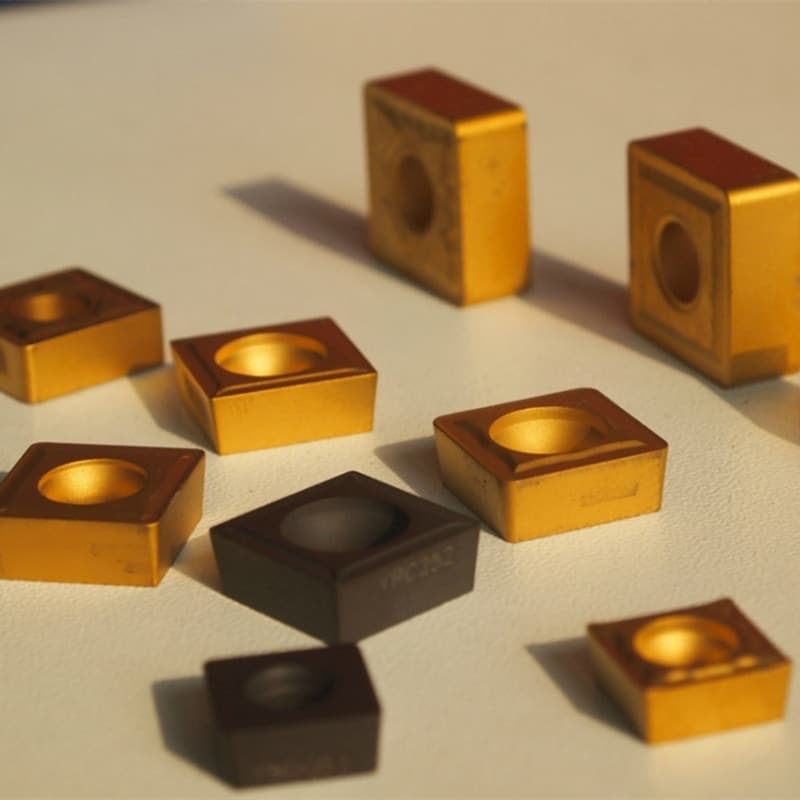
The filler metal’s melting range also constrains joint gap design. Too narrow a gap and capillary action may not pull the molten filler through the entire joint area. Too wide and the filler metal may not bridge the gap at all, leaving voids or unbonded regions. Most tungsten carbide brazing specifications call for gaps between 0.05 mm and 0.15 mm, though the optimal value depends on the specific filler alloy’s flow characteristics.
Joint geometry determines how stress distributes through a brazed tungsten carbide assembly—and whether that stress stays within acceptable limits or initiates failure.
Lap joints dominate tungsten carbide brazing for good reason. By spreading the load across a larger bonding area, lap configurations reduce the stress intensity at any single point. The overlap length becomes a design variable: too short and the joint fails in shear before the carbide or substrate reaches its limit; too long and you waste material without proportional strength gain. A common starting point is an overlap of three to four times the thickness of the thinner member, adjusted based on testing with the specific filler metal and loading conditions.
Butt joints look simpler on paper but perform poorly with carbide. The entire load transfers through a bonding area equal to the cross-section of the parts, concentrating stress at the interface. Worse, butt joints provide no geometric accommodation for thermal expansion mismatch—the carbide and substrate meet face-to-face with nowhere for differential strain to go except into the bond line.
Scarf joints offer a middle path. By angling the joint surface, scarf geometry increases the bonding area beyond what a simple butt joint provides while maintaining a relatively compact overall assembly. The gradual transition also reduces stress concentration compared to the abrupt interface of a butt joint. Scarf angles between 30° and 45° are typical, though steeper angles increase bonding area at the cost of more complex machining.
Thermal expansion mismatch demands attention regardless of joint type. When a carbide tip brazed to a steel shank cools from brazing temperature, the steel contracts more than the carbide. If the joint is rigid, this differential contraction creates tensile stress in the carbide—the worst possible loading for a material that fails in tension at a fraction of its compressive strength. Design strategies to manage this include using compliant filler metals that deform plastically rather than transmitting full stress, incorporating stress-relief grooves in the substrate, or adding intermediate layers of materials with thermal expansion coefficients between those of carbide and steel.
Brazing fixtures serve multiple functions beyond simply holding parts in position. Proper fixturing maintains joint gap consistency across the entire bonding area, prevents parts from shifting as filler metal melts and flows, and can provide controlled constraint during cooling to manage residual stress development. Fixtures themselves must be designed for the thermal environment—materials that distort or react with the brazing atmosphere create problems that show up in every joint processed.
The brazing cycle itself is where preparation meets execution. Each step either builds toward a sound joint or introduces defects that no amount of post-processing can fully correct.
Surface preparation starts with degreasing. Any organic contamination—cutting oils, fingerprints, residual lubricants—will volatilize during heating and create voids in the joint or interfere with wetting. Solvent cleaning followed by alkaline degreasing handles most contamination, but verification matters. A water-break test, where a clean surface supports a continuous water film rather than beading, provides quick confirmation.
Oxide removal comes next. Both the carbide and the mating surface carry oxide layers that impede wetting and bonding. Mechanical methods like grit blasting or grinding work for accessible surfaces. Chemical etching offers more uniform treatment for complex geometries. The key is to complete oxide removal close to the brazing operation—freshly cleaned surfaces re-oxidize within hours in normal atmosphere.
Assembly and fixturing establish the joint geometry that the brazing cycle will lock in permanently. Alignment errors, inconsistent gaps, and loose fits all become permanent features of the finished joint. Fixtures should locate parts positively, maintain gap dimensions under thermal expansion, and allow filler metal to flow without obstruction.
Atmosphere selection controls what happens at the surfaces during heating. Vacuum brazing eliminates oxidation entirely and allows the lowest-residue joints, but requires capital-intensive equipment. Hydrogen atmospheres actively reduce oxides during heating, improving wettability, but introduce safety considerations and may not be compatible with all filler metals. Inert gases like argon prevent oxidation without the reducing action of hydrogen—adequate for many applications but less forgiving of incomplete pre-braze cleaning.
The heating cycle itself requires controlled ramp rates. Rapid heating creates thermal gradients within the assembly—the surface reaches brazing temperature while the interior lags behind. These gradients generate stress before the filler metal even melts. Typical ramp rates for tungsten carbide brazing fall between 5°C and 15°C per minute, slowing further as the assembly approaches brazing temperature to allow thermal equilibration.
Hold time at brazing temperature allows the filler metal to melt, flow into the joint by capillary action, and react with the base materials to form the metallurgical bond. Too short a hold and the filler may not fully wet the surfaces or fill the joint. Too long and excessive diffusion can occur, particularly with active filler metals where prolonged reaction times lead to thick, brittle intermetallic layers.
Cooling rate management is where many tungsten carbide brazing operations fail. Rapid cooling locks in thermal stress before the assembly can equilibrate. Slow, controlled cooling—often with intermediate holds at temperatures where stress relaxation can occur—produces joints with lower residual stress and better resistance to cracking. For critical applications, post-braze stress relief heat treatments may be specified.
Induction brazing offers an alternative to furnace processing for applications where localized heating is advantageous. The ability to heat only the joint area minimizes thermal exposure to the bulk of the assembly, reducing distortion and processing time. Furnace brazing handles larger batches more efficiently and provides more uniform temperature distribution, making it the default choice for production volumes.
Post-brazing inspection separates acceptable joints from those that will fail in service. The inspection method must match the defect types of concern and the criticality of the application.
Visual inspection catches surface-breaking defects: incomplete filler metal coverage, obvious voids at the joint periphery, cracks, and discoloration indicating oxidation or overheating. A magnifying loupe or low-power microscope improves detection of fine cracks and porosity. Visual inspection is fast and inexpensive but limited to what shows at the surface.
Ultrasonic testing detects internal voids and unbonded areas by measuring how sound waves reflect from discontinuities within the joint. The technique requires calibration against known defect sizes and works best on joints with relatively simple geometry. Complex joint shapes can create spurious reflections that complicate interpretation.
Radiographic inspection (X-ray) provides a through-thickness image of the joint, revealing internal voids, porosity, and incomplete fill. The method handles complex geometries better than ultrasonics but involves radiation safety considerations and typically costs more per inspection.
Voids in brazed joints indicate incomplete fill, gas entrapment, or contamination that prevented wetting. Root causes include insufficient filler metal volume, joint gaps outside the optimal range for capillary flow, inadequate surface preparation, or atmosphere problems that allowed oxidation during heating. Corrective action depends on which cause dominates—adding filler metal won’t help if the real problem is surface contamination.
Incomplete fill shows up as unbonded areas, typically at the joint periphery or in regions where filler metal flow was obstructed. Poor wettability, inadequate filler metal quantity, or joint gaps too wide for capillary action are common causes. Improving surface preparation, adjusting filler metal placement, or tightening gap tolerances usually addresses the issue.
Brittle joints result from excessive intermetallic compound formation at the interface. This occurs when brazing temperatures run too high, hold times extend too long, or filler metal chemistry promotes aggressive reaction with the base materials. The intermetallic layer itself may be strong, but its brittleness creates a weak link that fails under impact or fatigue loading. Reducing brazing temperature, shortening hold time, or switching to a less reactive filler metal are typical corrective approaches.
Joint cracking almost always traces back to thermal stress—either residual stress from the brazing cycle or stress induced by subsequent thermal cycling in service. Immediate post-braze cracking indicates excessive cooling rate or severe thermal expansion mismatch without adequate accommodation. Delayed cracking may reflect residual stress combined with environmental factors like hydrogen embrittlement. Slowing the cooling rate, adding stress-relief holds, or redesigning the joint to better accommodate thermal expansion typically resolves the problem.
Mechanical testing provides quantitative data that inspection alone cannot. Shear tests measure the force required to slide the joint apart, directly assessing the bond strength. Tensile tests evaluate resistance to pulling forces perpendicular to the joint plane. Testing should be performed on representative samples from production runs, not just on specially prepared specimens that may not reflect actual process variation.
Tungsten carbide brazing continues to evolve as applications demand higher performance and manufacturing economics push toward greater efficiency.
Active brazing alloy development is expanding the range of carbide grades and substrate materials that can be reliably joined. New alloy compositions offer improved wettability, reduced intermetallic formation, and better compatibility with specific carbide chemistries. Some recent formulations target the medical and aerospace sectors, where biocompatibility or extreme temperature resistance add constraints beyond what industrial tooling applications require.
Additive manufacturing is beginning to intersect with brazing technology. Precise deposition of filler metal allows joint designs that would be impractical with conventional foil or paste application. The ability to vary filler metal composition across a joint—thicker deposits in high-stress regions, thinner layers elsewhere—opens design possibilities that were previously unavailable.
Process monitoring and control systems are becoming more sophisticated. Real-time temperature measurement at the joint interface, rather than just in the furnace atmosphere, allows tighter control of the actual brazing conditions. Adaptive systems that adjust heating rates or hold times based on measured thermal response promise more consistent results across batches with varying thermal mass.
Sustainability considerations are influencing both filler metal selection and process design. Cadmium-bearing silver brazing alloys, once common, are being phased out in favor of cadmium-free alternatives. Energy consumption during brazing—particularly for vacuum furnace operations—is receiving more attention as manufacturers look to reduce carbon footprints without sacrificing joint quality.
If your application involves tungsten carbide brazing with tight performance requirements or unusual material combinations, it is worth discussing the specific parameters before committing to a process specification.
Tungsten carbide brazing demands attention to material properties, filler metal selection, joint design, and process control—each element interacting with the others in ways that reward systematic analysis over trial-and-error. The thermal expansion mismatch between carbide and common substrate materials creates constraints that cannot be ignored, only managed through appropriate design and processing choices.
For projects involving tungsten carbide brazing or related material challenges, contact us at [email protected] or call +86 13995656368 or +86 13907199894.
What determines the right filler metal choice for a specific tungsten carbide brazing application?
The decision comes down to four factors that interact with each other. Thermal expansion compatibility between the filler and both base materials affects residual stress—silver alloys offer ductility that absorbs some mismatch, while nickel alloys run stiffer. Wettability on the specific carbide grade matters because higher-cobalt grades wet more readily than low-cobalt grades, potentially allowing conventional alloys where active fillers would otherwise be necessary. Joint strength requirements at operating temperature narrow the options further; silver alloys lose strength above 400°C while nickel-based fillers maintain strength past 800°C. The operating environment—corrosive media, thermal cycling, impact loading—eliminates candidates that cannot handle the specific conditions. Active filler metals simplify surface preparation but require vacuum or high-purity atmosphere processing.
How does joint geometry affect whether a brazed tungsten carbide assembly survives in service?
Joint design controls stress distribution, and stress distribution determines failure mode. Lap joints spread load across a larger area than butt joints, reducing peak stress at any point in the bond line. The overlap length sets the total shear area—too short and the joint fails before the carbide reaches its load limit. Scarf joints increase bonding area while keeping the assembly compact, with the angle determining the trade-off between area gain and machining complexity. Beyond geometry, the joint must accommodate thermal expansion mismatch. A rigid joint between carbide and steel locks in tensile stress in the carbide during cooling—exactly the loading condition that promotes cracking. Compliant filler metals, stress-relief features in the substrate, or intermediate layers with transitional expansion coefficients all help manage this fundamental incompatibility.
What causes the most common tungsten carbide brazing defects, and how do you prevent them?
Voids result from incomplete fill or gas entrapment—typically traced to surface contamination that prevents wetting, joint gaps outside the optimal range for capillary flow, or insufficient filler metal volume. Prevention starts with thorough degreasing and oxide removal immediately before brazing, followed by gap control within the 0.05-0.15 mm range that most filler metals require for proper flow. Brittle joints indicate excessive intermetallic compound formation, usually from brazing temperatures or hold times that allow too much reaction between filler and base materials. Reducing temperature, shortening hold time, or selecting a less reactive filler alloy addresses the root cause. Cracking traces to thermal stress—either from cooling too fast after brazing or from thermal expansion mismatch that exceeds what the joint design can accommodate. Controlled cooling rates with intermediate holds for stress relaxation, combined with joint designs that allow some compliance, prevent most cracking failures. Consistent results require treating each factor as part of an integrated system rather than addressing defects in isolation.
If you’re interested, you may want to read the following articles:
How To Find Reliable Chinese Titanium Pipe Distributors
Molybdenum Copper Plate Multi Field Application Of High Performance Alloys
What Is The Most Commonly Used Titanium Alloy