
Heat sinks in power electronics fail for predictable reasons. The substrate material sits at the center of most thermal failures, yet engineers often inherit material choices from previous designs without questioning whether those choices still make sense for current power densities. When a device runs hot, the substrate determines whether heat moves efficiently toward the cooling system or accumulates until something breaks.
Power densities keep climbing while package sizes shrink. This combination creates thermal conditions that would have seemed extreme a decade ago. Junction temperatures rise faster, and the margin for error narrows.
The heat sink substrate forms the thermal bridge between active components and whatever cooling system sits downstream. When this bridge has high thermal resistance, heat accumulates at the junction. Elevated junction temperatures accelerate material degradation in ways that compound over time. Solder joints weaken. Die attach interfaces develop micro-cracks. These failures rarely announce themselves until the device stops working.
Minimizing thermal resistance across the substrate path matters more now than it did when power densities were lower. The physics haven’t changed, but the stakes have.
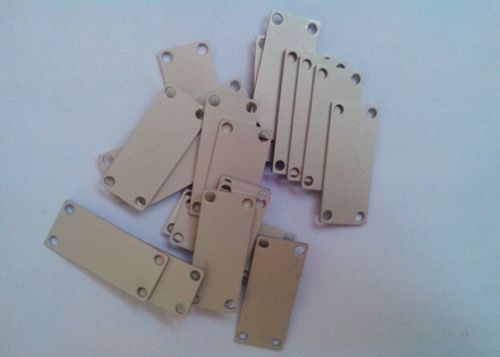
Selecting a heat sink substrate requires weighing several material properties against each other. No single material wins on every metric, so the choice depends on which properties matter most for a specific application.
Thermal conductivity measures how quickly heat moves through a material. Higher values mean faster heat transfer and lower thermal resistance in the substrate layer.
Copper leads common substrate materials at 390 W/m·K. Aluminum nitride reaches 170-200 W/m·K while providing electrical isolation that copper cannot. The difference between these values translates directly into temperature gradients across the substrate. A material with half the thermal conductivity creates roughly twice the temperature drop for the same heat flux.
Hot spots form when thermal conductivity falls below what the application demands. These localized high-temperature zones stress surrounding materials and accelerate failure mechanisms.
The Coefficient of Thermal Expansion describes how materials change dimension with temperature. Silicon expands at roughly 2.6 ppm/°C. Copper expands at about 17 ppm/°C. When these materials bond together and the assembly cycles through temperature extremes, the mismatch creates mechanical stress at the interface.
This stress accumulates with each thermal cycle. Solder joints fatigue. Die attach layers delaminate. Cracks propagate through brittle materials.
Materials like Molybdenum-Copper (MoCu) Alloy Heat Sink and CMC Copper-Molybdenum-Copper Composite exist specifically to address CTE mismatch. Their expansion coefficients can be tailored to match semiconductor materials closely, which reduces mechanical stress during power cycling and extends module life.
Different substrate materials suit different applications. The right choice depends on thermal requirements, electrical isolation needs, mechanical constraints, and cost targets.
Ceramics provide electrical insulation alongside thermal performance. This combination matters when the substrate must isolate high-voltage components.
Aluminum nitride delivers 170-200 W/m·K thermal conductivity with excellent dielectric strength. It handles high-power applications where both heat dissipation and electrical isolation are non-negotiable.
Alumina costs less but conducts heat more slowly at 20-30 W/m·K. It works for applications with moderate thermal loads where cost matters more than peak performance.
Silicon nitride offers 70-90 W/m·K thermal conductivity but excels in mechanical strength and fracture toughness. Harsh environments with vibration or thermal shock favor this material.
Copper and aluminum conduct heat well and cost less than advanced ceramics. Copper spreads heat effectively across large areas. Aluminum weighs less and machines easily. Both require insulating layers when electrical isolation matters.
Composite materials combine properties that no single material provides. Tungsten Copper (W-Cu) Alloy offers adjustable CTE alongside strong heat dissipation. The tungsten content can be varied to match specific expansion requirements while maintaining thermal performance.
These composites fill gaps where pure metals or ceramics fall short. When an application needs both high thermal conductivity and controlled expansion, composites often provide the only viable path.
Direct Bonded Copper and Active Metal Brazing represent two approaches to creating ceramic-metal composite substrates.
DBC bonds copper directly to ceramic at high temperatures. The resulting metallurgical bond creates a robust thermal path through the copper while the ceramic provides electrical isolation. Aluminum oxide and aluminum nitride serve as common ceramic layers in DBC assemblies.
AMB uses an active brazing alloy containing titanium or zirconium. These elements react with the ceramic surface, forming strong bonds at lower temperatures than DBC requires. AMB typically achieves better thermal performance and handles extreme thermal cycling more reliably than DBC.
Both technologies enable heat sink substrates that combine the thermal conductivity of copper with the electrical isolation of ceramics. The choice between them depends on performance requirements, thermal cycling severity, and manufacturing considerations.
Selecting the right heat sink substrate follows a logical sequence. Skipping steps or making assumptions leads to suboptimal choices.
Start by quantifying the thermal load. How much heat must the substrate transfer? What junction temperature can the device tolerate? These numbers define the minimum thermal performance required.
Electrical isolation requirements come next. Some applications need high dielectric strength and voltage withstand capability. Others can use electrically conductive substrates with separate isolation layers.
CTE matching deserves careful attention. The substrate must expand and contract at rates compatible with adjacent materials. Mismatches create stress that accumulates over thermal cycles.
Environmental factors influence material selection. Operating temperature range, humidity exposure, and vibration levels all affect which materials will survive long-term.
Cost enters the equation after performance requirements are clear. Expensive materials make sense when they enable capabilities that cheaper alternatives cannot match. They waste money when simpler materials would work equally well.
Manufacturing feasibility matters too. A theoretically perfect material choice fails if it cannot be processed reliably at production volumes.
For additional perspective on material selection for electronic packaging, 《Analysis Of The Outstanding Performance Of Copper Molybdenum Copper Cmc Electronic Packaging And Heat Sink Materials》 covers related ground.
Hubei Fotma Machinery Co., Ltd. brings over 30 years of experience with tungsten-molybdenum, tungsten-copper, and related non-ferrous metal materials. This technical depth supports heat sink substrate selection and custom material development for demanding thermal management applications.
Contact [email protected] or [email protected] for consultation. Phone inquiries reach +86 13995656368 or +86 13907199894.
The heat sink substrate transfers heat from semiconductor devices to the external cooling system. It forms part of the thermal path that determines how quickly heat leaves the active components. When the substrate conducts heat efficiently, junction temperatures stay lower, which reduces stress on materials and extends device life. A poorly chosen substrate creates a thermal bottleneck that limits how much power the device can handle reliably.
Some materials provide both properties. Aluminum nitride and silicon nitride conduct heat reasonably well while offering high electrical insulation. DBC and AMB technologies bond copper to ceramic insulators, creating substrates with copper’s thermal conductivity and ceramic’s dielectric strength. The specific balance depends on application requirements. High-voltage applications need stronger isolation. High-power applications need better thermal conductivity. Material selection involves finding the combination that meets both requirements without excessive cost.
Alumina substrates cost less than aluminum nitride while providing adequate thermal performance for moderate power levels. Aluminum-based substrates offer another economical path when electrical isolation can be handled separately. Composite materials have become more cost-competitive as manufacturing processes mature. The most cost-effective choice depends on specific thermal and electrical requirements. Over-specifying materials wastes money. Under-specifying leads to field failures that cost more than the material savings.