
Precision packaging in high-tech industries requires materials that hold their shape when temperatures shift. Kovar and Invar alloys meet this need because their thermal expansion rates are predictable and low. We machine components from these materials for applications where even small dimensional changes cause problems. This piece covers their properties, what makes them difficult to machine, and how to design with them effectively.
Kovar and Invar are nickel-iron alloys with thermal expansion rates engineered to match specific materials. This matters when you need hermetic seals or joints between metals and glass or ceramics that won’t crack under temperature swings.
Kovar contains nickel, cobalt, and iron. Its expansion rate closely matches borosilicate glass and alumina, which is why it shows up in glass-to-metal seals. When you need a vacuum-tight connection in an electronic device, Kovar properties make that bond reliable across temperature cycles.
Invar is simpler in composition—mostly iron and nickel—but its expansion coefficient is remarkably low across a wide temperature range. Precision instruments use Invar characteristics to maintain exact dimensions whether the room is cold or warm. Both alloys reduce thermal stress at material interfaces, which prevents the kind of failures that end a device’s useful life early.
| Feature | Kovar (ASTM F15) | Invar (FeNi36) |
|---|---|---|
| Composition | Fe-Ni-Co (approx. 54% Fe, 29% Ni, 17% Co) | Fe-Ni (approx. 64% Fe, 36% Ni) |
| CTE (x10^-6/°C) | ~5.0 (20-400°C) | ~1.2 (20-100°C) |
| Primary Use | Glass-to-metal seals, hermetic sealing | Dimensional stability, precision instruments |
| Thermal Expansion | Matches glass/ceramic | Extremely low |
| Magnetic Properties | Ferromagnetic | Ferromagnetic |
| Machinability | Moderate | Moderate |
The high nickel content in both Kovar and Invar causes work hardening during cutting. The material gets harder as you machine it, which wears tools quickly and degrades surface finish if you don’t adjust your approach. CNC machining Kovar successfully means accepting that standard parameters won’t work.
Invar fabrication challenges are similar. Carbide-tipped tools hold up better than high-speed steel. Rigid machine setups matter because any vibration amplifies the work-hardening problem. Feed rates need to be consistent—hesitation lets the material harden in place. Coolant keeps heat from building up, which would otherwise cause the dimensional changes you’re trying to avoid in the finished part.
We’ve found that achieving the surface finish requirements and tight tolerances these applications demand comes down to treating each cut as a balance between removing material efficiently and not letting the alloy fight back. The precision engineering components that result justify the extra attention.
Kovar and Invar machined parts appear wherever thermal stability determines whether a system works or fails. Aerospace components like satellite instrumentation and guidance systems operate across extreme temperature ranges, and dimensional shifts would throw off calibration. Medical devices manufacturing uses these alloys for hermetic seals in implants and diagnostic equipment where moisture ingress would cause failure.
Optical systems including lasers and imaging devices need stable mounts and enclosures because even microscopic movement affects beam alignment or image quality. Semiconductor packaging relies heavily on Kovar and Invar for lead frames and hermetic packages. The devices inside generate heat, and the packaging must accommodate thermal cycles without stressing the delicate components it protects.
Effective low-expansion packaging design starts with understanding how different materials in an assembly will move relative to each other. CTE matching between Kovar or Invar and adjacent materials—glass, ceramics, or other metals—determines whether joints stay intact or develop stress fractures over time.
Hermetic sealing depends on this matching. A seal that’s perfect at room temperature but stressed at operating temperature will eventually leak. Thermal stability across the full temperature profile matters more than performance at any single point.
We approach reliability engineering by mapping the entire thermal journey: assembly temperatures, storage conditions, operational extremes, and the number of cycles the assembly will see. This lets us predict where stress mitigation is needed and design accordingly. The goal is packaging that performs consistently for years, not just through initial testing.
CTE matching prevents the internal stresses that cause packaging to fail. When joined materials expand at different rates during temperature changes, they pull against each other. Over enough cycles, this creates cracks, delamination, or seal failures.
Material compatibility issues show up gradually. A package might test fine initially but fail after months of thermal cycling in the field. Accurate CTE matching means all parts move together, preserving packaging integrity through temperature swings. The result is long-term performance rather than early replacement.
Quality control low-expansion parts requires verification at every stage. Our processes follow ISO 9001 certification standards, covering incoming material inspection through final dimensional checks. Testing methods include composition verification and mechanical property measurement because the alloy’s performance depends on getting the chemistry right.
Material traceability provides accountability. If a problem appears later, traceability lets us identify the material lot, processing conditions, and inspection results. When evaluating any supplier for these specialized alloys, look for documented experience with Kovar and Invar specifically—general machining capability doesn’t translate directly to success with work-hardening materials.
Selecting between Kovar and Invar depends on what problem you’re solving. Start with the operational temperature range and whether the application involves thermal cycling or steady-state conditions.
Kovar makes sense when you need glass-to-metal seals because its expansion rate matches common sealing glasses. The bond stays stress-free across temperature changes, maintaining hermetic integrity.
Invar fits applications where dimensional stability matters more than sealing. Precision instruments, optical benches, and metrology equipment use Invar because it simply doesn’t move much when temperature changes.
Cost-effectiveness Kovar and Invar varies by application. Both are specialized alloys with processing requirements that affect price. Design trade-offs between thermal properties, mechanical strength, and machinability need evaluation against your specific performance requirements. Our material selection criteria help identify which alloy serves each project best.
Material property comparison between these alloys reveals why each serves different purposes. Kovar (ASTM F15) was engineered specifically to match the thermal expansion of borosilicate glass and alumina ceramics. This makes it the standard choice for hermetic sealing in electronic devices, vacuum tubes, and optoelectronic components. The alloy characteristic that matters is its CTE, which allows glass-to-metal bonds that don’t stress either material.
Invar (FeNi36) takes a different approach. Its expansion coefficient is simply very low—among the lowest of any metal alloy near room temperature. Applications of Invar prioritize holding exact dimensions regardless of temperature. Optical benches, precision measurement equipment, and scientific instruments rely on this stability.
The distinction is functional: Kovar applications focus on matching expansion rates with other materials for sealing, while Invar applications focus on minimizing expansion altogether for dimensional stability.
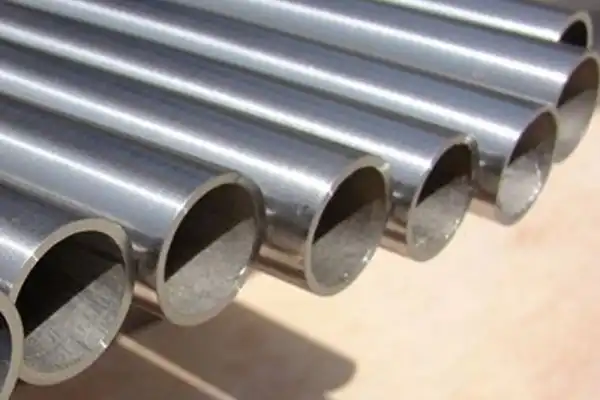
Partner with Hubei Fotma Machinery Co., Ltd. for unparalleled expertise in Kovar and Invar precision machined parts. With over 30 years of material research and ISO-9000-1:2008 certification, our advanced manufacturing solutions ensure the highest quality and reliability for your low-expansion packaging needs. Contact us today for a consultation or to discuss your specific project requirements. Email: [email protected], [email protected] | Phone: +86 13995656368, +86 13907199894.
The nickel content causes work hardening during cutting. As the tool passes through the material, the surface behind it becomes harder than the original stock. This accelerates tool wear, creates poor chip formation, and can ruin surface finish if cutting parameters aren’t adjusted. Successful precision machining requires carbide tooling, rigid setups, consistent feed rates, and effective cooling to maintain dimensional accuracy for low-expansion packaging applications.
We follow ISO-9000-1:2008 protocols covering every production stage. Incoming material gets composition and property verification. In-process checks monitor dimensions and surface conditions. Final inspection confirms that each part meets specifications. Material traceability documents the complete history of every component, so any question about a part can be answered with data rather than assumptions.
Yes. Custom machining services for Kovar and Invar are a core capability. Our team’s material research background means we understand how these alloys behave under different processing conditions. We design and produce low-expansion components to specific customer requirements across industries including aerospace, medical devices, and semiconductor packaging. The goal is parts that meet your exact specifications, not standard catalog items that almost fit.