
Power electronics keep getting hotter. That’s not a metaphor—it’s a literal engineering problem that gets worse every year as devices pack more capability into smaller footprints. I’ve watched the thermal management conversation shift dramatically over the past decade, from “adequate cooling” to “survival-critical heat dissipation.” The materials sitting between your semiconductor die and the rest of the thermal stack matter more than most engineers initially realize. Get the heat spreader wrong, and you’re looking at premature failures, degraded performance, and warranty claims that eat into margins. Get it right, and devices run cooler, last longer, and perform closer to their theoretical limits.
The shift to wide-bandgap semiconductors—SiC and GaN primarily—changed the thermal equation fundamentally. These devices operate at power densities and junction temperatures that would have seemed unrealistic a generation ago. Traditional heat spreader materials that worked fine for silicon-based power electronics often can’t keep pace.
The problem isn’t just raw heat output. It’s the combination of higher operating temperatures, faster switching frequencies, and the mechanical stress that comes from thermal cycling. A heat spreader that conducts heat adequately might still fail because it expands and contracts at a different rate than the semiconductor it’s bonded to. After enough thermal cycles, that mismatch creates cracks, delamination, and eventual device failure.
This is where composite materials enter the picture. By combining metals with different properties—copper for thermal conductivity, molybdenum or tungsten for CTE control—engineers can create heat spreaders tailored to specific thermal and mechanical requirements.
CMC and CPC represent fundamentally different approaches to the same problem. Understanding what each brings to the table helps clarify which applications favor one over the other.
CMC composite material uses a tri-layer architecture: a molybdenum core sandwiched between copper cladding on both faces. The molybdenum provides low thermal expansion and high stiffness, while the copper layers deliver the thermal and electrical conductivity needed for effective heat spreading.
Manufacturing CMC composite material requires precise bonding—typically through rolling or diffusion bonding—to create metallurgically sound interfaces between layers. The ratio of copper to molybdenum thickness can be adjusted to tune the overall CTE, allowing the composite to match specific semiconductor materials closely. This tunability is the key advantage.
CPC composite material typically starts with a copper substrate and adds a plated copper surface layer, usually through electroplating. The name can be slightly misleading—it’s not a structural composite in the same sense as CMC. The plating primarily addresses surface properties, thickness control, or corrosion resistance rather than fundamental thermal-mechanical behavior.
Manufacturing is straightforward and cost-effective compared to CMC. The result is essentially copper’s thermal performance with some surface enhancement. What you don’t get is meaningful CTE modification—the material behaves thermally like copper.
| Feature | CMC Composite Material | CPC Composite Material |
|---|---|---|
| Composition | Cu/Mo/Cu (Copper-Molybdenum-Copper) | Copper base with plated copper surface |
| CTE Match | Excellent (tailorable to semiconductor) | Moderate (primarily copper’s CTE) |
| Thermal Conductivity | High (due to copper layers) | Very High (pure copper) |
| Rigidity | High (due to molybdenum core) | Moderate |
| Manufacturing | Complex (rolling, diffusion bonding) | Simpler (electroplating) |
| Cost | Higher | Lower |
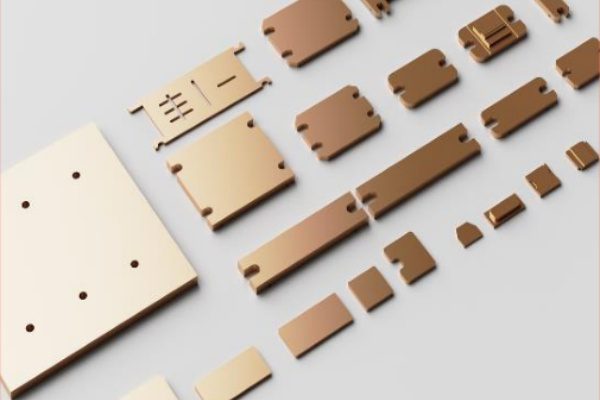
Two properties dominate heat spreader selection: thermal conductivity and coefficient of thermal expansion. Everything else is secondary.
Thermal conductivity determines how quickly heat moves through the material. Higher values mean lower temperature gradients and cooler junction temperatures. Pure copper excels here, which is why it forms the conductive layers in CMC and the base material in CPC. The molybdenum core in CMC composite material reduces overall thermal conductivity somewhat compared to solid copper, but the tradeoff is usually worthwhile for the CTE benefits.
CTE mismatch creates mechanical stress during thermal cycling. When a heat spreader expands at a different rate than the semiconductor die bonded to it, the solder joint between them experiences shear stress. Repeat this cycle enough times—and power devices can see thousands of thermal cycles over their operational life—and fatigue cracks develop. Eventually, the thermal interface degrades or fails entirely.
Materials like Molybdenum-Copper (MoCu) alloy and CMC composite material address this by offering CTE values closer to common semiconductor materials. Silicon has a CTE around 2.6 ppm/°C, while copper sits near 17 ppm/°C. That’s a substantial mismatch. Molybdenum’s CTE of approximately 5 ppm/°C, combined with copper in a composite structure, can achieve intermediate values that reduce stress significantly.
The practical impact shows up in reliability testing. Devices with well-matched CTE heat spreaders routinely survive thermal cycling tests that would cause failures in devices using pure copper heat spreaders within a few hundred cycles.
The connection between heat spreader material and device longevity isn’t subtle. It’s direct and measurable.
Power devices experience thermal cycling constantly during normal operation. Every time a device turns on, heats up, turns off, and cools down, the packaging materials expand and contract. The cumulative effect of these cycles determines when—not if—mechanical degradation occurs.
A heat spreader with poor CTE matching accelerates this degradation. Solder joints fatigue faster. Die attach materials delaminate. Thermal resistance increases as interfaces degrade, which raises junction temperatures, which accelerates further degradation. It’s a failure spiral that starts with material selection.
The economic argument for proper material selection is straightforward. The cost difference between CMC composite material and CPC composite material is real but modest compared to the cost of field failures, warranty claims, or reputation damage from unreliable products. In applications where reliability matters—and in power electronics, it almost always does—the material investment pays for itself.
CMC composite material heat spreaders prove their value in applications where CTE matching and thermal stability are non-negotiable.
High-frequency RF devices need minimal thermal expansion to maintain dimensional stability and signal integrity. Even small geometric changes from thermal expansion can shift performance parameters outside acceptable ranges.
Automotive power modules, especially in electric vehicles, face brutal thermal cycling. Ambient temperatures swing from well below freezing to desert heat, while the modules themselves generate substantial heat during operation. CMC’s ability to handle this cycling without degradation makes it a natural fit.
Aerospace electronics add the complication of vibration and shock alongside thermal demands. The mechanical rigidity of the molybdenum core in CMC provides structural benefits beyond pure thermal management.
How a heat spreader is made affects how it performs. This isn’t just about quality control—though that matters—it’s about the fundamental material properties that emerge from different manufacturing approaches.
For CMC composite material, the bonding process between copper and molybdenum layers determines interface quality. Poor bonding creates thermal resistance at the interfaces and mechanical weak points that can fail under stress. Controlled bonding through rolling or diffusion bonding, with proper temperature and pressure profiles, produces consistent CTE behavior and strong metallurgical integrity.
For CPC composite material, plating parameters influence surface finish, adhesion, and thickness uniformity. These factors affect thermal contact resistance when the heat spreader is assembled into a larger thermal stack. Consistent plating also matters for corrosion resistance in applications where environmental exposure is a concern.
Testing validates that manufacturing controls translate into predictable performance. Thermal conductivity measurements, CTE characterization, and mechanical testing confirm that each batch meets specifications.
The push toward higher power density and smaller form factors isn’t slowing down. If anything, it’s accelerating. This drives continued development in heat spreader materials.
Advanced Molybdenum-Copper (MoCu) alloy and Tungsten Copper (W-Cu) alloy formulations offer performance improvements over earlier generations. Tungsten’s extremely low CTE and high density make it attractive for applications where weight isn’t a constraint but thermal-mechanical stability is paramount.
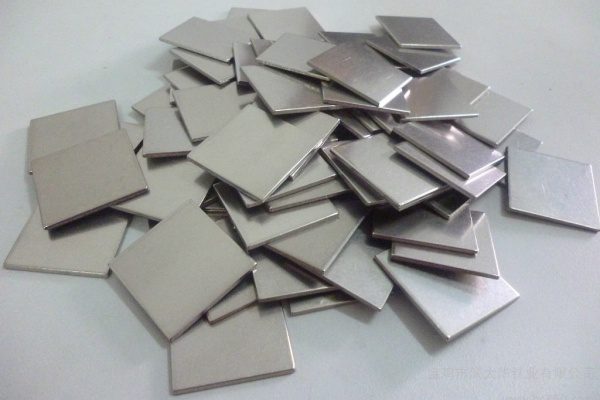
Research continues into novel composite structures that optimize heat flow paths. Rather than simple layered structures, some approaches use engineered architectures to direct heat more efficiently toward cooling surfaces. Manufacturing techniques are evolving to enable these more complex geometries while maintaining cost-effectiveness.
The integration of these advanced materials will be essential as electronic systems continue to shrink while handling more power. The thermal management challenge isn’t going away—it’s getting harder. Materials development has to keep pace.
CPC composite material heat spreaders offer considerable flexibility in customization. The electroplating process allows for precise control over dimensions, and the copper base material machines readily. This makes it practical to tailor CPC heat spreaders to match specific device footprints and integration requirements, ensuring good thermal contact with the components they serve.
CMC composite material typically costs more than CPC composite material due to the molybdenum content and more complex manufacturing process. However, the cost comparison shouldn’t stop at material price. In demanding applications, CMC’s superior thermal-mechanical stability can reduce failure rates and extend device life, potentially offsetting the higher initial cost through improved reliability and lower warranty expenses. The right choice depends on the specific application requirements and acceptable risk levels.
Reliability in extreme conditions comes from matching material properties to application demands. CMC composite material and CPC composite material, along with Molybdenum-Copper (MoCu) alloy products, provide different combinations of thermal conductivity, CTE, and mechanical strength. Selecting the right material for the thermal cycling range, operating temperature, and mechanical stress expected in a given application is the foundation of reliability. Manufacturing quality control and testing verify that the materials perform as specified under those conditions.
Hubei Fotma Machinery Co., Ltd. brings over 30 years of experience in advanced non-ferrous metal materials to thermal management applications. For specific CMC and CPC heat spreader requirements, reach out at [email protected] or [email protected] to discuss your application needs and explore material options.