
Choosing between custom-fabricated and off-the-shelf tungsten components is one of those decisions that looks straightforward on paper but gets complicated fast once real project constraints enter the picture. Budget pressures push toward stock parts. Performance demands pull toward custom fabrication. Timelines add their own pressure. After working through enough of these sourcing decisions, patterns emerge about when each approach actually makes sense—and when the obvious choice turns out to be wrong.
The gap between custom tungsten parts and stock components isn’t just about price or lead time. It shapes how well a component performs under stress, how long it lasts in service, and whether it integrates cleanly into existing systems. Tungsten’s extreme properties—its density, hardness, and thermal stability—amplify the consequences of getting this decision wrong. A stock part that almost fits might fail catastrophically in a high-temperature application. A custom part designed for conditions that never materialize wastes budget that could have gone elsewhere.
Hubei Fotma Machinery Co., Ltd. manufactures both custom and stock tungsten products, drawing on over 30 years of material research and modern production equipment. That dual capability matters because the real question isn’t which approach is better—it’s which approach fits the specific situation.
Custom tungsten manufacturing exists because standard parts have limits. When an application demands a geometry that doesn’t exist in catalogs, or when material properties need precise control, custom fabrication becomes the only viable path.
The process starts with specifications. Exact dimensions, tolerances, alloy composition, surface finish—all of it gets defined before production begins. Prototyping services verify fit and function before committing to full production runs. This front-loaded engineering work takes time, but it eliminates the guesswork that leads to field failures.
High-density alloys and tungsten-molybdenum alloys represent common custom requests. These materials serve applications where standard tungsten grades fall short—situations requiring specific combinations of density, machinability, or thermal behavior. Mechanical processing components and precision instrument accessories often fall into this category, where integration requirements leave no room for dimensional compromise.
Certain applications simply cannot tolerate the compromises inherent in standard parts. Thermal management systems operating near tungsten’s performance limits need components engineered for those exact conditions. Wear surfaces in extreme environments require material properties tuned to the specific abrasive or corrosive agents present.
The decision point often comes down to consequences. When a component failure means equipment downtime measured in days or weeks, custom fabrication costs look different. When safety margins matter, the precision of bespoke design justifies its premium.
Hubei Fotma’s work with mechanical processing and precision instrument accessories illustrates this principle. These components must integrate with existing systems while meeting performance specifications that standard parts cannot guarantee. The custom approach ensures that density, strength, and dimensional accuracy align with actual operating requirements.
Stock tungsten products exist because not every application requires custom engineering. When standard specifications meet the need, off-the-shelf solutions offer compelling advantages.
Batch production drives the economics. Manufacturers spread tooling and setup costs across larger volumes, reducing per-unit prices. Inventory availability eliminates the lead time associated with custom fabrication. For projects where rapid deployment matters more than perfect optimization, stock parts often make sense.
ISO-9000-1:2008 certification provides quality assurance for standard components. This certification means consistent material properties and dimensional accuracy across production batches—predictability that simplifies procurement and reduces incoming inspection requirements.
The practical question becomes whether standard specifications actually match the application. When they do, stock parts deliver value. When they don’t, forcing a standard part into a custom application creates problems that cost more to fix than custom fabrication would have cost upfront.
| Feature | Custom Tungsten Parts | Stock Tungsten Components |
|---|---|---|
| Design | Tailored to exact specifications | Standardized, pre-designed |
| Lead Time | Longer (design, prototyping, production) | Shorter (readily available) |
| Cost | Higher (tooling, specialized labor, lower volume) | Lower (economies of scale) |
| Flexibility | High (unlimited design possibilities) | Limited (fixed specifications) |
| Application | Unique, critical, high-performance | Standard, general-purpose |
| Volume | Low to medium (often project-specific) | Medium to high (mass-produced) |
The custom vs. stock decision rarely hinges on a single factor. Budget, schedule, and performance requirements interact in ways that shift the optimal choice.
Budget constraints favor stock parts when standard specifications suffice. But budget analysis should include lifecycle costs, not just purchase price. A cheaper stock part that fails prematurely or requires modification costs more in the long run than a properly specified custom component.
Delivery schedules create their own pressure. Custom fabrication timelines include design review, material sourcing, tooling, production, and quality verification. Projects with aggressive deadlines may not have room for this sequence, making stock parts the only practical option regardless of technical preference.
Performance requirements set the floor. When an application demands specific material properties or dimensional tolerances, those requirements override cost and schedule considerations. No amount of schedule pressure justifies installing a part that will fail in service.
Design complexity matters too. Simple geometries often exist in standard catalogs. Complex shapes with tight tolerances typically require custom fabrication. The boundary isn’t always obvious, which is why early consultation with material specialists helps avoid late-stage surprises.
Tungsten’s value in industrial applications stems from its material properties. High melting point, exceptional density, strong wear resistance, and good thermal conductivity make it irreplaceable in demanding environments. Understanding these properties guides both the custom vs. stock decision and the specific material selection within each category.
High-temperature applications exploit tungsten’s 3,422°C melting point—the highest of any pure metal. Components operating in furnaces, plasma systems, or other extreme thermal environments rely on this stability. The specific grade and alloy composition affect performance at temperature, making material selection a technical decision rather than a procurement formality.
Corrosion resistance varies with environment and alloy composition. Pure tungsten resists many acids but reacts with others. Alloy additions modify this behavior. Matching material to environment requires understanding both the tungsten grade and the operating conditions.
Tungsten Copper (W-Cu) Alloy combines tungsten’s thermal stability with copper’s conductivity. This composite material serves high-power heat sinks and electrical contacts where neither pure metal would suffice. The tungsten matrix provides structural integrity at temperature while copper pathways conduct heat away from critical surfaces.
High-Density Tungsten Alloy (WHA) offers radiation shielding capabilities that stem from tungsten’s density. Medical imaging equipment, nuclear facilities, and aerospace applications use these alloys where lead’s lower density would require impractically thick shielding sections.
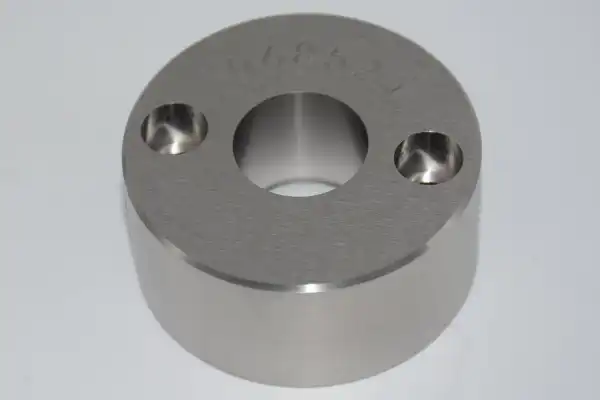
Effective tungsten procurement goes beyond transactional purchasing. The technical complexity of these materials rewards relationships with suppliers who understand both the materials and the applications.
Hubei Fotma’s ISO-9000-1:2008 certification reflects systematic quality management across tungsten-molybdenum products, tungsten-copper alloys, cemented carbide, and high-density alloys. Modern production equipment and advanced testing methods support consistent output quality. But certification and equipment only matter if the supplier can apply them to actual project needs.
Technical support distinguishes commodity suppliers from strategic partners. Material selection guidance, design consultation, and application engineering help procurement specialists navigate decisions that affect downstream performance. This expertise proves especially valuable when projects fall into gray areas where both custom and stock approaches might work.
Supply chain reliability matters for production planning. Consistent lead times, quality levels, and communication enable the kind of planning that keeps projects on track. Decades of experience in non-ferrous metal materials builds the operational discipline that delivers this reliability.
Tooling represents the largest cost driver for custom parts. Custom fabrication requires fixtures, dies, or specialized setups that spread across relatively small production volumes. Stock parts amortize these costs across much larger quantities, dramatically reducing per-unit impact.
Production volume compounds this effect. Custom orders typically involve tens or hundreds of pieces. Stock production runs in thousands or more. The math favors stock parts on unit cost, though total project cost depends on whether stock specifications actually meet requirements.
Design complexity adds machining time and increases scrap rates for custom work. Complex geometries require more operations, tighter process control, and more inspection. Simple shapes cost less to produce regardless of whether they’re custom or stock.
Minor modifications sometimes work. Drilling, tapping, or light machining can adapt stock parts for specific mounting or interface requirements. The feasibility depends on the original part’s design and the nature of the required changes.
Significant modifications usually fail. Tungsten’s hardness makes extensive machining difficult and expensive. More importantly, modifications can compromise material properties or introduce stress concentrations that lead to premature failure. When stock parts need substantial changes, custom fabrication typically produces better results at comparable or lower total cost.
Consultation with material specialists helps assess specific situations. Hubei Fotma’s technical team can evaluate whether a proposed modification makes sense or whether custom fabrication would better serve the application.
Custom fabrication timelines typically run weeks to months depending on complexity. The sequence includes design review, material sourcing, tooling fabrication, production, and quality verification. Each step takes time, and rushing creates quality risks.
Stock parts ship from inventory, often within days. This availability makes them attractive for urgent needs or projects where standard specifications suffice.
The gap narrows for repeat custom orders. Once tooling exists and specifications are established, subsequent production runs proceed faster. Long-term relationships with custom fabricators can reduce effective lead times through better planning and priority scheduling.
Navigate the complexities of tungsten part selection with Hubei Fotma Machinery Co., Ltd. Leverage our 30+ years of material research expertise, ISO-certified quality, and modern production capabilities to secure the optimal tungsten solutions for your specific industrial applications. Whether you require precision-engineered Customized Tungsten Parts or reliable stock parts, our team is ready to provide complete solutions and unparalleled technical support. Contact us today to discuss your project needs and discover how our advanced materials can enhance your operational efficiency and product longevity. Reach us at +86 13995656368, +86 13907199894, or via email at [email protected], [email protected].