
Racing engineers obsess over grams. Every component, every fastener, every bracket gets weighed, measured, and questioned. When you’ve spent enough time in pit lanes watching teams chase hundredths of a second, you start to understand why tungsten ballast has become the material of choice for serious motorsport weight optimization. The density alone changes what’s possible in chassis design. FOTMA has spent three decades developing tungsten ballast solutions that give OEMs the precision they need to push vehicle dynamics further than traditional materials ever allowed.
Weight distribution makes or breaks a racing car’s behavior. Tungsten ballast solves a fundamental packaging problem that lead simply cannot address. With a density nearly twice that of lead, tungsten concentrates mass in spaces that would otherwise require bulkier, less efficient solutions. This matters enormously when engineers need to shift a vehicle’s center of gravity by millimeters while working within tight chassis constraints.
The advantages of tungsten ballast extend well beyond raw density numbers. Lead faces increasing restrictions across motorsport sanctioning bodies due to toxicity concerns. Tungsten presents no such issues. It’s non-toxic, which simplifies handling during installation and eliminates environmental compliance headaches. The material also holds up remarkably well under the punishment racing delivers. Corrosion resistance and mechanical strength mean tungsten ballast maintains its dimensional stability season after season, even when subjected to constant vibration and thermal cycling.
Proper ballast material selection directly influences aerodynamic performance. When engineers can place weight exactly where physics demands it, they unlock handling characteristics that simply aren’t achievable with lower-density alternatives. This is why tungsten ballast has become standard equipment in professional motorsport weight distribution strategies.
| Property | Tungsten Alloy (WHA) | Lead (Pb) |
|---|---|---|
| Density (g/cm³) | 17.0 – 18.5 | 11.3 |
| Toxicity | Non-toxic | Toxic |
| Space Efficiency | Excellent | Good |
| Strength | High | Low |
| Corrosion | Excellent | Moderate |
FOTMA brings over 30 years of material research directly to motorsport applications. Our ISO-9000-1:2008 certification reflects the quality systems OEMs require when specifying critical performance components. Manufacturing tungsten ballast to racing tolerances demands process control that most suppliers cannot deliver consistently.
Racing environments push materials to their limits. High G-forces during cornering, braking, and acceleration create stress patterns that would deform lesser materials. Vibration from engine harmonics and road surface irregularities adds fatigue loading that accumulates over race distances. Our high-density tungsten alloys are formulated specifically to handle these conditions without dimensional creep or surface degradation.
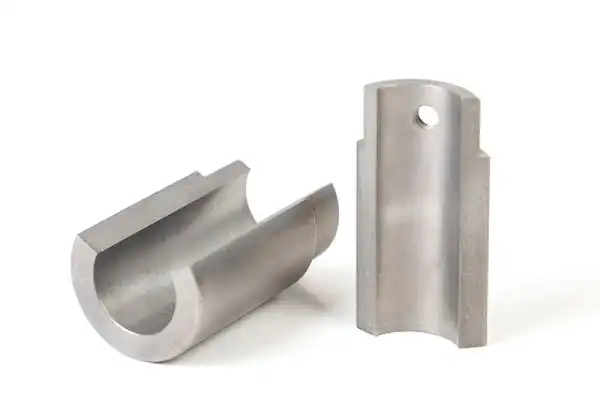
Every racing application presents unique constraints. Chassis geometry, weight class regulations, and performance targets vary significantly across series and vehicle platforms. Our engineering team works directly with OEM designers to develop tungsten ballast configurations that integrate seamlessly with existing structures. This collaborative approach ensures that custom components arrive ready for installation without modification.
Where you put weight matters as much as how much weight you add. Strategic tungsten ballast placement influences cornering balance, braking stability, and traction characteristics in ways that transform vehicle behavior. Engineers use ballast positioning to fine-tune understeer and oversteer tendencies, optimize tire loading during corner entry and exit, and manage weight transfer under acceleration.
Proper chassis balancing reduces tire degradation by ensuring even loading across all four contact patches. This translates directly to consistent lap times throughout a stint and reduced pit stop frequency in endurance events. The high density of tungsten ballast gives engineers more placement options within the chassis envelope, enabling weight distribution strategies that would be impossible with bulkier materials.
Thermal management considerations also factor into ballast placement decisions. Tungsten’s thermal properties allow it to be positioned near heat sources without the dimensional instability that affects some alternative materials. Impact resistance and fatigue strength ensure that ballast components survive the inevitable contact and curb strikes that occur during competitive racing.
For further insights into material performance in demanding applications, explore our article on 《Analysis Of The Outstanding Performance Of Copper Molybdenum Copper Cmc Electronic Packaging And Heat Sink Materials》.
The physics behind tungsten’s dominance in motorsport ballast applications comes down to atomic structure. Tungsten atoms pack more densely than virtually any other practical engineering material, yielding densities between 17.0 and 18.5 g/cm³ depending on alloy composition. This density advantage means a tungsten ballast block occupies roughly half the volume of an equivalent lead mass.
Space efficiency becomes critical in modern racing vehicles where every cubic centimeter of chassis volume serves a purpose. Aerodynamic ducting, cooling systems, and structural elements compete for the same real estate where ballast needs to go. Tungsten ballast allows engineers to achieve target weights without compromising other vehicle systems.
The non-toxic nature of tungsten eliminates the handling protocols and disposal requirements associated with lead. Mechanics can install and adjust tungsten ballast without specialized protective equipment. This practical advantage speeds up setup changes during race weekends when time pressure is intense.
Material strength ensures that tungsten ballast components maintain their specified dimensions throughout their service life. Unlike softer materials that can deform under mounting pressure or impact loading, tungsten holds its shape. This dimensional stability is essential for maintaining the precise weight distribution that engineers calculated during vehicle development.
Consistency separates professional-grade tungsten ballast from commodity products. FOTMA’s quality management system, validated by ISO-9000-1:2008 certification, ensures that every component meets the specifications OEMs require. This isn’t paperwork compliance. It’s the foundation of reliable performance in applications where failure isn’t acceptable.
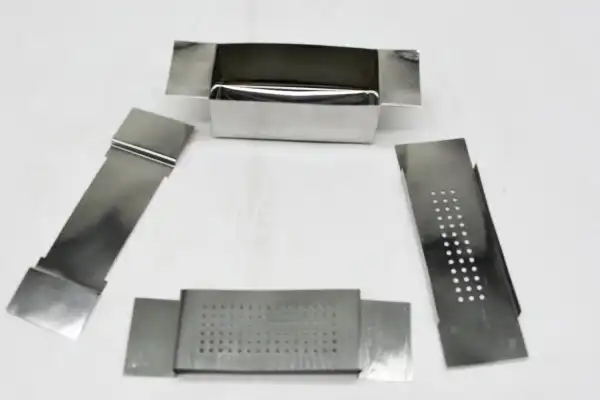
Our testing protocols verify material properties at multiple stages of production. Raw material purity gets confirmed through spectrometry before any machining begins. Density verification using Archimedes’ principle catches any batch variations that could affect weight calculations. Dimensional inspection on coordinate measuring machines confirms that finished components match CAD specifications within tight tolerances.
| Checkpoint | Method | Standard |
|---|---|---|
| Raw Material Purity | Spectrometry | ASTM E1019 |
| Density Verification | Archimedes’ Principle | ASTM B311 |
| Dimensional Accuracy | CMM Inspection | ISO 1101 |
| Surface Finish | Roughness Tester | ISO 4287 |
| Mechanical Properties | Hardness, Tensile Testing | ASTM E18, ASTM E8 |
| Non-Destructive Testing | Ultrasonic Inspection | ASTM E114 |
Surface finish inspection ensures that mounting surfaces mate properly with chassis fixtures. Mechanical property testing confirms hardness and tensile strength meet specifications. Non-destructive ultrasonic inspection detects any internal defects that could compromise structural integrity. This comprehensive approach to quality control reflects three decades of experience supplying precision tungsten components.
For more information on ensuring material quality, consider reading 《Manufacturing Process Of High Quality Molybdenum Plate Products》.
Competitive racing continues to evolve, and tungsten ballast technology evolves with it. Alloy development research focuses on optimizing the balance between density, machinability, and mechanical properties. New compositions may offer even higher densities while maintaining the workability that enables cost-effective manufacturing.
Sustainability considerations are reshaping material sourcing across all industries, including motorsport. Responsible tungsten supply chains and recyclable material streams are becoming competitive differentiators for suppliers. FOTMA’s ongoing investment in process efficiency reduces waste and energy consumption while maintaining the quality standards OEMs expect.
Regulatory frameworks governing motorsport materials continue to tighten. Environmental and safety requirements that once seemed distant are now standard compliance items. Tungsten ballast positions teams ahead of these trends by eliminating toxicity concerns before they become regulatory mandates.
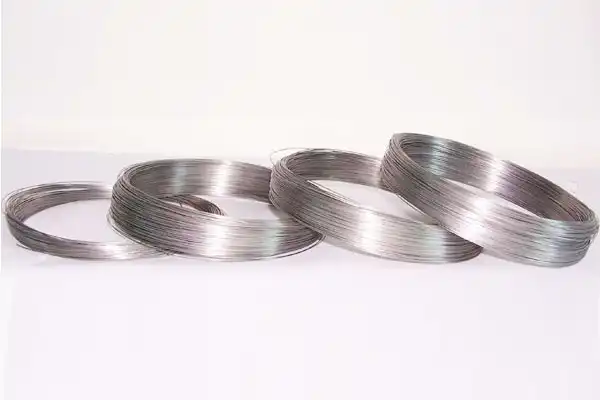
Tungsten delivers nearly double the density of lead, which means ballast components can be significantly smaller while achieving the same mass. This tungsten ballast density advantage frees up chassis volume for other systems and enables more precise weight placement. The material is also non-toxic, eliminating the health and environmental concerns that increasingly restrict lead use in professional motorsport.
Every tungsten ballast component passes through multiple quality checkpoints governed by our ISO-9000-1:2008 certified management system. We verify raw material purity, density, dimensional accuracy, surface finish, and mechanical properties using standardized test methods. This systematic approach ensures that components from different production batches perform identically when installed in racing vehicles.
Custom tungsten ballast lead times depend on component complexity, quantity requirements, and current production schedules. We establish realistic timelines during initial project discussions and maintain open communication throughout the manufacturing process. Our experience with OEM programs has built the production flexibility needed to meet demanding motorsport development schedules.
Partner with Hubei Fotma Machinery Co., Ltd. for unparalleled expertise in high-density tungsten ballast solutions. Leverage our 30+ years of material science innovation and ISO-certified precision manufacturing to gain a competitive edge in motorsport performance. Contact our engineering team today to discuss your custom OEM requirements and elevate your vehicle dynamics. Reach us at +86 13995656368 or [email protected].