
Tungsten is a pure metal element, yet most industrial “tungsten” parts are made from tungsten alloys—and that distinction causes procurement mistakes I see repeatedly. In three decades of working with tungsten and molybdenum materials, I have encountered many engineers who specify “tungsten counterweights” but actually need tungsten heavy alloy (WHA) components that can be machined, or buyers who order pure tungsten sheet expecting it to behave like a structural metal. The physical differences between these material families are not fine print; they determine whether a part meets density targets, survives machining, or performs in high heat. This article clarifies the classification, gives you a direct property comparison, and shows how to specify the correct tungsten material from the outset.
Tungsten, with the chemical symbol W and atomic number 74, is a transition metal and the heaviest element known to be essential for living organisms. Its melting point of 3422 °C is the highest of any metal, and its density of 19.3 g/cm³ puts it in the same league as gold and platinum. Pure tungsten is refractory, meaning it retains strength at extreme temperatures, and it is electrically and thermally conductive. However, unalloyed tungsten at room temperature is also brittle and prone to fracture, which limits direct machining. Most pure tungsten shapes—rods, sheets, boats—are produced by powder metallurgy: tungsten powder is pressed and sintered at temperatures near 2800 °C. This process yields a material that is dense and hard but must be polished, ground, or shaped by electrical discharge machining (EDM) rather than conventional turning or milling.
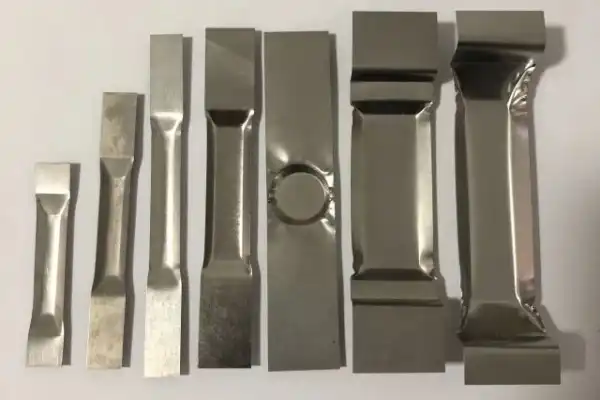
Tungsten alloys, in contrast, introduce binder metals to create properties that pure tungsten lacks. The most common are tungsten heavy alloys (WHAs), which consist of 90–97% tungsten with the balance being nickel, iron, or copper. These alloys are manufactured using liquid-phase sintering, where the binder melts and wets the tungsten particles, resulting in a material that is machinable, ductile, and still dense (typically 17.0–18.8 g/cm³). ASTM B777 defines standard classes for WHA based on tungsten content and mechanical properties. Another important category is cemented tungsten carbide (WC-Co), where tungsten carbide grains are bonded with cobalt. That composite is extremely hard—approaching 90 HRA—and is used for cutting tools, wear parts, and dies.
I often need to remind purchasing teams that when they say “tungsten,” the fabrication shop needs to know which of these families they mean. A request for “tungsten radiation shielding” almost certainly means WHA, because pure tungsten would be prohibitively difficult to shape into a large shield.
The table below compares three material groups at a glance.
| Property | Pure Tungsten (≥99.95%) | Tungsten Heavy Alloy (WHA, 90-97W) | Tungsten Carbide (WC-Co) |
|---|---|---|---|
| Density (g/cm³) | 19.25 | 17.0–18.8 | 14.5–15.5 |
| Hardness | 68–72 HRA | 25–35 HRC | 88–93 HRA |
| Machinability | Poor (grinding/EDM) | Good (conventional cutting) | Very poor (grinding only) |
| Melting point (°C) | 3422 | ∼1450 (binder melts) | ∼2800 (dissociates) |
| Thermal conductivity (W/m·K) | 175 | 75–110 | 70–100 |
| Typical applications | Crucibles, heating elements, electrodes | Counterweights, shielding, darts | Cutting tools, dies, wear parts |
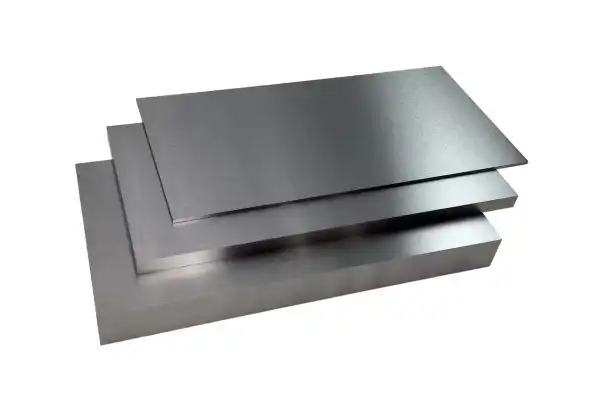
Behind these numbers lies a fundamental trade-off: adding binder metals sacrifices some density and thermal performance but gains machinability and impact toughness. For a pure tungsten heating element operating in a vacuum furnace at 2000 °C, the binder in a WHA part would melt long before the tungsten failed. On the other hand, a CNC machined tungsten alloy counterweight block with internal threads would be impossible to produce from pure tungsten without extensive EDM time and cost. These constraints shape how we at FOTMA advise clients on material selection during the quoting stage.
The decision comes down to four practical factors.
First, temperature exposure. If your part sees sustained temperatures above 1000 °C, pure tungsten is the only option. Components like ion implantation parts, high-temperature furnace furniture, and thin-film evaporation boats operate in regimes where any binder phase would soften or vaporize. We produce pure tungsten evaporation boats and crucibles precisely for these environments.
Second, machinability and shape complexity. A part that requires drilling, threading, or intricate contouring almost always calls for a tungsten heavy alloy. The liquid-phase sintered microstructure of WHA allows tools to cut through the tungsten grains because the binder bridges them. We routinely turn, mill, and thread WHA components for aerospace counterweights and radiation shielding collimators. In contrast, pure tungsten blanks arrive near net shape from the sintering furnace and are brought to final dimensions by centerless grinding or EDM wire cutting, which drives up cost for anything beyond simple geometries.
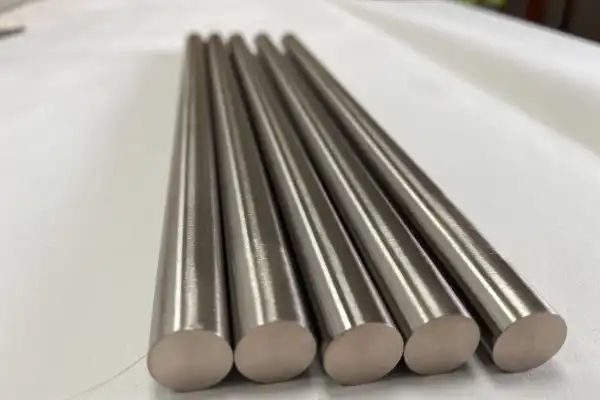
Third, density requirements. If your design demands absolute maximum density in a given volume, pure tungsten at 19.3 g/cm³ cannot be beaten by any alloy. However, most mass-balancing or shielding applications can accept WHA in the 17.5–18.8 g/cm³ range, which still gives a large weight advantage over lead (11.34 g/cm³) or steel (7.85 g/cm³). I always check with the customer whether a small density reduction is acceptable in exchange for faster delivery and lower machining cost.
Fourth, magnetic response. Pure tungsten is paramagnetic, essentially non-magnetic. W-Ni-Cu alloys are also non-magnetic, making them suitable for MRI shielding and electronic packaging. W-Ni-Fe alloys are slightly magnetic, which may be unacceptable in some imaging or guidance applications. Specifying the wrong binder can lead to rejections at incoming inspection.
Ambiguous specifications are the most frequent cause of material mismatch. From our experience at FOTMA, a clear RFQ should include at minimum these details:
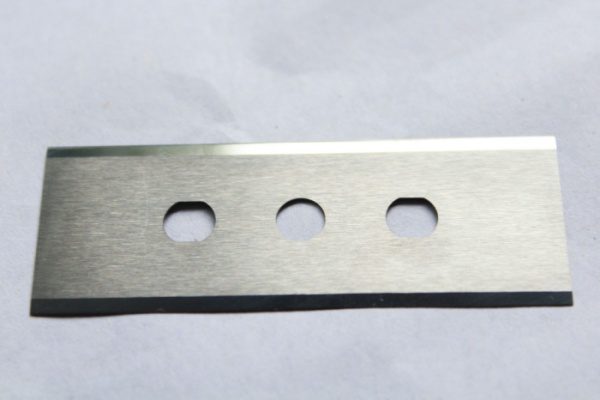
When the application is complex—such as a tungsten copper (WCu) heat sink that balances thermal conductivity and coefficient of thermal expansion—it pays to share the CAD model and thermal requirements. I have often found that the initial inquiry material is not the optimal one, and a brief technical discussion saves weeks of design iteration. You can reach our engineering team directly at [email protected] or +86 13995656368.
Mis-specifying tungsten material costs time and money: parts arrive too brittle to machine, weights fall short of density targets, or shielding fails during X-ray certification. Most of these failures are preventable with a material selection check at the sourcing stage.
At FOTMA, we have spent two decades producing pure tungsten, tungsten heavy alloys, copper tungsten, and cemented carbide for industries ranging from medical device to aerospace. Our approach is to treat each RFQ as an engineering conversation—not just a part order. If you are uncertain whether your design requires pure tungsten or an alloy, share your operating conditions (temperature, load, environment) and required tolerances with us. We will confirm the optimal material grade and manufacturing route, and we can supply samples for validation before committing to production quantities.
Send your inquiry to [email protected] or call +86 13995656368. By clarifying the tungsten material early, you avoid rework and get parts that perform from the first article.
Q: Is tungsten a metal or an alloy?
Tungsten is a pure chemical element and a metal. However, when the term “tungsten” is used in industry, it may refer to pure tungsten or to one of several families of tungsten-based alloys. The short answer: elementally a metal; in parts, often an alloy. The correct interpretation depends on the application context.
Q: Many people think pure tungsten and tungsten heavy alloy are interchangeable. What is the real difference?
This is a common misconception. Pure tungsten consists of ≥99.95% tungsten and has the highest density and melting point but is brittle at room temperature. Tungsten heavy alloy contains 90–97% tungsten plus binder metals such as nickel, iron, or copper. The binder phase gives WHA machinability, ductility, and impact strength while still retaining excellent density. In procurement, mixing them up leads to parts that either cannot be machined or that underperform thermally.
Q: I have been told pure tungsten cannot be machined. Is that true?
I have machined many tungsten parts, but pure tungsten is indeed not machinable in the conventional sense. Standard turning or milling tools will chatter and fracture the tungsten rather than cut it. Pure tungsten blanks are finished by grinding, diamond tooling, or electrical discharge machining (EDM). Tungsten heavy alloys, on the other hand, can be drilled, tapped, and milled with carbide tooling, which is why most mechanical tungsten components are WHA.
Q: What actually makes tungsten alloy different from mixing any two metals?
The term “tungsten alloy” normally describes a composite material where tungsten powder is mixed with a binder metal powder and then liquid-phase sintered. During sintering, the binder melts and infiltrates between tungsten grains, creating a solid that combines the high density of tungsten with the machinability and toughness of the binder. This is fundamentally different from simply alloying tungsten with another element in a melt, because tungsten’s extremely high melting point prevents conventional casting.
Q: How do I decide between pure tungsten and a tungsten alloy for my component?
Ask three questions: (1) Will the part see sustained temperatures above 1000 °C? If yes, you likely need pure tungsten. (2) Does the part require drilling, threading, or complex shapes? If so, a tungsten heavy alloy is the practical choice. (3) Is maximum density or magnetic neutrality critical? Pure tungsten gives 19.3 g/cm³ and is paramagnetic; W-Ni-Cu alloy offers non-magnetic properties at slightly lower density. If your program has particular requirements, share the specification with our team—we can run a quick material assessment and confirm the best option before you order.
If you’re interested, check out these related articles:
What Material Is Cuni44 Copper Nickel Alloy Plate
Molybdenum Copper Plate Multi Field Application Of High Performance Alloys
Analysis Of The Outstanding Performance Of Molybdenum Copper Alloy And Cmc Three Layer Structure Materials
Molybdenum Wire Price And Its Importance In Industrial Applications