
Choosing between nickel alloys and stainless steel for high-temperature work comes down to understanding where each material starts to struggle. I’ve seen engineers default to stainless steel because it’s familiar, only to watch components warp or scale over within months of installation. The temperature threshold matters enormously here, and getting it wrong costs far more than the initial material savings.
Industrial processes running at elevated temperatures put materials through punishment that accelerates several failure modes simultaneously. Oxidation attacks the surface as oxygen reacts with the metal, forming brittle scales that flake away and thin the component over time. Creep becomes the silent killer for structural parts, where sustained stress at high temperatures causes slow, permanent deformation that eventually leads to failure. Thermal fatigue from repeated heating and cooling cycles creates internal stresses that propagate cracks through the material.
| Failure Mechanism | Description | Impact on Performance |
|---|---|---|
| Oxidation | Reaction with oxygen at high temperatures | Material loss, reduced structural integrity |
| Creep | Time-dependent deformation under stress at high temperatures | Irreversible distortion, component failure |
| Thermal Fatigue | Cracking due to repeated thermal expansion and contraction | Reduced lifespan, structural instability |
| Hot Corrosion | Accelerated degradation in hot, corrosive environments | Rapid material loss, system breakdown |
These mechanisms don’t operate in isolation. A turbine blade might face oxidation on its surface while creep slowly distorts its internal structure, all while thermal cycling introduces fatigue cracks. Materials selected for these environments need to resist multiple degradation pathways at once.
Nickel alloys perform exceptionally well in extreme thermal environments because of their atomic structure and the specific elements added during alloying. The face-centered cubic crystal structure of nickel provides inherent ductility and maintains strength at elevated temperatures better than other crystal arrangements.
The alloying elements do specific jobs. Chromium forms a stable, protective oxide layer that improves oxidation and corrosion resistance. Molybdenum enhances solid solution strengthening and creep resistance by making it harder for atoms to move through the crystal lattice under stress. Cobalt contributes to high-temperature strength. Titanium and aluminum promote the formation of gamma prime precipitates, which are the primary reason nickel alloys maintain their strength at temperatures where other materials soften significantly.
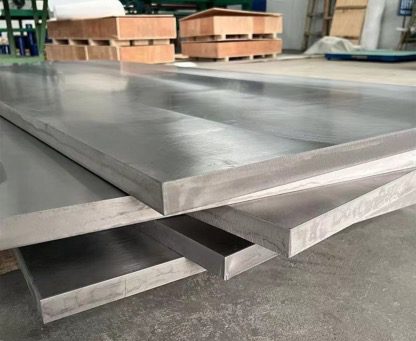
This combination of properties makes nickel alloys necessary for applications where stainless steel would degrade rapidly. The gamma prime phase remains stable at temperatures exceeding 800°C, providing strength retention that austenitic stainless steels simply cannot match.
For temperatures exceeding 1000°C, superalloys like Inconel and Hastelloy deliver the required performance. Inconel 625 and 718 offer exceptional strength and oxidation resistance, making them standard choices for aerospace components including turbine blades and rocket engine parts. Hastelloy X and C-276 provide outstanding resistance to both high temperatures and aggressive corrosive media, finding use in chemical processing and industrial furnaces.
These nickel alloy plate and nickel alloy sheet materials maintain their structural integrity and mechanical properties under ultra-high temperature conditions. The specific grade selection depends on whether oxidation resistance, corrosion resistance, or creep strength takes priority for the application.
Stainless steels offer good corrosion resistance at ambient temperatures but show significant limitations when temperatures climb. Their mechanical properties degrade considerably above certain thresholds that vary by grade. Common grades like 304 and 316 stainless steel are generally limited to continuous service below 800°C.
The problems at high temperatures include sensitization, where chromium carbides form at grain boundaries and deplete the surrounding areas of chromium, reducing corrosion resistance. Carbide precipitation weakens the material structure. Oxidation resistance drops as the protective chromium oxide layer becomes less stable.
| Stainless Steel Grade | Max Continuous Operating Temperature (°C) | Key Limitations at High Temps |
|---|---|---|
| 304 Stainless Steel | ~870 | Sensitization, reduced strength |
| 316 Stainless Steel | ~870 | Sensitization, reduced strength |
| 310S Stainless Steel | ~1100 | Creep, thermal expansion |
| 321 Stainless Steel | ~900 | Oxidation, creep |
High-temperature stainless steel grades like 310S offer improved performance through higher chromium and nickel content. They can operate at higher temperatures than standard grades. But they still cannot match the extreme thermal stability of specialized nickel alloys. The trade-off typically involves balancing cost against performance requirements.
For more insights into specific material properties, consider reading 《Ni200 Nickel Plate Performanceapplication And Processing Technology》.
Selecting between nickel alloys and stainless steel for high-temperature applications requires evaluating several factors systematically. Operating temperature range sets the baseline requirement. The presence of corrosive environments adds complexity. Mechanical stress levels determine whether creep resistance becomes critical. Economic viability influences the final decision when multiple materials could technically work.
Nickel alloys become the clear choice when temperatures consistently exceed 800°C. Severe thermal cycling favors nickel alloys because of their lower thermal expansion and better fatigue resistance. Aggressive corrosive media combined with high temperatures almost always require nickel alloys. Their superior creep strength, oxidation resistance, and thermal fatigue properties justify the higher initial cost in critical applications.
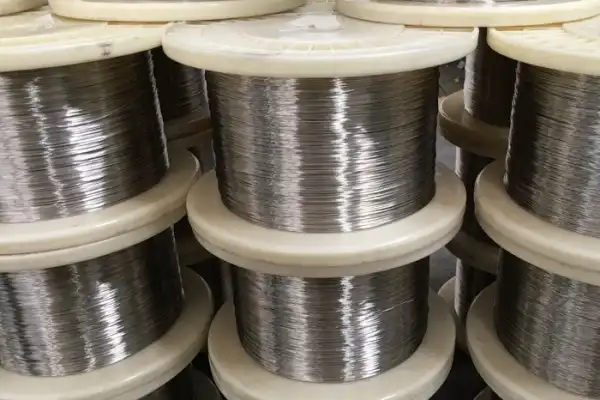
Stainless steels remain cost-effective for moderate high-temperature environments. When the extreme performance of nickel alloys isn’t strictly necessary, the cost savings can be substantial. The key is accurately assessing what “necessary” means for the specific application.
Nickel alloys demonstrate significantly superior creep resistance compared to stainless steel in industrial settings. The difference comes from their stable microstructures and the presence of refractory alloying elements like molybdenum and tungsten. These elements hinder atomic diffusion and dislocation movement at elevated temperatures, which are the mechanisms that cause creep.
Stainless steels, particularly austenitic grades, become susceptible to creep deformation above 500°C. The deformation is permanent and progressive, leading to structural changes and eventual failure. In applications requiring long-term structural integrity under sustained high-temperature loads, such as turbine components or industrial furnaces, the enhanced creep strength of Nickel Alloy Plate Nickel Alloy Sheet prevents premature material fatigue that would occur with stainless steel.
Nickel alloys serve critical functions across industries where extreme thermal conditions are routine. Aerospace applications include jet engine components and rocket propulsion systems that endure immense heat and pressure during operation. The power generation sector uses nickel alloys in gas turbines and heat exchangers, where efficiency demands materials capable of sustained operation at elevated temperatures without degradation.
Chemical processing equipment relies on nickel alloys for their exceptional corrosion resistance in hot, aggressive chemical environments. The combination of high temperature and corrosive media creates conditions that would destroy stainless steel components rapidly. Industrial furnaces use nickel alloys for heating elements and structural components that must maintain their shape and function through thousands of thermal cycles.
Oil and gas industry components, including downhole tools and flare stacks, leverage nickel alloys for their thermal stability and durability in harsh operating conditions.
We offer expertise in high-performance nickel alloys and specialized material solutions. Our production equipment and testing methods ensure quality and reliability for demanding high-temperature applications. Contact our material research specialists at +86 13995656368 or [email protected] for consultation and solutions tailored to your specific industrial requirements.
Nickel alloys maintain their creep strength, oxidation resistance, and thermal stability far better than stainless steel at elevated temperatures. Their higher melting points and stable microstructures prevent the significant material degradation that occurs in stainless steel above 800°C. The gamma prime precipitates in nickel alloys provide strength retention that stainless steel cannot achieve, making nickel alloys necessary for critical high-temperature applications.
Nickel alloys form stable, protective oxide layers on their surface, primarily chromium oxide and aluminum oxide depending on the alloy composition. These oxide layers act as barriers that prevent further oxygen diffusion and chemical attack. The stability of these protective layers at high temperatures is what separates nickel alloys from stainless steels, which form less stable oxide layers that break down and reform repeatedly.
Nickel alloys have a lower coefficient of thermal expansion than stainless steels, which reduces the internal stresses generated during heating and cooling cycles. Their excellent thermal fatigue resistance means they can withstand repeated temperature fluctuations without developing the cracks that would form in stainless steel. Gas turbines and industrial furnaces rely on this property because temperature changes are constant during normal operation.
High-grade stainless steels like 310S and 330, along with specialized high-chromium alloys, can serve as more economical alternatives for moderate high-temperature applications. The critical step is accurately defining what “moderate” means for the specific conditions. These alternatives have real performance limits in creep resistance, oxidation, and corrosion that must be evaluated against actual operating requirements. Underestimating the severity of conditions leads to premature failures that cost more than the initial material savings.