
Chemical processing throws some of the harshest conditions at materials you’ll find anywhere in industrial work. The combination of aggressive chemicals, elevated temperatures, and sustained pressure demands alloys that won’t degrade when conventional metals would fail within months. Nickel alloys have earned their place in these environments because they actually hold up where it matters. What follows covers the corrosion mechanisms at play, the specific alloy families engineered for these conditions, and the practical factors that determine whether a material choice succeeds or creates expensive problems down the line.
Corrosion in chemical plants operates through several distinct mechanisms, each attacking materials differently. Getting this wrong means equipment fails in ways that are expensive at best and dangerous at worst.
Uniform corrosion spreads evenly across exposed surfaces. It’s predictable, which makes it manageable through regular thickness monitoring and scheduled replacement. Pitting corrosion behaves nothing like this. Small holes form and penetrate rapidly through material thickness while the surrounding surface looks fine. Equipment can fail catastrophically even when overall corrosion rates appear acceptable because those pits concentrate damage in localized spots.
Crevice corrosion develops in confined spaces where fluid stagnates. Under gaskets, in bolted joints, anywhere solution sits without circulation becomes vulnerable. The chemistry inside these tight spaces diverges from the bulk fluid, creating conditions that accelerate localized attack. Stress corrosion cracking combines tensile stress with specific corrosive environments to produce sudden brittle fracture in materials that would otherwise behave as ductile. This failure mode catches people off guard because the material seems fine until it isn’t.
Intergranular corrosion targets grain boundaries specifically. When certain phases precipitate at these boundaries during heat treatment or welding, the adjacent material becomes susceptible to preferential attack. The grains themselves stay intact while the structure holding them together dissolves. Galvanic corrosion occurs when dissimilar metals contact each other in a conductive solution. The more active metal sacrifices itself to protect the more noble one, which sounds useful until you realize the wrong component is corroding away.
The pH of process fluids fundamentally changes how nickel alloys behave. Low pH environments promote active metal dissolution, while high pH solutions present their own challenges despite seeming less aggressive.
Strong acids like sulfuric and hydrochloric acid demand alloys with either robust passive films or inherent resistance to direct chemical attack. Molybdenum additions enhance resistance to reducing acids, which explains why alloys designed for sulfuric acid service contain significant molybdenum content. Hydrochloric acid presents particular challenges for localized corrosion resistance.
Caustic solutions can degrade alloys with amphoteric oxides, and even trace halide contamination severely compromises passivity in many materials. Material selection requires understanding the complete chemical makeup of process streams, not just the primary constituents. Small impurities often drive corrosion behavior more than the bulk chemistry suggests.
Different nickel alloy families address different corrosion challenges. Knowing which family suits which environment prevents both over-specification that wastes money and under-specification that causes failures.
Hastelloy grades handle aggressive media across a broad range. Alloy C-276 resists pitting, crevice corrosion, and stress corrosion cracking in environments that would destroy most alternatives. Hastelloy B-3 performs exceptionally in reducing environments where oxidizing conditions are absent.
Inconel alloys, particularly alloy 625, combine high strength with corrosion resistance in acidic environments and seawater. The nickel-chromium-molybdenum composition provides versatility across multiple aggressive conditions. Monel alloys use nickel-copper chemistry for seawater resistance and hydrofluoric acid service where other alloys fail.
Pure nickel grades like Nickel 200/201 excel in caustic alkalis and certain reducing acids. These alloys also offer high thermal and electrical conductivity when process requirements demand both corrosion resistance and heat transfer efficiency. Nickel-molybdenum alloys provide superior resistance to non-oxidizing acids specifically. FOTMA supplies these alloy families with the technical backing to match materials to actual service conditions.
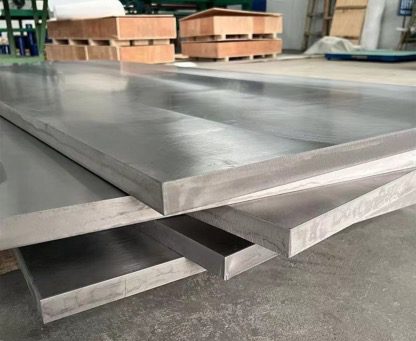
### Matching Nickel Alloys to Specific Chemical Environments
The right alloy depends entirely on what chemicals it contacts. Sulfuric acid service often calls for Hastelloy C-276 or Hastelloy B-3 because their molybdenum content handles reducing acid conditions effectively. Phosphoric acid applications frequently use Hastelloy C-276 or high-alloy austenitic grades with substantial nickel content.
Wet chlorine gas and hypochlorite solutions require alloys like Hastelloy C-276 or Inconel 625 that maintain passivity despite aggressive chloride attack. Nitric acid resistance depends heavily on concentration and temperature. Higher concentrations and temperatures may push selection toward nickel-chromium alloys or even titanium depending on specific conditions.
Chemical reactor materials must balance corrosion resistance against mechanical strength and weldability. A reactor that resists corrosion but cracks during fabrication or fails under operating loads doesn’t solve the problem. FOTMA’s material expertise helps navigate these tradeoffs for specific processing conditions.
For more on how titanium compares in demanding applications, see 《Is Titanium Alloy Stronger Than Titanium》.
Alloy selection involves more than identifying a corrosion-resistant material. The process requires systematic evaluation of operating conditions against material capabilities.
Chemical composition of the process fluid matters, but so do concentration levels and impurity content. Temperature effects on corrosion often determine whether an alloy that works at ambient conditions will survive at operating temperature. Higher temperatures accelerate corrosion rates and can destabilize protective passive films that provide resistance at lower temperatures.
Pressure affects reaction kinetics and material integrity. Flow rates influence mass transfer to metal surfaces, potentially causing erosion-corrosion where fluid velocity strips away protective films faster than they reform. Testing against ASTM and NACE standards provides established methodologies for evaluating performance under realistic conditions.
Cost-benefit analysis must account for lifecycle expenses, not just initial material cost. A cheaper alloy that requires replacement every two years costs more than a premium alloy lasting ten years when you factor in downtime, labor, and potential safety incidents. FOTMA guides clients through this selection framework to reach decisions that hold up over equipment lifetimes.
Temperature acts as a primary driver of corrosion behavior. Reaction rates accelerate with temperature increases, and protective oxide layers that remain stable at lower temperatures may break down as heat rises. This shifts the boundary between acceptable and unacceptable performance.
Extreme pH levels challenge passivity in both directions. Highly acidic solutions can break down passive films and initiate active corrosion. Oxygen presence either promotes passivation or accelerates attack depending on the specific system chemistry and whether aggressive ions are present.
Chloride ions penetrate passive films and initiate pitting and crevice corrosion even at concentrations that seem insignificant. Understanding how these factors interact allows prediction of long-term material behavior rather than discovering problems after equipment is installed and operating.
Material selection only solves part of the problem. How nickel alloy components are fabricated and maintained determines whether they deliver expected performance.
Welding nickel alloys demands specialized techniques and careful parameter control. Hot cracking and carbide precipitation during welding can compromise both corrosion resistance and mechanical properties in the heat-affected zone. Poor welds become the weak link regardless of how well the base material performs.
Machining presents challenges because these alloys work-harden rapidly and possess high strength. Specific tooling and cutting strategies prevent the surface damage that can initiate corrosion. Heat treatment optimizes mechanical properties, relieves residual stresses from fabrication, and can restore corrosion resistance compromised during welding.
Surface treatments like pickling and passivation enhance protective properties of finished components. Quality control throughout fabrication ensures the final product matches the performance expected from the specified material. FOTMA provides not just materials but also processing support to ensure components perform as designed.
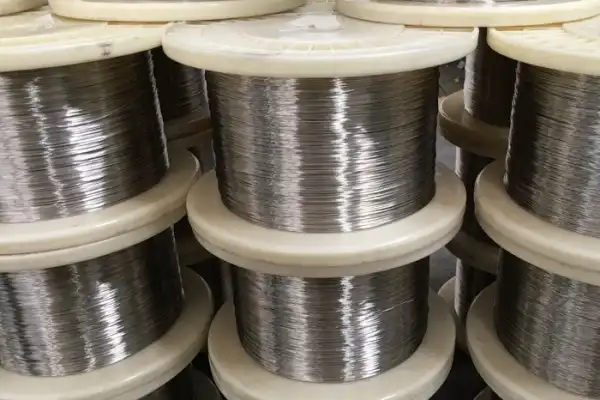
## Nickel Alloys Working in Real Chemical Processing
Actual installations demonstrate how proper alloy selection prevents failures and extends equipment life.
Chemical plants use nickel alloys extensively in reactors, heat exchangers, and piping handling aggressive acids and caustic solutions. One sulfuric acid plant switched to Hastelloy C-276 heat exchangers after repeated failures with previous materials. Maintenance costs dropped significantly and unplanned downtime essentially disappeared.
Pharmaceutical processing equipment relies on nickel alloys for corrosion resistance and product purity. Reactors and storage vessels made from Inconel 625 withstand sterilization processes without contaminating products. Oil and gas applications expose components to sour gas and brine that cause stress corrosion cracking in lesser materials. Nickel alloys prevent failures in offshore platforms and downhole equipment where replacement is extremely difficult and expensive.
Desalination plants use Monel 400 for pumps and valves handling seawater. Waste treatment facilities benefit from nickel alloy resistance to the variable and often aggressive effluents they process. These applications reflect the problem-solving approach FOTMA brings to complex industrial challenges.
### Why Alloy Selection Determines System Integrity
Wrong material choices lead to premature failures that create safety risks, environmental hazards, and financial losses that dwarf the cost difference between alloys. Proper selection reduces total cost by minimizing maintenance, repair, and replacement over equipment life.
Appropriate alloys ensure regulatory compliance and meet environmental mandates that become increasingly stringent. Equipment lasts longer, maximizing return on capital investment. FOTMA’s material recommendations prioritize operational continuity and system performance over the long term.
Hubei Fotma Machinery Co., Ltd. brings over 30 years of technical experience in high-performance non-ferrous metals, backed by ISO-9000-1:2008 certification. For consultation on selecting the optimal nickel alloy sheet for your chemical processing challenges, or to discuss custom fabrication solutions, contact our specialists. Our production capabilities and technical depth ensure your critical systems maintain integrity and efficiency throughout their service life. Reach us at +86 13995656368, +86 13907199894, or via email at [email protected], [email protected].
Hastelloy C-276, Hastelloy B-3, and Nickel Alloy Wires 200/201 handle sulfuric acid service effectively, particularly at elevated temperatures and concentrations. The best choice depends on acid concentration, operating temperature, and impurity content in the process stream. FOTMA provides specific recommendations based on your actual operating conditions rather than generic guidelines.
Higher temperatures generally accelerate corrosion and can destabilize the passive films that protect many nickel alloys. Some alloys that perform well at ambient conditions fail at elevated temperatures because their protective oxide layers break down. High temperatures also enable specific mechanisms like stress corrosion cracking that don’t occur at lower temperatures. Selection must account for the full operating temperature range, including upset conditions.
Both alloys offer excellent corrosion resistance across a wide range of aggressive media. Hastelloy C-276 provides broad resistance to oxidizing and reducing acids with particular strength against pitting and crevice corrosion. Hastelloy C-22 handles oxidizing environments and wet chlorine somewhat better while covering a broader acid range. The oxidizing potential of your specific chemical environment typically determines which alloy fits better. FOTMA’s technical team can evaluate your conditions and recommend the appropriate grade.