
Working with high-temperature furnaces long enough, you start to appreciate how much rides on the materials holding everything together. When ambient conditions push past 2000°C, the margin for error shrinks to almost nothing. The components that survive—and keep performing—are almost always built from refractory metals. These materials form the backbone of furnace heating elements and structural bodies across industries where thermal extremes are the norm, not the exception.
Refractory metals earn their reputation through measurable physical properties, not marketing claims. The defining characteristics—exceptionally high melting points, retained strength at elevated temperatures, and resistance to creep deformation—translate directly into practical advantages for refractory metal furnace components.
Tungsten sits at the top of the periodic table’s thermal hierarchy with a melting point around 3422°C. Nothing else comes close among pure metals. Molybdenum follows at 2623°C, bringing its own combination of thermal conductivity and mechanical stability. Both materials maintain structural integrity in temperature ranges where steel would have long since liquefied.
The practical implications extend beyond simple survival. Refractory metal furnace components resist the gradual deformation that accumulates over thousands of heating cycles. This creep resistance matters enormously for vacuum furnace materials and other applications where dimensional stability affects process outcomes. Oxidation resistance in controlled atmospheres—whether vacuum or inert gas—further extends service life by preventing the surface degradation that eats away at lesser materials.
Understanding recrystallization temperature becomes critical when designing for longevity. Push a component past this threshold repeatedly, and grain structure changes in ways that weaken mechanical properties. Proper alloy selection and thermal management keep operating conditions within safe boundaries.
| Property | Tungsten (W) | Molybdenum (Mo) | Tantalum (Ta) |
|---|---|---|---|
| Melting Point (°C) | 3422 | 2623 | 3017 |
| Density (g/cm³) | 19.25 | 10.2 | 16.6 |
| Tensile Strength (MPa) | 550-620 | 500-600 | 200-300 |
| Creep Resistance | Excellent | Excellent | Very Good |
| Thermal Conductivity (W/m·K) | 173 | 138 | 57 |
The geometry and material composition of refractory metal heating elements directly control how heat distributes across a furnace chamber. Poor design creates hot spots and cold zones. Good design delivers the thermal uniformity that precision processes demand.
Tungsten heating coils and molybdenum heating elements each bring distinct advantages depending on the application. Tungsten handles the highest temperatures but costs more and machines with greater difficulty. Molybdenum offers an excellent balance of performance and workability for slightly lower temperature ranges. The choice between these and alternatives like graphite or ceramic heating elements depends on specific operating conditions—atmosphere type, peak temperature, cycling frequency, and required lifespan.
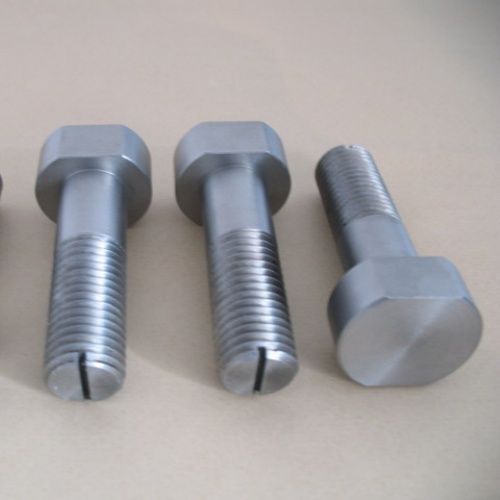
Cross-sectional geometry affects current distribution and heat generation patterns. Coil pitch, wire diameter, and support structure all influence how uniformly the element radiates thermal energy. These details might seem minor on paper, but they compound into significant differences in power efficiency and heating element longevity over months of continuous operation.
Manufacturing precision matters at every stage. Forming operations establish initial geometry. Sintering develops the microstructure that determines mechanical properties. Final machining achieves the tolerances that ensure proper fit and function. Each step requires process control calibrated to the specific material being worked.
If you are interested in how material choice impacts furnace efficiency, you may find our article, “What Is Tzm Material Equivalent To,” particularly insightful.
The furnace body contains extreme conditions while maintaining the structural integrity that keeps operations safe. Material selection for this application involves balancing multiple competing requirements—thermal resistance, mechanical strength, chemical stability, and compatibility with insulation systems.
Molybdenum furnace shields and tungsten alloy structural components handle the thermal loads that define high-temperature furnace construction. These refractory metal furnace components must endure repeated heating and cooling cycles without developing the cracks or warping that would compromise chamber integrity.
Thermal expansion coefficient mismatches between different materials in the furnace assembly create stress concentrations during temperature changes. Careful engineering accounts for these differential movements, either through material selection that minimizes mismatches or through mechanical designs that accommodate expansion without transmitting destructive forces.
Furnace insulation materials work in concert with the refractory metal structure. The insulation reduces heat loss to the surrounding environment while the metal components maintain the structural shell. This combination achieves the thermal profiles that processes require while keeping energy consumption within practical limits.
Producing reliable refractory metal furnace components requires manufacturing capabilities matched to the difficulty of working these materials. Standard metalworking approaches often fall short when applied to tungsten or molybdenum.
Powder metallurgy techniques provide the foundation for most refractory metal fabrication. Starting from carefully controlled metal powders, consolidation and sintering processes build up material density while establishing the grain structures that determine mechanical properties. The resulting blanks then undergo precision machining to achieve final geometries.
Machining refractory metals presents its own challenges. Tungsten in particular resists cutting tools and requires specialized approaches to achieve tight tolerances without introducing surface defects. Molybdenum machines more readily but still demands careful attention to tooling selection and cutting parameters.
Joining operations often prove critical for complex assemblies. Electron beam welding creates strong, pure joints without introducing contamination that would compromise high-temperature performance. The vacuum environment of the welding process prevents oxidation that would weaken the joint.
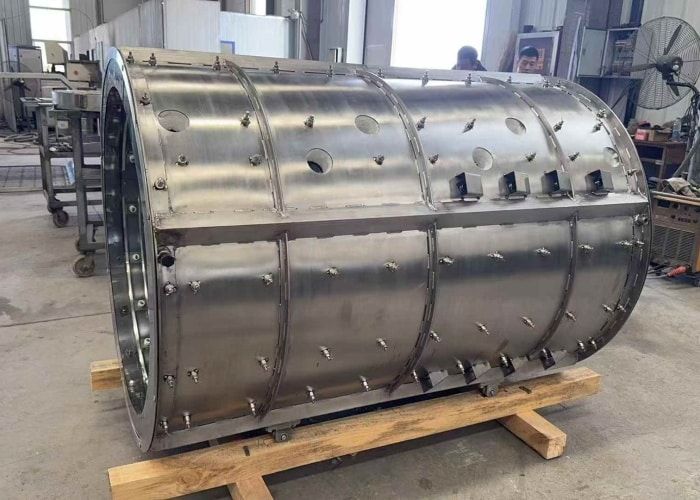
Quality verification through non-destructive testing confirms that finished components meet specifications. Ultrasonic inspection, radiographic examination, and other techniques reveal internal defects that visual inspection would miss. ISO 9001 certified processes ensure consistent quality across production runs.
Generic furnace components rarely deliver optimal performance for specialized applications. The temperature profiles, atmospheric conditions, and mechanical loads vary too much across industries for one-size-fits-all solutions.
Aerospace applications push refractory metal furnace components to their limits. Heat treatment processes for turbine components and structural alloys require precise temperature control at extreme levels. The components themselves must meet reliability standards that leave no room for premature failure.
Semiconductor manufacturing presents different challenges. Contamination control becomes paramount—any material shedding from furnace components can compromise wafer quality. Semiconductor furnace components must maintain purity while delivering the thermal performance that processing requires.
Heat treatment furnace solutions, sintering furnace parts, and brazing furnace components each involve distinct operating conditions that shape material selection and design decisions. Application-specific furnace design starts with understanding these requirements, then works backward to identify the materials and geometries that will perform.
We offer custom solutions for various applications, including Molybdenum Thermal Spray Wire for surface enhancement.
The materials science underlying refractory metal furnace components continues advancing. Research into advanced refractory alloys is yielding compositions with improved properties—better creep resistance, enhanced oxidation protection, or optimized thermal conductivity for specific applications.
Additive manufacturing methods are beginning to reach the refractory metal space. The ability to build complex geometries layer by layer opens design possibilities that traditional fabrication cannot match. Internal cooling channels, optimized surface textures, and consolidated assemblies that would otherwise require multiple joined parts all become feasible.
Smart furnace components incorporating embedded sensors represent another development trajectory. Real-time monitoring of temperature, strain, and other parameters enables predictive maintenance approaches that catch problems before they cause failures. The data these systems generate also feeds back into design improvements for future component generations.
Energy efficiency improvements remain a consistent focus. Better insulation integration, optimized heating element designs, and improved thermal management all contribute to reducing the power consumption of high-temperature operations. These gains matter both economically and environmentally.
Alloy)
Leverage Hubei Fotma Machinery Co., Ltd.’s 30+ years of material science expertise and ISO-certified manufacturing to elevate your high-temperature furnace performance. Our dedicated team provides comprehensive solutions for refractory metal heating elements and furnace bodies, engineered for durability and efficiency. Contact us today for a consultation tailored to your specific industrial requirements at +86 13995656368 or [email protected], [email protected]. Let FOTMA be your trusted partner in achieving peak operational excellence.
The answer comes down to physics. Tungsten’s 3422°C melting point means it remains solid and structurally sound at temperatures that would vaporize most alternatives. Molybdenum at 2623°C offers similar advantages with somewhat easier machinability. Both metals retain their strength at elevated temperatures rather than softening progressively like steel or nickel alloys. Their creep resistance prevents the gradual deformation that would change heating element geometry over time, maintaining consistent thermal output across thousands of operating cycles.
Different materials expand at different rates when heated. When a furnace body combines refractory metals with insulation materials and structural supports, these expansion mismatches create internal stresses during temperature changes. Repeated cycling can concentrate these stresses at joints and interfaces, eventually causing cracks or warping. Successful designs either select materials with closely matched expansion coefficients or incorporate mechanical features—slip joints, flexible connections, or strategic clearances—that accommodate differential movement without transmitting destructive forces through the structure.
Non-destructive testing forms the backbone of quality verification. Ultrasonic inspection detects internal voids, inclusions, or cracks that would weaken components under load. Radiographic examination reveals density variations and internal defects. Surface inspection methods identify machining damage or surface cracks. Dimensional verification confirms that finished parts meet tolerance specifications. Chemical analysis validates material composition. These methods, applied within an ISO 9001 quality management framework, provide confidence that components will perform as designed under demanding operating conditions.