
Industries that push materials to their limits know the frustration of sourcing refractory metals. Finding reliable tungsten, molybdenum, or titanium is one thing. Getting tantalum, niobium, zirconium, and vanadium from the same place, with consistent quality and actual engineering support? That’s where most supply chains fall apart. After years of watching companies piece together suppliers and deal with the inevitable mismatches, there’s something genuinely refreshing about a single-source approach that actually works.
Sourcing specialized materials like refractory metals rarely goes smoothly. The supply chain tends to fragment in ways that create problems far beyond logistics. One vendor handles your tungsten sheet, another your molybdenum rod, and suddenly you’re managing three different quality standards, three different lead times, and three different sets of documentation.
This fragmentation hits harder than most procurement teams expect. Material consistency becomes a moving target when each supplier operates under different specifications. A tungsten plate from one source might meet your thermal requirements perfectly while another batch from a different vendor falls just short. In high-performance applications, “just short” can mean scrapped parts or failed components.
Global metal sourcing compounds these challenges. Vetting suppliers across different regions requires significant resources, and even thorough vetting doesn’t guarantee consistent results over time. The administrative overhead of managing multiple contracts, coordinating shipments, and reconciling quality reports drains resources that could go toward actual engineering work.
Project delays become almost inevitable when you’re coordinating across multiple suppliers. One delayed shipment can cascade through your entire production schedule. The traditional multi-vendor approach might seem like it spreads risk, but it often concentrates it in the coordination layer where you have the least control.
Consolidating refractory metal procurement under one supplier fundamentally shifts how projects move forward. The administrative burden drops significantly when you’re not juggling multiple vendor relationships, payment terms, and quality documentation systems.
Lead times compress naturally when materials don’t need to arrive from scattered sources before work can begin. A single supplier coordinates internally rather than forcing you to play logistics coordinator across multiple organizations.
Quality consistency improves because one organization maintains one standard. When your Tungsten Plate Tungsten Sheet and your Molybdenum Plate Moly Sheet come from the same quality management system, you eliminate the variability that causes downstream problems.
| Feature | Single Supplier (FOTMA) | Multiple Suppliers |
|---|---|---|
| Lead Time | Reduced, consolidated logistics | Extended, coordinating multiple shipments |
| Cost Efficiency | Lower overhead, potential volume discounts | Higher administrative costs, fragmented pricing |
| Quality Control | Consistent, integrated quality assurance | Variable, dependent on individual supplier standards |
| Technical Support | Comprehensive, unified expert guidance | Dispersed, requiring coordination with various specialists |
| Risk Management | Lower, simplified communication and accountability | Higher, complex issue resolution across multiple parties |
| Project Management | Streamlined, single point of contact | Complex, managing diverse relationships and schedules |
Technical support becomes genuinely useful when your supplier understands your full material picture. A question about Molybdenum Copper Alloy Mocu Heat Sink performance gets answered by someone who also knows what tungsten components you’re using and how they interact.
Three decades of material research shows in the details. FOTMA’s tungsten, molybdenum, and titanium products reflect accumulated knowledge about how these metals actually perform in demanding applications.
Tungsten products span the full range of forms that industries require. Tungsten Plate Tungsten Sheet serves high-temperature applications where thermal stability matters. Pure Tungsten Rod and Tungsten Wire address needs from electrode manufacturing to specialized heating elements. The density and melting point of tungsten make it irreplaceable for certain applications, but only when the material quality supports the physics.
Molybdenum offerings follow similar breadth. Molybdenum Plate Moly Sheet and Molybdenum Rod find homes in vacuum furnaces and electronic components. Molybdenum Wire serves applications where high-temperature strength and electrical conductivity intersect.
The alloy combinations often prove most interesting for thermal management challenges. tungsten copper alloy rod and Molybdenum Copper Alloy Mocu Heat Sink products combine refractory metal properties with copper’s thermal conductivity. These composites solve problems that neither metal handles alone.
Titanium materials address different requirements entirely. Titanium Sheet Titanium Alloy Plates and Titanium Rod serve aerospace and medical applications where strength-to-weight ratio and corrosion resistance drive material selection. The biocompatibility of titanium makes it essential for implant applications.
high-density alloys and cemented carbide components round out the portfolio, demonstrating capability across the full spectrum of advanced materials.
## Beyond the Common Refractories: Tantalum, Niobium, Zirconium, and Vanadium
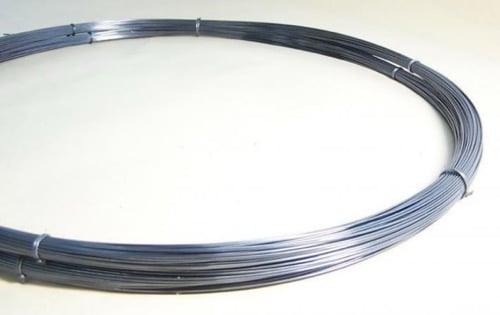
The less common refractory metals often prove most critical for specialized applications. FOTMA’s capabilities extend to tantalum, niobium, zirconium, and vanadium, each serving distinct industrial needs.
Tantalum’s corrosion resistance approaches legendary status in chemical processing. The metal withstands acids that would destroy most alternatives. Its biocompatibility makes it valuable for medical implant materials where long-term body contact is required. Tantalum Sheet and Tantalum Wire products serve both these demanding sectors.
Niobium brings superconducting properties that make it essential for particle accelerators and MRI machines. Aerospace applications leverage its high-temperature performance and weldability. The metal’s ability to form stable compounds makes it valuable in specialized alloys.
Zirconium’s nuclear applications stem from its low neutron absorption cross-section. The metal also resists corrosion in harsh chemical environments, making it useful beyond nuclear contexts. Its compounds serve as refractory materials in their own right.
Vanadium strengthens steel alloys and enables specialized structural components. The metal’s role in energy storage systems has grown as vanadium redox flow batteries gain traction for grid-scale applications.
These materials meet aerospace grade materials specifications and medical implant materials requirements when applications demand extreme temperature resistance, specific electrical properties, or exceptional corrosion performance.
!Properties and Applications of Ta, Nb, Zr, V
## Quality Systems That Actually Mean Something
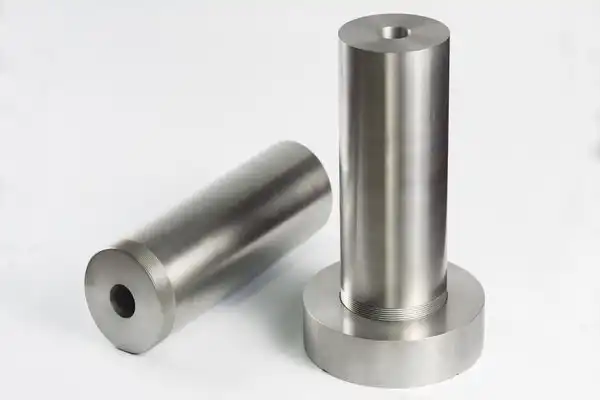
ISO certification gets thrown around so often it can seem like background noise. FOTMA’s ISO-9000-1:2008 certification represents something more substantive: a quality management system that touches every stage of production.
Advanced testing methods verify what matters. Chemical composition analysis confirms material purity. Mechanical property testing validates performance characteristics. Structural integrity examinations catch defects before they become customer problems.
This approach applies uniformly across the product range. Whether the product is a Pure Tungsten Electrode or Molybdenum Electrodes, the same quality protocols govern production. Consistency comes from systems, not individual vigilance.
The testing equipment itself matters. Modern analytical instruments detect variations that older methods miss. Investment in testing capability reflects commitment to the quality claims being made.
Reliable metal supplier relationships depend on this kind of verifiable quality. Trust builds when specifications consistently match delivered products.
Custom Fabrication That Solves Real Problems
Raw materials only get projects partway to completion. FOTMA’s custom fabrication and engineering support bridge the gap between material supply and functional components.
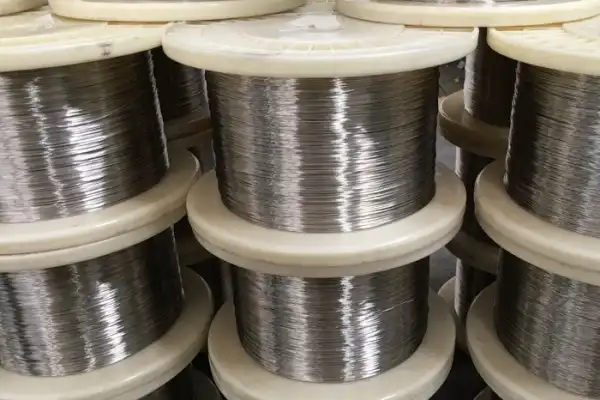
Precision machining services handle complex geometries that standard products can’t address. Refractory metals present machining challenges that require specific expertise. Their hardness and thermal properties demand tooling and techniques that general machine shops often lack.
The mechanical processing of non-ferrous metal materials transforms raw stock into finished parts. This capability means customers receive components ready for assembly rather than materials requiring additional processing steps.
Engineering collaboration addresses the “how should we make this” questions that arise in development. Material selection interacts with manufacturing process selection. Getting both right requires understanding how refractory metals behave under different processing conditions.
Custom metal fabrication capabilities extend to specialized products like Carbide Cutting Blade components. The same expertise that handles tungsten and molybdenum applies to cemented carbide materials.
!Custom component success story)
Hubei Fotma Machinery Co., Ltd. brings together the elements that make refractory metal procurement actually work: comprehensive material range, genuine technical expertise, and quality systems that deliver consistent results. As an ISO-certified one-stop supplier for tungsten, molybdenum, titanium, tantalum, niobium, zirconium, and vanadium, FOTMA offers the integrated approach that complex projects require.
Contact our specialists to discuss your specific material requirements. Reach us at +86 13995656368, +86 13907199894, [email protected], or [email protected].
FOTMA combines a comprehensive range of refractory metals with over 30 years of material research expertise. The company supplies tungsten, molybdenum, titanium, tantalum, niobium, zirconium, and vanadium under one roof, backed by ISO certification and advanced manufacturing capabilities. This integration allows solutions from raw materials through custom fabrication, eliminating the coordination overhead that multi-supplier approaches create.
ISO-9000-1:2008 certification provides the framework, but the substance lies in implementation. Modern production equipment and advanced testing methods operate at every production stage. Raw material inspection, in-process monitoring, and final product verification all follow documented protocols. This systematic approach ensures tungsten, molybdenum, titanium, and other non-ferrous metal materials meet specifications consistently.
Aerospace applications demand materials that perform at extreme temperatures and stresses. Medical device manufacturers need biocompatible materials for implants. Electronics manufacturing requires thermal management solutions. Energy sectors, including nuclear and solar, depend on materials with specific radiation and thermal properties. Chemical processing needs corrosion-resistant components. Precision instrument manufacturing and general mechanical processing round out the primary markets for these specialized materials.