
Refractory metal sputtering targets sit at the heart of modern thin film manufacturing. These materials—tungsten, molybdenum, tantalum, niobium, titanium, and zirconium—share a defining trait: they withstand temperatures that would vaporize most metals. That thermal resilience translates directly into coating performance. When ions strike a refractory metal sputtering target, the ejected atoms carry that stability onto whatever substrate receives them. The resulting films inherit properties that softer metals simply cannot deliver.
Refractory metals earn their classification through melting points that exceed 2000°C. Tungsten leads the group at 3422°C, followed by molybdenum at 2623°C. These temperatures matter because sputtering generates significant heat at the target surface. Materials that remain stable under bombardment produce cleaner, more consistent films.
The atomic structure of refractory metals contributes to their mechanical strength. Dense electron configurations create strong metallic bonds that resist deformation. This translates to thin films with exceptional hardness and wear resistance. The same bonding characteristics provide excellent electrical conductivity, making these materials valuable for electronic interconnects.
Thermal stability during deposition affects film quality in measurable ways. Targets that remain structurally sound under process conditions produce uniform sputtering rates. This consistency shows up in film thickness uniformity and reduced defect density. For semiconductor applications where nanometer-scale variations matter, this stability becomes essential.
| Refractory Metal | Primary Applications |
|---|---|
| Tungsten (W) | Electronics, X-ray tubes, high-temperature components |
| Molybdenum (Mo) | Semiconductors, solar cells, furnace parts |
| Tantalum (Ta) | Medical implants, chemical processing, capacitors |
| Niobium (Nb) | Superconductors, aerospace, optical coatings |
| Titanium (Ti) | Aerospace, biomedical, decorative coatings |
| Zirconium (Zr) | Nuclear, medical, corrosion-resistant coatings |
Each refractory metal sputtering target brings specific advantages to different coating challenges.
Tungsten holds the highest melting point of any element. A Tungsten Sputtering Target produces films with extreme density and hardness. These properties make tungsten ideal for diffusion barriers in semiconductor devices, where preventing atomic migration between layers determines device reliability. The material also finds use in X-ray tube anodes and wear-resistant tool coatings.
Molybdenum combines high thermal conductivity with good electrical properties. Molybdenum sputtering targets serve thin-film transistor manufacturing and photovoltaic cell production. The metal resists attack from molten glass and many acids, extending its usefulness to chemical processing environments. We also supply Molybdenum Spray Wire for thermal spray applications requiring similar properties.
Tantalum stands out for chemical inertness. Few substances attack tantalum at room temperature, and this resistance transfers to deposited films. Medical device manufacturers rely on tantalum coatings for implants that must survive decades in the human body. The metal also forms stable oxide layers useful in capacitor dielectrics.
Niobium shares tantalum’s corrosion resistance while offering superconducting properties below 9.3 Kelvin. Niobium sputtering targets enable superconducting cavity coatings for particle accelerators and MRI magnets. Optical coating applications benefit from niobium’s high refractive index.
Titanium provides an excellent strength-to-weight ratio. A Titanium Rod can be processed into sputtering targets that produce biocompatible, corrosion-resistant films. Aerospace components receive titanium nitride coatings for wear protection. Medical implants gain surfaces that promote bone integration.
Zirconium resists corrosion in nuclear reactor environments, making it valuable for fuel rod cladding applications. Zirconium sputtering targets also produce biocompatible films for dental and orthopedic implants.
Refractory metal sputtering targets deliver films with properties unmatched by lower-melting-point alternatives. The high melting points prevent target degradation during extended sputtering runs, reducing contamination from target material breakdown. Films deposited from these targets exhibit superior adhesion because the arriving atoms carry enough energy to form strong bonds with substrate surfaces. The inherent hardness of refractory metals produces coatings that resist scratching and abrasion. Chemical stability means these films maintain their properties in corrosive environments. Applications ranging from microelectronics to surgical implants depend on these characteristics.
Producing refractory metal sputtering targets requires careful control at every stage. Raw material selection begins with source metals of documented purity, typically 99.95% or higher for semiconductor applications. Powder metallurgy techniques consolidate these materials under high pressure and temperature. The resulting billets undergo hot isostatic pressing to eliminate internal voids.
Subsequent mechanical processing—forging, rolling, and machining—refines the grain structure. Smaller, more uniform grains improve sputtering behavior by providing consistent erosion patterns across the target surface. This uniformity extends target life and maintains film quality throughout the target’s service.
Testing protocols verify purity, density, and dimensional specifications. Glow discharge mass spectrometry detects trace impurities at parts-per-million levels. Archimedes density measurements confirm that the material has achieved theoretical density. Coordinate measuring machines verify that finished targets meet dimensional tolerances. These quality control steps ensure that each refractory metal sputtering target performs as specified.
Target purity directly determines film composition. Any impurity present in the target will transfer to the deposited film in proportion to its concentration. For semiconductor applications, even parts-per-million levels of certain contaminants can alter electrical properties or create defect sites. Metallic impurities may form unwanted phases or precipitates. Gaseous impurities like oxygen or nitrogen can create brittle oxide or nitride inclusions. High-purity targets minimize these risks, producing films with predictable, reproducible properties. The additional cost of higher-purity material typically pays for itself through improved device yields and reduced process troubleshooting.
Refractory metal sputtering targets serve industries where coating performance cannot be compromised.
Aerospace manufacturers deposit tungsten and molybdenum coatings on turbine components. These films provide thermal barriers that allow higher operating temperatures, improving engine efficiency. Erosion-resistant coatings on compressor blades extend service intervals.
Semiconductor fabrication relies heavily on refractory metal films. Tungsten fills contact holes connecting transistors to metal interconnect layers. Tantalum and tantalum nitride serve as barrier layers preventing copper diffusion into silicon. Molybdenum gates control current flow in thin-film transistors for display panels.
Medical device coatings must satisfy biocompatibility requirements while providing mechanical durability. Tantalum and titanium films meet both criteria. Hip and knee implants receive these coatings to promote osseointegration—the direct bonding of bone to implant surface.
Optical coatings for precision instruments use niobium and tantalum films. These materials provide controlled refractive indices for anti-reflective and filter applications. Telescope mirrors and camera lenses benefit from these coatings.
Cutting tools and wear parts receive hard coatings based on refractory metal nitrides and carbides. Titanium nitride and tungsten carbide films dramatically extend tool life in machining operations.
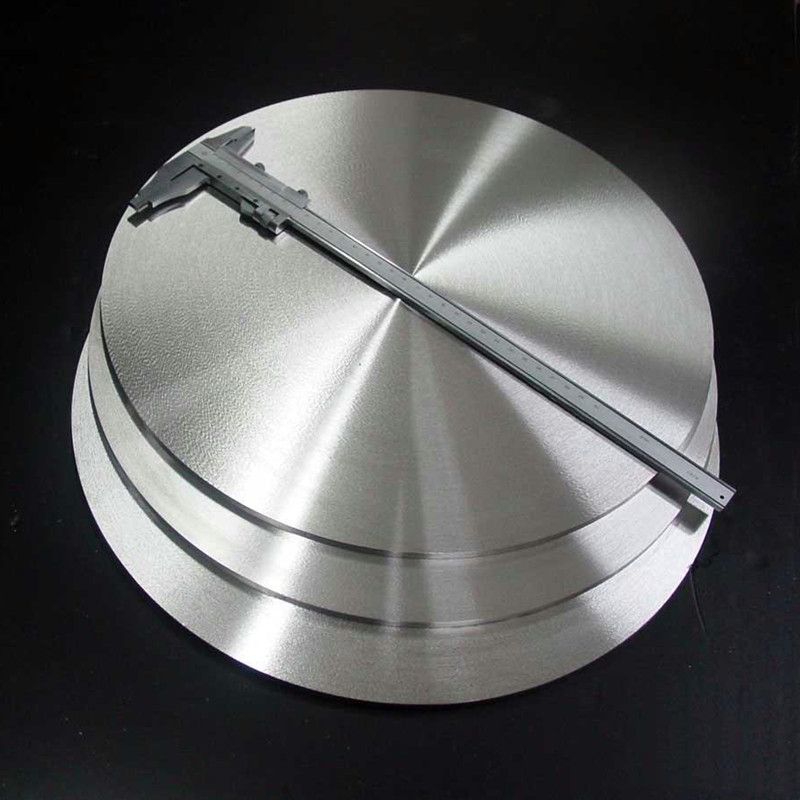
Matching a refractory metal sputtering target to an application requires evaluating several factors.
Film requirements come first. What hardness, conductivity, or corrosion resistance does the application demand? Tungsten provides maximum hardness. Molybdenum offers better thermal conductivity. Tantalum delivers superior chemical resistance. These property differences guide initial material selection.
Purity requirements depend on application sensitivity. Semiconductor devices typically require 99.99% or higher purity. Decorative coatings may tolerate 99.9% material. Higher purity costs more, so matching purity to actual requirements optimizes cost.
Target density affects sputtering rate and film quality. Fully dense targets sputter more uniformly than porous material. Density specifications should match the sputtering system’s requirements.
Grain size influences film microstructure. Fine-grained targets tend to produce smoother films with better adhesion. Applications requiring epitaxial growth may specify particular grain orientations.
Physical dimensions must match the sputtering system. Target diameter, thickness, and backing plate configuration all require specification.
| Selection Criteria | Description | Key Consideration |
|---|---|---|
| Purity | Level of undesirable elements | Minimizes film defects, enhances performance |
| Density | Material compactness | Affects sputtering rate and film quality |
| Grain Size | Microstructure of the target | Influences film uniformity and adhesion |
| Composition | Specific metal or alloy | Determines film properties (e.g., hardness, conductivity) |
| Dimensions | Size and shape of the target | Must fit the sputtering system |
Tungsten and molybdenum sputtering targets perform best when deposited films must withstand extreme heat. Tungsten’s 3422°C melting point means films remain stable at temperatures that would melt most metals. Molybdenum’s 2623°C melting point, combined with excellent thermal conductivity, suits applications where heat dissipation matters as much as thermal stability. Both metals maintain their mechanical properties at elevated temperatures, preventing film degradation during thermal cycling. Aerospace turbine coatings, furnace components, and high-power electronic devices benefit from these characteristics.
Sputtering target development continues advancing along several paths.
High-entropy alloys—materials containing five or more principal elements in near-equal proportions—offer property combinations unavailable from single metals. These alloys can provide exceptional hardness, corrosion resistance, and thermal stability simultaneously. Sputtering targets from these materials enable coatings with tailored property profiles.
Nanostructured targets produce films with refined microstructures. Smaller grain sizes in the target translate to denser, smoother deposited films. These improvements matter for applications requiring precise thickness control and minimal surface roughness.
Recycling programs address the high cost of refractory metals. Spent targets retain significant material value. Recovery and reprocessing reduce both cost and environmental impact. Closed-loop material flows are becoming standard practice for tungsten and tantalum.
Process monitoring advances allow real-time adjustment of sputtering parameters. Sensors tracking target erosion, plasma conditions, and film growth enable tighter process control. This feedback reduces waste and improves film consistency.
Hubei Fotma Machinery Co., Ltd. brings over 30 years of material research to refractory metal sputtering target production. ISO-9000-1:2008 certification documents our quality management systems. Advanced production equipment and comprehensive testing ensure that targets meet specifications for purity, density, and dimensional accuracy.
Contact us at +86 13995656368 or [email protected] to discuss your specific coating requirements.
Hubei Fotma produces refractory metal sputtering targets using equipment and testing methods developed through three decades of materials work. This experience shows in consistent purity levels, uniform density, and reliable sputtering performance. Our Tungsten Sputtering Target products, along with molybdenum, tantalum, niobium, titanium, and zirconium targets, meet specifications for demanding thin film applications.
Hubei Fotma manufactures refractory metal sputtering targets to customer specifications. Non-standard dimensions, specific purity grades, and custom alloy compositions are all available. Our technical team works with customers to define requirements and develop targets optimized for particular applications.
Every refractory metal sputtering target undergoes documented testing before shipment. Chemical analysis verifies purity. Density measurements confirm material consolidation. Dimensional inspection ensures fit to customer specifications. These protocols apply to all target materials—tungsten, molybdenum, tantalum, niobium, titanium, and zirconium. Test reports accompany each shipment.