
Titanium sheet fabrication demands precision at every step. The material’s strength-to-weight ratio and corrosion resistance make it essential for aerospace, medical, and chemical processing applications, but its low ductility and reactivity with atmospheric gases create processing constraints that other metals simply do not present. Getting consistent results requires understanding how titanium behaves under stress, heat, and mechanical force, then matching those behaviors to the right equipment and techniques.
Titanium’s mechanical and chemical characteristics determine which fabrication methods work and which create problems. The material’s strength-to-weight ratio exceeds most structural metals, which is why it dominates weight-critical applications. Its corrosion resistance comes from a stable oxide layer that forms naturally on the surface. Biocompatibility makes it the standard for medical implants where tissue contact is permanent.
These same properties complicate fabrication. Low ductility at room temperature means titanium resists deformation more than aluminum or mild steel. The material work-hardens rapidly during forming, increasing hardness and reducing remaining ductility with each pass. At elevated temperatures, titanium reacts aggressively with oxygen and nitrogen in the atmosphere, forming brittle surface layers that compromise fatigue life.
Different grades present different fabrication profiles. The table below summarizes common grades and their processing characteristics:
| Titanium Grade | Key Characteristics | Typical Applications |
|---|---|---|
| Grade 1 (CP) | High ductility, good formability | Chemical processing, medical |
| Grade 2 (CP) | Good strength, excellent corrosion resistance | Aerospace, marine, power generation |
| Grade 5 (Ti-6Al-4V) | High strength, good fatigue resistance | Aerospace, medical implants |
| Grade 7 (Ti-0.15Pd) | Excellent corrosion resistance in reducing acids | Chemical processing |
Grade selection happens early in the design process, but fabrication planning must account for how each grade responds to cutting, forming, and heat treatment.
Titanium’s hardness and work-hardening behavior make cutting method selection critical. The wrong approach produces poor edge quality, excessive heat-affected zones, or both. Each method offers trade-offs between speed, precision, thermal impact, and cost.
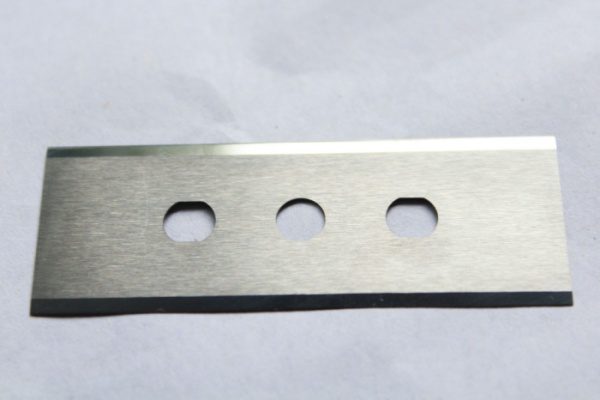
Waterjet cutting eliminates thermal concerns entirely. The process uses high-pressure water mixed with abrasive particles to erode material without generating heat. Edge quality is excellent, and the material’s metallurgical properties remain unchanged through the cut zone. The drawbacks are speed and operating cost, particularly for thicker sections where cutting rates drop significantly.
Laser cutting delivers high precision and narrow kerf widths on thinner sheets. Modern fiber lasers handle titanium effectively, though the heat-affected zone requires attention. For sheets under 6mm, laser cutting often provides the best balance of speed and edge quality. Thicker material pushes the process toward its limits, where edge quality degrades and the HAZ expands.
Plasma cutting handles thicker sections at higher speeds than laser or waterjet, but the trade-off is a wider heat-affected zone and rougher edge finish. Post-processing is typically required to meet dimensional tolerances on critical features.
Mechanical methods like shearing and punching work for simpler geometries in thinner gauges. Shearing produces straight cuts quickly and economically. Punching handles repetitive shapes at high speed, though tool wear accelerates compared to softer materials.
| Cutting Method | Advantages | Disadvantages |
|---|---|---|
| Waterjet Cutting | No HAZ, high precision, cuts thick material | Slower, higher cost, abrasive waste |
| Laser Cutting | High precision, fast for thin sheets, narrow kerf | Significant HAZ, limited thickness, reflective |
| Plasma Cutting | Fast, cuts thick material, lower cost than laser | Wide HAZ, rough edge, material distortion |
| Shearing | Fast, low cost for straight cuts | Limited to thinner sheets, edge deformation |
| Punching | High speed for repetitive shapes, low cost per part | Limited to thinner sheets, tool wear, burrs |
The choice between thermal and mechanical cutting depends on sheet thickness, edge quality requirements, and production volume. For thin titanium sheets requiring tight tolerances, laser cutting often proves most effective. When thermal distortion is unacceptable, waterjet cutting preserves material properties at the cost of longer cycle times.
Titanium’s springback exceeds most common metals, sometimes returning 15 to 20 percent toward its original shape after the forming load is released. This behavior requires overbending to achieve target angles, with the exact compensation depending on grade, thickness, and bend radius.
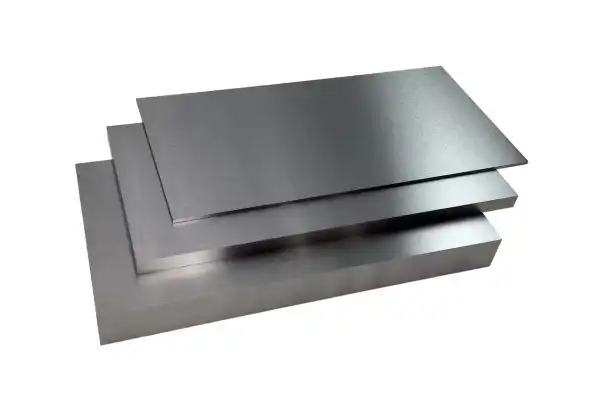
Cold forming works for certain grades and thinner gauges, but the process window is narrower than with steel or aluminum. Minimum bend radii are larger, typically 3 to 4 times material thickness for commercially pure grades and even larger for alloys like Ti-6Al-4V. Attempting tighter radii at room temperature risks cracking on the outer surface of the bend.
Hot forming expands the process window significantly. Heating titanium to 400 to 600°C increases ductility and reduces springback, allowing tighter radii and more complex shapes. The challenge is maintaining temperature control while preventing atmospheric contamination. Even brief exposure to oxygen at forming temperatures creates a brittle alpha case layer that must be removed before the part enters service.
Temperature consistency matters more than most fabricators initially expect. Variations of ±10°C during hot forming can produce inconsistent material flow and premature tool wear. Maintaining tighter temperature windows, particularly on complex formed components, reduces cracking and springback by measurable margins.
Multi-stage forming with intermediate annealing steps allows complex geometries that would crack in a single operation. Each forming stage introduces work hardening, and annealing restores ductility before the next stage.
Fabrication processes introduce residual stresses and may alter the material’s microstructure. Post-fabrication heat treatments restore mechanical properties and prevent delayed cracking.
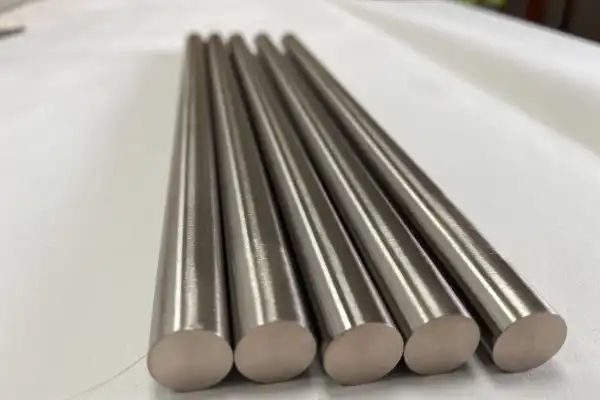
Annealing softens work-hardened material by allowing recrystallization of the grain structure. The process increases ductility and reduces internal stresses, preparing the material for subsequent operations or final service. Annealing temperatures vary by grade, typically ranging from 650 to 760°C for commercially pure titanium and 700 to 790°C for Ti-6Al-4V.
Stress relief operates at lower temperatures than full annealing, reducing residual stresses without significantly changing the microstructure. This treatment is appropriate when the material’s strength must be preserved but fabrication-induced stresses could cause distortion or cracking during service.
Both heat treatments require controlled atmospheres to prevent surface contamination. Vacuum furnaces or inert gas environments protect the titanium surface from oxygen and nitrogen pickup.
Surface preparation removes contamination and establishes the protective oxide layer that provides corrosion resistance. Pickling in acid solutions dissolves surface impurities and any alpha case layer formed during high-temperature processing. Passivation treatments enhance the natural oxide layer, improving corrosion performance in aggressive environments.
Quality verification includes dimensional inspection, visual examination for surface defects, and non-destructive testing where required. Ultrasonic testing detects internal discontinuities like voids or inclusions. Eddy current testing identifies surface and near-surface defects. The specific inspection requirements depend on the application’s criticality and the applicable specifications.
Several failure modes recur across titanium fabrication operations. Recognizing them early and implementing preventive measures improves yield and reduces cost.
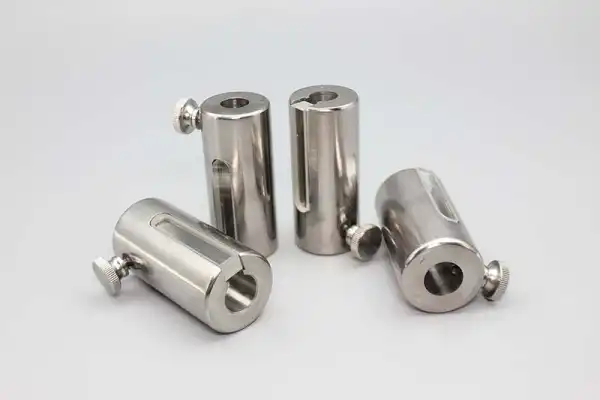
Galling occurs when titanium adheres to tooling surfaces during cutting or forming. The material’s high coefficient of friction and tendency to cold-weld under pressure create conditions where material transfers from the workpiece to the tool. Once galling starts, surface quality degrades rapidly and tool life drops. Specialized lubricants, appropriate tool materials, and controlled forming speeds reduce galling risk.
Contamination from dissimilar metals, particularly iron, compromises titanium’s corrosion resistance. Even trace amounts of iron embedded in the surface can create galvanic cells that accelerate local corrosion. Dedicated tooling, clean work surfaces, and separation from steel fabrication areas prevent cross-contamination. Stainless steel tools and fixtures are acceptable, but carbon steel contact must be avoided.
Tool wear accelerates in titanium fabrication due to the material’s hardness and work-hardening behavior. Carbide tooling with appropriate coatings extends tool life compared to high-speed steel. Cutting parameters must balance productivity against tool wear, as aggressive feeds and speeds that work in steel often cause rapid tool degradation in titanium.
Safety considerations include managing titanium dust and fine particles, which can ignite under certain conditions. Adequate ventilation, dust collection, and fire suppression systems are standard requirements for titanium fabrication areas. Cutting fluids must be compatible with titanium to avoid exothermic reactions.
If your titanium fabrication requirements involve complex geometries or tight tolerances, discussing material grade selection and process sequencing with an experienced fabricator before finalizing designs can prevent costly iterations.
Cold forming works for commercially pure grades and thinner gauges when bend radii stay above minimum thresholds, typically 3 to 4 times material thickness. The process requires careful control of forming forces and may need intermediate annealing steps for complex shapes. Hot forming becomes necessary for alloys like Ti-6Al-4V, thicker sections, or geometries requiring tighter radii than cold forming allows.
Titanium dust and fine particles present combustion risks under certain conditions. Cutting operations require proper ventilation to remove airborne particles, dust collection systems to prevent accumulation, and fire suppression equipment appropriate for metal fires. Cutting fluids must be compatible with titanium, as some formulations can react exothermically. Personal protective equipment prevents inhalation of fine particles.
Contamination prevention starts with dedicated tooling that never contacts steel or other dissimilar metals. Work surfaces must be clean and free of iron particles. Storage areas should separate titanium from other metals, and handling equipment should use non-metallic contact surfaces where possible. Cleaning protocols for tools and fixtures between operations remove any accumulated contamination before it transfers to the workpiece. For projects where contamination control is critical, contact FOTMA to discuss your specific handling and processing requirements.
If you’re interested, check out these related articles:
Thomas Mitchell S Successful Shopping Experience
How To Choose A Qualified Molybdenum Rod Supplier
Manufacturing Process Of High Quality Molybdenum Plate Products