
Tungsten alloy crucibles are the workhorse of high temperature melting processes where chemical inertness and thermal stability are non‑negotiable. Whether you are growing sapphire crystals, melting rare earth metals, or handling aggressive molten salts, the crucible material directly governs melt purity, process yield, and operating cost. After three decades of manufacturing tungsten heavy alloy components for demanding applications, I have observed one recurring lesson: off‑the‑shelf crucibles rarely serve a process well over the long term. The most reliable path combines the correct W‑Ni‑Fe or W‑Ni‑Cu grade with application‑specific engineering and full control from powder to finished part.
Tungsten Alloy Crucible Properties and Material Composition
Tungsten alloy crucibles are fabricated from high‑density tungsten heavy alloys (WHAs) that typically contain 90‑97% tungsten with nickel‑iron or nickel‑copper binders. This powder metallurgy‑derived composite delivers a density up to 18.5 g/cc, a melting point above 1400°C, and excellent resistance to thermal shock and molten metal corrosion. The embedded tungsten grains provide strength at elevated temperatures while the ductile binder phase imparts machinability and toughness.
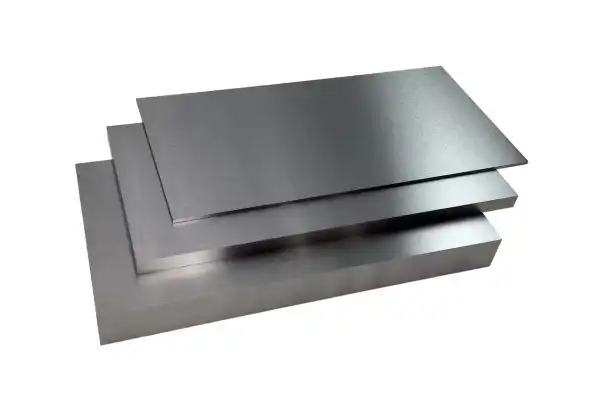
| Property | Grade 1 (90W‑Ni‑Fe) | Grade 3 (95W‑Ni‑Fe) | Grade 4 (97W‑Ni‑Fe) |
|---|---|---|---|
| Nominal density (g/cc) | 17.0 | 18.0 | 18.5 |
| Hardness (HRC) | 24‑28 | 27‑31 | 28‑32 |
| Tensile strength (MPa) | 900‑1000 | 800‑900 | 750‑850 |
| Thermal conductivity (W/mK) | 75‑85 | 85‑95 | 90‑100 |
These properties align with ASTM B777 and make the material suitable for long‑duration exposure to molten metals, slags, and reducing atmospheres.
High Temperature Melting Applications Across Industries
Over the years our team has supplied crucibles into four sectors that push the material’s limits.
Sapphire crystal growth by EFG or Kyropoulos methods demands a crucible that remains dimensionally stable in an oxidizing environment above 1500°C while avoiding contamination of the melt. Tungsten alloy crucibles with a controlled grain structure maintain flatness and resist cracking through hundreds of thermal cycles.
Rare earth metal producers use vacuum induction melting to process elements like neodymium and dysprosium. Here the crucible must withstand aggressive rare earth melts and resist erosion from magnetic stirring. W‑Ni‑Cu crucibles are often selected for their non‑magnetic advantage in such setups.
In glass melting, particularly for high‑refractive‑index optical glasses, the crucible serves as a liner inside an induction furnace. The alloy’s high density suppresses bubble formation and limits contamination.
Specialty alloy foundries that melt nickel‑base superalloys or cobalt‑chrome alloys employ tungsten alloy crucibles because the high tungsten content dramatically reduces iron pickup compared to steel crucibles, preserving the alloy composition.
Binder Selection: W‑Ni‑Fe vs W‑Ni‑Cu for Crucibles
Choosing between the two common binder systems changes the crucible’s behavior in service.
W‑Ni‑Fe grades are magnetic, exhibit slightly higher density and strength, and provide better resistance to liquid metal erosion. They are the standard choice for most melting applications, especially where magnetic stirring is not used or where magnetism is acceptable.
W‑Ni‑Cu grades are non‑magnetic, making them essential for vacuum induction melting with strong magnetic fields. The copper‑bearing binder also offers somewhat better resistance to attack by certain molten salts and slags. The trade‑off is a marginally lower density and a higher cost due to the Cu powder price.
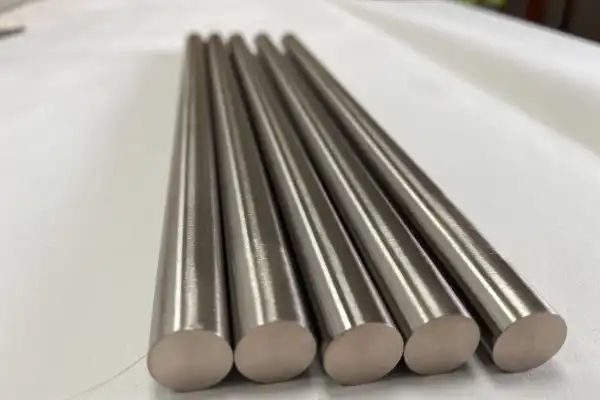
| Feature | W‑Ni‑Fe | W‑Ni‑Cu |
|---|---|---|
| Magnetic | Yes | No |
| Density (g/cc) | 17.0‑18.5 | 16.5‑18.0 |
| Corrosion resistance | Good | Better in acid/alkali |
| Typical applications | Sapphire, superalloy melting | Rare earth melting, salt baths |
For processes where magnetic stirring is not critical, we typically recommend W‑Ni‑Fe because of its proven longevity and cost profile.
Engineering Custom Crucibles for Your Specific Process
Standard diameters from 50 mm to 300 mm are available, but most high‑value melting processes benefit from a custom design. The geometry directly affects thermal gradients and melt flow, so parameters like wall thickness, bottom radius, and spout angle should be discussed early.
I frequently tell clients to provide a process data sheet that includes melt temperature, atmosphere, stirring conditions, and expected campaign length. With those inputs we can determine the minimum wall thickness that avoids creep during repeated cycles, and whether additional features such as a lip or a pour spout are needed. A well‑designed crucible can last two to three times longer than a generic one.
If your program involves a reactive melt or requires a non‑standard size, it is worth confirming the design parameters with a materials engineer before locking in the BOM — reach out at [email protected].
Manufacturing Quality and Powder Metallurgy Integrity
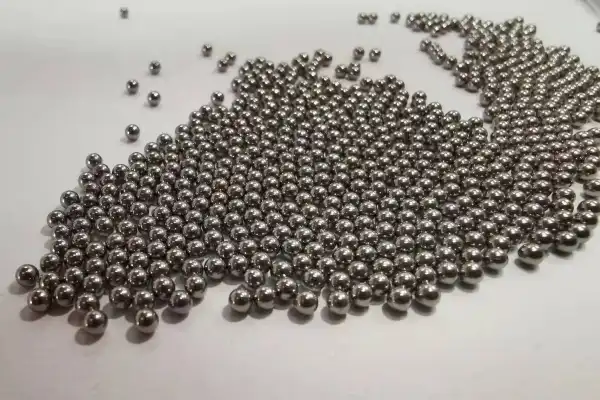
The real performance determinant for a tungsten alloy crucible lies in the manufacturing sequence. We start with high‑purity tungsten powder blended with Ni‑Fe or Ni‑Cu binder powder. The mixture is cold isostatically pressed into a near‑net‑shape preform, then liquid‑phase sintered at approximately 1450‑1500°C in a hydrogen atmosphere. This step controls grain size and density uniformity — variations here cause hot spots and premature failure.
After sintering, critical crucibles receive hot isostatic pressing (HIP) to close residual porosity, bringing the density above 99% of theoretical. We then machine the crucible to final dimensions on CNC lathes, holding tolerances of ±0.05 mm on ID and OD.
Every batch undergoes ultrasonic testing and density verification. FOTMA’s ISO‑9000‑1:2008 certified production system enforces traceability from powder lot to finished part, so you can audit the material pedigree.
Sourcing Tungsten Alloy Crucibles from an Experienced Supplier
When evaluating suppliers, look beyond price per kilogram. A manufacturer that only machines blanks purchased from a third‑party powder processor has limited ability to guarantee internal integrity. The crucible is a safety‑critical item: a crack during a melt can destroy the charge and damage furnace internals.
Key indicators of a qualified supplier include in‑house sintering capability, a documented quality system, and the willingness to share material certifications. Lead times for custom crucibles typically run four to six weeks, depending on size and complexity. Our team at FOTMA has over three decades of powder metallurgy experience, and we regularly assist clients in transitioning from stock crucibles to optimized custom designs.
Purchasing Tungsten Alloy Crucibles: A Clear Next Step
Inconsistent crucible quality leads to melt contamination, unplanned furnace downtime, and rejected production lots. Working with a manufacturer that controls the entire powder metallurgy process eliminates these variables. Send your part drawing and process requirements to [email protected] or call +86 13995656368, and we will provide a material recommendation and quotation within two business days.
Common Questions About Tungsten Alloy Crucibles
They handle most molten metals up to approximately 1600°C, including rare earths, aluminum oxide melts for sapphire, and nickel‑base superalloys. We do not recommend them for molten titanium or zirconium, which aggressively attack the binder phase.
It depends on whether your process uses magnetic stirring and the chemical aggressiveness of the melt. If the melt contains acidic or oxidizing agents and magnetic fields are present, specify W‑Ni‑Cu. For nearly all other cases, W‑Ni‑Fe provides better density and longer life.
Standard custom diameters under 200 mm typically ship in four weeks after drawing approval. Larger sizes or complex geometries may require six weeks. We run production campaigns that combine multiple customer orders, so early communication helps lock in a slot.
Yes. With proper pre‑heating and controlled cooling between cycles, we have seen crucibles last 50 to 100 cycles in sapphire growth. Inspect for surface cracks and wall‑thickness reduction after every 20 cycles, as uneven erosion can signal a process deviation.
It is possible but not recommended for critical applications. Machining from plate cuts across the grain flow and can expose porosity. The near‑net‑shape powder pressing route yields a crucible with superior density uniformity and thermal fatigue resistance. For high‑volume or demanding processes, the yield improvement from a pressed crucible more than offsets the tooling cost. Share your requirements with us and we will confirm the most cost‑effective manufacturing path.
If you’re interested, check out these related articles:
Custom Molybdenum Parts Processing Molybdenum Screw
What Is The Most Commonly Used Titanium Alloy
High Purity Tungsten Wire The Crossover King From Traditional Lighting To Modern Medicine
Titanium And Titanium Alloys Widespread Application And Future Challenges
What Is Titanium Wire Used For