
Tungsten sits at the center of a supply chain problem that most procurement teams underestimate until they face it directly. The metal’s combination of extreme hardness, the highest melting point of any element, and density makes it irreplaceable in applications from cutting tools to aerospace components. What makes sourcing complicated is not just geological scarcity but the concentration of production capacity in a single country. China controls roughly 80% of global tungsten concentrate output, a dominance that extends through refining and processing. For strategic planners managing material security, this concentration creates exposure that standard diversification playbooks struggle to address.
Tungsten occurs primarily in wolframite and scheelite deposits, minerals that require energy-intensive extraction and processing. The geological distribution is uneven, with economically viable deposits concentrated in a handful of regions. This natural scarcity combines with processing complexity to create a market where supply disruptions translate quickly into price volatility and allocation challenges.
Global Tungsten Reserves by Country (Estimated)
| Country | Estimated Reserves (Metric Tons) |
|---|---|
| China | 1,900,000 |
| Russia | 400,000 |
| Vietnam | 95,000 |
| Canada | 87,000 |
| United States | 69,000 |
| Bolivia | 52,000 |
The reserve figures tell only part of the story. Production capacity, processing infrastructure, and export policy determine actual availability far more than raw reserve numbers. A country might hold significant reserves while lacking the refining capability to deliver material that meets industrial specifications.
Tungsten’s demand profile reflects its unique property combination. Cemented carbides for cutting tools, drills, and wear-resistant components account for the largest share of consumption. The material’s hardness at elevated temperatures makes it essential for machining operations where other materials would fail. Filament applications in specialty lighting, electrodes for welding and electrical discharge machining, and high-temperature alloys for turbine components represent additional demand centers. Radiation shielding applications leverage tungsten’s density, which exceeds lead while avoiding toxicity concerns. Each application exploits a specific property combination that alternative materials cannot fully replicate.
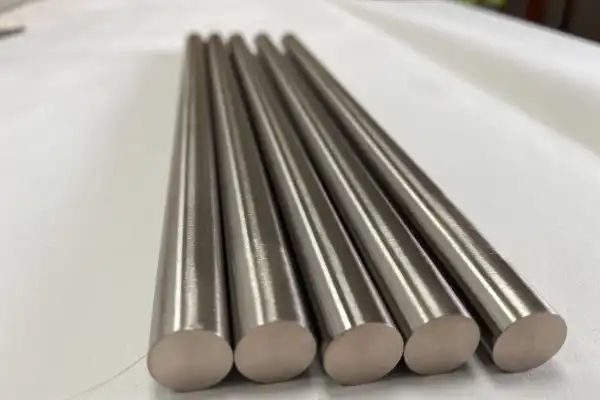
China’s dominance in tungsten extends beyond mining into the processing stages where raw concentrate becomes usable industrial material. This vertical integration means that even tungsten mined elsewhere often flows through Chinese processing facilities before reaching end users. The practical effect is that supply chain disruptions in China ripple through global markets regardless of where the original ore was extracted.
Export regulations, production quotas, and environmental enforcement actions in China have historically triggered supply tightness and price spikes. These policy shifts can occur with limited advance notice, leaving procurement teams scrambling to secure alternative sources that may not exist at required volumes or quality levels.
I encountered this dynamic directly during a project requiring high-purity tungsten for X-ray target manufacturing. Initial sourcing through established channels hit unexpected delays when export regulations shifted, and the material that did arrive showed quality inconsistencies that required additional testing and sorting. The experience reinforced something that reserve statistics obscure: supply chain resilience depends on having qualified alternative suppliers already in place, not on the theoretical existence of reserves in other countries. We completed that project by working with a supplier who maintained rigorous quality control and had built supply relationships outside the dominant production channels.
Russia holds the second-largest tungsten reserves globally, though geopolitical factors currently complicate its role as a supply source for many Western buyers. Vietnam, Canada, the United States, and Bolivia each hold reserves that could support expanded production, but current output from these sources remains a fraction of Chinese volumes. The gap between reserve potential and actual production capacity reflects decades of underinvestment in mining and processing infrastructure outside China. Developing these alternative sources requires capital, permitting timelines, and technical expertise that cannot be mobilized quickly when supply disruptions occur.
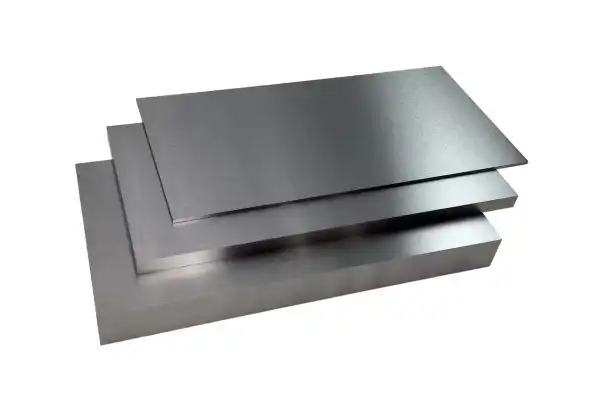
Effective supply chain risk mitigation for tungsten requires action across multiple dimensions simultaneously. Geographic diversification of suppliers provides some protection, but only if those suppliers have independent processing capability rather than relying on Chinese facilities. Supplier qualification should include verification of the complete supply chain, not just the immediate seller’s location.
Recycling programs offer a meaningful supplement to primary supply. Cemented carbide scrap contains recoverable tungsten that can be processed back into usable material at lower cost and environmental impact than primary extraction. Establishing relationships with recyclers and building internal collection programs for manufacturing scrap creates a partial buffer against primary supply disruptions.
Buffer stock strategies carry inventory costs but provide time to respond when supply tightens. The appropriate stock level depends on consumption rates, lead times from alternative suppliers, and the criticality of tungsten-dependent production lines. For applications where tungsten is genuinely irreplaceable, carrying several months of inventory may be justified despite the working capital impact.
Trade policy changes, export restrictions, and political tensions between major economies create supply chain turbulence that shows up in tungsten markets with particular intensity given the concentrated production base. Tariff implementations can shift cost structures overnight. Export quota adjustments in producing countries directly constrain available supply. Sanctions regimes may eliminate entire supplier options from consideration.
Economic cycles add another layer of volatility. Industrial demand for tungsten tracks manufacturing activity, particularly in sectors like automotive, aerospace, and tooling. Downturns reduce demand and prices, while recovery periods can create allocation challenges as production capacity struggles to ramp back up. The combination of supply concentration and demand cyclicality makes tungsten pricing inherently volatile, a factor that procurement planning must accommodate.
If your operations depend on consistent tungsten supply for critical applications, it is worth mapping your complete supply chain exposure before the next disruption tests your assumptions.
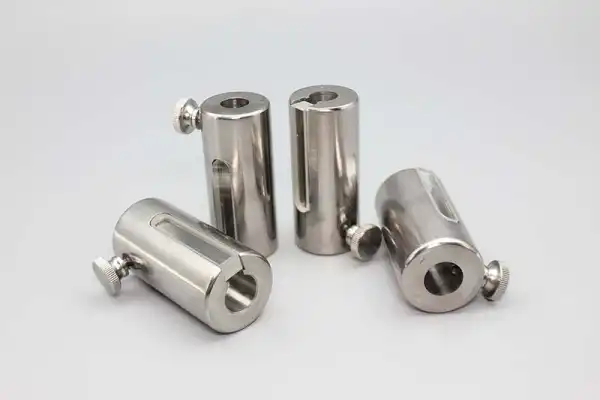
Research into tungsten alloy compositions continues to push performance boundaries in demanding applications. Finer grain tungsten carbide formulations deliver improved hardness and toughness simultaneously, extending tool life in machining operations and enabling tighter tolerances. These advances matter for procurement because they can shift consumption patterns, with higher-performance materials potentially reducing total tungsten requirements per unit of output while increasing demand for specific grades.
Tungsten-copper alloys have found growing application in electronic packaging and thermal management, where their combination of thermal conductivity and tailored thermal expansion coefficients addresses heat dissipation challenges in high-power devices. Aerospace applications continue to evolve as new alloy compositions offer improved performance under extreme temperature and stress conditions.
The practical implication for supply chain planning is that tungsten demand is not static. Application development creates new demand centers while material efficiency improvements may reduce consumption in established applications. Tracking these trends helps anticipate where supply tightness is likely to emerge.
Long-term supply security increasingly requires attention to sustainability factors beyond simple availability. Environmental regulations in producing regions are tightening, which can constrain supply from operations that cannot meet new standards. Buyers who verify environmental compliance in their supply chains face less disruption risk from regulatory enforcement actions.
Recycling plays a central role in sustainable tungsten supply. Effective recovery from cemented carbide scrap reduces primary mining requirements and lowers the carbon footprint of tungsten consumption. The economics of recycling have improved as primary supply has tightened, making recycled material increasingly competitive with virgin production.
Exploring deposits outside traditional production zones represents another sustainability dimension. New mining projects in North America, Australia, and Europe could diversify supply over time, though development timelines measured in years mean these projects address future rather than immediate supply needs. Supporting these developments through offtake agreements or investment can be part of a long-term supply security strategy.

Tungsten is not a rare earth element. It is classified as a transition metal and is considered a critical mineral due to its industrial importance and concentrated supply base. Rare earth elements are a specific group of 17 elements with distinct chemical properties. The confusion sometimes arises because both tungsten and rare earths face supply concentration concerns, but they are chemically and geologically distinct.
Tungsten mining generates tailings that can contaminate water sources if not properly managed. The processing stages are energy-intensive, contributing to carbon emissions. Habitat disruption at mine sites affects local ecosystems. Responsible operators implement water treatment, tailings management, and land reclamation programs to mitigate these impacts. Buyer due diligence should include verification of environmental practices at supplier operations.
Tungsten recycling from cemented carbide scrap and other sources has become increasingly effective and economically viable. Recycled tungsten can meet specifications for many industrial applications, reducing demand for primary production. The recycling rate varies by application and region, but expanding collection and processing infrastructure continues to increase the contribution of secondary supply to total availability.
Tungsten’s melting point of 3,422°C, the highest of any metal, enables applications where other materials would fail. Furnace components, welding electrodes, and aerospace parts operating at extreme temperatures rely on this property. The high melting point also contributes to tungsten’s performance in cutting tools, where friction-generated heat would soften other materials.
Direct substitutes for tungsten are limited in most critical applications. Ceramics and other hard materials can replace tungsten carbide in some cutting applications but typically with performance tradeoffs. Molybdenum can substitute in certain high-temperature applications but lacks tungsten’s full property combination. For radiation shielding, lead remains an alternative where toxicity concerns can be managed. The practical reality is that tungsten’s unique properties make it irreplaceable for many demanding applications, which is precisely why supply security matters. For guidance on material selection where alternatives might work for your specific application, contact us at [email protected] or +86 13995656368, +86 13907199894.
If you’re interested, check out these related articles:
Removal Of Oxides On The Surface Of Molybdenum Rods
Chinas Titanium Industry Breaks Through To High End Development
Concentrated supply chains for critical materials create vulnerabilities that standard procurement practices may not adequately address. Hubei Fotma Machinery Co., Ltd. provides tungsten-molybdenum products and alloys backed by decades of technical development and rigorous quality verification. To discuss specific material requirements or supply chain concerns, contact us at [email protected] or +86 13995656368, +86 13907199894.