
Tungsten behaves as a diamagnetic metal, which means it shows a weak repulsion when exposed to an external magnetic field. This property matters in engineering contexts where even minor magnetic interference can compromise measurement accuracy or signal integrity. The effect is subtle—far weaker than the attraction you would see with iron or nickel—but it is consistent and predictable, which makes tungsten a reliable choice for magnetically sensitive environments.
The magnetic behavior of any material traces back to its electron configuration. Tungsten atoms have all their electrons paired, leaving no net magnetic moment available to align with an external field. When a magnetic field is applied, the paired electrons generate a small opposing moment, producing the characteristic weak repulsion of diamagnetic materials.
This stands in contrast to paramagnetic materials like aluminum or platinum, where unpaired electrons create moments that align weakly with an applied field, resulting in attraction. Ferromagnetic materials—iron, nickel, cobalt—go further: their electron spins align spontaneously within domains, producing strong attraction and the ability to retain magnetism after the field is removed.
| Magnetic Type | Electron Configuration | Response to Magnetic Field | Example Materials |
|---|---|---|---|
| Diamagnetic | All paired electrons | Weakly repelled | Tungsten, Copper |
| Paramagnetic | Unpaired electrons | Weakly attracted | Aluminum, Platinum |
| Ferromagnetic | Aligned electron spins | Strongly attracted | Iron, Nickel |
The practical takeaway: tungsten will not magnetize, will not retain any magnetic field, and will not distort nearby magnetic measurements in any meaningful way.
Precision instruments, medical imaging equipment, and aerospace navigation systems all share a common requirement: the materials surrounding sensitive components must not introduce magnetic interference. Ferrous alloys are often disqualified immediately in these contexts, which narrows the field to non-magnetic alternatives.
Tungsten’s diamagnetism, combined with its density and mechanical stability, makes it suitable for components operating inside or near strong electromagnetic fields. MRI equipment is one example—any ferromagnetic material in the imaging zone distorts the field and degrades image quality. High-precision gyroscopes and inertial navigation units face similar constraints, where even weak magnetic effects can accumulate into measurable drift over time.
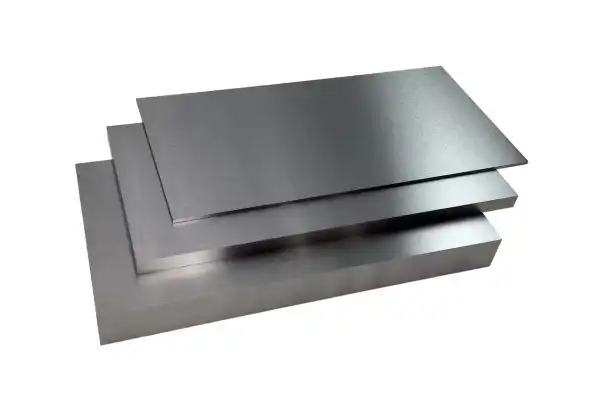
I worked on a project a few years back involving a research instrument that operated inside a 3-tesla magnetic field. The client had initially spec’d a steel mounting bracket, which introduced enough field distortion to throw off their baseline measurements. We replaced it with a high-density tungsten alloy component. The field distortion dropped below their detection threshold, and their signal-to-noise ratio improved by roughly 15%—enough to make previously marginal data usable. The tungsten part also served as a counterweight, which simplified their mechanical design.
Selecting tungsten for magnetic compatibility requires understanding what “non-magnetic” actually means in practice. Tungsten is not magnetically inert in the way a vacuum is—it does interact with magnetic fields, just very weakly. For most engineering purposes, this interaction is negligible. For ultra-sensitive applications, it may still need to be accounted for in system design.
The magnetic susceptibility of tungsten is approximately -6.8 × 10⁻⁵ (SI units), which places it firmly in the diamagnetic category but not at the extreme end. Bismuth, for comparison, has a susceptibility around -16.6 × 10⁻⁵ and is sometimes used specifically for its stronger diamagnetic response. In practice, tungsten’s combination of diamagnetism, high density, and mechanical properties often makes it the better overall choice even when its magnetic susceptibility is not the lowest available.
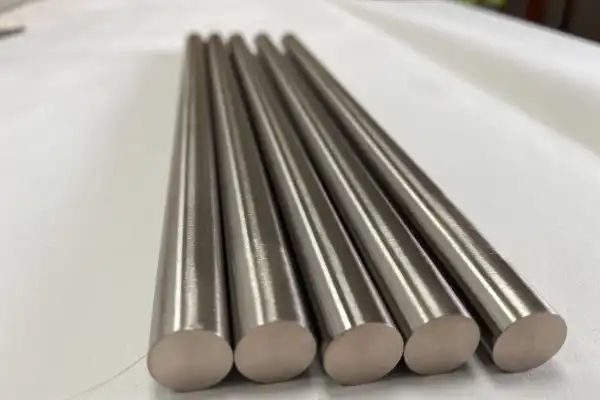
If your application involves components operating within strong magnetic fields, specifying the exact tungsten alloy grade matters. Some tungsten alloys use nickel-iron binders, which can introduce a slight paramagnetic or even weakly ferromagnetic response depending on composition. Nickel-copper binder systems typically maintain better non-magnetic characteristics. This is worth discussing with your supplier before finalizing material selection.
Magnetic behavior is rarely the only factor in material selection. Tungsten’s other characteristics frequently determine whether it makes the shortlist at all.
The melting point sits at approximately 3,422°C, the highest of any pure metal. This makes tungsten and its alloys suitable for high-temperature environments where other materials would soften or fail. Density runs around 19.3 g/cm³ for pure tungsten, nearly twice that of lead, which explains its widespread use in counterweights, ballast, and radiation shielding.
Hardness and wear resistance, particularly in tungsten carbide form, enable cutting tools and wear parts that outlast alternatives by significant margins. The trade-off is brittleness in pure form, which is why most structural applications use tungsten alloys with binder metals that improve toughness and machinability.
| Product Category | Key Characteristics | Typical Applications |
|---|---|---|
| Tungsten Copper (W-Cu) Alloy | Combines tungsten’s arc resistance and high melting point with copper’s thermal and electrical conductivity. Adjustable coefficient of thermal expansion. | Heat sinks, high-voltage switchgear contacts, EDM electrodes, resistance welding electrodes |
| High-Density Tungsten Alloy | 85–97% tungsten with Ni-Fe or Ni-Cu binders. High density, good machinability, excellent radiation shielding. Non-magnetic grades available. | Radiation shielding, aerospace counterweights, automotive ballast, kinetic energy penetrators |
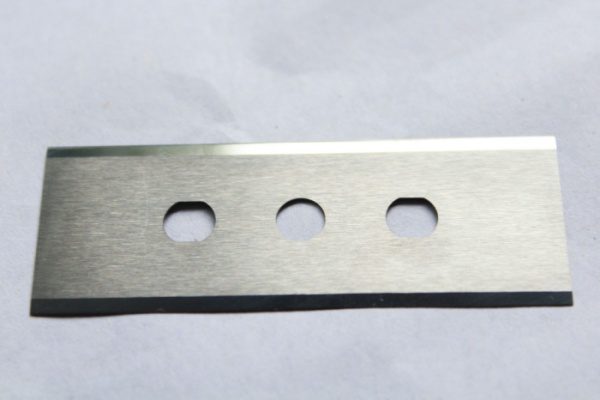
| Tungsten Carbide Knife Blades | Extreme hardness, wear resistance, edge retention. Multiple grades and geometries available. | Plastic granulation, rubber shredding, textile cutting, metal slitting |
Material specifications on paper mean little without verification. For tungsten components going into magnetically sensitive or safety-critical applications, testing protocols should cover density, hardness, chemical composition, and—where relevant—magnetic susceptibility.
ISO 9001 certification provides a baseline for quality management systems, but the specific tests that matter depend on your application. Radiation shielding components need verified density and compositional uniformity. Components for magnetic environments may warrant susceptibility measurements, particularly if the alloy contains binder metals. Mechanical parts require hardness and tensile testing appropriate to the loading conditions.
We maintain full traceability from raw material through final inspection, with test certificates available for each production lot. If your application has specific testing requirements beyond standard protocols, those can typically be accommodated.
Is tungsten diamagnetic or paramagnetic?
Tungsten is diamagnetic. All its electrons are paired, which means there is no net magnetic moment to align with an external field. The result is a weak repulsion rather than attraction. This behavior is consistent across pure tungsten and most tungsten alloys, though alloys with ferromagnetic binder metals like nickel-iron may show slightly different characteristics depending on composition.
What determines whether a material is magnetic or non-magnetic?
Electron configuration at the atomic level. Materials with unpaired electrons—iron, nickel, cobalt—have magnetic moments that can align with external fields, making them paramagnetic or ferromagnetic. Materials with all electrons paired, like tungsten and copper, have no net magnetic moment and are classified as diamagnetic. The distinction matters for any application where magnetic interference could affect performance.
Can tungsten be used for magnetic shielding?
Tungsten is not effective for magnetic shielding. Magnetic shielding requires materials with high magnetic permeability—mu-metal, soft iron, or specialized nickel alloys—that can redirect magnetic flux around a protected area. Tungsten’s strength is radiation shielding, where its high density attenuates X-rays and gamma rays effectively. If you need both magnetic and radiation shielding in the same system, you would typically use different materials for each function. To discuss material options for combined shielding requirements, contact us at [email protected] or call +86 13995656368.
If you’re interested, check out these related articles:
Beyond Price The Ultimate Guide To Choosing Your Titanium Supplier Parts Manufacturer
What Is Tzm Material Equivalent To