
Tungsten ranks among the most stable refractory metals available for high-temperature and chemically aggressive service. Its oxidation resistance and corrosion behavior determine whether components survive or fail in furnace environments, chemical processing, and electronics manufacturing. Engineers selecting tungsten need to understand not just that it resists degradation, but how that resistance works and where it breaks down.
Tungsten’s stability starts with its atomic structure. The body-centered cubic crystal lattice and strong metallic bonding produce the highest melting point of any metal at 3422°C. At ambient conditions, tungsten’s electron configuration makes it chemically inert to most common substances. It does not oxidize noticeably in air at room temperature, and it ignores dilute acids that would attack steel or aluminum within hours.
This baseline inertness matters for storage and handling. Tungsten stock can sit in a warehouse for years without protective coatings. The metal arrives at fabrication in the same condition it left the mill, which simplifies inventory management and reduces scrap from surface degradation.
When tungsten encounters oxygen at elevated temperatures, it forms tungsten trioxide (WO₃) on the surface. This oxide layer behaves differently depending on temperature and oxygen partial pressure.
Below roughly 500°C, the oxide grows slowly and remains adherent. The layer acts as a diffusion barrier, slowing oxygen transport to the underlying metal. Between 500°C and 800°C, oxidation accelerates but the oxide still provides some protection. Above 800°C in air, tungsten trioxide becomes volatile. The oxide sublimes rather than building up, exposing fresh metal to continued attack. This volatility explains why tungsten heating elements require vacuum or inert atmosphere operation at high temperatures.
On a recent project involving tungsten heating elements for a vacuum furnace operating above 1800°C, we observed minor surface oxidation at component edges after extended thermal cycling. The root cause traced to residual oxygen in the chamber during the annealing phase. By tightening the pre-sintering protocol and reducing residual oxygen levels, we cut oxide layer thickness by 30% and extended element life by over 150 hours in that specific application.
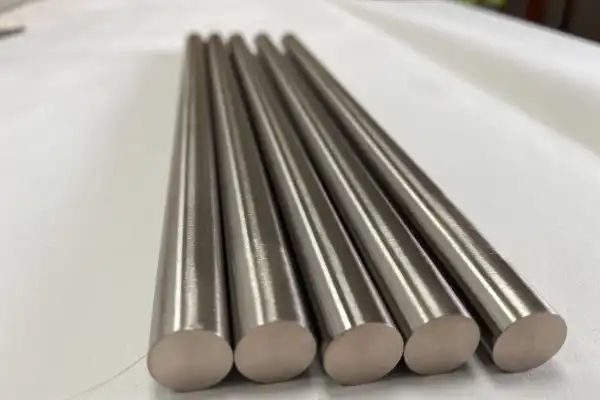
Tungsten handles most industrial chemicals without measurable degradation, but certain agents attack it aggressively.
| Environment | Resistance Level | Practical Notes |
|---|---|---|
| Ambient air | Excellent | Stable indefinitely at room temperature |
| Non-oxidizing acids (HCl, H₂SO₄) | Excellent | No significant reaction at typical concentrations |
| Oxidizing acids (hot HNO₃, H₂O₂) | Moderate | Attack rate increases with temperature |
| Alkaline solutions | Good | Molten NaOH and KOH cause rapid degradation |
| Molten metals | Excellent | Compatible with most molten metal baths |
| Halogens (F₂, Cl₂) | Moderate | Reacts at elevated temperatures |
The distinction between oxidizing and non-oxidizing acids matters for chemical processing applications. Tungsten vessels handle hydrochloric acid service without issue but require careful evaluation for nitric acid exposure, particularly at elevated temperatures.
Pure tungsten covers most high-temperature applications, but alloying extends its capabilities into specific chemical environments.
Tungsten-molybdenum alloys combine tungsten’s thermal stability with molybdenum’s resistance to hydrochloric and sulfuric acids. The resulting material handles acid environments that would limit pure tungsten’s service life.
Tungsten-copper composites serve a different purpose. The copper phase provides thermal and electrical conductivity while tungsten contributes arc resistance and high-temperature stability. These alloys appear in electrical contacts and heat sinks where both thermal management and erosion resistance matter.
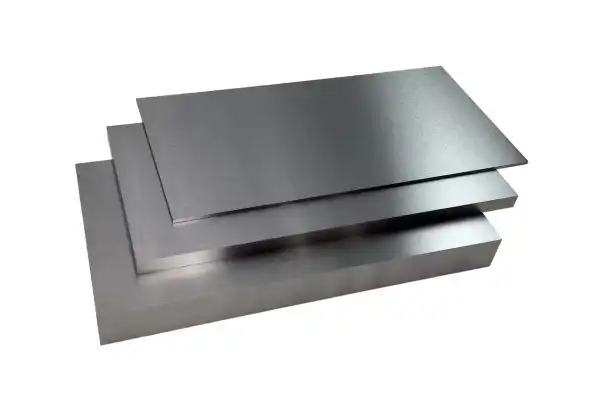
Alloy selection depends on the specific degradation mechanism you need to address. If the failure mode is oxidation at extreme temperatures, pure tungsten or tungsten-rhenium alloys perform best. If chemical attack from acids dominates, tungsten-molybdenum compositions warrant evaluation.
Chemical processing equipment represents one of the largest markets for tungsten’s corrosion resistance. Reactor internals, heat exchanger tubes, and valve components in aggressive acid service rely on tungsten when stainless steels and nickel alloys cannot survive the environment.
Furnace applications depend more on oxidation resistance than chemical corrosion resistance. Heating elements, radiation shields, and structural supports in vacuum and inert atmosphere furnaces exploit tungsten’s stability at temperatures where other metals would oxidize catastrophically or simply melt. Vacuum furnace insulation shields using tungsten and molybdenum minimize heat loss while surviving thousands of thermal cycles.
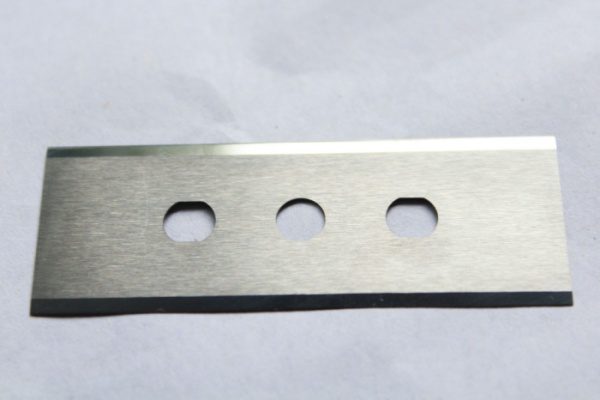
Electronics manufacturing uses tungsten for contacts and electrodes where arc erosion and chemical stability both matter. The metal’s resistance to the plasma environments in semiconductor processing makes it irreplaceable for certain chamber components.
Medical radiation shielding combines tungsten’s density with its chemical inertness. The material blocks radiation effectively while remaining stable in the presence of cleaning agents and sterilization processes.
Stainless steels rely on a chromium oxide passive layer for corrosion protection. This layer works well in many environments but breaks down under reducing conditions, in chloride-rich solutions, or at temperatures exceeding the steel’s oxidation limit.
Tungsten’s protection mechanism differs fundamentally. Its inherent chemical stability means it does not depend on a passive layer for room-temperature corrosion resistance. At elevated temperatures, the tungsten trioxide layer provides protection up to the point where volatility becomes the limiting factor.
For applications involving both high temperatures and oxidizing conditions, tungsten typically outlasts stainless steels by a wide margin. The tradeoff comes in cost and fabricability. Tungsten costs more per kilogram and requires specialized machining and joining techniques. Material selection becomes a question of whether the performance gain justifies the cost premium for your specific operating conditions.
If your application involves sustained high-temperature exposure or aggressive chemical environments where conventional alloys have failed, tungsten or a tungsten alloy likely warrants evaluation. Contact us at [email protected] or +86 13995656368 to discuss your specific requirements.
Does tungsten react with common industrial chemicals?
Tungsten resists most industrial chemicals at typical operating temperatures. It handles hydrochloric acid, sulfuric acid, and most alkaline solutions without measurable degradation. The exceptions are strong oxidizing acids like hot nitric acid and hydrogen peroxide, which attack tungsten progressively. Molten alkalis also cause rapid corrosion. For any chemical exposure outside the common acids and bases, testing under actual service conditions provides the most reliable compatibility data.
Can tungsten rust like iron or steel?
Tungsten does not rust. Rust specifically describes the iron oxide corrosion product that forms on ferrous metals. Tungsten contains no iron and its oxidation product, tungsten trioxide, behaves completely differently. The oxide forms a stable, adherent layer rather than the flaky, porous rust that accelerates iron corrosion. In practical terms, tungsten components do not develop the progressive surface degradation that eventually destroys steel parts in oxidizing environments.
What forms of corrosion can affect tungsten?
Tungsten’s primary vulnerability is high-temperature oxidation in air, where the volatile oxide layer fails to protect the underlying metal. In molten salt environments, electrochemical corrosion can occur depending on salt composition and temperature. Certain halogen gases attack tungsten at elevated temperatures. Galvanic corrosion remains minimal due to tungsten’s position in the galvanic series, but contact with more active metals in electrolyte solutions still warrants evaluation for critical applications.
Are there specific tungsten alloys designed for enhanced corrosion resistance?
Tungsten-molybdenum alloys offer improved resistance to hydrochloric and sulfuric acids compared to pure tungsten. Tungsten-rhenium alloys maintain ductility at high temperatures while preserving oxidation resistance. Tungsten-copper composites provide corrosion resistance combined with thermal conductivity for electrical and thermal management applications. The optimal alloy depends on whether your primary concern is chemical attack, high-temperature oxidation, or a combination of both degradation mechanisms. For guidance on alloy selection for your specific environment, reach out to our materials team at [email protected].
If you’re interested, check out these related articles:
A North American Electronics Engineers Successful Purchase Of Molybdenum Copper Alloy Mocu Heat Sinks On Tungstenbuy
Titanium And Titanium Alloys Widespread Application And Future Challenges
What Are The Applications Of Al Sic Composites
Analysis Of The Outstanding Performance Of Molybdenum Copper Alloy And Cmc Three Layer Structure Materials