
Electronic systems that demand tight tolerances and predictable behavior under temperature swings rely heavily on materials that simply refuse to move when heated. Invar and Kovar alloys occupy this niche, and working with them reveals why engineers keep returning to these particular nickel-iron formulations. The physics behind their stability is genuinely unusual, and the practical results in hermetic seals and precision assemblies speak for themselves.
Invar and Kovar alloys belong to a family of ferrous nickel alloys engineered specifically for controlled thermal expansion. Their value in electronics comes down to one thing: predictable dimensional behavior across temperature ranges that would cause ordinary metals to shift enough to compromise sensitive assemblies.
The coefficient of thermal expansion (CTE) determines how much a material grows or shrinks with temperature changes. In electronic packaging, even small mismatches between bonded materials create stress concentrations that eventually crack seals or warp substrates. These alloys solve that problem through careful compositional tuning.
Invar 36 contains roughly 36% nickel and 64% iron, a ratio that produces remarkably low thermal expansion at typical operating temperatures. The mechanism behind this behavior involves magnetostriction, where magnetic domain changes counteract normal thermal expansion. The result is a material that barely moves dimensionally even as temperature fluctuates.
This stability makes Invar 36 the natural choice for optical benches, precision measurement devices, and structural elements in systems where micron-level tolerances matter. Temperature swings that would throw off alignment in conventional materials have minimal effect on Invar-based assemblies.
Kovar alloy adds cobalt to the nickel-iron base, typically around 29% nickel, 17% cobalt, and 54% iron. This composition produces a CTE that closely matches borosilicate glass and certain ceramics. The match is deliberate and precise.
When creating hermetic seals for vacuum tubes, power semiconductors, or sensor housings, the interface between metal and glass experiences thermal cycling throughout the device lifetime. Mismatched expansion rates concentrate stress at the seal, eventually causing cracks that destroy hermeticity. Kovar eliminates this failure mode by expanding and contracting in lockstep with the glass.
| Property | Invar 36 | Kovar Alloy |
|---|---|---|
| Composition | ~36% Nickel, ~64% Iron | ~29% Nickel, ~17% Cobalt, ~54% Iron |
| Primary Characteristic | Extremely low CTE at room temperature | CTE matched to borosilicate glass and ceramics |
| Typical CTE (x10^-6/°C) | 1.2 – 2.0 (20-100°C) | 4.5 – 5.5 (20-400°C) |
| Magnetic Properties | Ferromagnetic | Ferromagnetic |
| Weldability | Good | Good |
| Key Application Focus | Dimensional stability, precision instruments | Hermetic seals, electronic packaging |
Temperature fluctuations create mechanical stress whenever bonded materials expand at different rates. In electronic assemblies, this stress accumulates over thermal cycles, eventually causing failures that range from subtle performance degradation to complete device breakdown. Invar and Kovar alloys address this directly through their controlled expansion characteristics.
High-performance electronic devices place severe demands on packaging materials. Semiconductor packages must protect delicate silicon dies while conducting heat away efficiently. Lead frames and heat sinks made from Invar and Kovar alloys maintain dimensional stability that prevents stress transfer to the chip itself.
Optoelectronic devices present even stricter requirements. Laser systems and optical sensors depend on precise component alignment that must survive temperature excursions. Invar-based optical benches hold alignment within tolerances that would be impossible with conventional metals. Kovar seals protect these assemblies from environmental contamination while maintaining the hermetic integrity that optoelectronic components require.
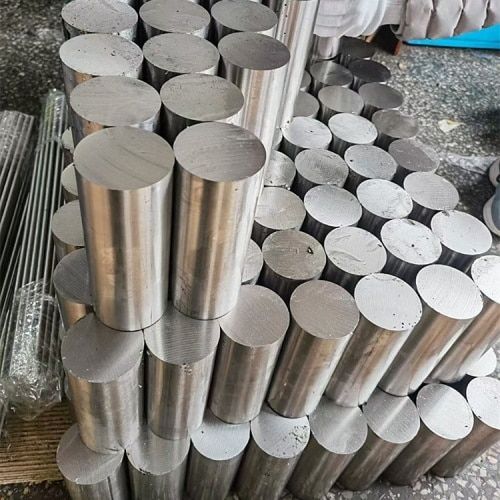
When engineers bond materials with different CTEs, temperature changes force differential expansion that generates internal stress. The consequences vary by application but typically include warping, interface delamination, and seal cracking. In hermetically sealed devices, a single crack destroys the protective atmosphere and leads to rapid degradation.
Invar and Kovar alloys prevent these failures by providing expansion characteristics that match the materials they contact. Silicon, glass, and ceramic components each have specific CTE values, and selecting the appropriate alloy ensures minimal stress generation during thermal cycling. This matching extends device lifetime significantly and reduces field failure rates.
Hubei Fotma Machinery Co., Ltd. has accumulated over three decades of experience in non-ferrous metal materials, including Invar and Kovar alloys for electronic applications. ISO-9000-1:2008 certification reflects the quality systems underlying this production capability.
Fotma’s alloy production combines modern equipment with testing methods that verify composition, mechanical properties, and thermal expansion characteristics. The accumulated technical knowledge from 30 years of material research supports consistent production of alloys meeting tight specifications.
This capability extends across tungsten-molybdenum alloys and other precision materials used in mechanical processing and instrumentation. The breadth of experience with specialty alloys informs the specific expertise applied to Invar and Kovar production.
Selecting between Invar and Kovar depends on the specific application requirements. The decision framework considers operating temperature range, the CTE of mating materials, and mechanical property needs. Getting this selection right prevents thermal stress failures and ensures long-term reliability.
Custom alloy solutions address applications where standard compositions fall short. Tailoring material properties to specific requirements becomes necessary when operating conditions or mating material CTEs fall outside typical ranges.
The fundamental difference between these alloys lies in their CTE values and intended applications. Invar 36 provides the lowest possible thermal expansion for applications demanding absolute dimensional stability. Precision instrumentation and optical systems benefit most from this characteristic.
Kovar serves a different purpose. Its CTE matches glass and ceramic materials used in hermetic sealing. Electronic packaging that requires environmental protection through glass-to-metal seals depends on Kovar’s expansion characteristics to maintain seal integrity over device lifetime.
Electronic packaging applications use both alloys in complementary ways. Kovar dominates in glass-to-metal seal applications for vacuum tubes, power transistors, and integrated circuits. The hermetic barrier these seals create prevents moisture and contaminant ingress that would otherwise degrade device performance.
Invar finds use in lead frames and heat sinks where its ultra-low CTE minimizes stress transfer to semiconductor dies. The combination of both alloys in a single package design addresses multiple thermal management challenges simultaneously.
Low thermal expansion alloys prevent the dimensional changes that cause thermal stress in bonded assemblies. When the CTE of packaging materials matches that of semiconductors, glass, or ceramics, temperature cycling produces minimal internal stress. This prevents warping, cracking, and delamination that would otherwise limit device lifetime. Hermetically sealed devices particularly benefit, as seal integrity depends directly on matched expansion between metal and glass components.
Hubei Fotma Machinery Co., Ltd. develops custom alloy compositions for applications where standard formulations prove inadequate. The technical knowledge accumulated over 30 years of material research supports this capability. Modern production equipment and testing methods ensure custom compositions meet the same quality standards as standard alloys.
Quality control under ISO-9000-1:2008 certification covers the entire production process. Testing includes chemical analysis to verify composition, mechanical property measurement, and CTE verification to ensure thermal expansion characteristics meet specifications. Raw material inspection and final product testing bracket the manufacturing process, ensuring consistent quality across production batches.
Hubei Fotma Machinery Co., Ltd. brings ISO-9000-1:2008 certified production capability and over 30 years of material research experience to Invar and Kovar alloy applications. Technical discussions with our team can clarify material selection for specific electronic packaging and precision instrument requirements. Contact us at +86 13995656368, +86 13907199894, or email [email protected], [email protected] to discuss your application needs.