
Working with dense metals teaches you quickly that numbers on a spec sheet only tell part of the story. The real challenge comes when you need to balance density against machinability, cost against environmental compliance, and theoretical performance against what actually works in production. Tungsten, lead, gold, and uranium each occupy distinct niches in high-density applications, and understanding where each excels—and where each falls short—makes the difference between a successful project and an expensive lesson.
Density measures mass per unit volume, but for dense metals, that simple definition masks considerable complexity. Atomic weight matters, certainly, but crystalline structure plays an equally important role in determining how tightly atoms pack together. Dense metals with specific gravity well above water share this characteristic, yet their practical behavior varies dramatically based on how those atoms arrange themselves at the microscopic level.
Material scientists spend considerable effort analyzing these attributes because the engineering properties that emerge from atomic structure dictate real-world performance. A metal might look perfect on paper, then prove impossible to machine or fail unexpectedly under thermal stress. The table below captures the basic density relationships, though actual application suitability requires much deeper analysis.
| Metal | Density Range (g/cm³) | Atomic Weight (amu) |
|---|---|---|
| Lead (Pb) | 11.34 | 207.2 |
| Gold (Au) | 19.30 | 196.97 |
| Tungsten (W) | 19.25 | 183.84 |
| Uranium (U) | 19.10 | 238.03 |
Lead earned its place in industry through accessibility and ease of use. The material machines beautifully, melts at temperatures any shop can achieve, and costs far less than alternatives. Radiation shielding installations and ballast weights relied on lead for decades precisely because it worked well enough at prices that made projects viable. That calculus has shifted as toxicity concerns and environmental regulations impose costs that the purchase price never reflected.
Tungsten heavy alloys emerged as the answer to lead’s limitations without sacrificing the density that made lead useful in the first place. These alloys typically contain 85–97% tungsten bound with nickel-iron or nickel-copper matrices, creating materials that combine exceptional density with mechanical properties lead simply cannot match. The corrosion resistance alone justifies the higher initial cost in many applications, and the X-ray and gamma radiation shielding capabilities meet or exceed what lead provides.
Hubei Fotma Machinery Co., Ltd. produces these high-density alloys with particular attention to the dimensional stability that demanding applications require. The high melting point of tungsten—over 3400°C—means these alloys maintain their properties in thermal environments that would liquify lead entirely.

Tungsten heavy alloys dominate applications where density must combine with strength and environmental safety. Kinetic energy penetrators, aerospace components, and vibration dampening systems all benefit from tungsten’s mechanical properties alongside its mass. Medical imaging equipment increasingly specifies tungsten for shielding because it eliminates the handling protocols that lead requires.
Lead retains its position in applications where cost drives decisions and environmental management systems are already in place. General ballast and some gamma radiation shielding installations still use lead when budgets are tight and disposal pathways are established. We offer Tungsten Alloy Radiation Shielding for various industrial needs.
For further insights into the diverse applications of tungsten alloys, consider reading 《Comprehensive Applications Of Tungsten Copper Alloy In Aerospace And New Energy Vehicles》.
Gold occupies a unique position among dense metals because its density comes packaged with properties no other material matches. Complete chemical inertness, exceptional electrical conductivity, and biocompatibility make gold irreplaceable in applications where corrosion would be catastrophic. High-end electrical contacts in aerospace systems, specialized counterweights where contamination cannot be tolerated, and certain medical implants all rely on gold despite its cost.
Gold alloys allow engineers to fine-tune properties for specific requirements, adjusting hardness or conductivity while maintaining the fundamental characteristics that make gold valuable. The material’s density—19.30 g/cm³—exceeds even tungsten, though the price differential means gold sees use only where alternatives genuinely cannot perform.
Depleted uranium presents a different proposition entirely. The density rivals tungsten, and the material’s behavior under impact—self-sharpening and pyrophoric—makes it devastatingly effective in military applications. Armor-piercing projectiles and tank armor exploit these characteristics in ways no other material can replicate. Civilian applications exist but face regulatory frameworks that add substantial complexity to any project. The inherent radioactivity, while low, triggers material safety protocols that most organizations prefer to avoid when alternatives exist.
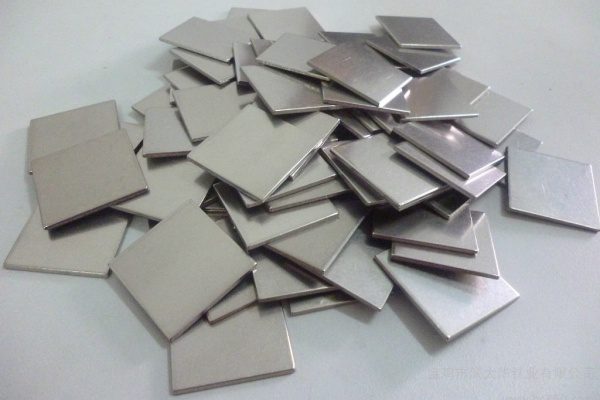
Depleted uranium attenuates gamma radiation effectively due to its extreme density and high atomic number. The practical challenges, however, often outweigh this performance advantage. Tungsten heavy alloys provide comparable or superior shielding for gamma and X-ray radiation without triggering the regulatory requirements that depleted uranium demands. Medical facilities and industrial installations overwhelmingly choose tungsten because the shielding works and the compliance burden disappears.
Gold’s lower atomic number compared to tungsten or depleted uranium makes it a poor choice for primary radiation shielding. The material excels at other tasks, but stopping gamma rays efficiently is not among them.
Density alone never determines the right material choice. Engineers evaluating dense metals must weigh cost analysis against environmental impact, consider machinability alongside mechanical properties, and account for thermal expansion, tensile strength, and hardness in the specific application context. The optimal choice often emerges from trade-offs that balance performance against practical constraints.
Lead’s low purchase price looks attractive until disposal costs, worker protection requirements, and potential liability enter the calculation. Tungsten heavy alloys cost more upfront but eliminate many of the ongoing expenses that lead accumulates over a project’s lifetime. The powder metallurgy processes used to produce tungsten alloys also enable compositional adjustments that optimize properties for specific requirements.
| Property | Tungsten Heavy Alloy | Lead | Gold | Depleted Uranium |
|---|---|---|---|---|
| Density (g/cm³) | 17.0-18.8 | 11.34 | 19.30 | 19.10 |
| Melting Point (°C) | 3422 | 327 | 1064 | 1132 |
| Hardness (HV) | 250-350 | 5-10 | 25 | 150-200 |
| Machinability | Good | Excellent | Excellent | Moderate |
| Toxicity | Non-toxic | High | Non-toxic | Radioactive, toxic |
| Shielding | Excellent (X/Gamma) | Good (X/Gamma) | Moderate | Excellent (X/Gamma) |
Aerospace applications demand precise weight distribution and balance, where density directly affects fuel efficiency and flight dynamics. Every gram matters when calculating payload capacity and range. Medical devices face different pressures—miniaturization enables less invasive procedures, and dense metals allow designers to achieve required mass in smaller packages.
Precision instrument accessories depend on consistent density for accurate calibration and vibration control. Variations in density across a component create imbalances that degrade performance in ways that may not appear until the instrument is in service. Radiation shielding requirements in both aerospace and medical contexts add another dimension where high-density materials protect personnel and sensitive equipment from harmful exposure.
Dense metal engineering continues to advance as new alloy compositions and manufacturing techniques expand what these materials can achieve. Improved strength-to-weight ratios and enhanced corrosion resistance emerge from ongoing research into how binder compositions and processing parameters affect final properties. Additive manufacturing has opened possibilities for complex geometries that traditional machining could never produce economically.
We utilize advanced manufacturing techniques for our Customized Tungsten Parts, enabling solutions tailored to specific application requirements rather than forcing designs to accommodate material limitations.
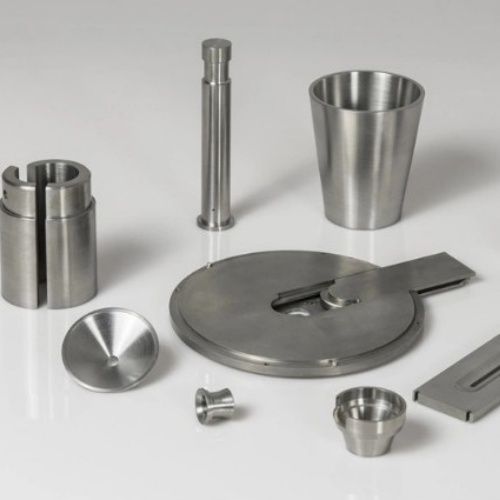
Sustainability concerns are driving development of non-toxic alternatives and more efficient recycling methods for dense metals. Hubei Fotma Machinery Co., Ltd. brings over 30 years of technical accumulation in non-ferrous metal materials to these challenges, with particular focus on tungsten-molybdenum products and high-density alloys that meet performance requirements while satisfying environmental standards. The dense metals that serve future industries will need to deliver on both fronts.
Hubei Fotma Machinery Co., Ltd. stands as a leader in specialized non-ferrous metal materials, including tungsten-molybdenum products and high-density alloys. With over 30 years of technical accumulation and modern production capabilities, we provide complete solutions for mechanical processing and precision instrument accessories. Contact us today at +86 13995656368 or [email protected] to discuss your specific requirements and leverage our expertise for your next high-performance project.
The decision typically comes down to whether depleted uranium’s unique properties—self-sharpening behavior and pyrophoric characteristics—are essential to the application. Military projectiles and armor benefit from these traits in ways tungsten cannot replicate. For nearly all other high-density applications, tungsten alloys deliver comparable or superior density without the radiological concerns, regulatory complexity, and specialized handling that depleted uranium requires. Cost, machinability, and environmental compliance all favor tungsten in civilian contexts.
Quality assurance at Hubei Fotma rests on ISO-9000-1:2008 certification, modern production equipment, and testing methods that verify material properties at multiple stages of production. The core team’s three decades of experience in tungsten-molybdenum products and high-density alloys translates into process knowledge that prevents problems rather than merely detecting them. Critical applications demand this level of attention because failures in high-density components often prove catastrophic.
Tungsten heavy alloys represent the most established non-toxic alternative to lead for radiation shielding. The shielding effectiveness for gamma and X-ray radiation matches or exceeds lead’s performance, particularly when accounting for tungsten’s higher density and superior mechanical strength. The initial material cost runs higher than lead, but tungsten alloys eliminate the handling protocols, disposal costs, and potential liability that lead carries. Medical facilities, industrial installations, and aerospace applications increasingly specify tungsten precisely because it delivers the shielding performance without the environmental burden.