
Picking the right counterweight material is one of those decisions that ripples through an entire project. Get it wrong, and you’re stuck redesigning enclosures, recalculating load paths, or explaining to procurement why the budget just shifted. Tungsten alloy and brass sit at opposite ends of the density-cost spectrum, and understanding where each one makes sense can save months of back-and-forth. This comparison breaks down their properties, cost structures, and real-world fit across different industries.
Material selection for counterweights comes down to fitting the required mass into the available space without blowing the budget. Density matters, but so does how the material behaves under load, how easily it machines, and whether it holds up in the operating environment. A counterweight that corrodes or creeps over time defeats its purpose. Engineers weigh these factors against project economics, and the answer changes depending on whether you’re balancing a satellite component or a piece of marine hardware.
High-density tungsten alloy stands apart for counterweight applications where every cubic centimeter counts. These alloys run 85–97% tungsten with nickel-iron or nickel-copper binders holding the matrix together, reaching densities up to 18.8 g/cm³. That figure is roughly 2.4 times denser than steel and 1.6 times denser than lead. When a design envelope is fixed and the mass target is non-negotiable, tungsten heavy alloy often becomes the only viable path forward.
The mechanical profile supports demanding service conditions. Tensile strengths between 700 and 1000 MPa combine with hardness values in the 24–32 HRC range, giving these alloys resistance to wear and impact that softer materials lack. Tungsten’s inherent vibration dampening also helps in precision balancing applications where resonance could throw off measurements. And because tungsten alloy is non-toxic, it serves as a lead-free alternative in applications where environmental or health regulations apply.
Aerospace counterweights and medical device counterweights represent the clearest cases for tungsten alloy. In both sectors, physical space is severely constrained, and the mass requirements are fixed by physics rather than preference. A helicopter rotor blade needs a specific moment of inertia to balance properly. A CT scanner gantry spins at high speed and demands precise mass distribution. Tungsten alloy meets these requirements in volumes that would be impossible with lower-density materials.
Defense applications add another dimension. Tungsten alloy provides effective radiation shielding while also serving as ballast or balance weight. This dual functionality reduces part count and simplifies system design. The material’s stability under temperature extremes and its resistance to corrosion extend service intervals in environments where maintenance access is limited.
| Property | Tungsten Alloy (W-Ni-Fe) | Steel (1045) | Lead |
|---|---|---|---|
| Density (g/cm³) | 17.0 – 18.8 | 7.85 | 11.34 |
| Tensile Strength (MPa) | 700 – 1000 | 620 | 12 |
| Hardness (HRC) | 24 – 32 | 17 | 5 |
| Modulus of Elasticity (GPa) | 300 – 350 | 200 | 16 |
Brass occupies a different position in the counterweight material landscape. Its density falls between 8.4 and 8.7 g/cm³, which is lower than tungsten alloy but still meaningfully higher than steel. For applications where the volume constraint is less severe, brass provides adequate mass concentration at a fraction of the cost.
The real advantage of brass shows up in manufacturing. Free-machining grades like C36000 cut cleanly and hold tolerances without excessive tool wear. This translates to shorter lead times and lower fabrication costs, especially for complex geometries or high-volume production runs. Brass also resists corrosion well, particularly in marine environments where salt exposure would degrade unprotected steel. Brass ballast weights on boats and ships benefit from this natural durability.
Aesthetics occasionally factor into the decision. Architectural counterweights or visible balance mechanisms sometimes call for a material that looks finished without additional coating. Brass delivers that appearance while still performing its mechanical function.
| Brass Alloy Type | Density (g/cm³) | Tensile Strength (MPa) | Common Uses |
|---|---|---|---|
| C26000 (Cartridge Brass) | 8.53 | 310-410 | Ammunition, plumbing |
| C36000 (Free-Machining Brass) | 8.5 | 310-440 | Fasteners, fittings |
| C46400 (Naval Brass) | 8.52 | 345-485 | Marine hardware, shafts |
Tungsten alloy costs more per kilogram than brass. That fact is unavoidable. But the comparison becomes more nuanced when you factor in what each kilogram accomplishes. Tungsten alloy packs nearly twice the mass into the same volume, which means the enclosure, mounting hardware, and surrounding structure can all be smaller. In some designs, that size reduction offsets the material premium.
The calculation also shifts when you consider service life. Tungsten alloy resists wear, corrosion, and thermal cycling better than brass in most demanding environments. A counterweight that lasts the full service life of the equipment it balances avoids replacement costs and downtime. Brass may require protective coatings or more frequent inspection in aggressive conditions.
Initial material cost captures only part of the picture. Tungsten alloy counterweights often enable design simplifications elsewhere in the system. A smaller counterweight means a smaller housing, which means less material, fewer fasteners, and potentially a lighter overall assembly. These cascading effects can shift the economic balance toward tungsten alloy even when the raw material cost looks prohibitive at first glance.
Durability compounds the advantage over time. Tungsten alloy’s corrosion resistance and mechanical stability reduce maintenance intervals. In applications where access is difficult or downtime is expensive, that reliability has real dollar value. Brass performs well in moderate conditions, but it may not match tungsten alloy’s longevity when temperatures swing, vibration is constant, or corrosive agents are present.
The right counterweight material depends on what the application actually demands. Industrial counterweight applications with generous volume allowances and moderate environmental exposure often favor brass. The cost savings are real, and the performance is adequate. Marine ballast solutions, general machinery balance, and architectural applications fall into this category.
Aerospace balancing weights, medical imaging equipment, and precision instrument accessories push toward tungsten alloy. These applications cannot compromise on density, and they often operate in conditions that would stress lesser materials. The investment in tungsten alloy pays off through performance that brass simply cannot deliver.
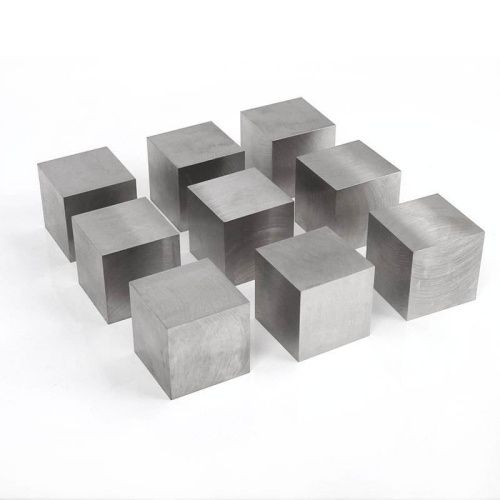
Dynamic balancing systems benefit from tungsten alloy’s high inertia properties. When a rotating assembly needs precise mass distribution to minimize vibration, the ability to concentrate weight in specific locations matters more than material cost. Aerospace balancing weights exemplify this requirement. Flight stability depends on getting the mass exactly right, and the volume available for counterweights is fixed by aerodynamic constraints.
Radiation shielding applications add functional value beyond simple mass. Tungsten alloy blocks gamma radiation effectively, which means a single component can serve as both counterweight and shield. This dual-purpose capability simplifies designs in nuclear environments and medical facilities where radiation protection is mandatory.
Raw material properties set the ceiling, but manufacturing quality determines whether a counterweight actually reaches that ceiling. Tungsten alloy machining requires specialized knowledge. The material is hard and dense, which means standard tooling and feeds may not produce acceptable results. Precision fabrication of complex geometries demands experience with the material’s behavior.
Brass machines more forgivingly, but quality still varies with process control. Dimensional accuracy, surface finish, and freedom from internal defects all affect how a counterweight performs in service. Consistent manufacturing processes backed by proper inspection catch problems before they reach the field.
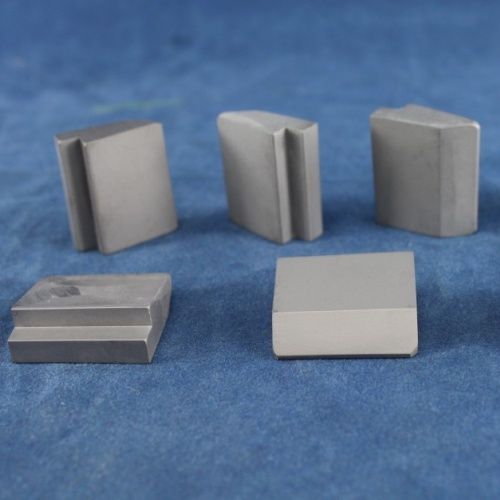
Custom counterweight solutions often require engineering collaboration between the material supplier and the end user. Application-specific requirements like mounting features, surface treatments, or unusual geometries benefit from early involvement of manufacturing expertise. This collaboration reduces iteration cycles and improves the fit between component and system.
If you’re interested, check 《What Is The Most Commonly Used Titanium Alloy》.
Tungsten alloy presents no toxicity concerns in solid form and serves as a direct lead-free alternative where regulations restrict hazardous materials. Both tungsten alloy and brass are recyclable, though tungsten’s higher value often makes reclamation more economically attractive. Brass contains copper and zinc, which require proper handling during machining to manage particulate exposure. Neither material poses unusual safety risks in normal counterweight applications, but tungsten alloy’s non-toxic profile gives it an edge in medical, food processing, and consumer product contexts.
Tungsten alloy accepts a wide range of custom configurations. Machining can produce complex external geometries, internal cavities, and precision mounting features. Density can be adjusted within the 17.0–18.8 g/cm³ range by varying the tungsten content and binder composition. Surface treatments including plating, coating, and polishing address specific environmental or aesthetic requirements. The practical limits depend more on manufacturing capability than on material constraints.
Tungsten alloy maintains its properties across a broader range of conditions than brass. Temperature extremes, vibration, and corrosive atmospheres affect tungsten alloy less severely. Brass performs well in moderate marine environments and general industrial settings, but it may require protective measures in more aggressive conditions. For counterweights expected to last decades in demanding service, tungsten alloy’s stability reduces the risk of performance degradation over time.
Hubei Fotma Machinery Co., Ltd. stands as a premier ISO-9000-1:2008 certified enterprise with over 30 years of technical mastery in tungsten-molybdenum products and high-density alloys. Leverage our unparalleled expertise and advanced manufacturing capabilities to engineer bespoke counterweight solutions that meet your most stringent density, cost, and performance requirements. Contact us today for a consultation or to explore how our precision-engineered materials can elevate your next project.
Email: [email protected], [email protected]
Phone: +86 13995656368, +86 13907199894