
When you spend enough time around jet engines and airframe assemblies, you start to develop an instinct for which materials belong where. The turbine section runs hot enough to make most metals give up, while the structural components need to stay light without sacrificing strength. Titanium and nickel alloys have carved out their respective territories in aerospace precisely because each one does something the other cannot. The choice between them is rarely straightforward—it depends on temperature exposure, weight constraints, and how much punishment the component will take over its service life.
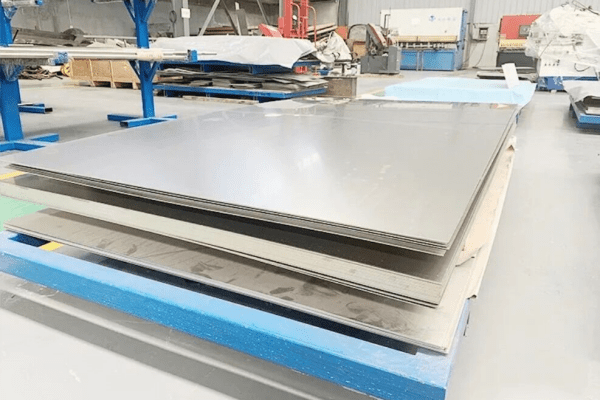
The fundamental properties of titanium and nickel alloys explain why engineers reach for one or the other depending on the application. Titanium alloys deliver an exceptional strength-to-weight ratio combined with corrosion resistance that holds up well in atmospheric conditions. Titanium Alloy Products have become standard in applications where every gram matters. Nickel superalloys take a different approach—they sacrifice some weight efficiency to achieve superior high-temperature strength and creep resistance that titanium simply cannot match.
| Property | Titanium Alloys (e.g., Ti-6Al-4V) | Nickel Superalloys (e.g., Inconel 718) |
|---|---|---|
| Density (g/cm³) | 4.5 | 8.0-9.0 |
| Melting Point (°C) | ~1650 | ~1300-1400 |
| Thermal Conductivity (W/m·K) | ~6.7 | ~11-12 |
| Elastic Modulus (GPa) | ~110 | ~200-220 |
The density difference jumps out immediately. Titanium weighs roughly half as much as nickel superalloys, which matters enormously when you are designing components that will fly millions of miles over their service life. Nickel alloys compensate with better thermal stability at extreme temperatures. Their higher elastic modulus also means they resist deformation more effectively under load. These trade-offs shape every material decision in aerospace design. Three decades of working with non-ferrous metal materials has taught us that understanding these fundamentals prevents costly mistakes downstream.
Aerospace components operate in conditions that would destroy most engineering materials. The difference between titanium and nickel alloys becomes most apparent when temperatures climb past certain thresholds.
Nickel alloys maintain their mechanical properties at temperatures where titanium begins to struggle. Above 800°C, nickel superalloys still resist creep—that slow, permanent deformation that happens when metals sit under sustained stress at high temperature. Titanium performs admirably at moderate high temperatures, and its oxidation resistance in that range is genuinely impressive. The problem is that “moderate” in aerospace terms still means conditions that would melt consumer-grade metals.
Ti-6Al-4V and similar titanium grades hold their structural integrity up to roughly 600°C (1112°F). Push beyond that threshold and two things happen: oxidation accelerates, and creep strength drops off. The titanium essentially starts to give under sustained load in ways that compromise safety margins.
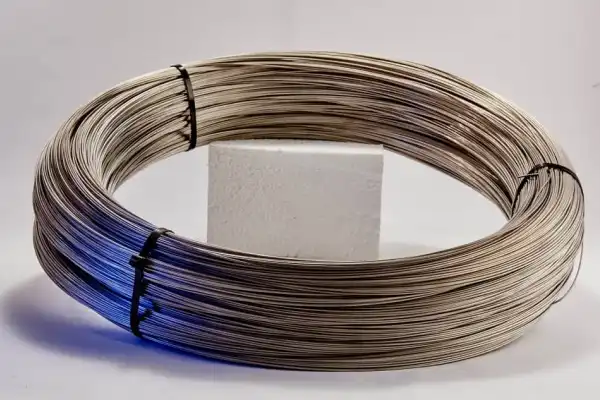
Some specialized titanium formulations extend this envelope slightly, but the gains are incremental. Once you cross into territory above 600°C, nickel-based superalloys become the only responsible choice. This boundary is not arbitrary—it reflects fundamental limits in how titanium’s crystal structure responds to thermal energy. Our materials research team has mapped these transitions across dozens of alloy compositions.
The operational environment of each component dictates which alloy family makes sense. This is not a matter of preference—it is physics and economics working together.
Turbine blades and combustors live in the hottest part of a jet engine. Temperatures routinely exceed 1000°C in these zones. Nickel superalloys are the only option here because they maintain creep resistance and resist oxidation at temperatures that would cause titanium to fail within hours. The gamma-prime precipitates in nickel superalloys create a microstructure that physically blocks dislocation movement, which is the mechanism behind their exceptional high-temperature strength.
Airframe structures face a completely different challenge. They need to be strong enough to handle flight loads while contributing as little weight as possible. Titanium alloys excel here because their strength-to-weight ratio is unmatched. Landing gear components benefit from titanium’s fatigue resistance—these parts cycle through enormous stress ranges with every takeoff and landing. Our company serves as titanium material suppliers for exactly these demanding structural applications.
| Component Type | Preferred Alloy Type | Key Performance Driver |
|---|---|---|
| Turbine Blades | Nickel Superalloys | Creep Resistance, High-Temp Strength |
| Airframe Structures | Titanium Alloys | Strength-to-Weight Ratio, Corrosion Resistance |
| Landing Gear | Titanium Alloys | High Strength, Fatigue Resistance |
| Combustors | Nickel Superalloys | Oxidation Resistance, Thermal Stability |
| Fasteners | Titanium Alloys | Weight Savings, Corrosion Resistance |
| Exhaust Systems | Nickel Superalloys | Extreme High-Temp Capability |
For a broader perspective on where titanium fits into modern applications, 《Titanium And Titanium Alloys Widespread Application And Future Challenges》 covers the landscape in detail.
Technical performance only tells part of the story. Cost structures, machining behavior, and supply chain reliability all influence which alloy ends up in a design.
Nickel superalloys cost more than titanium on a per-kilogram basis, and the gap widens when you factor in manufacturing. These alloys are notoriously difficult to machine. They work-harden rapidly, they generate significant heat during cutting, and they wear through tooling faster than most materials. All of this adds to production costs and extends lead times.
Titanium presents its own machining challenges—it is reactive at elevated temperatures and tends to gall against cutting tools—but the difficulties are generally more manageable than with nickel superalloys. We supply nickel alloy sheet alongside various manufacturing support services to help customers navigate these production realities.
The density gap between titanium (approximately 4.5 g/cm³) and nickel superalloys (approximately 8.0-9.0 g/cm³) cascades through every aspect of aircraft design. Titanium weighs roughly half as much for the same volume of material.
This difference compounds across an entire airframe. Lighter structural components mean the aircraft burns less fuel to stay airborne. Fuel savings translate to either extended range or increased payload capacity—both valuable outcomes for operators. The economics are straightforward: every kilogram saved in structural weight pays dividends over the aircraft’s entire service life.
Outside the engine’s hottest sections, titanium becomes the strategic choice almost by default. The strength-to-weight ratio advantage is simply too significant to ignore when thermal requirements permit its use.
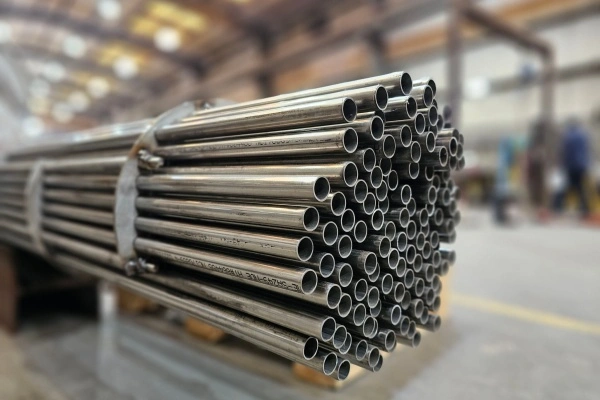
Additive manufacturing has changed what is possible with both titanium and nickel alloys. Complex geometries that were previously impossible to machine can now be built layer by layer. This opens up design possibilities that optimize material usage and reduce weight in ways that conventional manufacturing cannot achieve.
For nickel superalloys, additive manufacturing enables internal cooling channels in turbine blades that improve thermal management without adding weight. For titanium, the technology allows near-net-shape production that minimizes expensive machining operations.
FOTMA has invested heavily in understanding these developments. Our 30 years of technical accumulation in non-ferrous metal materials provides the foundation, and our production and testing capabilities continue to evolve alongside the technology. The aerospace industry’s push for better performance at lower weight shows no signs of slowing down.
Choosing between titanium and nickel alloys for high-temperature aerospace applications requires weighing multiple factors simultaneously. Performance requirements set the baseline—if a component will see temperatures above 600°C under sustained load, nickel superalloys are the only viable path. Below that threshold, titanium’s weight advantage usually wins.
Cost and manufacturability enter the equation once the technical requirements are satisfied. Nickel alloys demand more investment in tooling, machining time, and raw materials. Titanium is more forgiving in production but still requires specialized handling.
The optimal choice emerges from understanding operational demands in detail. Deep expertise in both alloy families is essential for making decisions that balance performance, cost, and reliability over the component’s full service life.
Titanium alloys like Ti-6Al-4V maintain excellent strength and corrosion resistance up to approximately 600°C (1112°F) in aerospace service. Beyond this point, oxidation accelerates and creep strength drops significantly, making titanium unsuitable for the hottest engine sections. Specialized high-temperature titanium grades can push this boundary slightly higher, but nickel-based superalloys become necessary for sustained exposure above 600°C.
Inconel 718, Waspaloy, and René alloys dominate jet engine hot sections including turbine blades, combustors, and exhaust nozzles. These materials resist creep at temperatures exceeding 800°C (1472°F), which means they maintain their shape under sustained mechanical stress even when glowing hot. Their oxidation resistance at these temperatures is equally critical—the alloys form protective oxide layers that prevent the base metal from degrading. Titanium alloys would fail within hours under the same conditions.
Titanium’s density of approximately 4.5 g/cm³ versus nickel superalloys at 8.0-9.0 g/cm³ creates substantial weight savings in airframe structures, landing gear, and non-engine components. Lighter aircraft require less fuel to maintain altitude and speed. This weight reduction translates directly to improved fuel efficiency, greater payload capacity, and extended operational range. For components outside the engine’s hottest zones, titanium’s strength-to-weight advantage makes it the default choice whenever thermal requirements permit.
As an ISO-9000-1:2008 certified leader with over 30 years of technical accumulation in non-ferrous metal materials, Hubei Fotma Machinery Co., Ltd. offers unparalleled expertise in titanium, nickel, and other advanced alloys. Our state-of-the-art production and testing capabilities ensure the highest quality materials for your most demanding aerospace applications. Contact our material research specialists today for a consultation on optimizing your high-temperature aerospace components, or to explore our tailored material solutions. Let FOTMA be your partner in achieving superior performance and reliability. Call +86 13995656368 or email [email protected].