
Working with specialized metals for over three decades teaches you something that spec sheets never quite capture: the difference between a material that merely meets requirements and one that performs when conditions turn hostile. At Hubei Fotma Machinery Co., Ltd., our focus on tungsten-molybdenum, titanium, and other non-ferrous metal materials grew from solving real engineering problems across aerospace, medical, energy, and electronics applications. The ISO-certified manufacturing processes we’ve built reflect lessons learned from thousands of projects where material integrity wasn’t negotiable.
Aircraft and defense systems operate in environments that expose every material weakness. Temperature swings from ground level to cruising altitude, vibration loads during takeoff, corrosive atmospheres at high humidity—these conditions filter out materials that look good on paper but fail in service. FOTMA supplies non-ferrous metal materials engineered specifically for these demands.
Titanium alloys, particularly Ti-6Al-4V, deliver strength-to-weight ratios that aluminum simply cannot match while resisting the corrosion that would compromise structural integrity over time. The alloy’s microstructure allows it to maintain mechanical properties at elevated temperatures, which explains its prevalence in engine components and landing gear assemblies. Tungsten heavy alloy serves different but equally critical functions: its density makes it ideal for counterweights that balance rotating assemblies, while its radiation attenuation properties protect sensitive avionics and crew compartments.
Our ISO certification isn’t just paperwork. It represents traceability systems that track every heat lot from raw material through final inspection, documentation that aerospace quality engineers require before approving any supplier.
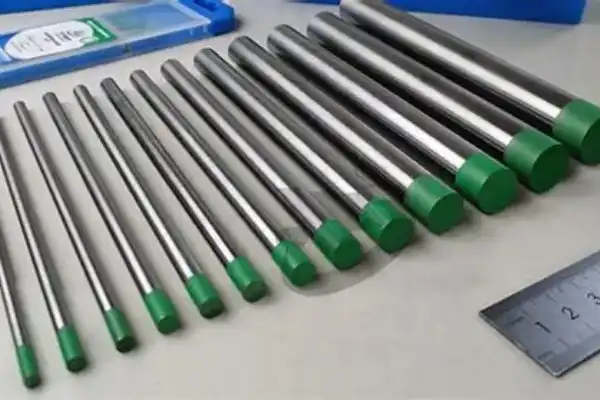
| Material Type | Key Properties | Typical Aerospace Applications |
|---|---|---|
| Titanium Alloy (Ti-6Al-4V) | High strength-to-weight, corrosion resistance | Airframe structures, engine parts, landing gear |
| Tungsten Heavy Alloy (WHA) | High density, radiation shielding, vibration damping | Counterweights, kinetic energy penetrators |
| Molybdenum-Copper (MoCu) | Tailored CTE, excellent heat dissipation | Avionics heat sinks, electronic packaging |
| Tungsten Copper (W-Cu) Alloy | High melting point, arc resistance, heat dissipation | Electrical contacts, thermal management |
Medical applications impose constraints that go beyond mechanical performance. A material implanted in the human body must resist corrosion from biological fluids, avoid triggering immune responses, and maintain dimensional stability through years of cyclic loading. FOTMA provides non-ferrous metal materials for medical device materials that address these overlapping requirements.
Titanium grades used in orthopedic implants form a stable oxide layer that prevents ion release into surrounding tissue. This passive surface chemistry explains why titanium implants integrate with bone rather than being rejected. For diagnostic equipment, our specialized alloys contribute to imaging components where material purity directly affects image quality and equipment longevity.
Meeting medical standards requires testing protocols that simulate actual clinical conditions. FOTMA conducts biocompatibility testing that evaluates cytotoxicity, sensitization potential, and material degradation under physiological conditions. Surface characterization confirms that finished components have the oxide layer thickness and composition necessary for biological compatibility.
Sterilization compatibility matters because medical devices undergo repeated autoclave cycles, gamma irradiation, or ethylene oxide exposure. Materials that degrade under these conditions create patient safety risks. Our manufacturing protocols ensure that non-ferrous metal materials maintain their properties through hundreds of sterilization cycles.
Power generation and heavy industry present material challenges that differ from aerospace or medical applications but prove equally demanding. Furnace environments reach temperatures where most metals lose structural integrity. Chemical processing exposes materials to corrosive atmospheres that attack conventional alloys. FOTMA supplies non-ferrous metal materials for energy sector applications and industrial applications where failure means expensive downtime or safety incidents.
Molybdenum Electrodes perform in glass melting furnaces because molybdenum maintains strength at temperatures exceeding 1500°C while resisting attack from molten glass. The metal’s high melting point and low vapor pressure prevent contamination of the glass melt. For radiation shielding in nuclear facilities, tungsten heavy alloy provides attenuation equivalent to lead at roughly half the thickness, enabling more compact shield designs.
Wear-resistant coatings applied through thermal spray processes extend the service life of components in abrasive environments. Our molybdenum wire formulations create coatings that resist galling and maintain surface integrity under sliding contact conditions.
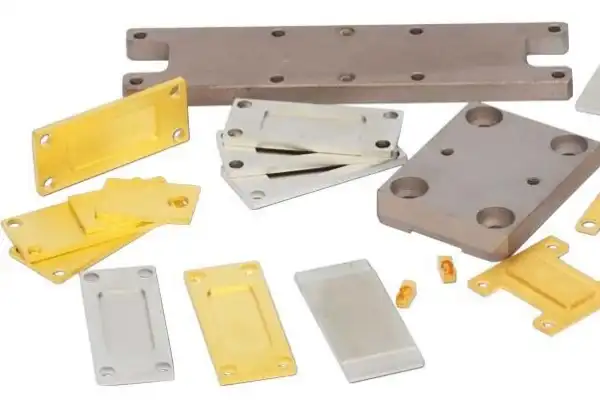
| Alloy Type | Key Features | Typical Energy and Industrial Use |
|---|---|---|
| Pure Molybdenum Plate | High melting point, strong at high temperatures | Vacuum furnace hot zones, glass melting |
| Tungsten Heavy Alloy | High density, excellent radiation shielding | Nuclear shielding, industrial counterweights |
| Molybdenum Thermal Spray Wire | Wear-resistant coatings, anti-galling | Automotive parts, bearing surfaces |
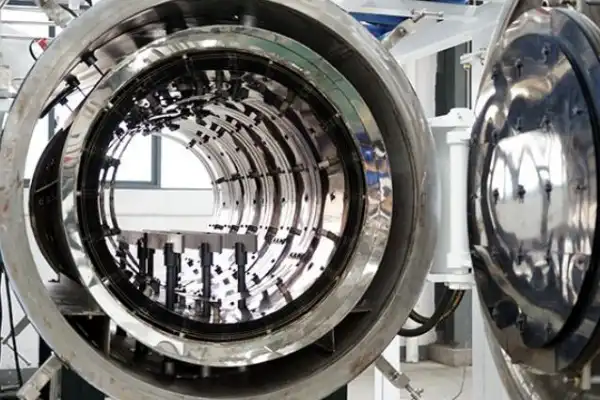
| Vacuum Furnace Insulation Shield | Minimize heat loss, ensure temperature uniformity | Vacuum heat treatment, sintering, brazing |
Vehicle efficiency improvements increasingly depend on material substitution. Replacing steel components with lighter non-ferrous metal materials reduces mass without sacrificing crash performance or durability. FOTMA’s advanced material solutions support automotive manufacturing solutions across powertrain, chassis, and body applications.
Engine components benefit from materials that maintain strength at operating temperatures while weighing less than traditional cast iron alternatives. Structural elements in electric vehicles require materials that combine stiffness with crash energy absorption. Our alloys address these competing requirements through careful composition control and processing optimization.
Modern electronics pack increasing processing power into shrinking form factors. The thermal loads generated by high-performance chips would cause failures without effective heat dissipation pathways. FOTMA provides electronics industry materials that enable the thermal management strategies keeping devices cool and reliable.
Semiconductor fabrication requires materials with precisely controlled thermal expansion coefficients. Mismatches between chip and substrate cause mechanical stresses that lead to solder joint failures and die cracking. Our non-ferrous metal materials for microelectronics components match expansion characteristics to silicon and ceramic substrates, maintaining mechanical integrity through thermal cycling.
The physics of heat transfer favor materials with high thermal conductivity and appropriate mechanical properties. Molybdenum Copper Alloy Mocu Heat Sink components spread heat from concentrated sources across larger areas where it can dissipate. Wcu Tungsten Copper Alloy provides similar thermal performance with different expansion characteristics, allowing engineers to select the optimal material for specific packaging requirements.
These thermal management alloys directly enable the miniaturization trends driving consumer electronics. Without effective cooling solutions, processors would throttle performance or fail prematurely. FOTMA’s materials contribute to devices that deliver full performance in compact packages.
FOTMA’s ISO-9000-1 certification reflects quality systems developed through experience with demanding applications. Our material science expertise accumulated over 30 years of technical work informs every aspect of production, from raw material selection through final inspection.
Custom alloy development capabilities allow us to address applications where standard compositions fall short. Our advanced material testing verifies that custom formulations meet specified properties before production scaling. This combination of research capability and manufacturing discipline ensures material integrity across our product range.
The global supply chain supporting our operations provides access to high-purity raw materials while maintaining the traceability that quality-critical applications require.
FOTMA provides aerospace components including titanium alloys for structural parts, Titanium Rod stock for machined components, and tungsten heavy alloy for counterweights and radiation shielding. All materials meet aerospace traceability requirements and come with full documentation of composition and mechanical properties.
Our Wcu Tungsten Copper Alloy and Molybdenum Copper Alloy Mocu Heat Sink products provide the thermal conductivity necessary to manage heat in compact electronic devices. These non-ferrous metal materials spread heat from processor dies to larger heat sink surfaces, preventing thermal throttling and extending component life.
Complete specifications for our tungsten-molybdenum alloys and other non-ferrous metal materials are available through our website. Technical support staff can provide detailed material data sheets and application guidance for specific requirements.
Yes. Our research and material science capabilities support custom alloy development for applications where standard compositions don’t meet requirements. We work with customers to define target properties, develop candidate compositions, and validate performance before production.
Hubei Fotma Machinery Co., Ltd. holds ISO-9000-1 certification for our manufacturing operations. This certification covers our quality management systems, testing methods, and documentation practices that ensure material integrity and traceability.
Hubei Fotma Machinery Co., Ltd. brings over 30 years of tungsten-molybdenum, titanium, and advanced non-ferrous metal materials expertise to engineering challenges across aerospace, electronics, medical, and industrial applications. Our ISO-certified manufacturing and custom development capabilities address both standard and specialized material requirements. Contact our technical team at [email protected] or [email protected] to discuss your project specifications.