
Pure tungsten sits in a category of its own among machinable metals. The combination of extreme hardness, brittleness at room temperature, and poor heat dissipation creates a narrow window for successful cutting operations. Most shops that attempt tungsten for the first time discover this the hard way—burned tools, cracked workpieces, and dimensional drift that defies their usual compensation methods.
The material demands a complete rethink of cutting strategy. What works for steel, or even for other refractory metals like molybdenum, often fails spectacularly with pure tungsten. After three decades of working with this material, certain patterns emerge: the shops that succeed treat tungsten machining as a distinct discipline rather than an extension of their existing capabilities.
Pure tungsten’s machinability problems stem from a specific combination of physical properties that interact in ways that amplify each other’s effects.
The melting point of 3422°C sounds like it should make heat management easier, since the material won’t soften or deform under cutting temperatures. In practice, the opposite occurs. Tungsten’s relatively low thermal conductivity (173 W/m·K, compared to copper’s 400 W/m·K) means heat concentrates at the cutting zone rather than dissipating into the bulk material. The tool tip absorbs most of this thermal load, accelerating wear in ways that don’t follow the predictable patterns seen with steel.
Brittleness compounds the thermal problem. At room temperature, pure tungsten has essentially no ductility. The material fractures rather than deforms, which means chips break unpredictably and cutting forces spike rather than flowing smoothly. A tool that’s slightly dull, or parameters that are marginally too aggressive, can initiate cracks that propagate through the workpiece.
The density of 19.3 g/cm³ creates fixturing challenges that many shops underestimate. A tungsten blank weighs roughly 2.5 times what an equivalent steel piece would weigh, and the cutting forces required to remove material are correspondingly higher. Inadequate fixturing leads to vibration, which leads to chatter marks, which leads to stress concentrations, which leads to cracking.
| Property | Pure Tungsten | Steel (Typical) |
|---|---|---|
| Melting Point | 3422°C | 1370-1538°C |
| Density | 19.3 g/cm³ | 7.85 g/cm³ |
| Hardness (HV) | 350-400 | 150-250 |
| Thermal Conductivity | 173 W/m·K | 45-50 W/m·K |
| Modulus of Elasticity | 411 GPa | 200-210 GPa |
The high elastic modulus (411 GPa versus steel’s 200-210 GPa) means tungsten deflects less under load, which sounds beneficial until you realize it also means the material absorbs less energy through deformation. Forces that would cause a steel workpiece to flex slightly instead transmit directly to the tool edge and the workpiece surface.
Tool selection for tungsten machining follows different logic than for most other materials. The goal isn’t finding the hardest possible tool, it’s finding the right balance between hardness, toughness, and thermal stability for each specific operation.
Cemented carbide remains the workhorse for roughing operations. Fine-grain carbide grades with cobalt content in the 10-12% range offer the toughness needed to absorb the interrupted cutting forces that tungsten generates. Coarse-grain carbides with lower cobalt content, the type that excel at high-speed steel machining, tend to chip when they encounter tungsten’s brittle fracture behavior.
Polycrystalline diamond (PCD) tools justify their cost in finishing operations where surface quality and dimensional accuracy matter. PCD’s extreme hardness (approximately 8000 HV) means it resists the abrasive wear that tungsten inflicts on softer tools. The limitation is thermal, since PCD begins to degrade above 700°C, which constrains cutting speeds and makes coolant delivery critical.
Cubic boron nitride (CBN) occupies the middle ground. It handles higher temperatures than PCD (stable to approximately 1000°C) while offering hardness second only to diamond. For continuous cutting operations at moderate speeds, CBN often delivers the best tool life per dollar.
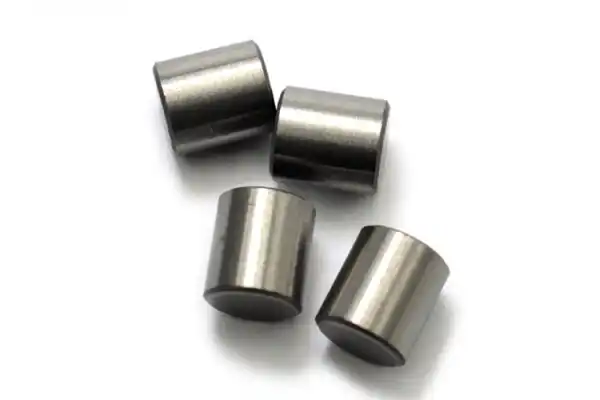
Tool geometry matters as much as tool material. Positive rake angles reduce cutting forces, which reduces heat generation and lowers the risk of workpiece cracking. The trade-off is edge strength, since a positive rake angle creates a thinner, more fragile cutting edge. Edge preparation (honing or chamfering) helps restore some of that strength without sacrificing the force reduction benefits.
PVD coatings like TiAlN or AlCrN extend tool life by reducing friction and improving hot hardness. The coating acts as a thermal barrier, keeping more heat in the chip and less in the tool substrate. For tungsten machining, coating selection should prioritize thermal properties over pure hardness.
Coolant isn’t optional when machining pure tungsten. The material’s thermal properties mean that even conservative cutting parameters generate enough heat to damage tools and workpieces without active cooling.
High-pressure emulsion coolants (water-based with 5-10% oil content) provide the best combination of cooling capacity and lubrication for most tungsten operations. The water component absorbs heat effectively, while the oil reduces friction at the tool-chip interface. Pressures above 70 bar improve chip breaking and evacuation, which matters because tungsten chips are dense and tend to pack in the cutting zone if not actively flushed away.
Synthetic coolants offer advantages in specific situations. They provide better visibility of the cutting zone, longer sump life, and easier disposal. The cooling capacity is typically lower than emulsion coolants, which limits their use to lighter cuts or finishing operations.
The delivery method matters as much as the coolant type. Through-spindle coolant delivery puts the fluid exactly where it’s needed, at the tool-chip interface. External flood cooling works but requires higher flow rates to achieve the same effect. For deep-hole drilling in tungsten, through-tool coolant delivery is essentially mandatory, since external coolant can’t reach the cutting zone effectively.
Mist cooling (minimum quantity lubrication) has a limited role in tungsten machining. It provides enough lubrication to reduce friction but not enough cooling capacity for anything beyond very light finishing passes. The environmental benefits rarely outweigh the performance limitations for this material.
Dry machining should be avoided entirely. The heat buildup without coolant causes rapid tool degradation and can induce thermal cracking in the workpiece. Shops that attempt dry machining of tungsten typically see tool life measured in seconds rather than minutes.
Parameter selection for tungsten machining starts conservative and stays conservative. The material punishes aggressive approaches with tool failure and workpiece damage.
Cutting speeds for tungsten run 30-60% of what the same tool would handle in steel. The lower speeds reduce heat generation and give the tool more time to dissipate thermal load between cutting engagements. Starting at the low end of the recommended range and increasing gradually while monitoring tool wear is the safest approach.
Feed rates follow similar logic. Moderate feeds (0.05-0.15 mm/rev for turning) balance material removal rate against cutting forces. Too low a feed rate causes the tool to rub rather than cut, generating heat through friction rather than shearing. Too high a feed rate overloads the cutting edge and accelerates wear.
Depth of cut should be shallow relative to steel machining norms. Multiple light passes produce better results than single heavy cuts, even though the total machining time increases. The reduced cutting forces from lighter passes lower the risk of workpiece cracking and improve surface finish.
| Operation | Cutting Speed (m/min) | Feed Rate (mm/rev or mm/tooth) | Depth of Cut (mm) |
|---|---|---|---|
| Turning (Roughing) | 30-60 | 0.1-0.2 | 1.0-2.0 |
| Turning (Finishing) | 50-80 | 0.05-0.1 | 0.2-0.5 |
| Milling (Slotting) | 20-40 | 0.03-0.08 | 0.5-1.0 |
| Drilling | 10-25 | 0.02-0.05 | Varies |
Spindle speed calculations should account for the actual cutting diameter, not just the tool nominal size. For turning operations, the cutting speed at the workpiece surface varies with diameter, which means spindle speed needs adjustment as the tool moves radially.
Fixture design deserves the same attention as cutting parameters. The high density and cutting forces involved require fixtures that are stiffer and more secure than what steel machining would demand. Vibration during cutting shows up immediately as chatter marks on the surface and accelerated tool wear.
Precision work in tungsten requires managing thermal effects that don’t exist at the same scale in other materials. The workpiece heats during machining, expands, gets measured, cools, and contracts to a different dimension than what the measurement showed. Shops that don’t account for this thermal behavior consistently miss their tolerance targets.
Multi-pass strategies address both thermal and mechanical concerns. Roughing passes remove bulk material while generating the most heat. Semi-finishing passes bring the workpiece close to final dimension while allowing thermal stabilization. Finishing passes, taken with sharp tools at light depths, achieve final dimension and surface quality on a thermally stable workpiece.
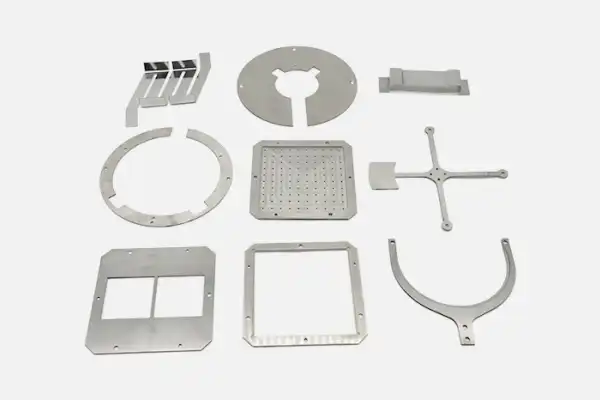
High-pressure coolant delivery during finishing passes serves two purposes: it removes heat to minimize thermal expansion, and it flushes chips away from the cutting zone to prevent re-cutting. Re-cut chips scratch the finished surface and can cause dimensional variation.
Tool condition monitoring becomes critical for precision work. A tool that’s slightly worn produces different cutting forces and different surface finish than a fresh tool. Shops that achieve consistent precision on tungsten typically change tools on a schedule rather than waiting for visible wear.
Coordinate measuring machines (CMMs) provide the dimensional verification that precision tungsten work requires. The measurement should occur after the workpiece has reached thermal equilibrium with the inspection environment, which may take hours for large parts. If your application involves tolerances below ±0.01mm, discussing thermal stabilization protocols with your machining partner before production starts can prevent costly rework.
Most tungsten machining problems trace back to one of four root causes: thermal management, tool selection, parameter settings, or fixturing. Systematic diagnosis starts by identifying which category the symptoms fall into.
Excessive tool wear that exceeds expected rates usually indicates thermal problems. The first check is coolant delivery, since inadequate flow or poor targeting leaves the cutting zone too hot. If coolant is adequate, the cutting speed may be too high for the tool grade being used. Switching to a more thermally stable tool material (CBN instead of carbide, for example) addresses the root cause rather than just the symptom.
Poor surface finish has multiple potential causes. Worn tools leave characteristic patterns that differ from vibration-induced chatter marks. Inspect the tool under magnification to distinguish between these causes. If the tool shows wear, the solution is obvious. If the tool is still sharp but the surface finish is poor, check machine rigidity and fixture clamping force. Vibration at frequencies too high to hear can still affect surface quality.
Chipping of the workpiece edges or surfaces indicates excessive cutting forces or inappropriate tool geometry. Positive rake angles reduce cutting forces, as does reducing depth of cut. If chipping persists with conservative parameters, the tool edge preparation may be wrong for the application. A slight hone or T-land on the cutting edge distributes forces more evenly and reduces the point loading that initiates cracks.
Dimensional inaccuracy that doesn’t correlate with tool wear typically stems from thermal expansion. The workpiece dimension during cutting differs from the dimension after cooling. Measuring the workpiece at a known temperature and applying thermal compensation to the tool path addresses this issue. For critical dimensions, allowing the workpiece to stabilize thermally before final measurement reveals whether the problem is thermal or mechanical.
What specific cutting tools are recommended for pure tungsten to prevent chipping?
Preventing chipping in pure tungsten requires tools designed to minimize cutting forces while maintaining edge integrity. Fine-grained carbide inserts with positive rake angles reduce the force concentration that initiates cracks. The positive geometry creates a slicing action rather than a pushing action, which the brittle material tolerates better. Edge preparation matters significantly, since a slight hone (0.02-0.05mm radius) or T-land (0.1mm x 20°) strengthens the cutting edge without sacrificing the force reduction benefits of positive rake. For finishing operations where chipping risk is highest, PCD tools offer the sharpest possible edge combined with extreme wear resistance.
Are there specialized coolants or techniques for high-precision tungsten machining?
High-precision tungsten machining benefits from cooling methods that go beyond conventional flood coolant. Cryogenic machining, using liquid nitrogen delivered directly to the cutting zone, provides cooling capacity that water-based coolants cannot match. The extreme cold keeps the workpiece thermally stable and reduces tool wear by limiting heat transfer into the cutting edge. Minimum quantity lubrication (MQL) systems work for light finishing passes where cooling demand is lower, delivering a fine oil mist that lubricates without the thermal shock that flood coolant can cause. The choice between these methods depends on the specific tolerance requirements and production volume, since cryogenic systems involve higher equipment costs but deliver better results for critical applications.
How can I minimize tool wear and maximize surface finish when machining tungsten?
Tool wear and surface finish are linked through a common set of variables. PVD coatings (TiAlN or AlCrN) reduce friction at the tool-chip interface, which lowers heat generation and slows wear progression. High-pressure coolant delivery (70+ bar) keeps the cutting zone cool and flushes chips away before they can scratch the finished surface. Parameter optimization for finishing passes means lower speeds and feeds than roughing, with depth of cut shallow enough that the tool is always cutting fresh material rather than rubbing. Rigid fixturing eliminates the vibration that causes both accelerated wear and poor surface finish. Monitoring tool wear and changing tools before they degrade past acceptable limits maintains consistent surface quality across production runs. For projects requiring surface finishes below Ra 0.8μm, contact us at +86 13995656368 to discuss specific tooling and parameter recommendations.
如果您感兴趣,可以阅读以下文章:
Unveiling The Versatile World Of Cemented Carbide Products Powering Industries Across The Globe
Exploring The Secrets Of Tungsten Sputtering Targets The Material Magician Of The Microscopic World
Beyond Price The Ultimate Guide To Choosing Your Titanium Supplier Parts Manufacturer
A Domestic Pioneer In High Purity Tungsten Target Technology
Tungsten Copper Composite Material An Efficient Electrode Material For Multiple Applications