
Tungsten alloys occupy a strange position in materials engineering. They solve problems that most metals simply cannot handle, yet selecting the right one requires navigating a maze of compositional trade-offs that textbooks rarely explain clearly. After working through countless specification sheets and watching projects succeed or fail based on alloy choices, the patterns become clearer. The decision framework matters as much as the material data itself.
Tungsten alloys are composite materials that leverage tungsten’s unique attributes: high density, strength, and melting point. These properties make them indispensable in applications requiring extreme performance. The specific alloy composition significantly impacts mechanical properties and overall suitability for any given project.
Three primary categories dominate the tungsten alloy landscape:
Tungsten Heavy Alloys (WHA) contain 85-97% tungsten, typically bound with nickel-iron or nickel-copper. The binder phase allows for excellent machinability while maintaining the high density that makes these alloys effective for radiation shielding and counterweight applications. The tungsten particles remain suspended in a ductile matrix, which explains why these materials can be machined conventionally despite tungsten’s inherent brittleness.
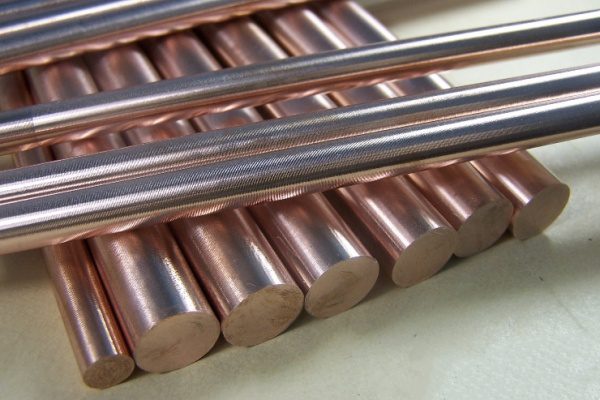
Tungsten-Copper Alloys (W-Cu) combine tungsten’s high melting point and arc resistance with copper’s excellent thermal and electrical conductivity. The two metals do not form a true alloy in the metallurgical sense. Instead, copper infiltrates a sintered tungsten skeleton, creating a composite where each phase contributes its dominant property. This makes them ideal for applications demanding both heat dissipation and electrical performance.
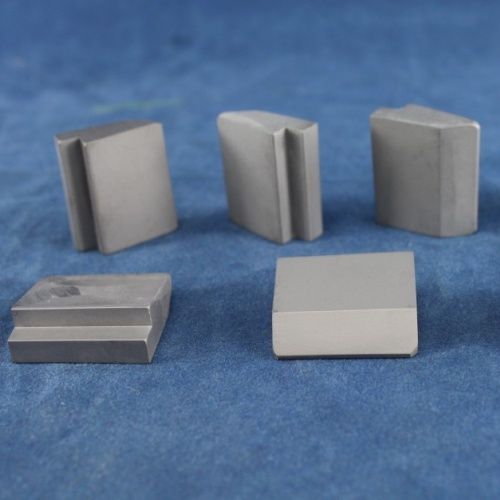
Cemented Carbides (WC) represent the hardest end of the tungsten alloy spectrum. Tungsten carbide particles are sintered with a binder metal, usually cobalt, creating materials with extreme hardness and wear resistance. The carbide phase provides hardness while the binder contributes toughness, though the ratio between them determines whether the material excels at cutting or impact resistance.
| Alloy Type | Primary Characteristics | Typical Tungsten Content | Key Applications |
|---|---|---|---|
| Tungsten Heavy Alloy | High density, machinable, radiation shielding | 85-97% | Counterweights, radiation shielding, kinetic energy |
| Tungsten-Copper Alloy | High thermal/electrical conductivity, arc resistance | 10-50% | Electrical contacts, heat sinks, EDM electrodes |
| Cemented Carbide | Extreme hardness, wear resistance, high compressive strength | 70-97% | Cutting tools, wear parts, dies |
Selecting the correct tungsten alloy involves a systematic evaluation of critical engineering criteria. These factors determine an alloy’s suitability for specific operational environments and performance requirements. The challenge lies in prioritizing which properties matter most for your application, since optimizing one characteristic often compromises another.
Mechanical properties tungsten alloys exhibit vary dramatically based on composition and processing. Tensile strength measures the material’s resistance to breaking under tension, but the numbers alone can mislead. A tungsten heavy alloy with 90% tungsten content might show lower tensile strength than one with 93% tungsten, yet perform better in applications involving impact or thermal cycling because the additional binder phase improves ductility.
Hardness testing assesses resistance to indentation and wear. For cemented carbides, hardness values can exceed 90 HRA, but this comes at the cost of toughness. The balance of these properties dictates an alloy’s resilience and longevity under operational loads. Failure analysis tungsten alloys often reveals that engineers selected based on a single property without considering how the material would behave under actual service conditions.
The high density of tungsten alloys directly correlates with their effectiveness in radiation shielding materials. Denser materials absorb and scatter radiation more efficiently because they pack more atomic mass into a given volume. This allows for thinner, more compact shielding solutions compared to lead, especially for X-ray and gamma-ray attenuation where space constraints matter.
The physics behind this involves photon interactions with atomic electrons. Tungsten’s high atomic number (74) combined with its density creates more opportunities for photoelectric absorption and Compton scattering per unit thickness. A tungsten heavy alloy shield can achieve equivalent protection to lead at roughly 30% less thickness.
Thermal conductivity tungsten-copper alloys provide becomes critical in electronic applications where heat must be dissipated quickly. Electrical resistivity tungsten varies with composition, affecting applications from electrical contacts to heating elements. Corrosion resistance tungsten exhibits depends heavily on the binder phase and operating environment. Wear resistance solutions often require cemented carbide grades, though the specific grade must match the wear mechanism involved, whether abrasive, adhesive, or erosive.
For high temperature applications, the alloy’s melting point and thermal expansion characteristics are paramount design considerations tungsten engineers must address early in the project. Mismatched thermal expansion between a tungsten component and its mounting structure can generate stresses that lead to cracking during thermal cycling.
Tungsten alloys solve problems across industries that seem unrelated until you recognize the common thread: extreme conditions that defeat conventional materials.
Aerospace components rely on high-density tungsten alloys for balancing and vibration damping. Control surfaces on aircraft require precise counterweights to achieve proper mass distribution, and the density of tungsten heavy alloys allows these counterweights to fit within tight geometric constraints. The alternative would be larger, heavier assemblies that compromise aerodynamic performance.
Medical device materials benefit from tungsten’s combination of density and biocompatibility. Radiation therapy collimators use tungsten heavy alloy to shape beam profiles with precision. The material’s non-toxic nature and radiation shielding capabilities make it preferable to lead in applications where patient safety and equipment longevity both matter.
Tooling and dies frequently utilize cemented carbide grades due to their extreme hardness and wear resistance. A carbide die might produce millions of parts before requiring replacement, while a tool steel alternative would need frequent reconditioning. The initial cost difference becomes irrelevant when measured against production downtime and replacement expenses.
Precision instrument accessories benefit from the dimensional stability and high density of tungsten alloys. Gyroscope components, for instance, require materials that maintain their properties across temperature ranges without introducing measurement errors.
High-Density Tungsten Alloy (WHA) products designed for radiation shielding and aerospace counterweights achieve their performance through careful control of the tungsten content (85-97% W) and binder selection. Ni-Fe binders provide better machinability while Ni-Cu binders offer improved corrosion resistance in specific environments.
Tungsten Copper (W-Cu) Alloy composites combine tungsten’s high melting point and arc resistance with copper’s thermal and electrical conductivity. The powder-metallurgy manufacturing process creates a structure where heat flows through the copper network while the tungsten skeleton resists arc erosion. This makes them ideal for high-power heat sinks and electrical contacts in circuit breakers.
Carbide Moving Knife Blades demonstrate the practical utility of specific tungsten alloy solutions in industrial processing. These blades, made from tungsten carbide composites, maintain sharp cutting edges through millions of cycles in plastic recycling, rubber shredding, and wood processing applications.
The integrity and performance of tungsten alloys depend heavily on precise manufacturing and stringent quality assurance. Two components with identical nominal compositions can perform very differently if their processing histories differ.
Machinability of tungsten alloys is a key consideration during production. Pure tungsten is brittle and difficult to machine, but alloying elements improve its workability. The binder phase in tungsten heavy alloys creates a ductile matrix that allows conventional machining operations. Cemented carbides require diamond or CBN tooling and grinding rather than cutting, which affects both manufacturing cost and achievable tolerances.
The sintering process tungsten alloys undergo determines their final microstructure. This process involves compacting tungsten powder and heating it below its melting point, fusing the particles through solid-state diffusion. Temperature profiles, atmosphere control, and time at temperature all affect grain size, porosity, and the distribution of phases within the material. Variations in any of these parameters can produce parts that meet dimensional specifications but fail to achieve expected mechanical properties.
ISO 9001 certification materials standards provide a framework for consistent quality control tungsten manufacturers must follow. These standards ensure that processes are documented, controlled, and verified through testing. Advanced testing methods verify alloy composition impact, mechanical properties, and thermal characteristics before materials ship.
Material purity tungsten achieves determines the upper limit of what the final alloy can accomplish. Impurities can significantly compromise mechanical properties and thermal characteristics even at trace levels. Carbon contamination, for instance, can form brittle carbide phases at grain boundaries, reducing ductility. Oxygen pickup during processing creates oxide inclusions that act as stress concentrators.
The effects compound in high-performance applications. A tungsten heavy alloy used in radiation shielding might tolerate minor impurity levels without noticeable degradation. The same impurity level in a tungsten-copper alloy used for high-power electrical contacts could cause localized melting and premature failure. Quality control tungsten manufacturers implement must account for these application-specific sensitivities.
## Evaluating Costs and Suppliers for Tungsten Alloy Projects
A comprehensive cost-benefit analysis tungsten projects require must extend beyond the purchase price. The initial material cost represents only one component of total ownership. Manufacturing expenses, potential failure costs, and component lifespan all factor into the economic equation.
Consider a tooling application where a cemented carbide insert costs three times as much as a tool steel alternative. If the carbide insert lasts ten times longer and eliminates five production stoppages for tool changes, the higher initial cost generates substantial savings. The calculation becomes more complex when factoring in scrap rates, surface finish quality, and the cost of quality inspection.
Supplier evaluation criteria should include technical expertise as a primary factor. A supplier who understands alloy properties and applications can prevent specification errors before they become expensive problems. Questions about material selection, processing alternatives, and application-specific considerations reveal whether a supplier operates as a technical partner or merely a material vendor.
Certifications like ISO 9001 confirm adherence to quality management systems, but certifications alone do not guarantee technical competence. A supplier’s ability to provide custom alloy manufacturing and support for long-term material solutions indicates deeper capabilities. The global tungsten market includes suppliers ranging from commodity traders to specialized manufacturers. The right choice depends on whether your application requires standard materials or custom solutions.
Competitive pricing tungsten suppliers offer should be evaluated in context. The lowest price often reflects lower purity, less process control, or limited technical support. For commodity applications, these trade-offs might be acceptable. For critical applications, the cost of a single failure can exceed years of material cost savings.
The optimal tungsten alloy for extreme temperature environments depends on the specific operating conditions. Temperature range matters, but so do thermal cycling frequency, atmosphere, and mechanical loads. Tungsten heavy alloys with nickel-iron binders maintain properties up to approximately 500°C before the binder phase begins to soften. For higher temperatures, pure tungsten or tungsten-rhenium alloys offer better stability, though at the cost of machinability. Tungsten-molybdenum alloys provide intermediate performance with improved fabricability. The presence of oxidizing atmospheres at high temperatures requires protective coatings or inert environments, since tungsten oxidizes rapidly above 400°C in air.
The high density of tungsten alloys is the primary factor in their effectiveness for radiation shielding. Denser materials attenuate radiation more efficiently per unit thickness. A tungsten heavy alloy with 95% tungsten content achieves a density around 18 g/cm³, compared to lead’s 11.3 g/cm³. This means equivalent shielding can be achieved with significantly less material thickness, which matters in applications where space is constrained or weight distribution must be controlled. The Tungsten Alloy Radiation Shielding effectiveness also depends on the radiation type. High-energy gamma rays require more material than lower-energy X-rays, and neutron shielding involves different physics entirely.
Finding reliable suppliers for custom tungsten alloy components requires evaluating technical expertise alongside manufacturing capabilities. Look for quality control certifications like ISO 9001 as a baseline, then assess experience with complex non-ferrous metal materials and the specific alloy types your application requires. Companies with decades of specialized experience in tungsten-molybdenum and high-density alloys typically offer more comprehensive solutions than general metal suppliers. The ability to support material research, prototype development, and production scaling indicates a supplier capable of handling projects from concept through volume manufacturing.
For engineers facing complex material challenges, Hubei Fotma Machinery Co., Ltd. offers unparalleled expertise. We specialize in custom tungsten-molybdenum, tungsten-copper, and high-density alloys. Leverage our 30+ years of material research and ISO 9001 certified production. We develop precise, high-performance solutions for your mechanical processing and precision instrument needs. Contact us today for a consultation tailored to your specific project requirements. Reach us at +86 13995656368, +86 13907199894 or via email at [email protected], [email protected].