
Choosing between molybdenum and graphite for industrial furnace heating elements comes down to understanding how each material behaves under real operating conditions. I’ve seen facilities make this decision based purely on temperature ratings, only to face unexpected maintenance cycles or premature element failure. The truth is, both materials perform exceptionally well in their respective sweet spots, but the wrong choice for your specific process can cost you significantly in downtime and replacement parts.
Molybdenum earns its place in high-temperature applications through a combination of metallurgical properties that few other materials can match. With a melting point of 2620°C, the metal maintains structural integrity at temperatures where most alternatives would soften or deform. What makes molybdenum particularly valuable is its creep resistance—the ability to hold its shape under sustained thermal stress without gradually sagging or warping over months of operation.
The electrical characteristics work in your favor too. Molybdenum’s resistivity sits at 5.34 µΩ·cm at room temperature, which translates to efficient heat generation without excessive power draw. Mechanical strength at elevated temperatures exceeds what you’d get from most competing metals, giving heating elements the durability needed for continuous furnace operation.
There’s a significant limitation to acknowledge. Molybdenum oxidizes aggressively above approximately 400°C when oxygen is present, forming volatile oxides that essentially cause the element to evaporate. This behavior restricts molybdenum heating elements to vacuum furnace applications or inert gas environments where oxygen levels stay strictly controlled.
You’ll find these elements in sintering furnaces, brazing systems, and heat treatment equipment for ceramics and specialized alloys. FOTMA manufactures Molybdenum Rod and Molybdenum Plate Moly Sheet components for these applications, along with Customized Molybdenum Parts designed to fit specific furnace configurations.
| Property | Value |
|---|---|
| Melting Point | 2620 °C |
| Density | 10.2 g/cm³ |
| Thermal Conductivity | 138 W/(m·K) at 20°C |
| Electrical Resistivity | 5.34 µΩ·cm at 20°C |
| CTE (20-1000°C) | 5.4 x 10⁻⁶ /K |
| Modulus of Elasticity | 329 GPa |
| Oxidation Resistance | Poor above 400°C |
| Primary Atmosphere Use | Vacuum, Inert Gas |
Graphite takes a different approach to high-temperature performance. The material doesn’t melt—it sublimes at temperatures exceeding 3600°C, which opens up operating ranges that molybdenum simply cannot reach. This characteristic makes graphite the default choice when processes demand temperatures above 2000°C.
Thermal shock resistance sets graphite apart in applications with rapid heating and cooling cycles. The crystalline structure absorbs thermal stresses that would crack or fracture more rigid materials. Combined with excellent machinability, graphite allows for complex heating element geometries and custom designs that would be difficult or impossible to achieve with refractory metals.
The oxidation problem exists here too, though the threshold differs. Graphite begins forming carbon dioxide above approximately 500°C in oxygen-containing atmospheres, so the same vacuum or inert gas requirements apply. Different graphite grades offer varying purity and density levels, which directly impact both performance and contamination risk in sensitive processes.
Cost considerations favor graphite for larger heating elements. The material’s lower density and more straightforward manufacturing process typically result in lower per-unit costs, particularly for substantial furnace components.
| Property | Value |
|---|---|
| Sublimation Point | >3600 °C |
| Density | 1.7-1.9 g/cm³ (varies by grade) |
| Thermal Conductivity | 100-200 W/(m·K) (varies by grade) |
| Electrical Resistivity | 800-1500 µΩ·cm (varies by grade) |
| CTE (20-1000°C) | 1-8 x 10⁻⁶ /K (varies by grade) |
| Modulus of Elasticity | 8-15 GPa (varies by grade) |
| Oxidation Resistance | Poor above 500°C |
| Primary Atmosphere Use | Vacuum, Inert Gas |
Both materials perform well in vacuum or inert gas environments, but they fail differently over time. Understanding these degradation mechanisms helps predict maintenance schedules and plan for replacements before unexpected failures disrupt production.
Molybdenum’s longevity often ends through embrittlement. Prolonged high-temperature exposure causes recrystallization, which gradually makes the material more brittle and prone to cracking. The lower thermal expansion coefficient provides good dimensional stability during thermal cycling, reducing stress-related failures. But once embrittlement sets in, localized hot spots can develop and accelerate the decline.
Graphite experiences gradual erosion and structural changes from repeated thermal cycling rather than sudden brittle failure. The higher electrical resistivity means some furnace designs will consume more power to achieve equivalent heating output. At extremely high temperatures, sublimation slowly removes material from element surfaces. If reactive gases contaminate the atmosphere, carbide formation can compromise structural integrity.
| Feature | Molybdenum | Graphite |
|---|---|---|
| Max Operating Temperature | Up to 2000 °C (in vacuum/inert) | Up to 3000 °C (in vacuum/inert) |
| Atmosphere Compatibility | Vacuum, H₂, N₂, Ar (non-oxidizing) | Vacuum, H₂, N₂, Ar (non-oxidizing) |
| Thermal Cycling Resistance | Good, but can embrittle over time | Excellent |
| Creep Resistance | Excellent | Moderate to Good |
| Brittleness | High at room temperature, increases with age | Moderate |
| Failure Modes | Embrittlement, localized hot spots | Erosion, structural weakening, sublimation |
| Maintenance Cycles | Longer, but replacement can be complex | Shorter, easier replacement |
For background on the metallurgy involved, 《What Is Molybdenum Alloy》 covers the fundamentals.
The selection process involves more than comparing specification sheets. Your actual operating conditions determine which material will deliver the best combination of performance and longevity.
Temperature range matters most. Processes running above 2000°C essentially require graphite—molybdenum won’t survive those conditions. Below that threshold, molybdenum’s superior mechanical stability and precise temperature control capabilities often make it the better choice. Heating ramp rates factor in too; rapid cycling favors graphite’s thermal shock resistance.
Furnace geometry influences the decision. How the heating element integrates with insulation components like hot zone thermal shields affects thermal efficiency and element stress. The power delivery system must match the electrical characteristics of whichever material you choose.
Material purity becomes critical in semiconductor and other contamination-sensitive applications. Outgassing from heating elements can ruin entire production batches, making high-purity grades worth the premium cost.
A complete cost analysis accounts for purchase price, installation complexity, power consumption over the element’s life, maintenance frequency, and the production cost of unplanned downtime. FOTMA works with clients as molybdenum rod manufacturers to navigate these tradeoffs and identify the configuration that makes economic sense for each specific application.
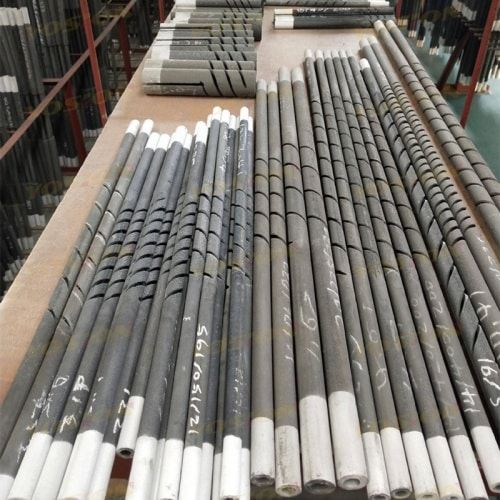
Material science continues to improve heating element durability beyond what standard grades can achieve. These developments address the specific failure modes that limit conventional molybdenum and graphite elements.
Molybdenum alloys like TZM (titanium-zirconium-molybdenum) and MHC (molybdenum-hafnium-carbon) significantly boost creep resistance and high-temperature strength. The alloying additions stabilize the grain structure, delaying the recrystallization that leads to embrittlement in pure molybdenum. These alloys extend operational lifespan in applications where standard molybdenum would require more frequent replacement.
Graphite has seen parallel improvements through composite formulations and advanced purification processes. Higher density grades offer better mechanical properties, while purification reduces the impurity outgassing that can contaminate sensitive processes. Specialized manufacturing techniques produce more consistent material properties throughout each heating element.
FOTMA incorporates these enhanced materials into Heating Elements and precision components for demanding industrial applications.
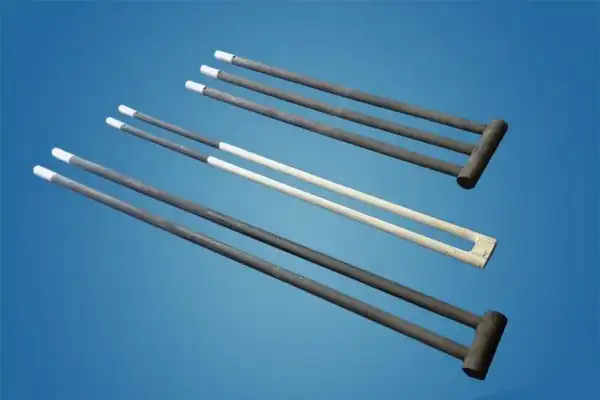
The molybdenum versus graphite decision ultimately depends on matching material characteristics to your specific operating conditions. Molybdenum delivers superior mechanical strength and dimensional stability for vacuum or inert gas applications up to 2000°C. Graphite handles thermal shock better and reaches temperatures that molybdenum cannot survive, also requiring non-oxidizing atmospheres.
Neither material is universally superior. The right choice minimizes total cost of ownership while meeting process requirements reliably. FOTMA’s ISO-9000-1:2008 certified manufacturing and three decades of experience with refractory metals help ensure that heating element selection translates into actual operational performance.
Hubei Fotma Machinery Co., Ltd. has built over 30 years of technical expertise in tungsten-molybdenum products and advanced non-ferrous metal materials. Contact us at +86 13995656368 or [email protected] to discuss your industrial heating requirements and find the heating element configuration that fits your process.
Molybdenum heating elements work reliably up to approximately 2000°C in vacuum or inert gas. Graphite can operate above 3000°C under the same atmospheric conditions. The practical limit for your application depends on how close to maximum temperature you’ll run continuously—operating near the ceiling accelerates degradation for both materials.
Initial purchase price favors graphite, especially for larger elements. Long-term economics depend on your specific situation. Molybdenum’s longer service life between replacements can offset higher upfront cost, while graphite’s lower material cost and easier replacement may work better for applications with frequent thermal cycling or higher contamination tolerance.
Graphite tolerates thermal shock significantly better than molybdenum. The crystalline structure absorbs thermal stresses that would cause cracking in more rigid materials. If your process involves rapid heating and cooling cycles, graphite will typically last longer and fail more predictably than molybdenum under the same conditions.