
Working with metals that refuse to quit at extreme temperatures changes how you think about material limits. After years of specifying components for high-heat environments, the performance gap between refractory metals and conventional alloys becomes impossible to ignore. These materials hold their shape and strength where others would soften or fail entirely. What follows covers the essential characteristics and real-world uses of tungsten, molybdenum, tantalum, rhenium, niobium, titanium, and zirconium—the metals that make extreme engineering possible.
Refractory metals earn their classification through melting points that dwarf conventional metals. Tungsten tops the list at 3422°C, but even niobium at the lower end still melts above 2477°C. This thermal stability translates directly into maintained structural integrity and mechanical strength at temperatures exceeding 2000°C—conditions that would reduce most metals to puddles or at least severely compromise their load-bearing capacity.
The property set extends beyond heat resistance. These metals typically combine exceptional hardness with wear resistance and chemical stability. That combination explains why they show up in applications where failure carries serious consequences.
Aerospace relies on refractory metals for jet engine components and rocket nozzles where thermal cycling would destroy lesser materials. Defense applications demand their durability under extreme stress. Electronics manufacturing uses their electrical and thermal conductivity for advanced packaging and heating elements. Medical device makers value their biocompatibility and corrosion resistance. The common thread across these industries is an operating environment that pushes materials to their absolute limits.
Selecting the right refractory metal requires understanding how their properties differ. The numbers tell the story more clearly than generalizations.
| Property | Tungsten (W) | Molybdenum (Mo) | Tantalum (Ta) | Rhenium (Re) | Niobium (Nb) |
|---|---|---|---|---|---|
| Melting Point (°C) | 3422 | 2623 | 3017 | 3186 | 2477 |
| Density (g/cm³) | 19.25 | 10.28 | 16.69 | 21.04 | 8.57 |
| Tensile Strength (MPa) | 550-1900 | 400-1400 | 200-700 | 1000-1500 | 150-400 |
| Hardness (HV) | 350-450 | 150-200 | 60-120 | 220-270 | 40-70 |
| Thermal Conductivity (W/m·K) | 173 | 138 | 57 | 48 | 54 |
Tungsten dominates when maximum melting point and tensile strength matter. Its density of 19.25 g/cm³ makes it the heaviest option, which can be either an advantage or constraint depending on the application. Molybdenum offers a practical middle ground—high melting point, good thermal conductivity at 138 W/m·K, and roughly half the density of tungsten.
Tantalum trades raw strength for ductility and corrosion resistance. Its tensile strength range of 200-700 MPa sits below tungsten and molybdenum, but its workability and chemical inertness open applications those harder metals cannot serve. Rhenium commands premium pricing for good reason: its high-temperature strength and creep resistance exceed the other options, making it irreplaceable in certain aerospace applications. Niobium brings the lowest density at 8.57 g/cm³ along with superconductivity properties that matter in specialized electronics and research applications.
These trade-offs shape every material selection decision for high-temperature alloys.
Tungsten and molybdenum anchor numerous industrial processes because their properties match specific operational demands. Tungsten’s combination of the highest melting point and substantial hardness makes it the default choice for heating elements in high-temperature furnaces, electrical contacts that must survive repeated arcing, and X-ray targets that absorb intense electron bombardment. Aerospace components operating at extreme temperatures frequently specify tungsten for structural elements.
Molybdenum fills a complementary role where thermal conductivity and strength matter but maximum temperature resistance is less critical. Vacuum furnace hot zones rely on molybdenum components. Sputtering targets for thin-film deposition use molybdenum extensively. Glass melting operations depend on molybdenum electrodes because the metal resists the corrosive environment while conducting heat efficiently. Both metals appear in composite forms like tungsten-copper alloy and molybdenum copper alloy mocu heat sink configurations that balance thermal and electrical properties.
Titanium, zirconium, tantalum, and niobium share a property set that distinguishes them from the higher-melting refractory metals: exceptional stability in chemically aggressive environments combined with biological compatibility.
Titanium resists chlorides and oxidizing acids better than most metals, which explains its presence in chemical processing equipment, marine hardware, and aerospace structures where salt exposure is constant. The strength-to-weight ratio adds another dimension—titanium delivers structural performance at roughly 60% of steel’s density. Zirconium handles strong acids and alkaline solutions with similar effectiveness, earning its place in nuclear reactors and chemical processing where other metals would corrode rapidly.
Tantalum approaches chemical inertness. Highly aggressive acids that attack most metals leave tantalum surfaces unchanged, making it essential for chemical processing equipment handling the most corrosive substances. Medical implant designers also specify tantalum because the body tolerates it without adverse reactions. Niobium shares much of tantalum’s corrosion resistance, though it performs slightly less well in certain oxidizing environments.
The biocompatibility of these four metals stems from their tendency to form stable passive oxide layers. This surface chemistry prevents reactions with biological tissues, enabling their use in prosthetics, dental implants, and surgical instruments. The same oxidation resistance that protects against chemical attack also protects against biological rejection.
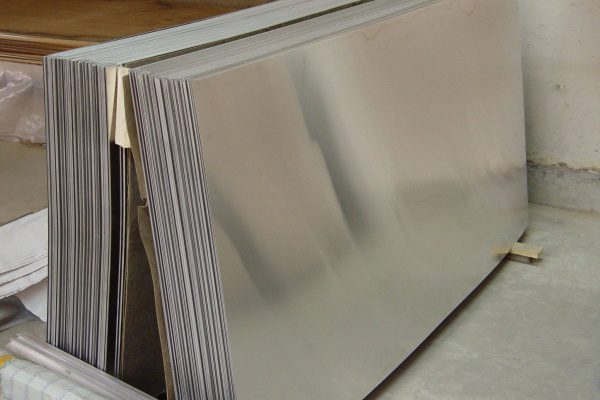
For broader context on titanium’s role across industries, 《Titanium And Titanium Alloys Widespread Application And Future Challenges》 covers the material’s trajectory and current limitations.
Tantalum and niobium both resist corrosion and maintain strength at elevated temperatures, but the differences matter for specific applications. Tantalum’s passive oxide layer provides superior protection against aggressive acids, including hydrofluoric acid that attacks most other metals. Niobium resists many corrosive agents effectively but shows vulnerability in highly oxidizing acid environments where tantalum remains stable.
High-temperature strength favors tantalum for furnace components and chemical processing equipment where both heat and corrosion are present. Niobium maintains good elevated-temperature strength but typically requires alloying to achieve the creep resistance needed for sustained high-temperature service. The choice between them often comes down to the specific chemical environment and whether pure corrosion resistance or a balance of properties serves the application better.
Current applications only hint at where refractory metals are going. Aerospace continues pushing temperature limits with engine components, re-entry vehicles, and hypersonic aircraft designs that demand materials capable of surviving conditions previously considered impossible. Nuclear applications rely on these metals for reactor components and fuel cladding where neutron transparency and corrosion resistance determine safety margins.
Electronics manufacturing increasingly depends on refractory metals for high-performance devices. Molybdenum sputtering targets deposit thin films with precise composition control. Tungsten evaporation boats enable vacuum deposition processes that create the conductive layers in advanced semiconductors. Medical implants continue expanding their use of biocompatible refractory metals as surgical techniques become more sophisticated.
Additive manufacturing represents a significant shift in how these materials can be used. Building complex geometries layer by layer opens design possibilities that traditional machining cannot achieve. New alloy development continues improving ductility, strength, and oxidation resistance simultaneously—properties that historically required trade-offs. These advances point toward applications in renewable energy systems and advanced propulsion that current materials cannot support.
Selecting the optimal refractory metal follows a logical sequence that starts with understanding what the application actually demands.
The first question identifies the primary requirement. Is maximum melting point the critical factor, or does corrosion resistance matter more? Does the application need strength at temperature, or is weight the limiting constraint?
Temperature range narrows the options quickly. An application operating at 2800°C eliminates everything except tungsten and rhenium. Lower temperatures open the field to molybdenum, tantalum, and niobium depending on other requirements.
Environmental compatibility addresses chemical exposure, vacuum conditions, oxidation potential, and biological contact. A component that must resist hydrofluoric acid points toward tantalum. Nuclear applications requiring low neutron capture favor zirconium.
Mechanical loading determines whether tensile strength, hardness, or creep resistance drives the selection. High-stress applications at temperature typically favor tungsten or rhenium. Lower-stress applications where ductility matters might specify tantalum or niobium.
Fabrication considerations affect both cost and feasibility. Some refractory metals machine readily while others require specialized techniques and tooling. The ability to form complex shapes without cracking can determine whether a design is practical.
Cost analysis completes the evaluation. Rhenium’s exceptional properties come with exceptional pricing. The question becomes whether the performance justifies the expense or whether a less costly alternative meets the actual requirements.
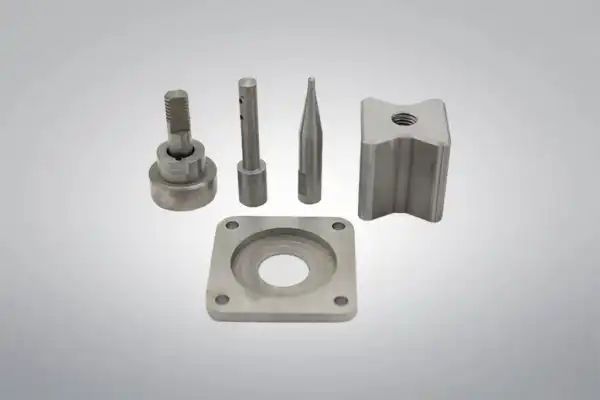
Refractory metal performance depends directly on material purity and manufacturing precision. Trace impurities that would be insignificant in conventional metals can dramatically affect high-temperature behavior, ductility, and corrosion resistance in refractory materials. The difference between a component that performs reliably and one that fails prematurely often traces back to raw material quality and processing control.
Hubei Fotma Machinery Co., Ltd. maintains ISO-9000-1:2008 certification specifically because these materials demand rigorous quality control. Thirty years of technical accumulation in material research translates into understanding how processing parameters affect final properties. Modern production equipment combined with advanced testing methods ensures that tungsten-molybdenum products, alloys, and other non-ferrous metal materials meet the specifications that demanding applications require.
Hubei Fotma Machinery Co., Ltd. brings ISO-9000-1:2008 certified manufacturing and three decades of materials expertise to tungsten-molybdenum products, alloys, titanium, nickel, and other non-ferrous metals. Our production capabilities and testing infrastructure support complete solutions for mechanical processing and manufacturing applications where material performance cannot be compromised. Reach us at +86 13995656368 or +86 13907199894, or email [email protected] or [email protected] to discuss how our refractory metal products can address your specific engineering challenges.
Each metal solves a specific problem that other materials cannot address. Rhenium maintains strength and resists creep at temperatures that would compromise other refractory metals, making it irreplaceable for jet engine hot-section components where operating temperatures continue climbing. Titanium combines structural strength with low density—aircraft structures and spacecraft benefit from carrying less weight while maintaining load-bearing capacity. Its corrosion resistance handles the salt and moisture exposure that aircraft encounter.
Zirconium earns its nuclear industry role through an unusual property: low neutron capture cross-section. Reactor components and fuel rod cladding must allow neutrons to pass through without absorbing them, and zirconium does this while also resisting corrosion in high-temperature water. That combination of nuclear transparency and chemical stability makes it essential for reactor safety.
The properties that make these metals valuable also make them difficult to work. Room-temperature brittleness means standard machining approaches can crack the material. High hardness wears tooling rapidly. Melting points above 2600°C eliminate conventional casting as a fabrication option.
Successful fabrication typically involves powder metallurgy to create initial shapes, followed by high-temperature forming operations that take advantage of improved ductility at elevated temperatures. Precision machining requires appropriate tooling materials, controlled cutting speeds, and cooling strategies that prevent thermal shock. These complexities explain why customized molybdenum parts and customized tungsten parts require specialized manufacturing expertise rather than general metalworking capabilities.
Durability drives the sustainability contribution. Components that survive extreme conditions for extended periods reduce replacement frequency, which means less material consumption and less manufacturing energy over the equipment’s lifetime. High-temperature furnaces with refractory metal heating elements operate more efficiently because the elements maintain their properties rather than degrading and requiring more power to compensate.
Chemical processing equipment made from corrosion-resistant refractory metals lasts longer in aggressive environments, reducing both material waste and the energy cost of manufacturing replacements. Power generation systems benefit from components that maintain efficiency at high operating temperatures. The pattern repeats across applications: materials that perform reliably under extreme conditions enable processes that would otherwise be impractical or inefficient.