
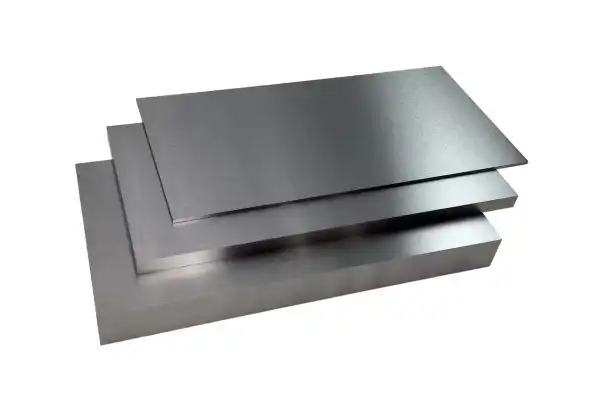
Tungsten behaves as a diamagnetic metal, which means it shows a weak repulsion when exposed to an external magnetic field. This property matters in engineering contexts where even minor magnetic interference can compromise measurement accuracy or signal integrity. The effect is subtle—far weaker than the attraction you would see with iron or nickel—but it is consistent and predictable, which makes tungsten a reliable choice for magnetically sensitive environments. Why Tungsten Qualifies as Diamagnetic The magnetic behavior of any material traces back to its electron configuration. Tungsten atoms have all their electrons paired, leaving no net magnetic moment available to align with an external field. When a magnetic field is applied, the paired electrons generate a small opposing moment, producing the characteristic weak repulsion of diamagnetic materials. This stands in contrast to paramagnetic materials like aluminum or platinum, where unpaired electrons create moments that align weakly with an applied field, resulting in attraction. Ferromagnetic materials—iron, nickel, cobalt—go further: their electron spins align spontaneously within domains, producing strong attraction and the ability to retain magnetism after the field is removed. Magnetic Type Electron Configuration Response to Magnetic Field Example Materials Diamagnetic All paired electrons Weakly repelled Tungsten, Copper Paramagnetic Unpaired electrons Weakly attracted Aluminum, Platinum Ferromagnetic Aligned electron spins Strongly attracted Iron, Nickel The practical takeaway: tungsten will not magnetize, will not retain any magnetic field, and will not distort nearby magnetic measurements in any meaningful way. Where Tungsten’s Non-Magnetic Behavior Solves Engineering Problems Precision instruments, medical imaging equipment, and aerospace navigation systems all share a common requirement: the materials surrounding sensitive components must not introduce magnetic interference. Ferrous alloys are often disqualified immediately in these contexts, which narrows the field to non-magnetic alternatives. Tungsten’s diamagnetism, combined with its density and mechanical stability, makes it suitable for components operating inside or near strong electromagnetic fields. MRI equipment is one example—any ferromagnetic material in the imaging zone distorts the field and degrades image quality. High-precision gyroscopes and inertial navigation units face similar constraints, where even weak magnetic effects can accumulate into measurable drift over time. I worked on a project a few years back involving a research instrument that operated inside a 3-tesla magnetic field. The client had initially spec’d a steel mounting bracket, which introduced enough field distortion to throw off their baseline measurements. We replaced it with a high-density tungsten alloy component. The field distortion dropped below their detection threshold, and
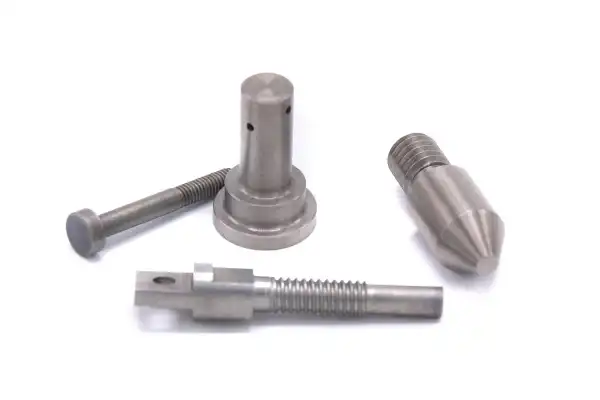
Working with advanced materials like tungsten requires a thorough understanding of potential health risks and stringent safety protocols. Solid tungsten metal is generally considered benign, but its various forms—particularly fine dusts and certain compounds—demand careful industrial handling. Establishing robust guidelines protects personnel and ensures environmental integrity throughout the material lifecycle. How Tungsten’s Physical Form Determines Its Toxicity Tungsten exhibits varying degrees of toxicity depending on its physical and chemical form. Pure, solid tungsten metal, such as in Tungsten Copper (W-Cu) Alloy, is largely inert and poses minimal health effects under normal handling conditions. Its low solubility and reactivity mean the body does not readily absorb it. The situation changes significantly with tungsten compounds, alloys, and especially fine tungsten powder. Tungsten carbide toxicity presents a different challenge, particularly when combined with cobalt in cemented carbides. This combination can lead to hard metal disease, a severe interstitial lung disease. Cobalt acts as a sensitizer, exacerbating the respiratory response. Tungsten compounds health effects also vary: soluble compounds like sodium tungstate are more bioavailable and thus potentially more toxic than insoluble forms. While tungsten is less toxic than some other heavy metals, its cumulative effects in dust form warrant caution. Tungsten powder safety is a critical area because fine particles can be inhaled, leading to respiratory irritation or more serious long-term issues. Tungsten Form Primary Hazard Health Effects Recommended Handling Solid Metal Physical injury Minimal systemic toxicity Standard industrial safety Fine Powder Inhalation, ingestion Respiratory irritation, potential long-term lung issues Ventilation, PPE, dust control Tungsten Carbide Inhalation, skin contact Hard metal disease, skin sensitization Strict dust control, PPE, medical surveillance Soluble Compounds Ingestion, skin absorption Systemic toxicity, organ damage Containment, PPE, emergency wash stations Insoluble Compounds Inhalation, ingestion Respiratory irritation, gastrointestinal upset Dust control, PPE Where Tungsten Exposure Actually Occurs in Industrial Settings Understanding how workers encounter tungsten is fundamental to effective risk management. The primary routes of tungsten exposure include inhalation, skin contact, and ingestion. Tungsten dust inhalation is arguably the most significant concern in industrial settings, particularly during grinding, cutting, or powder handling operations. Fine particles can bypass the body’s natural defenses and deposit deep within the lungs, leading to respiratory irritation, coughing, and shortness of breath. Chronic exposure can result in more severe long-term health risks, such as pneumoconiosis or hard metal disease when cobalt is present. Skin contact with tungsten, especially with powders or solutions, can cause irritation or allergic
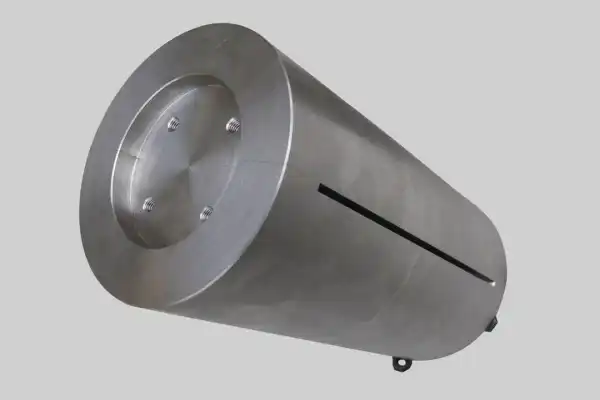
Engineers frequently evaluate materials based on their physical properties, with density being a primary consideration for many applications. Understanding the significant density differences between tungsten and lead is crucial for informed material selection, particularly when designing components that require maximum mass in a minimal volume. This comparison extends beyond simple numerical values, influencing performance, safety, and environmental impact across various industrial sectors. My experience in non-ferrous metal materials research has shown me how critical these distinctions are for achieving optimal engineering solutions. What Material Density Actually Tells You About Performance Material density represents the mass of a substance per unit volume, typically expressed in grams per cubic centimeter (g/cm³) or pounds per cubic inch (lb/in³). This intrinsic property is determined by an element’s atomic weight and the arrangement of its atoms within its crystal structure. For engineers, density is a foundational metric that directly impacts a component’s weight, inertia, and ability to absorb radiation. These factors influence design choices for everything from aerospace counterweights to medical shielding. A higher density means more mass can be packed into a given space, which is often a desirable characteristic in specialized applications where volume constraints are tight but mass requirements are fixed. How Tungsten and Lead Density Numbers Actually Compare When comparing pure tungsten (W) and pure lead (Pb), the density difference is striking and forms the basis for their distinct engineering applications. Tungsten, with an atomic number of 74, possesses a significantly higher atomic weight and a more compact crystalline structure than lead, which has an atomic number of 82. This structural difference accounts for tungsten’s superior density. Material Density (g/cm³) Density (lb/in³) Tungsten 19.3 0.697 Lead 11.34 0.410 Tungsten is approximately 70% denser than lead. Pure tungsten measures about 19.3 g/cm³, while pure lead comes in around 11.34 g/cm³. This substantial difference means that a tungsten component will weigh nearly twice as much as a lead component of the exact same volume. When space is at a premium but high mass is required, this characteristic becomes particularly valuable. Why Density Alone Does Not Determine Material Selection While density is a critical factor, a comprehensive material evaluation requires considering other properties that influence overall performance. Tungsten and lead diverge significantly across several key metrics that affect real-world applications. Tungsten boasts an exceptionally high melting point of 3422°C, the highest of all metals, making it suitable for extreme temperature environments. Lead, by contrast,
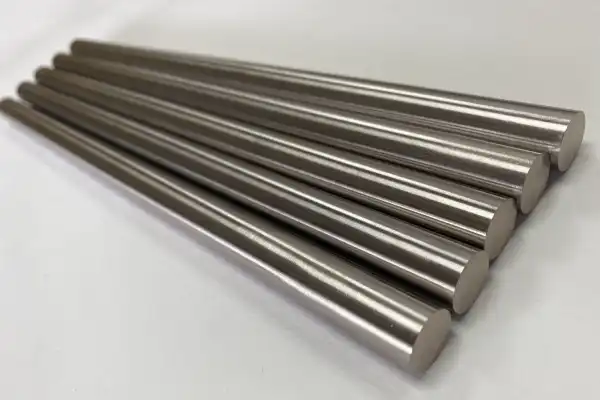
Tungsten holds a unique position in modern industry due to its extraordinary physical and chemical properties. Its unparalleled melting point, exceptional hardness, and remarkable density make it indispensable across a spectrum of demanding applications. This material enables advancements in fields ranging from precision manufacturing to high-temperature aerospace components, consistently pushing the boundaries of performance and durability. Understanding these inherent characteristics is key to appreciating its widespread industrial utility. Why Tungsten Outperforms Other Metals Under Extreme Conditions Tungsten (W) is classified as a refractory metal, meaning it retains its strength and stiffness at extremely high temperatures. This characteristic is paramount for components operating under severe thermal stress. With a melting point of 3422°C (the highest of all metals), tungsten resists deformation and degradation where other materials would fail. Its atomic structure also contributes to its exceptional hardness, often measured on the Vickers scale, making it highly resistant to wear and abrasion. Tungsten boasts a density of 19.3 grams per cubic centimeter, comparable to gold, which is crucial for applications requiring high mass in a compact volume. These combined properties provide tungsten with superior resistance to corrosion and excellent electrical conductivity, particularly at elevated temperatures. The low coefficient of thermal expansion also ensures dimensional stability across wide temperature fluctuations. When analyzing material specifications for critical components, tungsten’s profile consistently stands out for its ability to maintain integrity under conditions that would compromise most other metals. This unique combination of attributes makes it a cornerstone material in advanced engineering. What makes tungsten ideal for industrial applications? Tungsten is ideal for industrial applications because of its unique combination of properties. Its extremely high melting point allows it to perform reliably in high-temperature environments. Exceptional hardness provides superior wear resistance, extending the lifespan of tools and components. High density is valuable for applications requiring significant mass in a small volume, such as counterweights and radiation shielding. Property Tungsten (W) Molybdenum (Mo) Steel (Typical) Melting Point (°C) 3422 2623 1370–1530 Density (g/cm³) 19.3 10.2 7.8–8.0 Hardness (HV) 340–460 150–200 120–300 Thermal Expansion Low Low Moderate Tensile Strength High High Variable How Tungsten Carbide Transforms Cutting Tool Performance The extreme hardness and wear resistance of tungsten make it an unrivaled material for advanced manufacturing and precision tools. Tungsten carbide, a compound formed from tungsten and carbon, is particularly renowned. This ceramic-like material is significantly harder than steel, making it the primary choice for cutting tools, drilling bits,
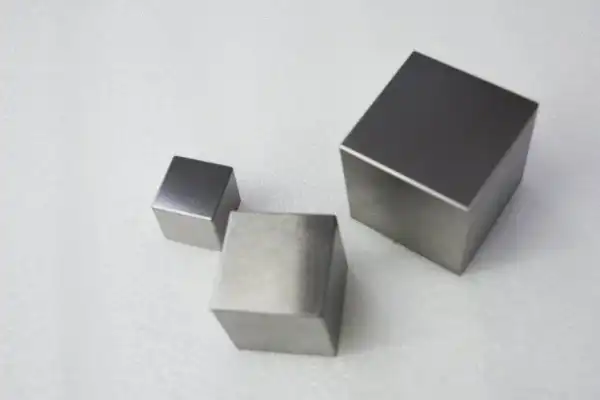
Tungsten counterweights solve a specific engineering problem: fitting enough mass into a tight space to balance a rotating or moving assembly. The material’s density, ranging from 17.0 to 18.5 g/cm³ depending on alloy composition, means a tungsten counterweight can be half the size of a steel one at the same mass. That dimensional advantage matters in aerospace actuators, medical imaging gantries, and high-speed rotating machinery where every cubic centimeter is contested. The calculation itself is straightforward. If a system needs 500 grams of additional mass and the available cavity measures 27.8 cm³, the minimum required density is 18.0 g/cm³. Steel at 7.8 g/cm³ would need 64 cm³ for the same mass, more than double the volume. Lead at 11.3 g/cm³ would need 44 cm³, still 58% larger than the tungsten solution. These numbers drive material selection before any detailed design work begins. Why Tungsten Alloys Outperform Other Counterweight Materials Pure tungsten is brittle and difficult to machine. Tungsten heavy alloys, typically 85–97% tungsten with nickel-iron or nickel-copper binders, retain most of the density while gaining ductility and machinability. A 90% tungsten alloy with nickel-iron binder machines cleanly on standard CNC equipment and holds tolerances under ±0.05 mm without special tooling. The density advantage over common alternatives is substantial: Material Density (g/cm³) Relative Density Machinability Cost Factor Tungsten 17.0–18.5 1.0 Good High Lead 11.3 0.65 Excellent Low Steel 7.8 0.45 Excellent Low Brass 8.5 0.49 Excellent Medium Lead is cheap and easy to cast, but its toxicity creates handling and disposal complications. Steel is inexpensive and readily available, but its lower density forces larger counterweight volumes. Brass falls between steel and lead in density, offering no particular advantage for mass-critical applications. Tungsten heavy alloys cost more per kilogram, but the reduced volume often simplifies the surrounding structure and shrinks the overall assembly envelope. How Mass Distribution and Center of Gravity Drive Counterweight Geometry A counterweight’s job is to shift the center of mass of an assembly. The required mass depends on the imbalance being corrected, and the required placement depends on the moment arm from the rotation axis. A 100-gram counterweight mounted 50 mm from the axis produces the same balancing moment as a 50-gram counterweight at 100 mm. When space constraints fix the mounting location, the counterweight mass is determined by geometry. Moment of inertia matters for dynamic applications. A counterweight concentrated near the rotation axis adds less rotational inertia
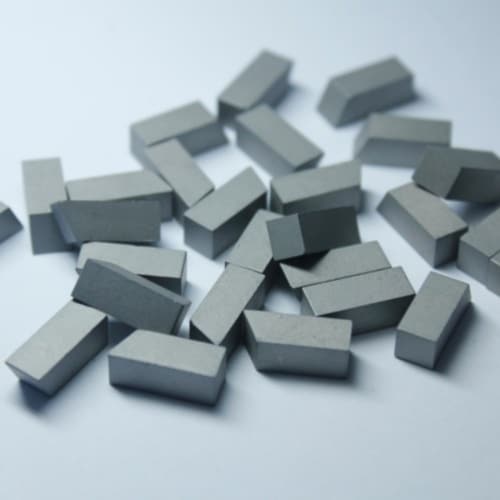
Tungsten carbide scrap sits in warehouses and scrap bins across manufacturing facilities worldwide, often treated as waste when it represents recoverable value. The material’s tungsten and cobalt content makes recycling economically attractive, while the environmental case for keeping these metals in circulation grows stronger as primary extraction costs rise and ore grades decline. Why Tungsten Carbide Scrap Commands Premium Prices Tungsten carbide combines tungsten carbide particles with a metallic binder, typically cobalt, creating a composite with hardness second only to diamond among common industrial materials. This composition explains why scrap prices track closely with primary tungsten and cobalt markets. The value calculation depends on several factors: tungsten content by weight, binder type and percentage, contamination level, and physical form. Clean solid inserts with 90% tungsten content command significantly higher prices than grinding sludge at 55% tungsten mixed with cutting fluids. Cobalt content adds value independently, given cobalt’s critical role in battery technology and superalloys. Scrap Type Typical Tungsten Content (Wt%) Primary Binder Value Indicator Solid Inserts 85-95% Cobalt High, minimal contamination Drills/End Mills 80-90% Cobalt, Nickel High, moderate contamination Sludges/Grinding Dust 50-70% Cobalt, various Medium, high contamination Brazed Tips 70-85% Cobalt, Copper Medium, requires separation Wear Parts 75-90% Cobalt, Nickel High, varies by size/form Hubei Fotma Machinery Co., Ltd. maintains deep expertise in tungsten-molybdenum products, which translates directly into accurate scrap assessment and identification of recovery potential that less specialized buyers might miss. How Scrap Classification Affects Recovery Economics The path from scrap bin to recovered metal depends entirely on what goes into that bin. Mixing high-purity solid carbide inserts with contaminated grinding sludge forces the entire batch through more intensive processing, destroying value that proper segregation would preserve. Solid carbide tools, including products like Carbide Moving Knife Blades, typically contain 85-95% tungsten carbide with cobalt binder. These materials can often enter direct recycling streams with minimal processing. Brazed carbide tips require separation from their steel substrates before processing. Grinding sludge demands degreasing, drying, and often chemical treatment to remove cutting fluid residues and tramp metals. The classification decision happens at the point of generation. Facilities that maintain separate collection streams for different scrap grades consistently achieve better returns than those that commingle everything. The upfront effort of segregation pays dividends when scrap reaches the recycler. What Happens During Tungsten Carbide Recycling Modern recycling operations employ several distinct processes, each suited to different scrap characteristics and target product specifications. Direct

Achieving high-quality TIG welds relies heavily on precise control over numerous variables, with the selection of the tungsten electrode diameter being among the most critical. This choice directly influences arc stability, penetration, and overall weld integrity. Understanding how electrode type, welding current, and material properties interact is fundamental for any serious welding operation. A well-chosen tungsten electrode diameter ensures efficient heat input and minimizes costly defects, leading to superior results. How Tungsten Electrode Types Affect Your Welding Performance The foundational material science behind TIG electrodes reveals how specific alloying elements dictate performance and application suitability. Tungsten, with its exceptionally high melting point of 3422°C, forms the core of these non-consumable electrodes. Various additives enhance its electron emission characteristics, arc stability, and longevity. These alloying elements are crucial for optimizing the electrode for different welding currents and base metals. Pure tungsten electrodes, identified by a green band, offer good arc stability for AC welding on aluminum and magnesium, but they have lower current carrying capacity and are prone to contamination. Thoriated tungsten, marked with a red band, contains 2% thorium dioxide. It provides excellent arc starting and stability for DC welding, making it popular for stainless steel and carbon steel. However, thorium is radioactive, leading many to seek alternatives. Ceriated tungsten, with a grey or orange band, contains cerium oxide. It performs well with both AC and DC processes, offering good arc starting at low amperages and being non-radioactive. Lanthanated tungsten, often blue or gold, contains lanthanum oxide. It is a versatile, non-radioactive option suitable for both AC and DC, providing stable arcs across a wide current range. Zirconiated tungsten, with a brown band, contains zirconium oxide. It is primarily used for AC welding, offering a very stable arc and high resistance to contamination, particularly beneficial for aluminum. Our team at Hubei Fotma Machinery Co., Ltd. has accumulated over 30 years of technical knowledge in tungsten-molybdenum materials. This deep understanding allows us to develop and produce high-quality tungsten products that meet stringent performance demands in welding applications. We focus on material purity and precise alloying to ensure our electrodes deliver consistent, reliable performance. Electrode Type Primary Application Key Characteristics Pure Tungsten (WP) AC, Aluminum, Magnesium Low current capacity, stable balled tip Thoriated (WT20) DC, Carbon/Stainless Steel Excellent arc start, high current capacity Ceriated (WC20) AC/DC, Low Amperage Good arc start, non-radioactive, versatile Lanthanated (WL15/20) AC/DC, Wide Range Stable arc, non-radioactive, long
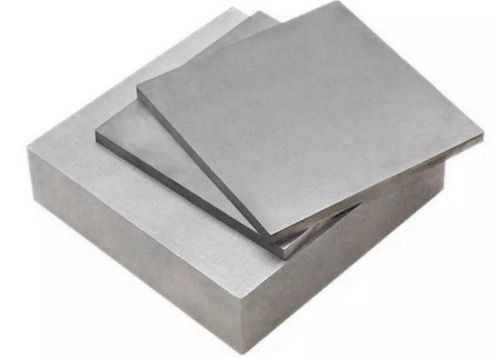
Storing tungsten and molybdenum properly determines whether these materials perform as specified or fail prematurely in service. The storage environment directly affects surface chemistry, mechanical properties, and purity levels that precision manufacturing depends on. This article covers the environmental factors that degrade refractory metals and the storage practices that prevent degradation, from climate control through packaging to long-term inventory management. What Actually Damages Tungsten and Molybdenum in Storage Tungsten and molybdenum resist high temperatures and mechanical stress, but they react to atmospheric conditions and physical handling in ways that compromise performance. Even minor environmental changes can alter surface chemistry and microstructure over time. The primary threats come from atmospheric elements and physical stressors. Oxygen and moisture in ambient air cause surface oxidation. At room temperature, this oxidation stays superficial, but it accelerates under elevated humidity or temperature fluctuations. Contaminants like dust, oils, and chemical residues adhere to surfaces and cause localized corrosion or interfere with downstream processes such as welding and coating. Mechanical abrasion or impact during handling introduces defects that reduce structural integrity. Each material type responds differently to its surroundings. Pure molybdenum plate and tungsten copper alloys have distinct oxidation behaviors. Prolonged exposure to high humidity accelerates surface changes on both, particularly on finely finished components where even thin oxide layers affect performance. Environmental Threat Impact on Tungsten Impact on Molybdenum Humidity Surface oxidation, potential discoloration Surface oxidation, tarnishing, increased brittleness Oxygen Formation of tungsten oxides (WO₃) Formation of molybdenum oxides (MoO₃) Temperature Fluctuations Thermal stress, condensation risk Thermal stress, condensation risk Contaminants Surface impurities, processing interference Surface impurities, etching, reduced bond strength Physical Damage Scratches, dents, structural defects Scratches, deformation, micro-cracks Climate Control Requirements for Tungsten and Molybdenum Storage Precise climate control preserves material integrity and keeps tungsten and molybdenum ready for high-precision applications. The key variables are temperature stability, humidity levels, and atmospheric purity. A systematic approach to climate control starts with assessing the existing environment. Evaluate ambient temperature, humidity levels, and potential contamination sources. Then determine the specific purity and surface finish requirements for the parts being stored, since these dictate how stringent the controls need to be. For primary controls, HVAC systems should maintain temperatures between 18°C and 25°C. Industrial-grade dehumidifiers keep relative humidity below 50%, with 30% to 40% being the target range to prevent condensation and oxidation. HEPA filtration minimizes particulate contamination, which matters especially for parts destined for vacuum or cleanroom
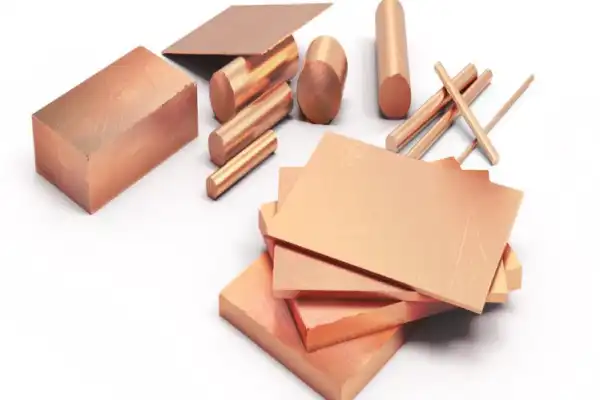
Getting metal density to weight conversions right is one of those things that separates a smooth OEM project from one that bleeds money at every stage. When you know exactly how much a part will weigh before cutting metal, you can order the right amount of raw material, quote shipping accurately, and catch design problems before they become expensive production problems. The relationship between density, mass, and volume is straightforward in theory, but applying it to real manufacturing situations requires attention to details that textbooks tend to skip. Why Density Values from Reference Tables Are Starting Points, Not Final Answers Density is mass per unit volume. For metals, we typically express it in grams per cubic centimeter or kilograms per cubic meter. The formula itself is simple: multiply the volume of your part by the material’s density, and you get the theoretical weight. The problem is that the density value you plug into that formula matters enormously, and published values are nominal figures for pure or standard compositions. Actual densities vary. A 6061-T6 aluminum extrusion and a cast A356 aluminum part will not have identical densities, even though both are “aluminum.” Alloy composition shifts the number. Manufacturing process affects it too, since castings can contain microporosity that reduces effective density by a few percent. Temperature during measurement and during service also plays a role, though for most room-temperature applications this effect is small enough to ignore. For OEM work, I treat reference table values as a starting point. When weight tolerance is tight, or when the material is expensive, verifying density on incoming stock is worth the effort. A simple displacement test or a calibrated sample weighing can catch discrepancies before they propagate through your cost estimates. Metal Type Typical Density (g/cm³) Density (kg/m³) Density (lb/in³) Aluminum 2.70 2700 0.0975 Titanium 4.50 4500 0.1625 Steel (Carbon) 7.85 7850 0.2835 Copper 8.96 8960 0.3237 Tungsten 19.30 19300 0.6970 Molybdenum 10.20 10200 0.3685 How to Calculate Part Weight When Geometry Gets Complicated Simple shapes are easy. A cylindrical rod, a rectangular plate, a tube with uniform wall thickness: you can calculate the volume with basic geometry formulas and multiply by density. The challenge comes with complex machined parts, and this is where CAD software earns its keep. Modern CAD systems calculate volume directly from the 3D model, accounting for every pocket, bore, fillet, and chamfer. If your model is accurate, the volume