
When you spend enough time around jet engines and airframe assemblies, you start to develop an instinct for which materials belong where. The turbine section runs hot enough to make most metals give up, while the structural components need to stay light without sacrificing strength. Titanium and nickel alloys have carved out their respective territories in aerospace precisely because each one does something the other cannot. The choice between them is rarely straightforward—it depends on temperature exposure, weight constraints, and how much punishment the component will take over its service life. Metallurgical Characteristics That Define Aerospace Suitability The fundamental properties of titanium and nickel alloys explain why engineers reach for one or the other depending on the application. Titanium alloys deliver an exceptional strength-to-weight ratio combined with corrosion resistance that holds up well in atmospheric conditions. Titanium Alloy Products have become standard in applications where every gram matters. Nickel superalloys take a different approach—they sacrifice some weight efficiency to achieve superior high-temperature strength and creep resistance that titanium simply cannot match. Property Titanium Alloys (e.g., Ti-6Al-4V) Nickel Superalloys (e.g., Inconel 718) Density (g/cm³) 4.5 8.0-9.0 Melting Point (°C) ~1650 ~1300-1400 Thermal Conductivity (W/m·K) ~6.7 ~11-12 Elastic Modulus (GPa) ~110 ~200-220 The density difference jumps out immediately. Titanium weighs roughly half as much as nickel superalloys, which matters enormously when you are designing components that will fly millions of miles over their service life. Nickel alloys compensate with better thermal stability at extreme temperatures. Their higher elastic modulus also means they resist deformation more effectively under load. These trade-offs shape every material decision in aerospace design. Three decades of working with non-ferrous metal materials has taught us that understanding these fundamentals prevents costly mistakes downstream. Behavior at Temperature Extremes Aerospace components operate in conditions that would destroy most engineering materials. The difference between titanium and nickel alloys becomes most apparent when temperatures climb past certain thresholds. Nickel alloys maintain their mechanical properties at temperatures where titanium begins to struggle. Above 800°C, nickel superalloys still resist creep—that slow, permanent deformation that happens when metals sit under sustained stress at high temperature. Titanium performs admirably at moderate high temperatures, and its oxidation resistance in that range is genuinely impressive. The problem is that “moderate” in aerospace terms still means conditions that would melt consumer-grade metals. Temperature Boundaries for Titanium in Flight Applications Ti-6Al-4V and similar titanium grades hold their structural integrity up to
Working with dense metals teaches you quickly that numbers on a spec sheet only tell part of the story. The real challenge comes when you need to balance density against machinability, cost against environmental compliance, and theoretical performance against what actually works in production. Tungsten, lead, gold, and uranium each occupy distinct niches in high-density applications, and understanding where each excels—and where each falls short—makes the difference between a successful project and an expensive lesson. Why Atomic Structure Determines Dense Metal Behavior Density measures mass per unit volume, but for dense metals, that simple definition masks considerable complexity. Atomic weight matters, certainly, but crystalline structure plays an equally important role in determining how tightly atoms pack together. Dense metals with specific gravity well above water share this characteristic, yet their practical behavior varies dramatically based on how those atoms arrange themselves at the microscopic level. Material scientists spend considerable effort analyzing these attributes because the engineering properties that emerge from atomic structure dictate real-world performance. A metal might look perfect on paper, then prove impossible to machine or fail unexpectedly under thermal stress. The table below captures the basic density relationships, though actual application suitability requires much deeper analysis. Metal Density Range (g/cm³) Atomic Weight (amu) Lead (Pb) 11.34 207.2 Gold (Au) 19.30 196.97 Tungsten (W) 19.25 183.84 Uranium (U) 19.10 238.03 How Tungsten and Lead Serve Different Industrial Demands Lead earned its place in industry through accessibility and ease of use. The material machines beautifully, melts at temperatures any shop can achieve, and costs far less than alternatives. Radiation shielding installations and ballast weights relied on lead for decades precisely because it worked well enough at prices that made projects viable. That calculus has shifted as toxicity concerns and environmental regulations impose costs that the purchase price never reflected. Tungsten heavy alloys emerged as the answer to lead’s limitations without sacrificing the density that made lead useful in the first place. These alloys typically contain 85–97% tungsten bound with nickel-iron or nickel-copper matrices, creating materials that combine exceptional density with mechanical properties lead simply cannot match. The corrosion resistance alone justifies the higher initial cost in many applications, and the X-ray and gamma radiation shielding capabilities meet or exceed what lead provides. Hubei Fotma Machinery Co., Ltd. produces these high-density alloys with particular attention to the dimensional stability that demanding applications require. The high melting point of tungsten—over 3400°C—means
Picking the right counterweight material is one of those decisions that ripples through an entire project. Get it wrong, and you’re stuck redesigning enclosures, recalculating load paths, or explaining to procurement why the budget just shifted. Tungsten alloy and brass sit at opposite ends of the density-cost spectrum, and understanding where each one makes sense can save months of back-and-forth. This comparison breaks down their properties, cost structures, and real-world fit across different industries. What Drives Counterweight Material Decisions Material selection for counterweights comes down to fitting the required mass into the available space without blowing the budget. Density matters, but so does how the material behaves under load, how easily it machines, and whether it holds up in the operating environment. A counterweight that corrodes or creeps over time defeats its purpose. Engineers weigh these factors against project economics, and the answer changes depending on whether you’re balancing a satellite component or a piece of marine hardware. Tungsten Alloy Delivers Density That Other Metals Cannot Match High-density tungsten alloy stands apart for counterweight applications where every cubic centimeter counts. These alloys run 85–97% tungsten with nickel-iron or nickel-copper binders holding the matrix together, reaching densities up to 18.8 g/cm³. That figure is roughly 2.4 times denser than steel and 1.6 times denser than lead. When a design envelope is fixed and the mass target is non-negotiable, tungsten heavy alloy often becomes the only viable path forward. The mechanical profile supports demanding service conditions. Tensile strengths between 700 and 1000 MPa combine with hardness values in the 24–32 HRC range, giving these alloys resistance to wear and impact that softer materials lack. Tungsten’s inherent vibration dampening also helps in precision balancing applications where resonance could throw off measurements. And because tungsten alloy is non-toxic, it serves as a lead-free alternative in applications where environmental or health regulations apply. Where Tungsten Alloy Becomes the Only Practical Choice Aerospace counterweights and medical device counterweights represent the clearest cases for tungsten alloy. In both sectors, physical space is severely constrained, and the mass requirements are fixed by physics rather than preference. A helicopter rotor blade needs a specific moment of inertia to balance properly. A CT scanner gantry spins at high speed and demands precise mass distribution. Tungsten alloy meets these requirements in volumes that would be impossible with lower-density materials. Defense applications add another dimension. Tungsten alloy provides effective radiation shielding while
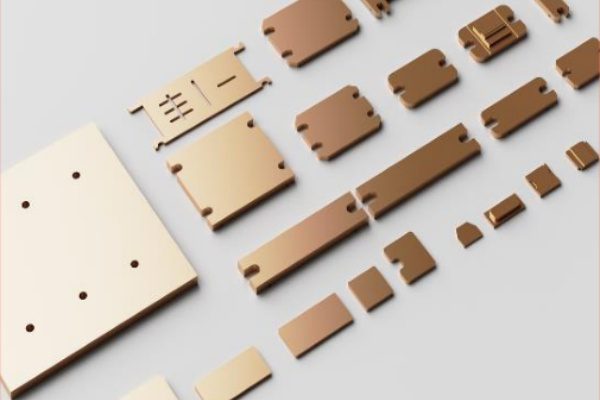
Power electronics keep getting smaller while pushing more current through tighter spaces. The heat has to go somewhere, and traditional copper or aluminum heat sinks increasingly struggle to keep up. After years of working with thermal management challenges in semiconductor packaging, the pattern becomes clear: matching thermal expansion rates matters as much as raw conductivity. WCu, MoCu, and CMC composites exist precisely because this dual requirement cannot be solved with single-element metals alone. Why Standard Heat Sink Materials Fall Short in Modern Power Electronics The push toward higher power density creates thermal loads that conventional materials simply cannot handle gracefully. Pure copper conducts heat well but expands at rates that stress semiconductor die bonds during thermal cycling. Aluminum weighs less but shares the same fundamental mismatch problem. When a silicon carbide chip cycles between ambient and operating temperature hundreds of thousands of times, even small CTE differences accumulate into mechanical fatigue. Advanced heat sink materials address this by combining elements with complementary properties. Tungsten and molybdenum both expand slowly and maintain structural rigidity at elevated temperatures. Copper provides the thermal pathway. The composite approach lets engineers dial in specific expansion rates while preserving adequate heat transfer. This tunability explains why WCu, MoCu, and CMC composites have become standard choices for demanding power electronics applications. WCu and MoCu Composites Compared: Different Paths to Thermal Stability WCu tungsten copper alloy and molybdenum-copper alloy both emerge from powder metallurgy processes, but their performance profiles diverge in meaningful ways. Tungsten’s density and extremely low thermal expansion make WCu the natural choice when gallium arsenide or silicon carbide devices demand precise CTE matching in the 6-9 ppm/°C range. The tradeoff comes in weight and machining difficulty. MoCu offers a middle ground. Molybdenum expands slightly more than tungsten but machines more easily and weighs considerably less. For silicon-based power modules where CTE requirements fall in the 6-10 ppm/°C window, MoCu often delivers adequate thermal performance with better manufacturability. The density difference alone—roughly 10 g/cm³ for MoCu versus up to 17 g/cm³ for WCu—can matter significantly in weight-sensitive applications. Thermal Performance Differences Between WCu, MoCu, and CMC Heat Sinks WCu heat sinks reach thermal conductivities between 170-220 W/m·K depending on composition ratio, with CTE values tunable to match GaAs and SiC device requirements closely. MoCu achieves 150-200 W/m·K with slightly broader CTE adjustment range, making it versatile across silicon device families. CMC composite material laminates take a
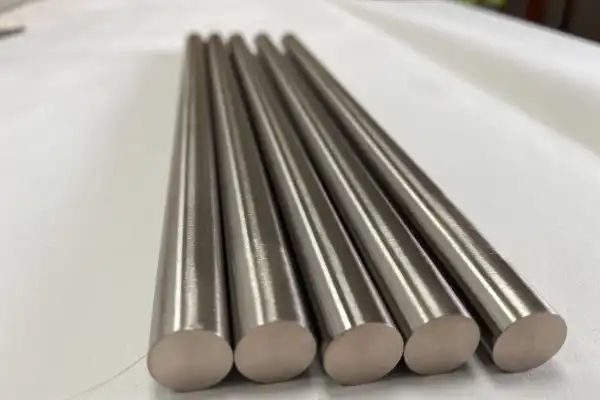
Working with metals that refuse to quit at extreme temperatures changes how you think about material limits. Tungsten, molybdenum, and tantalum each bring something different to the table when conventional alloys have already given up. After years of handling these materials across aerospace, medical, and electronics projects, the distinctions between them become less about numbers on a spec sheet and more about knowing which one actually performs when conditions turn hostile. Why Refractory Metals Matter in Extreme Engineering High melting point metals earn their place in modern industrial design because nothing else survives where they operate. These refractory metals handle thermal loads, mechanical stress, and corrosive environments that would destroy standard engineering alloys within hours. Their value shows up in applications where failure carries serious consequences—rocket nozzles, medical implants, semiconductor manufacturing equipment, and radiation shielding systems. The three metals covered here each solve different problems. Tungsten dominates when absolute thermal stability matters most. Molybdenum offers a practical balance between high-temperature performance and workability. Tantalum stands apart for chemical inertness and biocompatibility. Understanding these distinctions helps engineers match the right high melting point metal to specific operating conditions rather than defaulting to whatever worked on the last project. Tungsten Delivers Unmatched Thermal Performance Tungsten holds the highest melting point of any metal at 3422°C. This number alone explains why it appears in applications where thermal survival is non-negotiable. Combined with exceptional strength retention at elevated temperatures and a density of 19.3 g/cm³, tungsten maintains structural integrity in environments that would turn other metals into puddles. The material comes in several forms depending on application requirements. Pure tungsten works for lighting filaments and X-ray tube targets where thermal stability is the primary concern. High-Density Tungsten Alloy (WHA), containing 85–97% tungsten with nickel-iron or nickel-copper binders, provides better machinability while maintaining the density needed for radiation shielding and kinetic energy penetrators. Tungsten Copper (W-Cu) Alloy pairs tungsten’s thermal properties with copper’s electrical and thermal conductivity, making it suitable for high-power heat sinks and electrical contacts. Aerospace engineers rely on tungsten for rocket nozzles and components exposed to combustion gases. Medical imaging equipment uses tungsten targets in X-ray tubes because the material handles repeated thermal cycling without degradation. The high density also makes tungsten effective for counterweights and radiation shielding where mass concentration matters. FOTMA supplies pure tungsten rod and tungsten plate for these critical applications. Molybdenum Balances Performance With Practicality Molybdenum melts at

Tungsten sits at the heart of two material families that couldn’t behave more differently in practice. Tungsten carbide brings ceramic-like hardness that chews through rock and metal without flinching. Tungsten heavy alloy delivers density so extreme it stops radiation and adds mass where space is tight. Both start with the same element, yet their compositions push them toward opposite ends of the performance spectrum. Picking the wrong one means either premature failure or wasted budget, so the distinction matters more than most material choices I’ve encountered in industrial settings. What Makes Tungsten Carbide So Hard Tungsten carbide is a ceramic composite built from tungsten monocarbide particles. These WC grains form through strong covalent bonds between tungsten and carbon atoms, creating a structure second only to diamond in hardness. The grains alone would be too brittle for practical use, so manufacturers embed them in a metallic binder phase. Cobalt is the most common binder, though nickel and iron appear in specialized grades. The binder acts as a ductile matrix holding the hard WC grains together, dramatically improving toughness and fracture resistance. Adjusting the cobalt content, typically between 3% and 30% by weight, lets engineers dial in the exact balance between hardness and impact tolerance. Lower binder content pushes hardness and wear resistance higher. More binder increases toughness at the expense of some hardness. This tunability makes cemented carbide properties highly adaptable. The material resists abrasion, erosion, and impact better than almost any alternative. High elastic modulus, excellent thermal conductivity, and resistance to deformation at elevated temperatures round out the profile. These characteristics explain why tungsten carbide dominates cutting tool materials, mining tools, and components facing severe wear conditions. WC Grade Binder Content (%) Hardness (HRA) Typical Applications G5 6 90.5 General purpose cutting, wear parts G20 10 89 Mining tools, impact resistance G30 15 87 Heavy impact applications Why Tungsten Heavy Alloy Packs So Much Mass Tungsten heavy alloy takes a fundamentally different approach. Instead of forming a carbide compound, WHA uses 85-97% pure tungsten particles sintered with a metallic binder, usually nickel-iron or nickel-copper. The result is a metal matrix composite with densities ranging from 17.0 to 18.8 g/cm³, far exceeding conventional metals. The binder phase forms a ductile matrix around the tungsten grains, overcoming the brittleness that makes pure tungsten difficult to work with. This matrix allows conventional machining operations that would be impossible with pure tungsten or tungsten
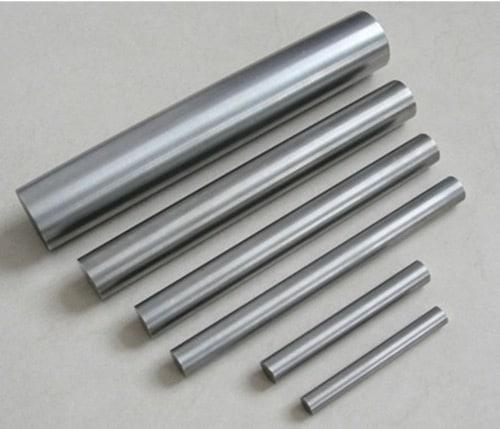
Working with refractory metals teaches you quickly that material selection isn’t about finding the “best” option—it’s about matching specific properties to specific demands. Tungsten, tantalum, and molybdenum each bring something distinct to extreme engineering environments, and understanding those differences matters more than memorizing melting points. These three metals handle temperatures above 2000°C while maintaining structural integrity, but they behave differently under thermal stress, chemical exposure, and mechanical loading. The right choice depends entirely on what you’re asking the material to do. What Makes Refractory Metals Different From Conventional Alloys Refractory metals stand apart because they maintain strength and hardness at temperatures where steel and aluminum would soften or melt entirely. Their defining characteristics—exceptionally high melting points, superior elevated-temperature strength, and strong corrosion resistance—make them essential in applications that push thermal and mechanical limits. The practical importance of tungsten, tantalum, and molybdenum comes down to reliability under conditions that destroy other materials. Aerospace components, furnace internals, chemical processing equipment, and electronic devices all depend on these metals precisely because alternatives don’t exist for certain operating conditions. Material selection in these contexts isn’t about preference; it’s about physics. Property Tungsten (W) Tantalum (Ta) Molybdenum (Mo) Melting Point (°C) 3422 3017 2623 Density (g/cm³) 19.3 16.6 10.2 Hardness (HV) High Medium Medium-High Corrosion Resist. Good Excellent Good How Tungsten, Tantalum, and Molybdenum Compare in Practice The differences between these three refractory metals become clear when you examine their physical, chemical, and mechanical behaviors side by side. Tungsten holds the highest melting point of any metal at 3422°C, paired with exceptional hardness and the highest density of the group. Tantalum offers remarkable resistance to acids and maintains good ductility even at lower temperatures—a combination that’s harder to find than you might expect. Molybdenum brings a high melting point with excellent thermal conductivity, though it oxidizes more readily in air at elevated temperatures. Density differences are substantial. Tungsten at 19.3 g/cm³ weighs nearly twice as much as molybdenum at 10.2 g/cm³, with tantalum falling between them at 16.6 g/cm³. This matters for applications where weight is constrained but thermal performance isn’t negotiable. Thermal expansion coefficients stay low across all three, which helps prevent thermal stress failures in components that cycle through temperature extremes. Fabrication presents its own challenges. Tantalum is notably more ductile and easier to machine than either tungsten or molybdenum, both of which tend toward brittleness. If your application requires complex geometries or

Racing engineers obsess over grams. Every component, every fastener, every bracket gets weighed, measured, and questioned. When you’ve spent enough time in pit lanes watching teams chase hundredths of a second, you start to understand why tungsten ballast has become the material of choice for serious motorsport weight optimization. The density alone changes what’s possible in chassis design. FOTMA has spent three decades developing tungsten ballast solutions that give OEMs the precision they need to push vehicle dynamics further than traditional materials ever allowed. Why Tungsten Ballast Outperforms Traditional Materials in Racing Weight distribution makes or breaks a racing car’s behavior. Tungsten ballast solves a fundamental packaging problem that lead simply cannot address. With a density nearly twice that of lead, tungsten concentrates mass in spaces that would otherwise require bulkier, less efficient solutions. This matters enormously when engineers need to shift a vehicle’s center of gravity by millimeters while working within tight chassis constraints. The advantages of tungsten ballast extend well beyond raw density numbers. Lead faces increasing restrictions across motorsport sanctioning bodies due to toxicity concerns. Tungsten presents no such issues. It’s non-toxic, which simplifies handling during installation and eliminates environmental compliance headaches. The material also holds up remarkably well under the punishment racing delivers. Corrosion resistance and mechanical strength mean tungsten ballast maintains its dimensional stability season after season, even when subjected to constant vibration and thermal cycling. Proper ballast material selection directly influences aerodynamic performance. When engineers can place weight exactly where physics demands it, they unlock handling characteristics that simply aren’t achievable with lower-density alternatives. This is why tungsten ballast has become standard equipment in professional motorsport weight distribution strategies. Comparison Chart: Tungsten vs. Lead Ballast Properties Property Tungsten Alloy (WHA) Lead (Pb) Density (g/cm³) 17.0 – 18.5 11.3 Toxicity Non-toxic Toxic Space Efficiency Excellent Good Strength High Low Corrosion Excellent Moderate Custom Tungsten Ballast Engineering for Motorsport OEMs FOTMA brings over 30 years of material research directly to motorsport applications. Our ISO-9000-1:2008 certification reflects the quality systems OEMs require when specifying critical performance components. Manufacturing tungsten ballast to racing tolerances demands process control that most suppliers cannot deliver consistently. Racing environments push materials to their limits. High G-forces during cornering, braking, and acceleration create stress patterns that would deform lesser materials. Vibration from engine harmonics and road surface irregularities adds fatigue loading that accumulates over race distances. Our high-density tungsten alloys are formulated specifically
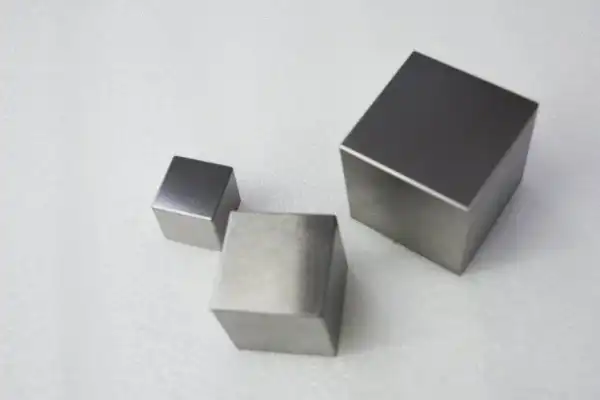
The push for conflict-free minerals has moved from a niche concern to a baseline expectation across manufacturing sectors. I’ve watched procurement teams shift from treating ethical sourcing as a compliance checkbox to recognizing it as a genuine supply chain risk factor. When you’re sourcing tungsten tantalum for aerospace components or medical devices, the origin story of those materials matters—not just ethically, but commercially. A single audit failure or regulatory flag can freeze shipments and damage relationships that took years to build. China’s position in this space has evolved considerably, and understanding how responsible sourcing actually works on the ground there requires looking past the headlines. What Makes a Mineral “Conflict-Free” and Why Regulations Exist Conflict minerals refer to raw materials extracted from regions where mining operations fund armed groups, enable human rights violations, or cause severe environmental harm. The term most commonly applies to tin, tantalum, tungsten, and gold—the so-called 3TG minerals—with the Democratic Republic of Congo and surrounding countries being the primary concern. But the underlying principle extends beyond geography: any mineral supply chain that lacks transparency creates risk. The Dodd-Frank Act Section 1502 forced publicly traded U.S. companies to disclose whether their products contain 3TG minerals from the DRC region. The EU Conflict Minerals Regulation (EU 2017/821) took a different approach, requiring importers to conduct due diligence rather than simply report. Both frameworks share the same goal: making it economically and reputationally costly to ignore where your materials come from. The OECD Due Diligence Guidance provides the operational framework that most serious players follow. It’s not a certification—it’s a process. Companies identify risks, assess their severity, implement mitigation measures, and report on their efforts. The practical work involves verifying smelter compliance and establishing traceability in mining operations back to the extraction site. This isn’t paperwork for its own sake. When done properly, it creates a documented chain of custody that can withstand regulatory scrutiny. Why Due Diligence Isn’t Optional Anymore Due diligence in mineral supply chains has shifted from best practice to business necessity. The systematic identification and mitigation of mineral supply chain risks protects companies from legal exposure, but the reputational dimension often carries more weight. A single investigative report linking your products to conflict financing can undo years of brand building. Implementing a robust due diligence supply chain framework requires more than policy statements. It demands actual audits, supplier questionnaires with teeth, and the willingness to